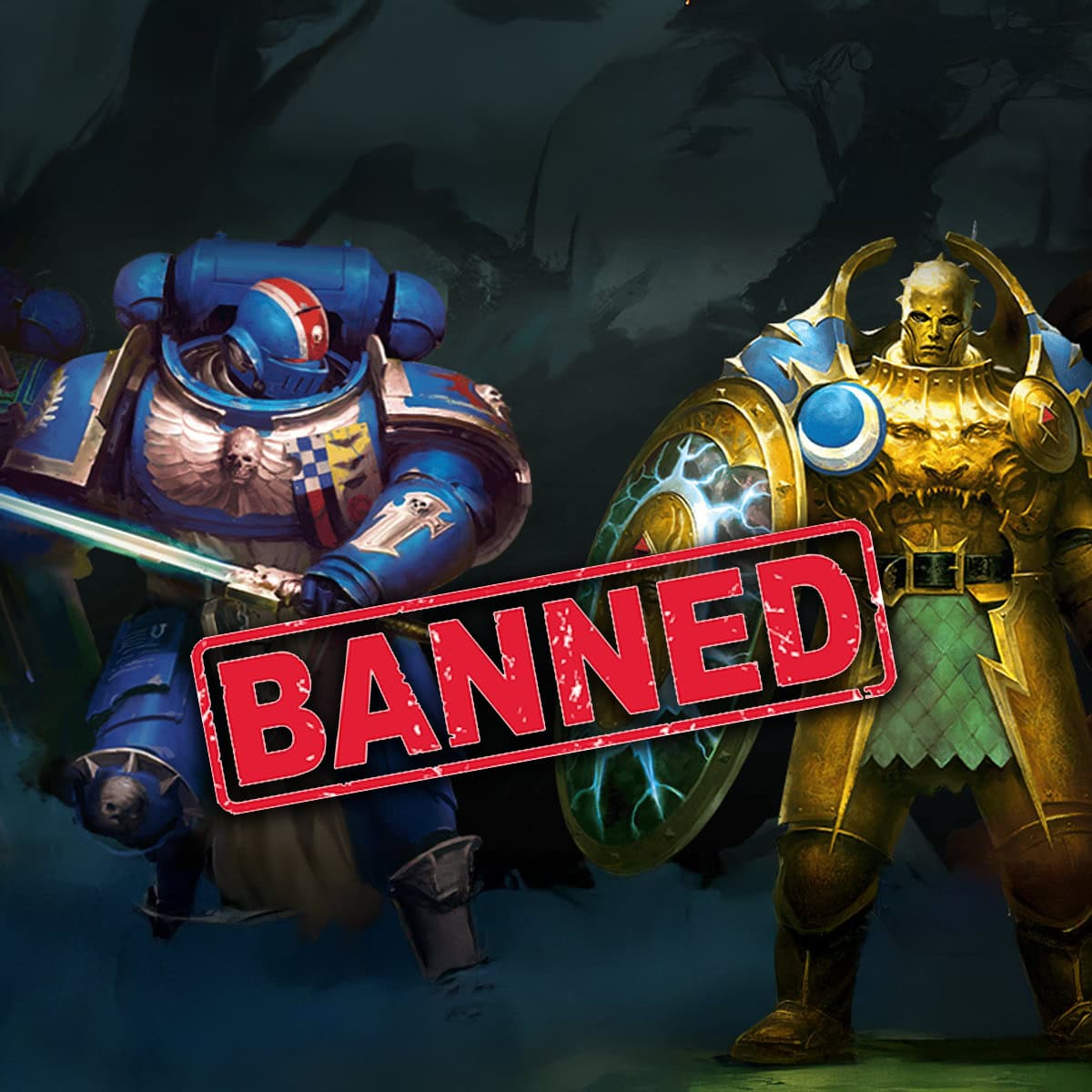
Games Workshop’s CEO has banned the use of AI in Warhammer. Find out what the CEO said, why managers are not sold on AI, and how this impacts GW’s content overall.
Games Workshop just planted a big flag in the ground on generative AI, and it is not subtle. In their January 2026 financial update, CEO Kevin Rountree described AI as a broad subject and said the company’s internal policy is “very cautious,” including a clear restriction on AI-generated content and AI use inside GW’s design processes.
A lot of people are speed-running this into “GW bans AI,” full stop. However, the actual wording is more specific, and that specificity matters if you want to understand what GW is actually trying to stop and what it probably cannot stop, even if it wants to.
What Games Workshop actually said about AI (yes, they still use it)
Updated on February 24, 2026, by Rob Baer with the latest developments.
- GW put it on the record: in the January 2026 financial update, CEO Kevin Rountree says their internal AI policy is “very cautious”, with a clear restriction on AI-generated content and AI use in GW’s design processes.
- This is not a blanket “AI doesn’t exist” ban: the wording targets deliverables and the design pipeline, plus unauthorised AI use tied to GW, including competitions.
- Managers are not sold: GW flags compliance, security, and governance risks, and admits “AI features” keep getting baked into everyday tools whether you want them or not.
- What this impacts: GW wants “human-made Warhammer” as the official standard for the studio side, but it does not settle how this applies to marketing, WarCom-style content, vendors, enforcement automation, or partner drama like the Displate Fulgrim AI suspicion and subsequent denial.
Here is the core of what Games Workshop CEO Kevin Roundtree said in their mid-year report.
- Games Workshop does not allow AI to be used in its design processes.
- The policy also calls out unauthorised use outside Games Workshop, including use connected to GW competitions.
- A small number of senior managers are allowed to stay “inquisitive” and keep testing or exploring the tech.
- Rountree also flagged compliance, security, and governance concerns, and notes AI and machine learning features are creeping into everyday devices, whether people want them there or not.
So yeah, you will still see “Games Workshop AI ban” articles everywhere, but what is being described is really a restriction on generating deliverables with AI and on using AI inside the design pipeline, plus rules for unauthorised use in external contexts like competitions.
Which, to us, here at Spikey Bits, isnt the same as the things we have been pointing out for years that they are using AI for.
What “Design Process” Likely Means in Practice
Games Workshop is not out here publishing a nice, tidy internal policy PDF for the internet to argue over. So we are left with the phrase “design processes,” and a whole lot of reasonable inference.
In practical Warhammer terms, “design process” is commonly understood to mean the work that directly creates the product and the setting’s official look, voice, and canon. Think:
- Miniature design and sculpting workflows
- Concept art and key visuals that define a faction or range
- Writing and development for rules, codexes, and narrative releases
- Studio output that shapes the official identity of Warhammer (and what it is “allowed” to be)
This framing also ties the stance to protecting intellectual property and the value of human creators, which lines up with “hands off our creative pipeline” more than with “we are afraid of autocomplete a sentence in Outlook.”
Why Games Workshop Is Taking a Cautious Position on AI
Intellectual property protection and creator attribution
GW links the stance to protecting its IP and respecting human creators. Which is not just a moral stance; it is also a business stance when your entire empire is built on recognizable worlds, characters, and visuals.
Operational risk: compliance, security, and governance
In the report, Rountree explicitly talks about governance concerns and the reality that “AI features” can be bundled into devices and software by default. Even companies that hate generative AI still have to deal with the fact that vendors keep slapping “AI” labels on everything.
Reinforcing investment in human creatives
They also mentioned continued hiring across creative roles, such as art, writing, and sculpting. That is GW basically saying: the Warhammer vibe is the product, and the vibe comes from people.
How This Fits with Earlier Games Workshop Competition Rules
If you feel like you have heard this song before, you have.
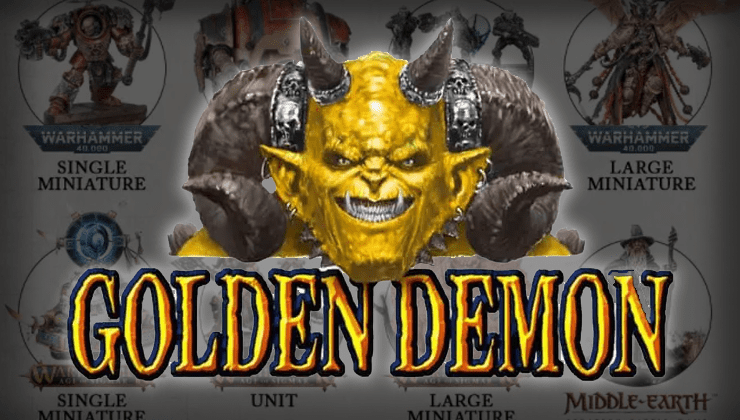
Back in 2024, the Golden Demon painting competition got dragged into an AI-related controversy, and GW later updated entry rules to ban AI assistance. Which was pretty much a zero-tolerance move for a competition that is supposed to be about human craft.
That history matters again now because Roundtree mentions rules against unauthorised AI use in GW-related competitions. Which is not a brand-new fear by any means; it is a continuation of a boundary GW already had to draw in public.
Why “GW AI use” May Be Happening Elsewhere
Here is where things get mess to us. Even if GW’s intent is “no AI-generated stuff in the core creative pipeline,” people immediately jump to other parts of the company where AI might show up, intentionally or accidentally:
- Marketing workflows (copy, layout, image editing)
- Publishing workflows (proofing, localization, asset management)
- External vendors and partners (licensed products, ads, merch)
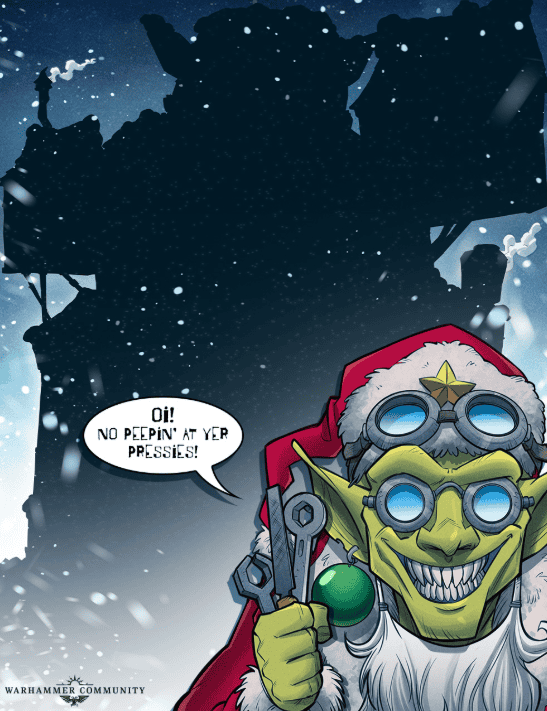
This isnt all just vague “something feels off” vibes anymore, either. We pointed out some interesting Red Gobbo promo art where the goggles looked duplicated and stacked, which is the kind of sloppy, machine-ish detail that kicked off our “caught using AI art red-handed” blowup.
And on the writing side, the “GW let AI take over Warhammer’s lore, articles, and more” conversation zeroed in on the Warhammer Community website and lore posts where some have read like polished-but-weird prompt output, including the infamous overuse of em dashes and awkward sentence flow
None of this is a smoking gun on its own, but as “potential proof,” it is exactly the kind of repeat-pattern stuff that makes hobbyists stop shrugging and start keeping receipts.
There is also a separate, adjacent worry: enforcement and takedowns. Sellers have alleged that some marketplace enforcement feels automated. In 2024, what looked to be automation-driven enforcement connected to a third-party provider scoured eBay and Etsy of “infringing items.”
So, that is not the same thing as “GW uses generative AI to make art,” but it does fuel the broader “GW is using automation somewhere” narrative.
GW Partner Controversies: the Displate Fulgrim Case

Even if GW keeps its internal studio clean, licensed partners can still become a reputational landmine.
In late 2025, Warhammer fans flagged a Displate limited edition Fulgrim product as looking “AI-ish.” Luetin09 publicly described the concern as speculative and said he removed his promotional post until he could get clarity.
Displate later denied that the artwork was generative AI and attributed the “red flags” to human error and production oversight, according to Displate’s response.
The key point is not “who was right”; it is the reality: even the suspicion of AI involvement in a licensed product can become a headache for the Warhammer brand, regardless of what GW’s internal policy says. You can see why GW would want bright lines internally when external lines are always fuzzier.
What This Does, and Does Not, Settle About AI Use For Warhammer

So yeah, GW just drew a line in the sand and did it on the record, in a money report, where executives usually keep things boring. “No AI in the design process” is a real statement with real intent: keep Warhammer’s look, voice, rules, and canon tied to human hands, not a text box and a roulette wheel.
What it does settle: GW wants “human-made Warhammer” to be the official standard, and it is willing to say it out loud, on the record, in the middle of a financial update.
What it does not settle: how enforcement works in practice, what tools are considered “AI” versus “normal software,” and how strictly this extends to their marketing copy, WarCom Articles, and contractors.
That is where the next round of drama will live, because, well, it always does.
GW Granted $10m Final Judgment in Warhammer Case
What do you think about such a big company as GW using AI in general?