Check out the top 40k tournament army lists for Adeptus Mechanicus, Necrons, and Tyranids from Fabricators Forge’s February RTT tournament, which saw some great factions hit the podium.
The latest Fabricators Forge February results are real-time insights for anyone who likes usable 40k tournament tech.
Now we’re breaking down the top 40k army lists from the event and calling out the choices that mattered so you can spot meta trends fast and tune your own roster.
Top Placings From Warhammer Fabricators Forge February
Studying these winning army lists for their tactical synergies can provide great insights for playing your army since the latest balance dataslate rules changes and points updates.
If you want to elevate your game even further, consider applying to Team USA to compete at the World Team Championships each year!
Thanks to Best Coast Pairings, we can look back at the event as if we were all there ourselves. Click this special promo link to save $20 on a year’s subscription to BCP.
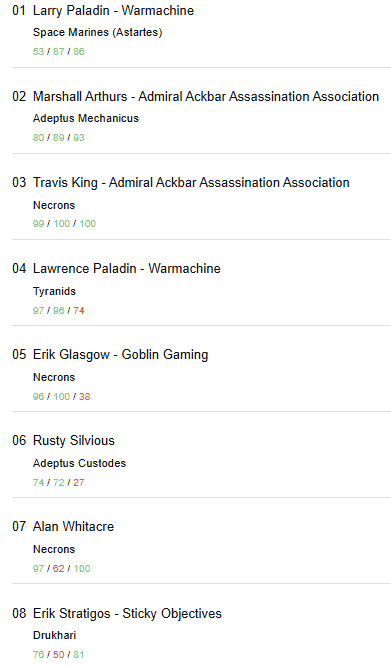
Editor’s Note: The first-place list was unsubmitted, so we will cover the second-place list here today.
2nd Place: Marshall Arthurs, Adeptus Mechanicus Army Lists (AdMech)
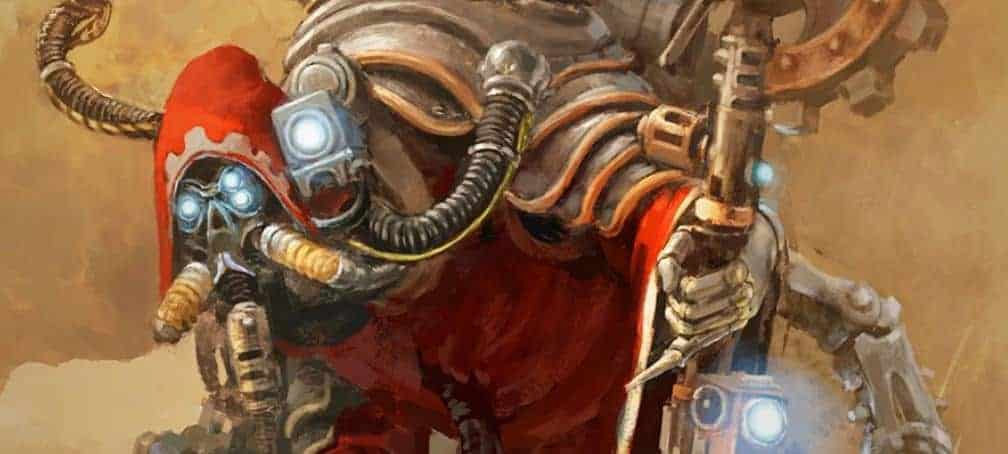
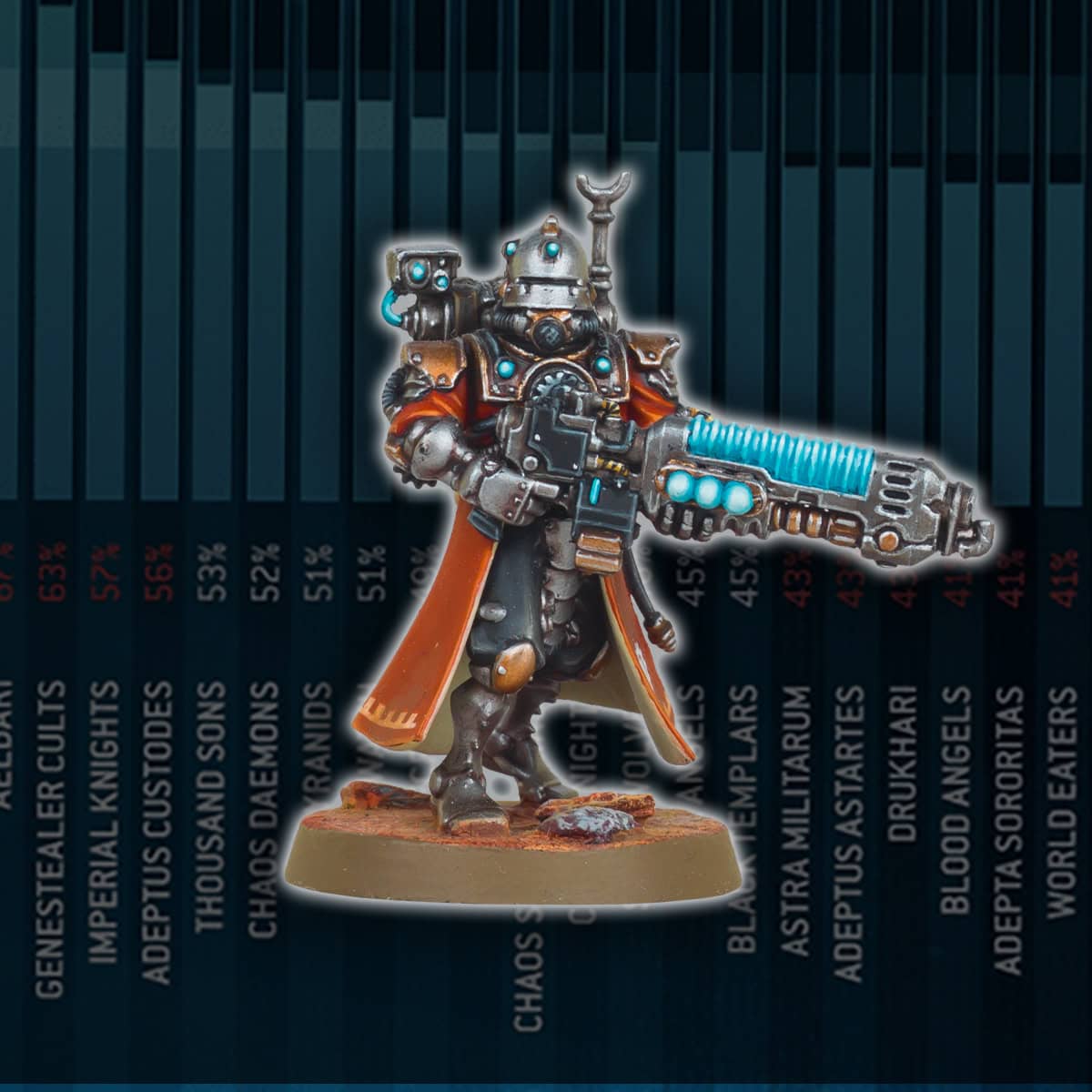
This Haloscreed Battle Clade build is the Adeptus Mechanicus army list version of mean board control.” It clogs the mid-board with cheap, irritating bodies, steals deployment space early with infiltrators, then lets a ridiculous number of twin cognis lascannons decide what the opponent is allowed to keep on the table.
The guns do the killing, the little units do the scoring, and the whole thing works because every time the opponent tries to solve the mission problem, they have to step into firing lanes.
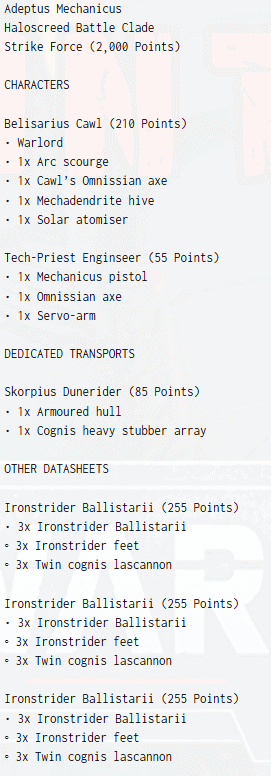
Belisarius Cawl and the Tech-Priest Enginseer are the anchors
Cawl is the anchor that makes the shooting phase feel reliable instead of hopeful. He wants to be near the important pieces, keep the army’s output consistent, and punish anyone who thinks trading into the AdMech “castle” is going to be clean. He is not here to sprint up the table and throw hands. He is here to make the rest of the list do its job better, every single turn.
The Enginseer is the practical support piece that keeps the engine running. With multiple vehicles on the board, being able to patch something up and keep it alive for one more turn is a big deal. He also helps keep the backfield from feeling empty, because the list wants to protect its firing base while the skirmish units do the messy work up front.
A Skorpius Dunerider secures the mid-board
The Dunerider is the “get a unit to the mid-board without it evaporating on the way in” tool. It is also a chunk of metal that can block movement, deny angles, and force awkward charges. It is not trying to be the star; it is trying to make sure the list’s screens and objective play actually arrive where they need to be.
Ironstrider Ballistarii are the list’s main threats
This is the list’s actual punch. Nine Ballistarii with twin cognis lascannons is not subtle, and it does not need to be. These are the primary damage dealers, and they are what turns every opponent’s plan into “hide the good stuff or lose it.”
Running them as three separate units is where it gets nasty. One squad can take a bold angle and trade, another can hold a safe lane, and the third can flex based on what the opponent exposes. It also means losing one unit does not shut the lights off.
The list can keep deleting a key vehicle, monster, or lynchpin unit every turn, and it can split fire intelligently without wasting the whole battery on one target.
Pteraxii Skystalkers help finish the mission
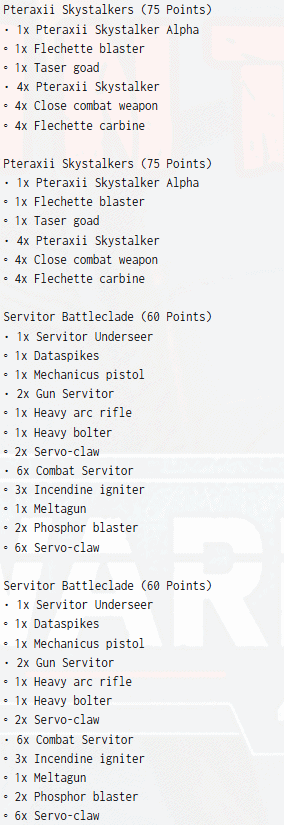
Skystalkers are the list’s mission gremlins. They are there to threaten backfield corners, pick up light infantry, and create “cool, are you screening that?” moments. Two small units are perfect because it forces choices. Either the opponent spends real resources clearing cheap fliers, or they accept that actions, late-game flips, and annoying harassment are going to happen.
They also thrive in this list because the opponent is already stressed about the lascannons. When someone is spending their brainpower trying not to lose tanks, they often forget to respect fast-scoring pieces. Skystalkers punish that.
Servitor Battleclades are the unglamorous backbone
Three Battleclades means there are bodies to stand on objectives, bodies to screen, and bodies to move-block so the Ironstriders do not get tagged or wrapped. They are also great trading pieces into enemy skirmishers, because they can show up, take up space, and force the opponent to spend more effort than they wanted just to clear an objective.
The mixed weapon loadouts also matter in practice. They are not supposed to delete hard targets, but they can absolutely pick up chaff, threaten mid-weight stuff at close range, and make enemies pay for walking into the wrong part of the table.
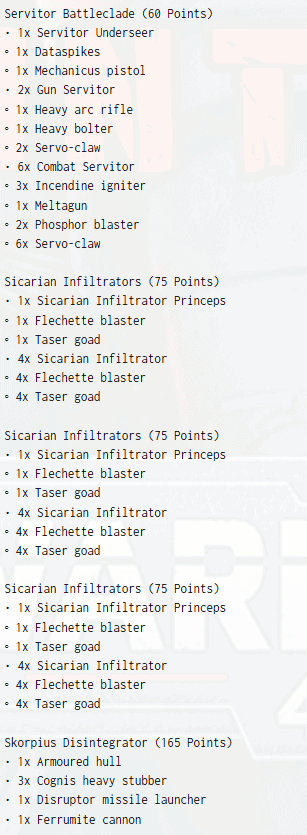
Sicarian Infiltrators help set the tone
Three Infiltrator squads means the opponent does not get to deploy as if it were a casual game. They steal space, force honest staging, and make early objective play feel contested immediately. If the opponent wants the mid-board, they have to fight for it.
They also make life easier for the gunline. Early screens and forward presence stop fast armies from just launching into the Ironstriders, and they create the kind of awkward movement where opponents have to step into bad lanes to get anything done. That is exactly what the lascannons want.
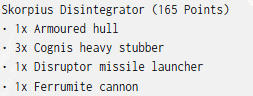
Two Skorpius Disintegrators give the shooting phase more bite
The Disintegrators give the list a second layer of “real shooting” that is not just lascannons. They add durability, steady damage, and the ability to pressure infantry and mid-weight targets without wasting the Ballistarii’s best shots. Two of them also mess with target priority. If an opponent focuses everything into the Ironstriders, the tanks keep contributing and stay annoying. If they try to answer the tanks, the walkers keep deleting the important stuff. Either way, something is getting through.
Combos and matchup tricks that matter
The list wins by stacking problems. Infiltrators and Servitors crowd the board, deny clean movement, and make early turns awkward. Skystalkers threaten secondary play and weak flanks. While the opponent is trying to untangle that mess, the Ironstrider bricks and Disintegrators punish anything that gets exposed.
The real “trick” is that solving the mission usually requires stepping out into lanes. This list is built to make that feel like a mistake.
How This Adeptus Mechanicus Army List Wins
It scores by taking space early with Infiltrators, then sitting on objectives with the triple Servitor Battleclades while the guns erase anything that can realistically contest. Skystalkers handle actions, late-game flips, and opportunistic scoring plays, and the Ironstriders keep the opponent’s key scoring pieces from living long enough to matter. The win condition is not fancy. It is just relentless pressure, steady trades, and the opponent running out of units that can stand on circles.
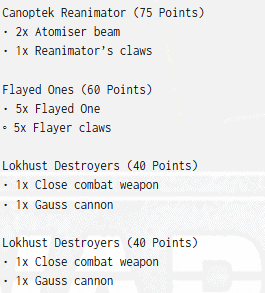
3rd Place: Travis King, Necrons Army Lists
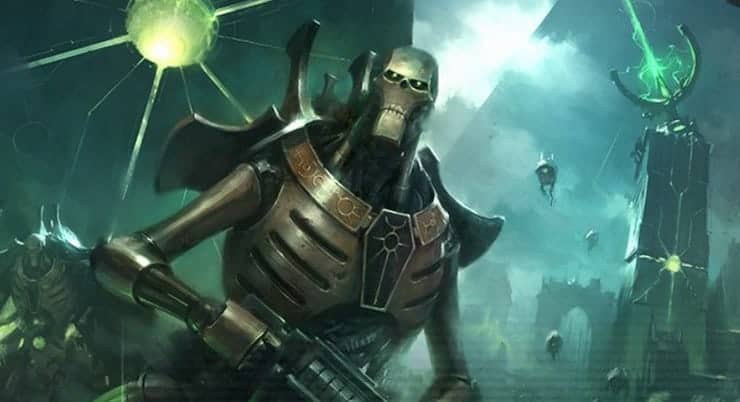
How This Necrons Army List Wins
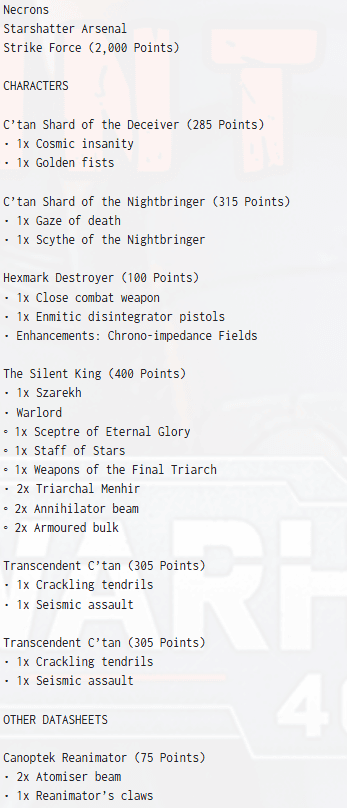
If someone wondered what it looks like when Necrons decide the center of the table belongs to them forever, this is the blueprint.
The Silent King plays bouncer and hype man at the same time, while the C’tan lineup (Deceiver, Nightbringer, and the double Transcendent menace) spreads pressure across the board until the opponent runs out of “good” choices.
Reanimators keep the core pieces sticking around like a bad rumor, and the Hexmark is the classic “try something cute, get punished” button.
Then the Flayed Ones and those solo Lokhust Destroyers handle the boring but necessary parts: stealing space, touching objectives, and letting the god-shards focus on turning the game into a slow-motion collapse.
4th Place: Lawrence Paladin, Tyranids Army Lists
How This Tyranids Army List Wins
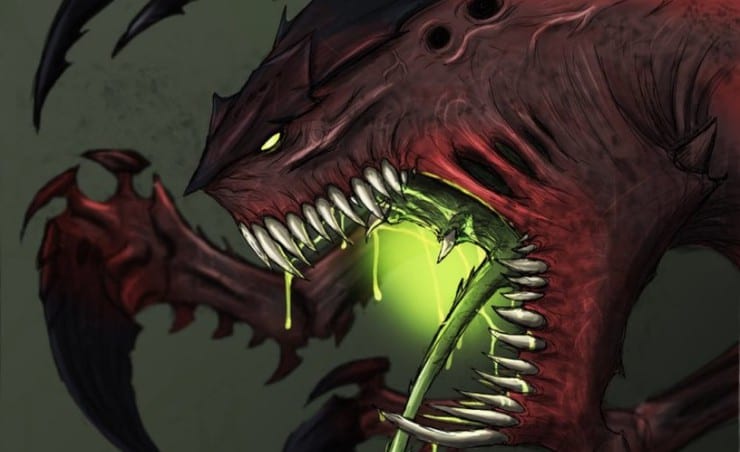
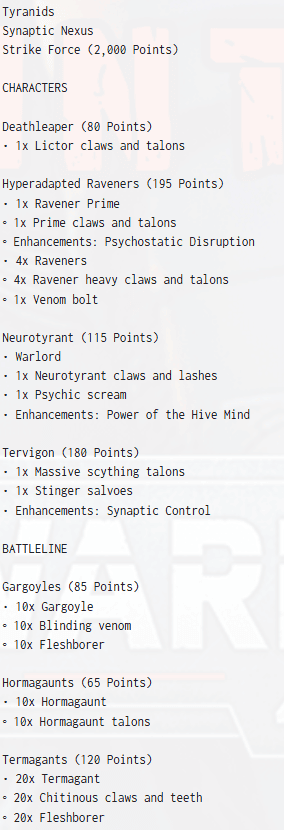
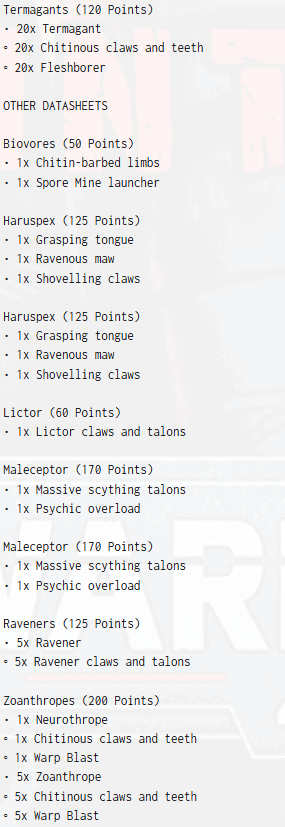
This Synaptic Nexus Tyranids build is the kind of list that makes opponents feel like the table shrank two feet overnight. It floods the board with bodies, glues itself to objectives, and then backs it up with serious brain-bug damage that can reach out and ruin someone’s plan from behind cover.
Between the Neurotyrant calling the shots, double Maleceptors and a chunky Zoanthrope pack deleting key pieces, and a Tervigon fueling the Termagant carpet, it plays the classic Tyranid game of “answer this problem, then answer three more.”
Add in Haruspex brawlers for the midboard slap and Lictors plus Raveners for the sneaky scoring swings, and it has all the tools to turn a normal turn into a full-on firefight.
Final Thoughts from us on Warhammer Fabricators Forge February Army Lists
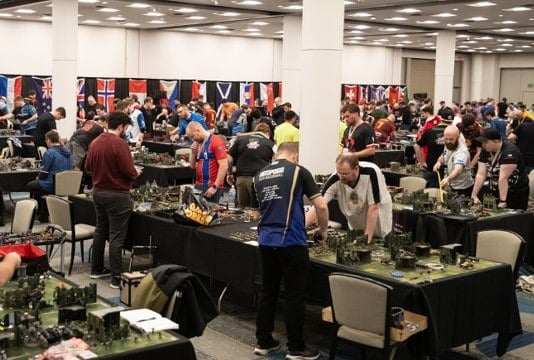
Fabricators Forge’s February Rtt ended up being a tidy little snapshot of where strong lists are living right now: brutal mid-board denial from the Ad Mech army list, an unmovable Necron army list center backed by actual nightmares, and the Tyranid army list doing the classic bug thing of turning the mission into quicksand.
The funny part is that all three podium builds win in different ways, yet they all punish the same mistake. Step out to play the mission, and something awful happens. Ad Mech deletes the pieces that matter. Necrons make the center a no-fun zone, daring anyone to try. Tyranids smother the board, then pick the moment a key unit sticks its head out.
So if these results resonate with you, steal the parts that translate to real games: more early presence, more pieces that trade up, and a plan for keeping scoring units alive past turn three.
See all the Top Warhammer Army Lists & Latest 40k Tournament Schedule
What do you think of the results from the Warhammer Fabricators Forge February 40k Adeptus Mechanicus, Necrons, and Tyranids army lists?