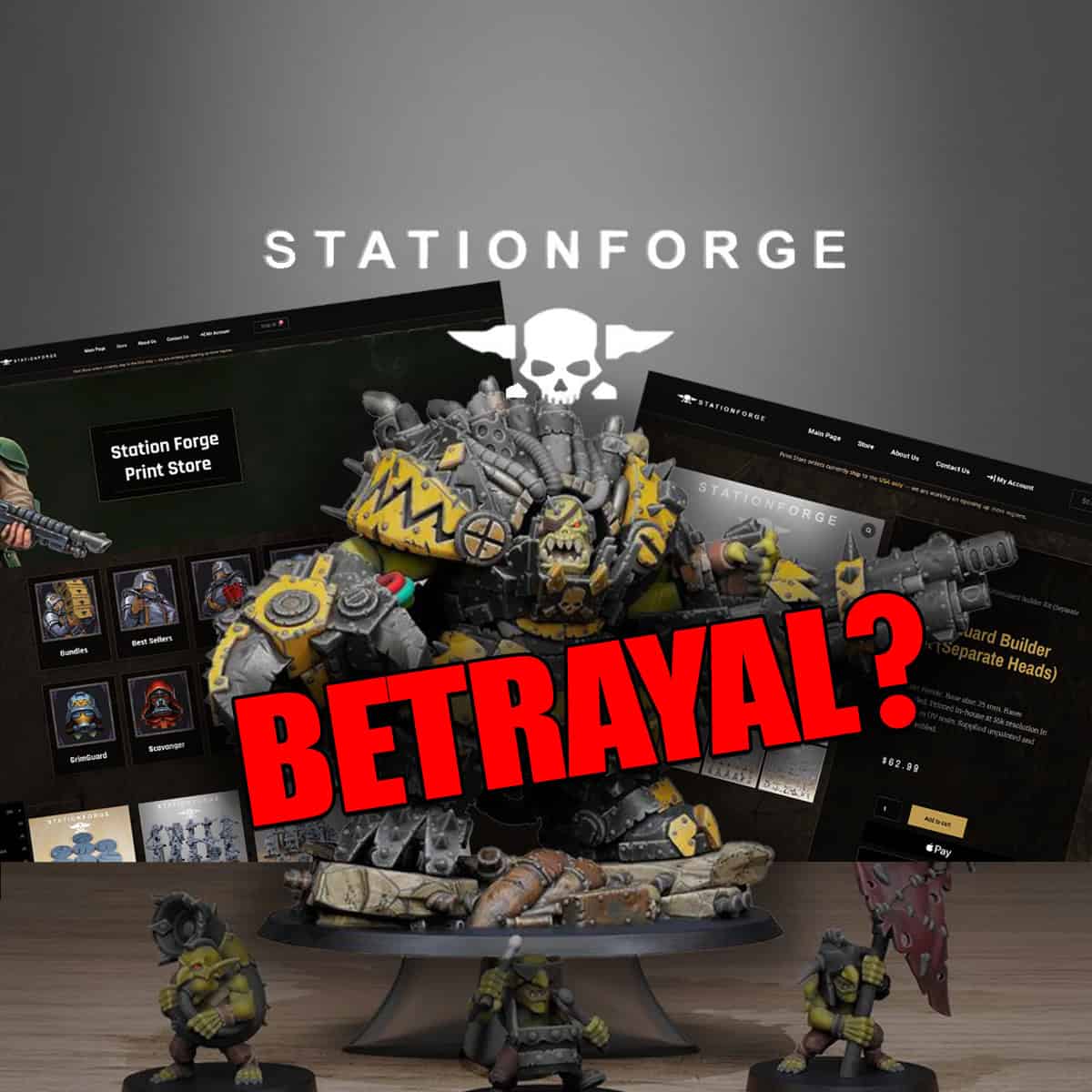
Station Forge merchants are pushing back over a controversial change that’s drawing Games Workshop comparisons and raising questions about how the company treats its sellers.
Station Forge has spent years licensing its STL catalog to commercial printers. But now it’s selling physical miniatures itself, putting those same merchants in the awkward spot of paying Station Forge to compete with… Station Forge.
The printers paying that bill are now watching Station Forge sell the same GrimGuard kits they’ve been selling, printed in-house and shipped straight to hobbyists.
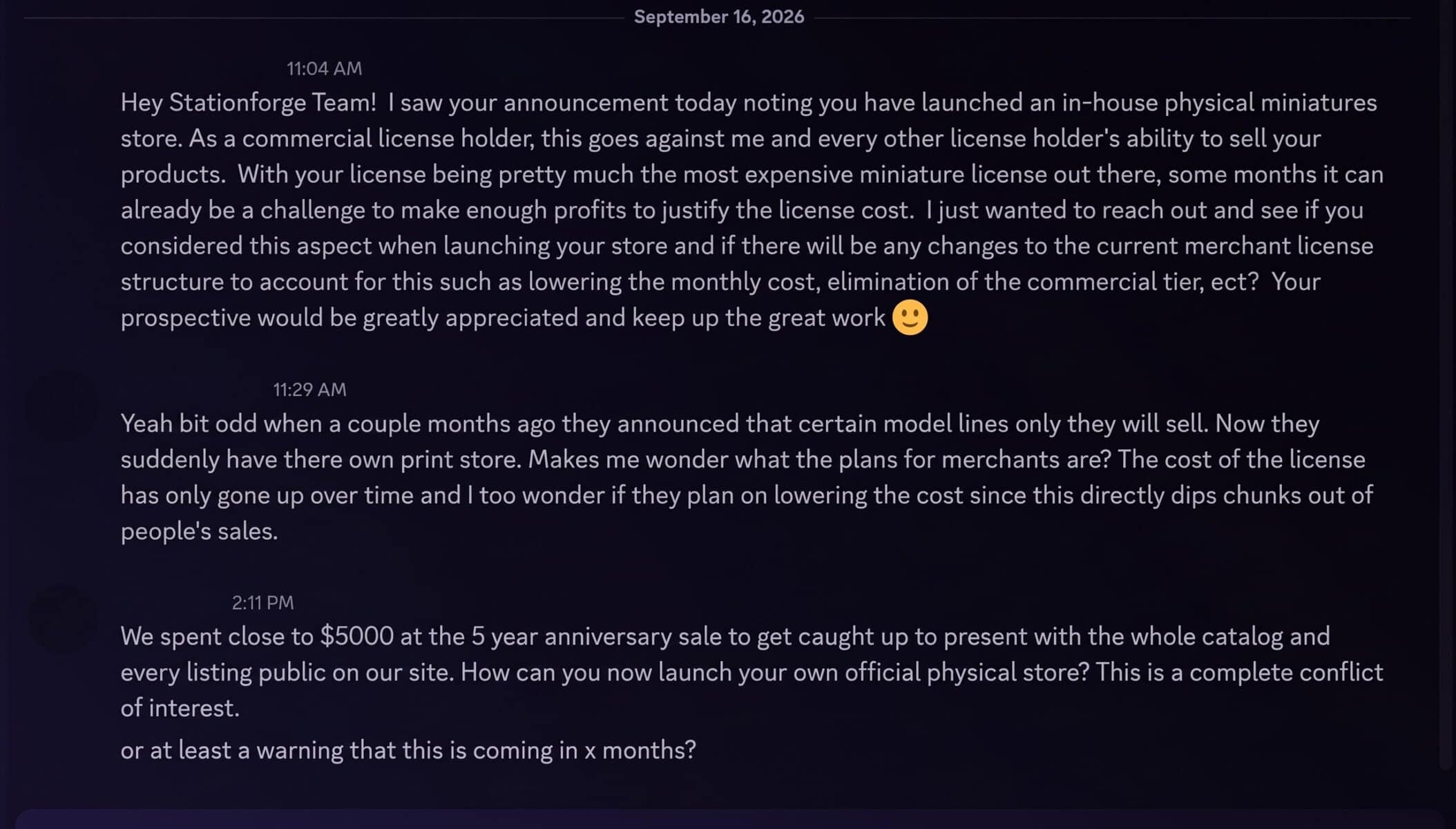
Merchants were in the Station Forge Discord within hours of the announcement, asking why a change this big to their business relationship showed up as a public announcement instead of a heads-up to the merchants funding the program.
There are plenty of reasons for Station Forge to open its own store, sure, especially for hobbyists who don’t print their own minis. Anyone who’s watched alternative miniatures companies grow has seen creators bring more sales in-house, but it gets a lot more awkward when outside sellers pay a monthly subscription for permission to sell the same products.
- License cost: Station Forge merchants pay $150 a month, or $1,800 a year, before resin, labor, failed prints, fees, and back-catalog buys.
- Timeline: Two factions came off the merchant license on June 10 with 30 days’ notice, then the Print Store opened in September with no comparable warning, according to merchants.
- Both sides: Merchants now have their licensor competing for the same sales, while Station Forge gets more control over print quality and access to hobbyists who don’t own resin printers.
The $150 Merchant License Was Already a Tough Sell

Even before the Print Store appeared, the math on a Station Forge commercial license was already tight. That $150 monthly payment is only the first expense for a merchant trying to make the numbers work:
- The license itself: $150 a month, $1,800 a year.
- Production: resin, printers, labor, and the prints that fail on the build plate.
- Selling: packaging, shipping supplies, marketplace fees, and advertising.
- Catalog gaps: older Station Forge releases that weren’t part of a merchant’s subscription still have to be bought from a studio that’s been turning out Patreon miniatures for years.
That puts it among the most expensive commercial STL subscriptions we’ve come across, although we can’t say for certain it’s the most expensive license out there. One merchant put it plainly: some months it’s already tough to make enough profit to justify the fee.
The margins on third-party miniatures and 3D printing weren’t exactly huge to begin with, even when you’re working with some of the best STL files around (but that’s a story for a different article, I feel like).
June’s Faction Pull Looks Different Three Months Later
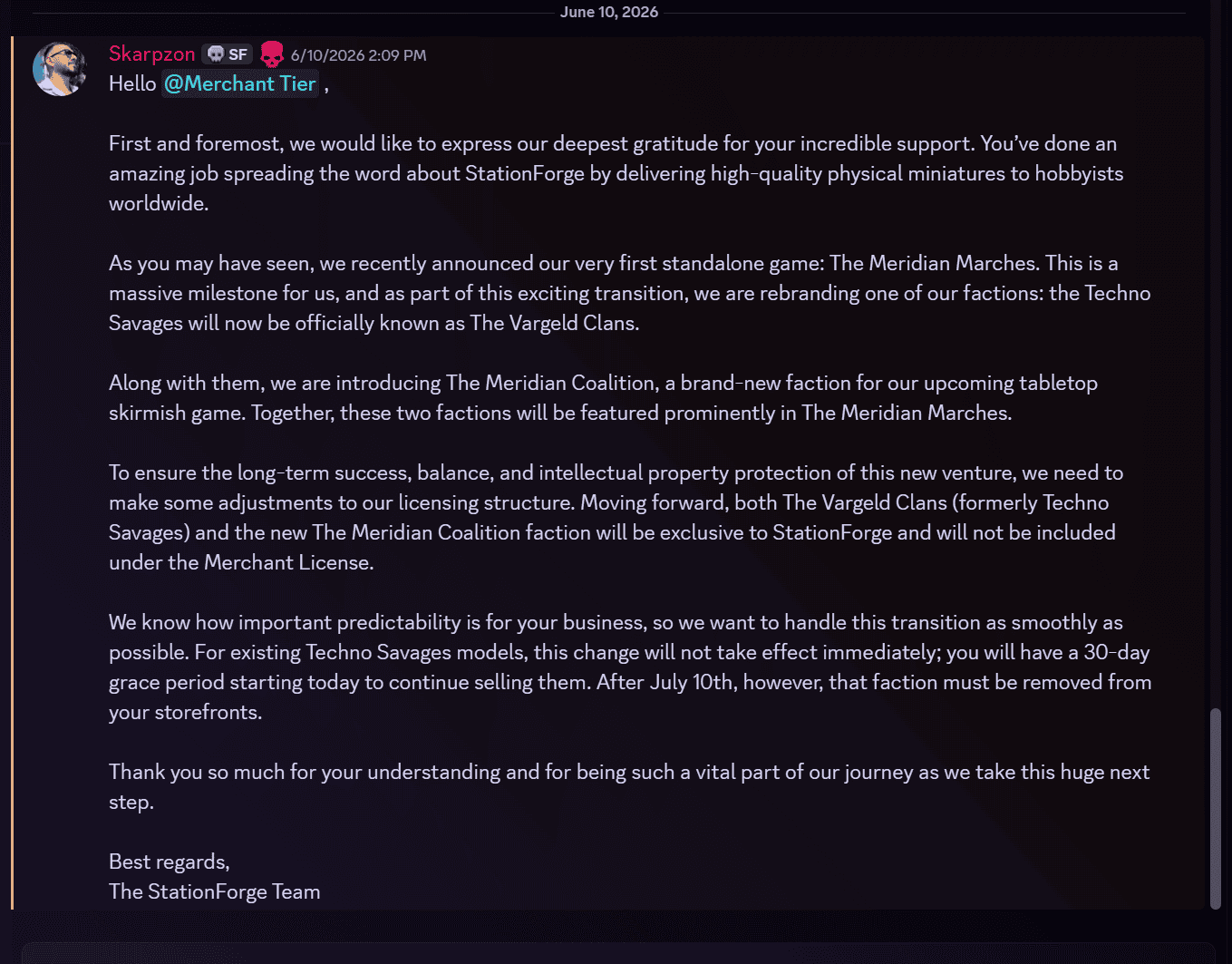
On June 10, Station Forge sent its Merchant Tier a direct message. The Techno Savages were being rebranded as The Vargeld Clans, while a new faction called The Meridian Coalition was also coming. Both were tied to Station Forge’s first standalone skirmish game, The Meridian Marches.
Those two factions became Station Forge exclusives and came off the Merchant License. Existing merchants got a 30-day window to keep selling Techno Savages, and after July 10, those models had to disappear from their storefronts.
Merchants weren’t thrilled, but at least they knew what was happening. It involved two factions: Station Forge explained what was changing, and sellers got time to adjust.
Then Print Store Put Station Forge on the Other Side of the Counter
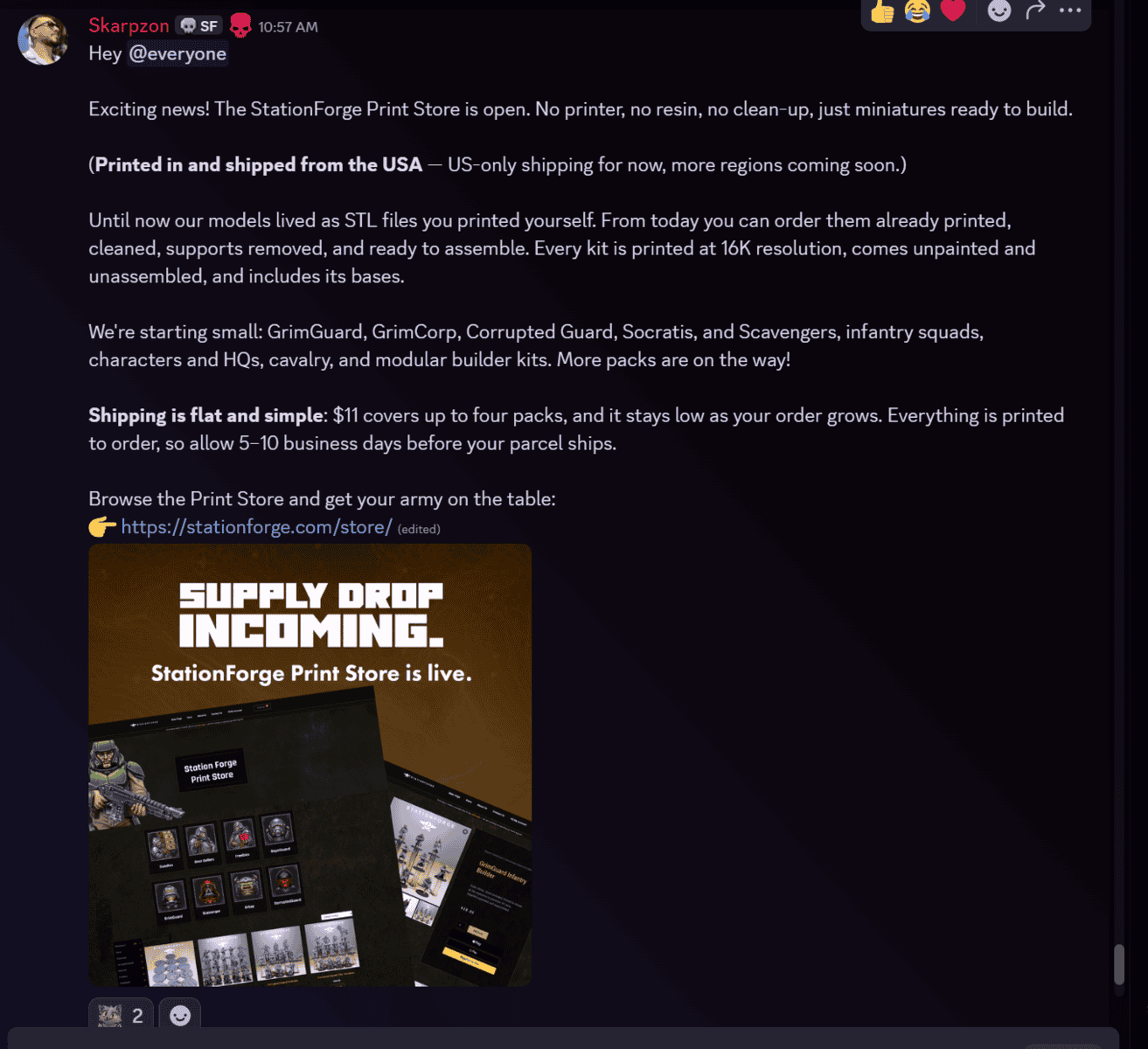
Then out of no where Station Forge’s Print Store went live through an @everyone post in their Discord, with a pretty detailed rundown of what buyers were getting:
- Where: printed in and shipped from the USA, with US-only shipping for now and more regions promised.
- What: GrimGuard, GrimCorp, Corrupted Guard, Socratis, and Scavengers, covering infantry squads, characters and HQs, cavalry, and modular builder kits.
- How: Printed at 16K, supports removed, unpainted and unassembled, bases included.
- Shipping: $11 flat covers up to four packs, and everything is printed to order, so parcels ship in 5-10 business days.
Worse, this isn’t a third-party service like Shapeways printing minis to order. Station Forge sold merchants the license to print its designs, and now they are also making and selling the physical product itself.
So for the merchants reacting in Discord, the bigger problem was how they found out about the store: they learned about it alongside everyone else. One seller says they spent close to $5,000 during Station Forge’s five-year anniversary sale just to get their catalog caught up and listed.
Etsy’s Photo Rules Are Another Issue for Licensed Printers
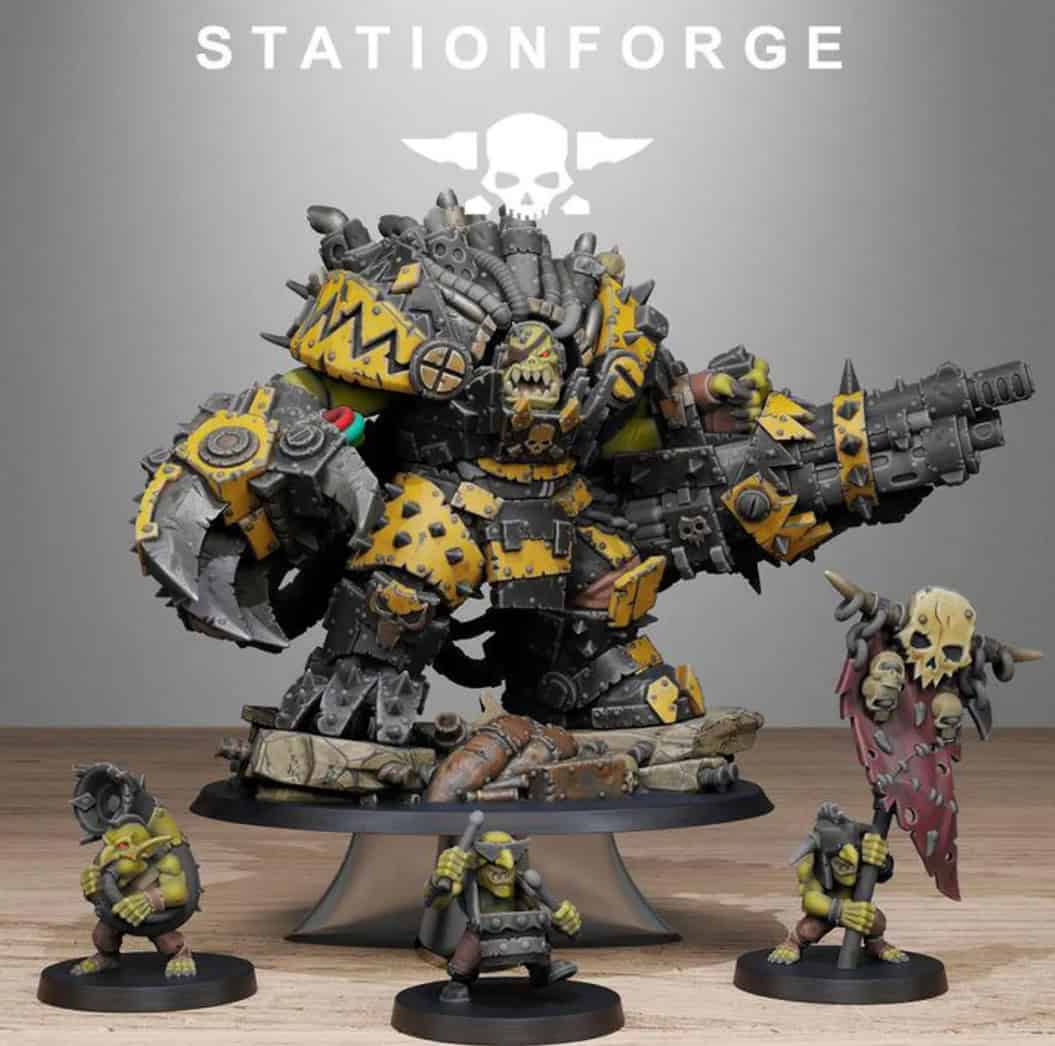
A lot of licensed printers sell through Etsy, much like One Page Rules did when it opened an Etsy store for printed minis years ago. Etsy’s Seller Policy, effective July 9, 2026, says sellers of applicable items must use their own photos or video and specifically excludes “stock photos, artistic renderings, or photos used by other sellers or sites.”
Its Creativity Standards count 3D-printed items as “Made by a seller,” but those listings still need original photos of the finished product. Etsy also says automated systems work alongside human reviewers to flag and remove listings.
That is actually a good policy because it shows merchants have produced the product and what it will look like.
The problem is that retailers say Station Forge’s terms ask them to use Station Forge-supplied renders or product images. If that’s the case, a printer following the licensor’s rules could run into Etsy’s rules instead and face potential corrective action from them.
Station Forge Has a Real Business Case Too
From Station Forge’s side, selling printed minis isn’t hard to understand. Lots of hobbyists like STL miniatures but don’t own a resin printer, don’t want resin fumes in the house, or would rather open a box and start building. An official store reaches those customers while letting Station Forge handle print quality, cleanup, packaging, and the customer experience itself.
The Print Store is also US-only for now, which leaves merchants in other regions as the only practical way many hobbyists can buy printed Station Forge models.
Station Forge’s store policy also says it’s open to bulk and retail orders, suggesting some kind of wholesale or bulk retail channel could sit alongside the commercial-printing license.
“We are happy to talk about bulk and retail orders. Anything above roughly 20 packs needs custom packing and postage, so get in touch and we will put a quote together.”
There may still be room for licensed sellers there, especially outside the US, but it’s fair for a $150-a-month merchant to wonder what their part of this business looks like now.
This is a Familiar Tabletop Move… With One Big Twist
Station Forge isn’t Games Workshop, and it’s nowhere close to operating at GW’s scale. Still, anyone who’s watched GW and independent retailers deal with direct sales will recognize the setup. Outside sellers spend money and effort promoting and supplying your products, you tighten control over parts of the range, and eventually you start selling more of it yourself.
We’ve watched GW change its deal with game stores repeatedly, even while local stores remain GW’s biggest customers, and we’ve had plenty to say about ordering direct from GW along the way.
There’s one difference that makes the Station Forge comparison a lot stranger. Game stores buy GW inventory at wholesale. Station Forge merchants pay the company every month for permission to manufacture the products they’re now competing with Station Forge to sell.
Final Thoughts on the Station Forge Print Store
The merchant program needs some clearer answers now that Station Forge direct-to-consumer store exists. Plus, there are a ton of unanswered questions that Station Forge may want to answer to save face with all their supporters going forward now, too.
- Were commercial sellers told about it before the public announcement?
- Is the $150 license price staying the same now that Station Forge sells direct?
- Will more factions come off the license and stay exclusive to Station Forge, and will merchants get notice before that happens?
- Will Station Forge send buyers toward licensed sellers in regions where its own store doesn’t ship?
Overall, the merchant tier price and the exclusive factions list are probably the two things worth watching going forward. For printers already stretched thin after years of defending 3D-printed minis as a legitimate hobby business, it’s all just another problem to deal with.
Either way, now the question isn’t whether Station Forge can sell its own miniatures. It’s whether paying $150 every month to compete with the company you’re already paying still makes sense.
🔗 Related Reads:
- These Station Forge Patreon Miniatures are Amazing!
- Games Workshop’s Biggest Customers Are Being Treated the Worst
- Games Workshop Alters Their Deal Again to Game Stores
- Ordering Direct From Games Workshop Is A Bad Idea Now
- One Page Rules Etsy Store for Printed Minis is Live!
- Shapeways is Back Making 3D Printed Miniatures Again
- Mystery Store Shipments are Proof GW is Out of Touch With Everyone
What do you think of Station Forge opening its own Print Store while charging merchants $150 a month?