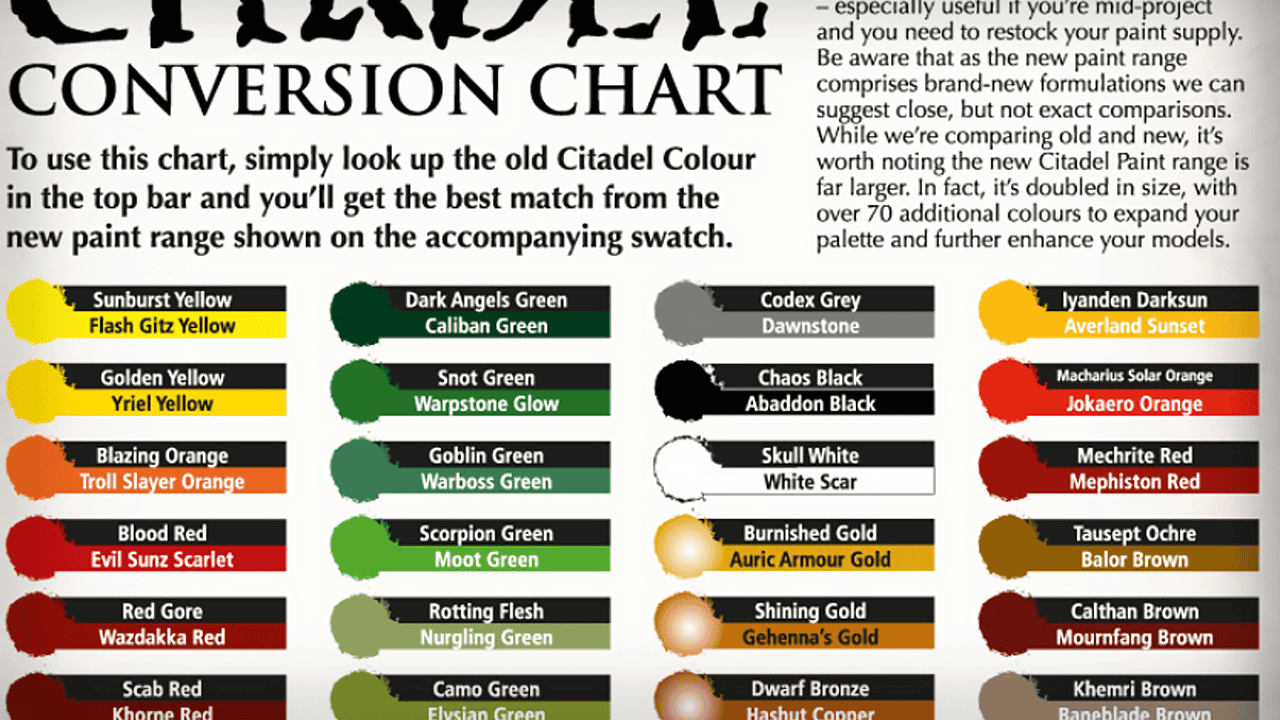
This free PDF download of the Citadel Paint color conversion chart is all you need to match your paints for flawless layering, organizing, and painting your Games Workshop Warhammer miniatures!
If you’ve ever stared at your pile of grey Warhammer minis wondering where to start, the Citadel paint colour chart is your new best friend.
Whether you’re trying to make your Space Marines shine brighter than the Emperor’s armor or give your Orks that perfect “fresh-from-the-swamp” grime, this Citadel paint chart is the key to mastering every hue in the range.
If Citadel’s ever-changing paint names have left your Warhammer recipes in chaos, the updated Citadel paint colour chart and paint conversion chart are here to save your army and your sanity.
Why You Need the Citadel Paint Conversion Chart
Updated November 4th, 2025, by Rob Baer with new information and links to relevant content.
Think of the Citadel paint conversion chart as your roadmap through the ever-changing world of GW’s paints. This Citadel color chart helps you match, convert, and organize your paints without the guesswork.
Download the Citadel Paint Color Chart (PDF)
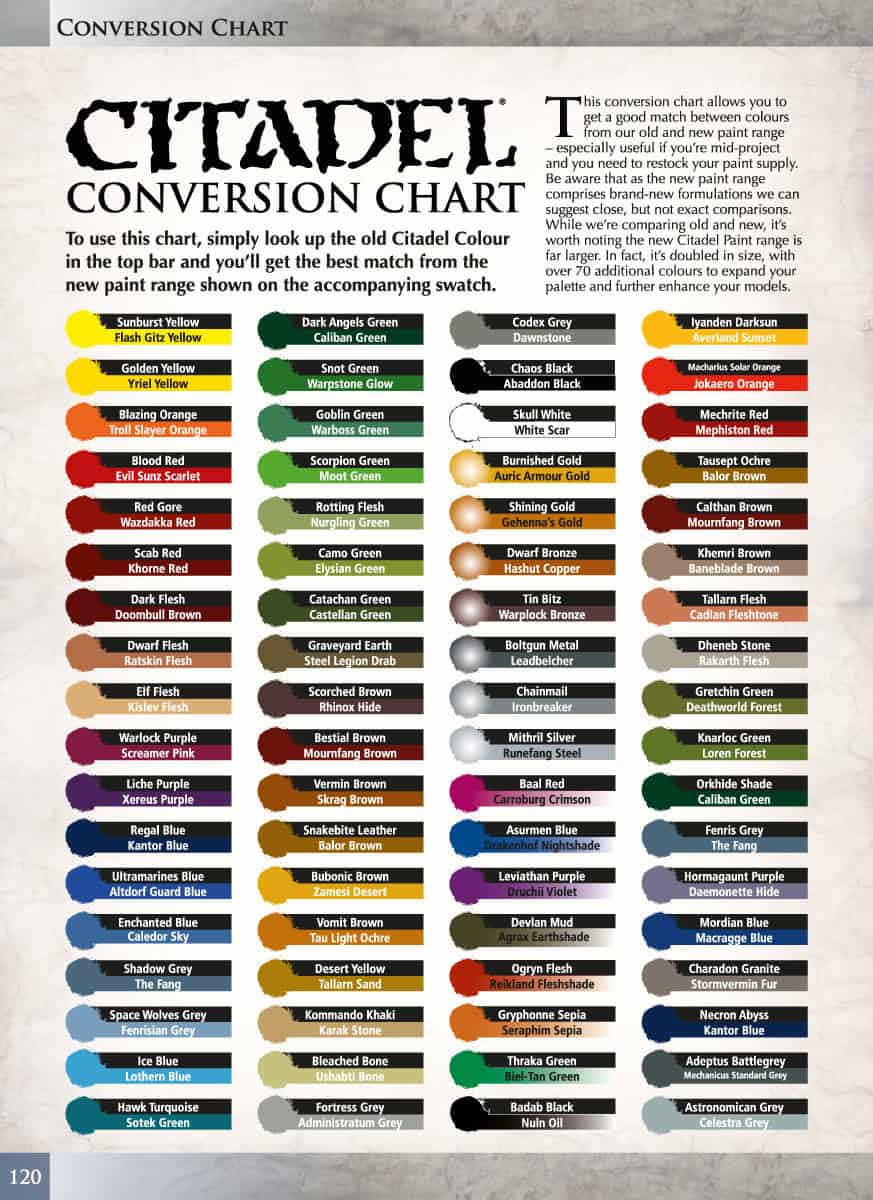 Need a quick guide to figure out whether that old pot of Snot Green is now Warpstone Glow? You’re in luck because they have this Citadel paint conversion chart, which you can download here. Think of it as your pocket companion for navigating the modern Citadel paint range while giving a nod to the classics.
This handy reference is a must for hobbyists who find themselves digging through a pile of old Citadel paints or want to maintain consistency in their army’s look. The days of guessing whether your Space Marine was originally painted with Regal Blue or Kantor Blue are over.
Now, you can convert your beloved old paints to their newer equivalents and keep your army cohesive.
Using the Current Citadel Paint Chart Effectively

Whether you’re just starting your Warhammer journey or already have a hobby desk overflowing with minis, the current Citadel paint colour chart is your shortcut to getting the most out of every paint pot.
And hey, Citadel didn’t make things easy over the years, with their old paint names evolving into new, more dramatic titles. A quick paint conversion chart is essential if you’re ever confused about whether you’re supposed to be using Mephiston Red or some elusive blood-red cousin from 2009.
So, let’s break down this chart and get you ready to paint miniatures like the true commander of the battlefield you are. If you want to see the conversion charts for companies like the Army Painter or Monument Hobbies, check those out here.
Exploring the Latest Citadel Colour Chart Updates
Citadel has come a long way since the days of Goblin Green bases, and your collection of paints probably spans multiple generations of their range. Luckily, there’s a clear path to finding the modern equivalent of the colors and how to choose yours!
This Citadel Color Chart PDF will have your answers, and it is up on Games Workshop’s site, or you can download the PDF here.
Red Paints: Citadel Colour Chart Updates
 Warhammer wouldn’t be Warhammer without bold, bloody reds, and Citadel has gone through its fair share of red paint iterations over the years. Case in point: Blood Red that’s been replaced by Evil Sunz Scarlet.
Fear not; this new shade brings the same intensity, perfect for making your minis stand out on the battlefield.
Blue Paints: Citadel Colour Chart Updates
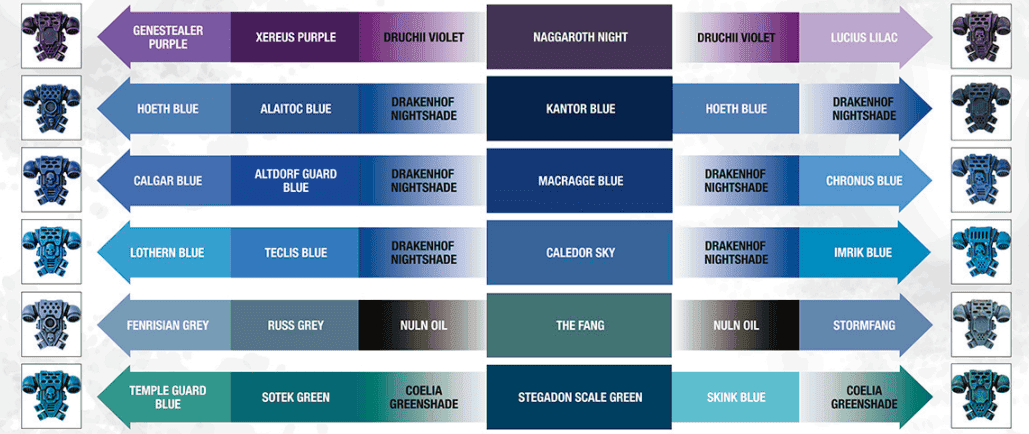 Few colors are as iconic in Warhammer lore as Ultramarines Blue. But if you’re wondering what to do with that old pot of Ultramarines Blue, the modern equivalent you’re looking for is Altdorf Guard Blue
Green Paints: Using the Citadel Colour Chart
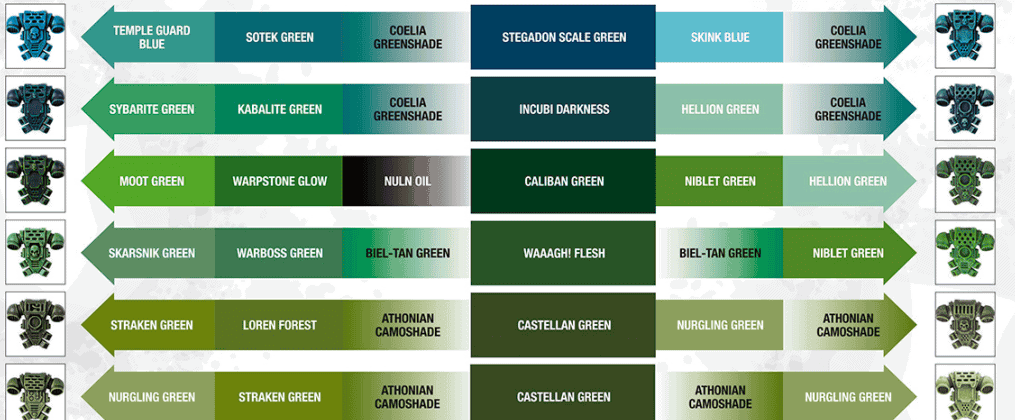 Orks and Nurgle lovers, listen up. You probably remember the vibrant Goblin Green, well, it’s been reimagined as Warboss Green.
Grey & Metallics: Citadel Paint Colour Chart Highlights
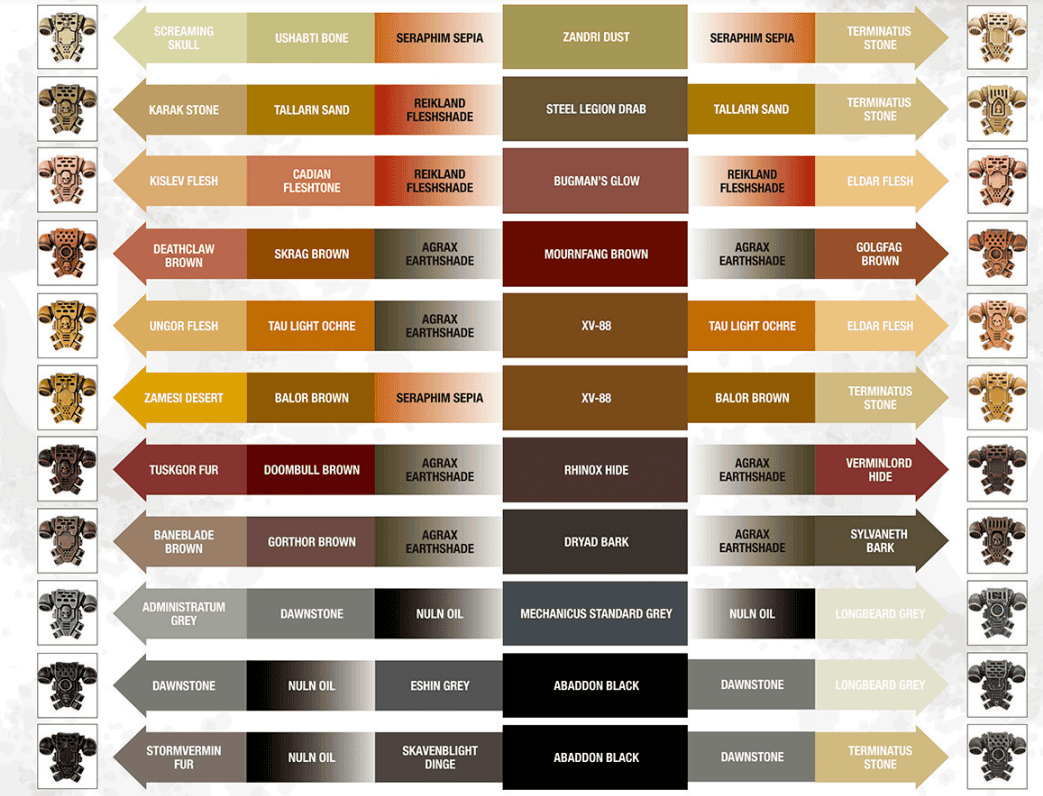 Metallics and greys are the unsung heroes of miniature painting. Old-timers might remember Boltgun Metal, one of Citadel’s most iconic metallic paints.
It’s now known as Leadbelcher, a name just as gritty and powerful as its predecessor.
 Similarly, Codex Grey (once the go-to neutral grey) has been revamped as Dawnstone.
How to Use the Citadel Paint Chart for Beginners
If you’re new to painting Warhammer miniatures, the Citadel Paint Color Chart might look a little like ancient arcane text. But don’t worry—decoding it isn’t as hard as summoning a Daemon. With the right paints and a little patience, you’ll turn that grey plastic into a work of art worthy of the Emperor.
Let’s break down how to pick the best combination of base, layer, and shade paints, so your miniatures can dominate the tabletop both in battle and style.
Base, Layer & Shade Combinations with the Citadel Paint Chart
Getting the right color scheme for your miniatures is half the battle, and the paint chart Citadel system is built to make that easy. To start, you’ll need a base paint; this is the core color that forms the heart of your model. Think of it like setting the stage for what’s to come.
Let’s say you’re painting an Ultramarine. Your first step is to grab Macragge Blue as your base coat. This iconic color is perfect for that rich, loyalist blue. Once it’s on and dry, it’s time to add some depth.
Reach for Altdorf Guard Blue, a layer paint designed to highlight the armor’s raised surfaces and edges. Just a light touch on the edges will make the blue look more vibrant and natural.
Finally, we need to shade the model to bring out the fine details. Drakenhof Nightshade is perfect here, it flows into the recesses, giving shadows to the armor’s crevices and making those Ultramarine pauldrons look like they’ve weathered the long war. These three paints —Macragge Blue, Altdorf Guard Blue, and Drakenhof Nightshade —work together to create a striking finish.
Advanced Techniques Using the Citadel Colour Chart
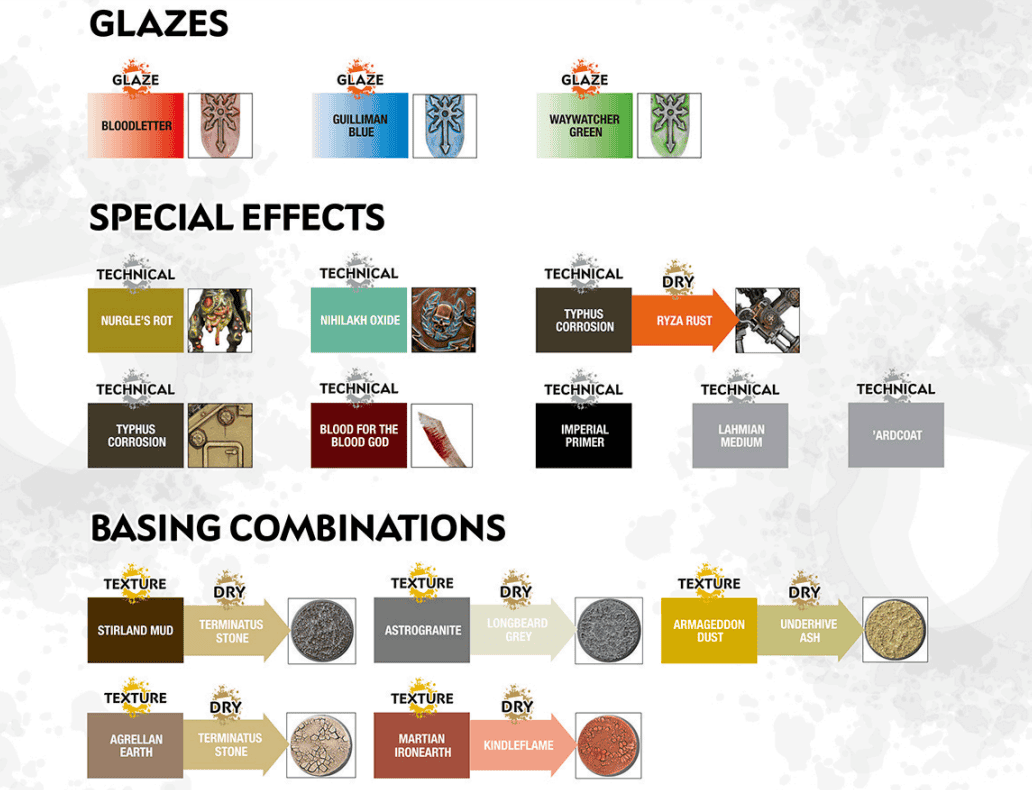 Once you’ve mastered the basics, it’s time to push the boundaries. Layer paints aren’t just for simple highlights anymore—when used correctly, they can create stunning gradients and depth that will make your miniatures look like they’ve stepped straight off a display shelf.
For example, blending Evil Sunz Scarlet with Wild Rider Red on your Blood Angels will give a smooth transition from shadow to light on their armor. The trick here is thinning your paints with water or medium to create a more transparent layer, allowing the colors to gently transition into one another. Patience is key, but the results are worth it.
Don’t forget about shade paints—they’re not just for quick washes. You can use them with more precision, applying Nuln Oil carefully in small recesses or using Seraphim Sepia for weathering effects on parchment or bones.
By focusing on individual areas rather than slathering a wash over the entire model, you’ll bring out those intricate details with a more professional touch.
Final Thoughts on the Citadel Paint Colour Chart
Whether you’re painting your very first Space Marine or adding battle damage to your thousandth Chaos tank, the Citadel paint colour chart is your secret weapon for keeping every miniature looking its best.
That’s right, the Citadel paint conversion chart makes it easy to match those long-lost classics, find their modern twins, and keep your army’s colors consistent from base coat to final highlight.
So turn your paint rack chaos into organized perfection, because with the right colors in hand, even a humble pot of Leadbelcher can make you feel like a master of the hobby.
The Ultimate Guide To Painting Miniatures