Here’s your guide to the Emperor’s mighty Thunder Warriors and how they would play in Warhammer 40k with new rules and more.
Thunder Warriors were the Emperor’s first shot at super-soldiers: huge, mean, and built to end the Unification Wars the hard way. They won him the war for Terra, then got “retired” the moment something sleeker and easier to control showed up.
Games Workshop still has never official rules, but that hasn’t stopped the community from cooking up homebrew stats, conversions, and full-on codex additions.
Here’s what Thunder Warriors could look like on a modern Warhammer 40k table, including a quick rules idea and why the “what if they survived?” crowd will not let this idea die.
Who Were the Thunder Warriors in Warhammer 40k?
Updated February 15th, 2026, by Rob Baer with new rules and ideas for 10th Edition Warhammer 40k.
- Thunder Warriors were the Emperor’s first super-soldiers: built to win the Unification Wars, then quietly “retired” once the Adeptus Astartes were ready.
- No official 40k rules: GW still hasn’t given them a real datasheet, so the community keeps the dream alive with homebrew stats, conversions, and fan codexes.
- How they’d play: elite shock troops with a fuse that hit like a truck early, then start falling apart via attrition/decay/self-damage mechanics.
- Easy 10th ed rules pitch: think Marine-plus bodies (T5, W2 or W3) and unstable “prototype” wargear with risky overcharge spikes that can punish greed.
- Why the return rumors never die: lore threads like Arik Taranis and “Thunder Astartes” style experiments keep the door cracked for a Terra remnant, black project, or rogue warband comeback.

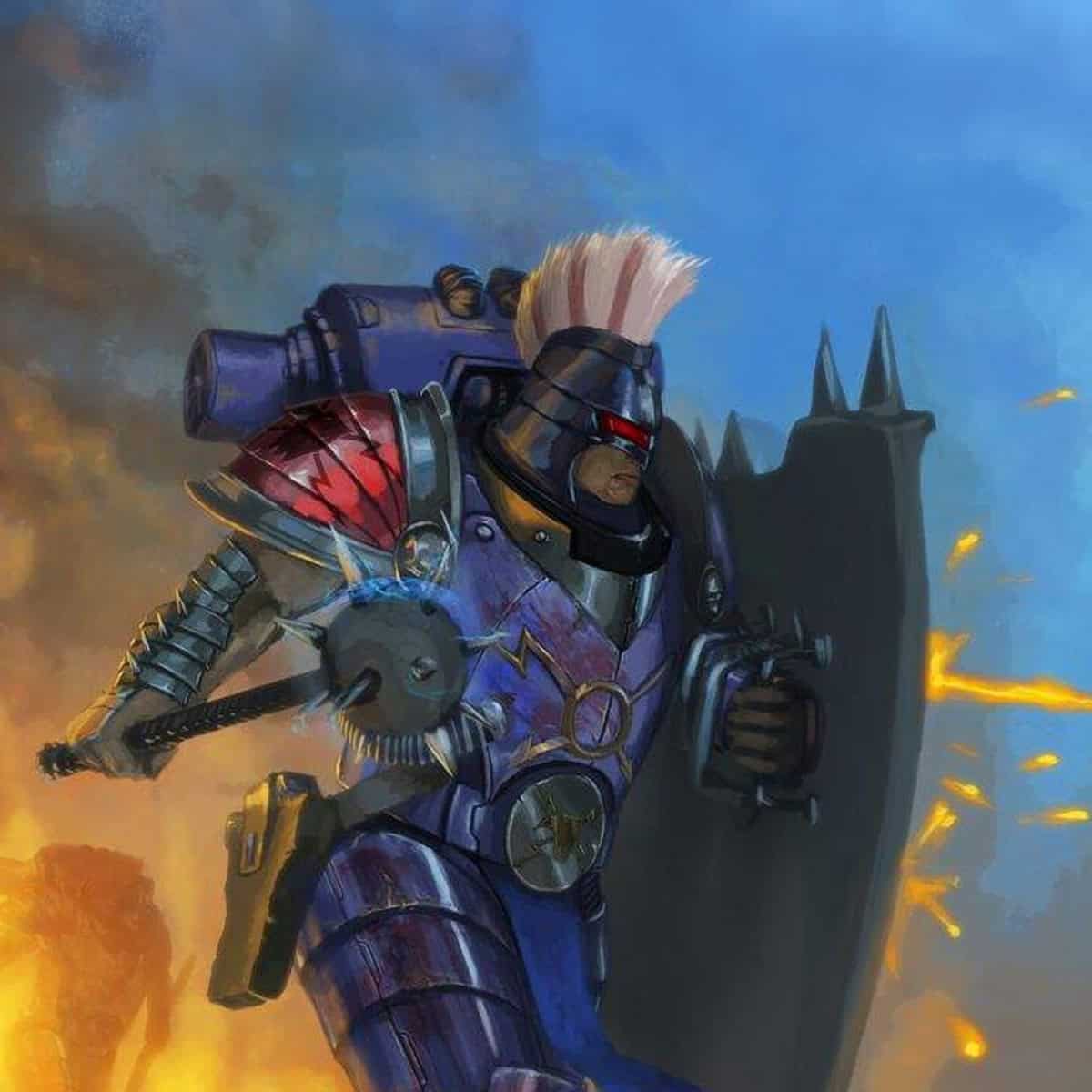
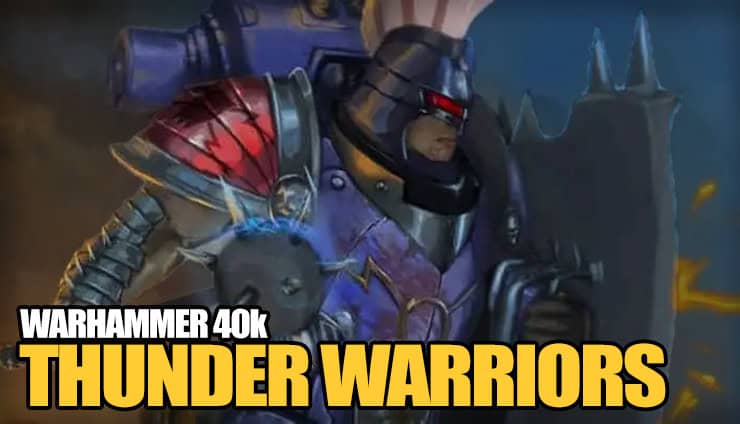
Before the Space Marines became the galaxy’s favorite poster boys, the Emperor had a rougher prototype: Thunder Warriors. They were designed to smash Techno-Barbarians during the Unification Wars, and they even had an early miniature back in classic Warhammer 40k ranges.
They were called Thunder Warriors because Big E’s iconography back then leaned hard into the thunderbolt, so the symbol showed up across their armor. Also, at the time, the Emperor was still building his power base, not running a polished interstellar empire. He didn’t have the resources he later used for the Space Marines, so the process was faster, nastier, and full of corners cut.
The big catch: Thunder Warriors were powerful but genetically unstable, and their short shelf life was a major reason they were replaced. Once the Emperor had a better, more sustainable tool for his grand plan, the Thunder Warriors started “disappearing,” and official records go very quiet after that.
If you’re trying to play Thunder Warriors on the tabletop, most homebrew takes land in a pretty consistent lane:
- Elite shock troops with a fuse. They hit like a truck early, but the longer the fight goes, the more the wheels come off.
- Unification-era brutality. Less refined armor, more raw muscle, and wargear that feels like “experimental prototypes” rather than mass-produced perfection.
- Volatile output. Big damage spikes and scary melee profiles, but with a built-in price tag: self-damage, attrition, or reliability checks.
The Fate of the Thunder Warriors in Warhammer 40k Lore
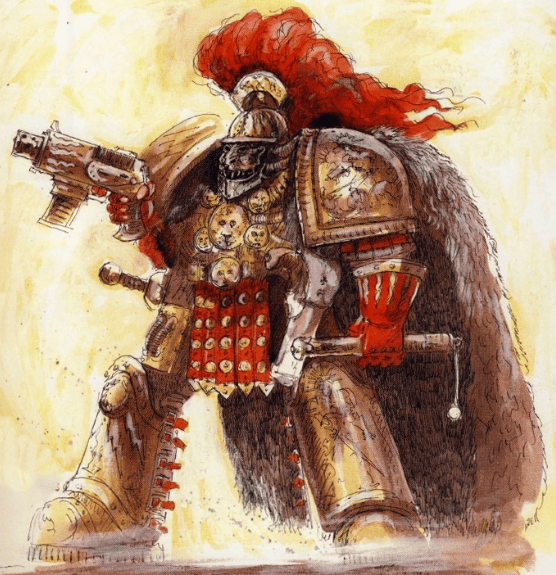
The Thunder Warriors were wiped out at the end of the Unification Wars, a crucial turning point in early Warhammer 40k history.
On Terra, the Thunder Warriors were the backbone of the Emperor’s push to unify the planet. They tore through warlords, close combat specialists, techno-barbarians, and mutant filth with pure, blunt-force momentum. The problem was never effort. The problem was stability. They were brutal, hard to rein in, and they were burning out fast thanks to genetic degradation.
Then the next tool arrived: the Adeptus Astartes. Longer-lasting. More consistent. Easier to manage. Once Space Marines were ready to step into the spotlight, the Thunder Warriors became a loose end the Emperor didn’t want hanging around.

During the final battle of the Unification Wars, the Siege of Mount Ararat, the Emperor pulled the biggest backstab in history (and yes, it would be a spicy scene idea for the Cavill Amazon series). The Thunder Warriors who survived didn’t get medals or a retirement plan. Officially, they died in battle. Unofficially, the implication has always been the same: they got purged to clear the board for the more controllable Space Marines.
If you’re sketching rules out for Thunder Warriors that “feel right,” the lore practically writes the drawbacks for you!
- Decay clock: the unit gets worse as the game goes on (or takes mortal wounds when pushing too hard).
- Rage control: bonuses when charging or fighting on objectives, paired with penalties to fallback, actions, or leadership-style tests.
- Unreliable tech: high-power profiles that can fizzle, overheat, or just straight-up delete the user if you get greedy (think plasma that kills the bearer on a one or two).
How Thunder Warriors 40k Rules Could Work on the Tabletop

Thunder Warriors likely had early (prototype) versions of weapons that Space Marines use today, plus plenty of experimental ammunition and sketchy “it works until it doesn’t” plasma-adjacent tech. Physically, Thunder Warriors are bigger and meaner than regular Space Marines, but with less refined armor and a whole lot more risk baked into the package.
Their stats and rules ideas usually boil down to four main themes:
- Role: elite shock infantry that wants to get stuck in and trade up.
- Durability: chunky bodies, decent toughness, but not wrapped in the Emperor’s best toys.
- Damage: high melee threat with the option to spike ranged output using unstable wargear.
- Drawback: volatility, self-harm, and some kind of “they are falling apart” timer.
Taking all this into consideration, in 10th edition, Warhammer 40k Thunder Warriors stats could be something like this:
That puts a Thunder Warrior in the “elite but not immaculate” bracket: tougher and punchier than a standard Marine, but not rocking the same level of refined kit you see on the truly premium bodyguards like Custodians:
You could bump them up closer to the level of the Emperor’s current bodyguard, but the cost and the drawbacks would have to do real work. If the points were right, it would be very easy to justify them as a rare, elite hammer unit that hits like a meteor and then starts paying interest.
The differentiator is not just “stronger bodies.” It’s the volatility. Their weapons and biology are where you hang the whole theme:
- Experimental overcharge: big upside, ugly downside. On a roll of one, regardless of overcharging, they would be slain.
- Higher risk to push the red button: to overcharge, you would have to roll a 3+ to see if you even could fire the overcharged profile.
- One-time “special issue” punch: once per battle, they can fire special ammunition rounds or trigger a tech surge that boosts damage at a cost.

Points-wise, they would likely sit a bit above a normal Marine and well below a Custodes, with the gap justified by “less refined armor, more volatile output, and a shorter-lived peak.”
Warhammer 40k Books Featuring Thunder Warriors
Snag your new Black Library books, and give us a high-five in support! Every qualifying purchase helps Spikey Bits keep the lights on and the fun going.
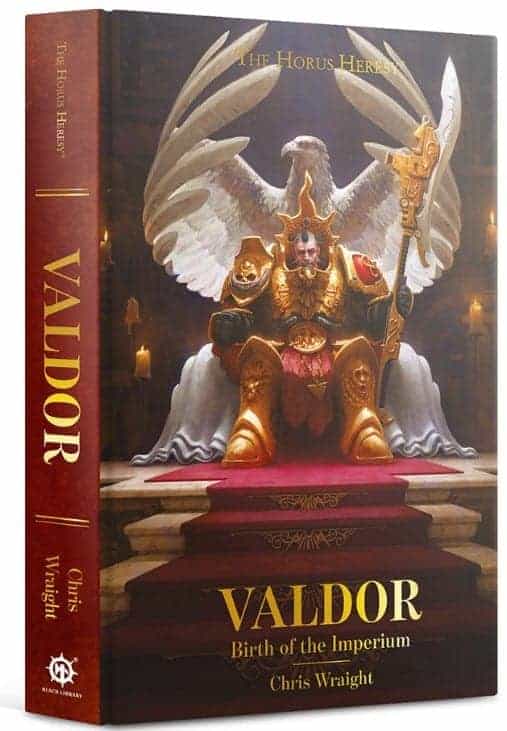
Snag these books, and give us a high-five in support! Every qualifying purchase helps Spikey Bits keep the lights on and the fun going.
If you want Thunder Warrior lore that actually gives you usable flavor for rules, conversions, and campaign hooks, these are the go-to reads:
- Valdor: Birth of the Imperium by Chris Wraight
Thunder Warrior-specific payoff: the “end of the line” vibe, and the cold, administrative reality of how they get removed from the Emperor’s plans. - The Outcast Dead by Graham McNeill
Thunder Warrior-specific payoff: Arik Taranis as a survivor, plus the gritty look at what “left behind by history” can look like on Terra. - The Devastation of Baal by Guy Haley
Thunder Warrior-specific payoff: a notable reference that reinforces how mythic and tragic they are in-universe, which is perfect fuel for a “secret remnant” narrative.
Could Thunder Warriors Return to Warhammer 40k?
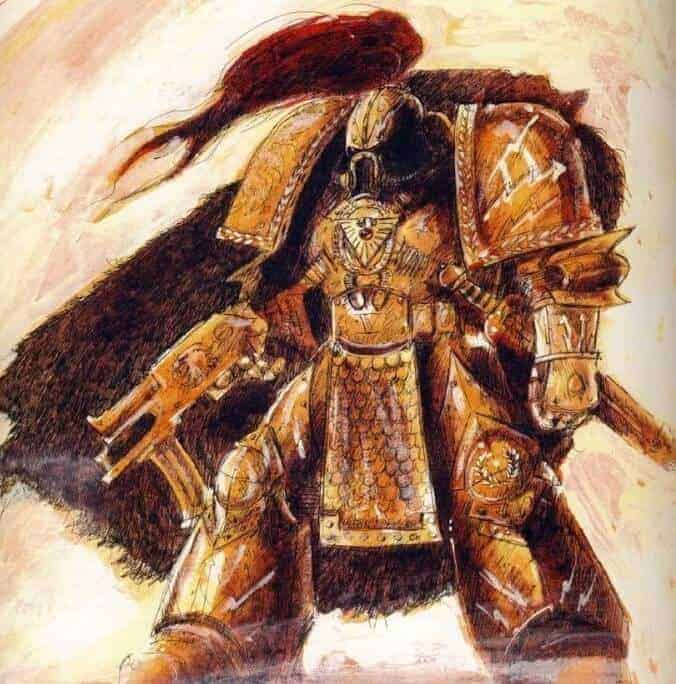
In the book The Outcast Dead, Arik Taranis and his Lieutenant, Ghota, managed to survive the rest of the Thunder Warriors’ 40k eradication and found a dead traitor marine, harvesting his progenoid gland. Otherwise known as Geneseed.
Somehow, they managed to implant the genetic data into themselves, making them somewhere between the two warriors. (Probably called a Thunder Astartes).
After that, the story goes quiet, which is exactly why the “could they come back?” conversation never really ends. If you want three plausible return theories that fit both narrative and tabletop logic, here are the best ones:
- The Terra remnant: a hidden pocket of survivors and stitched-together “Thunder Astartes” experiments in the underhives. Tabletop hook: elite infantry with brutal melee and a decay mechanic, built for small-scale, high-drama games.
- The sanctioned black project: desperate times lead to desperate tools, and someone in the Imperium tries to recreate the Thunder Warrior method as a stopgap. Tabletop hook: unreliable, high-output units with strict limitations, like once-per-game spikes and painful self-damage.
- The relic warband: a rogue faction or unknown patron turns surviving Thunder Warriors into a roaming problem the Imperium has to deal with. Tabletop hook: an aggressive, mid-model-count force that plays like a battering ram, with wargear that is nasty but risky.
None of that breaks the setting. It just requires someone deciding that “obsolete” is still useful when the galaxy is on fire.
Final Thoughts on the Warhammer 40k Thunder Warriors
If you want to field Thunder Warriors in Warhammer 40k (or a “Thunder Astartes” offshoot) and have it feel right, the identity is pretty simple:
- Hit hard: elite shock troops that want to bully the mid-board and crack things open in melee.
- Hold… for a while: tough bodies, but not flawless armor, and not designed for long, clean wars.
- Pay the price: unreliable wargear, attrition, and risk mechanics that make every big play feel like a gamble.
That is the Thunder Warrior in one concise rules package that’s basically peak violence, until the bill shows up, that is.
See How the Emperor Started the Imperium Here!