Check out the top 40k tournament army lists for Necrons, Astra Militarum, and Ultramarines from the Clutch City GT, which saw some great factions hit the podium.
The latest Clutch City GT results are real-time insights for anyone who likes usable 40k tournament tech.
Now we’re breaking down the top 40k army lists from the event and calling out the choices that mattered so you can spot meta trends fast and tune your own roster.
Top 8 Warhammer 40k Army Lists: 2026 Clutch City GT
Studying these winning army lists for their tactical synergies can provide great insights for playing your army since the latest balance dataslate rules changes and points updates.
If you want to elevate your game even further, consider applying to Team USA to compete at the World Team Championships each year!
Thanks to Best Coast Pairings, we can look back at the event as if we were all there ourselves. Click this special promo link to save $20 on a year’s subscription to BCP.
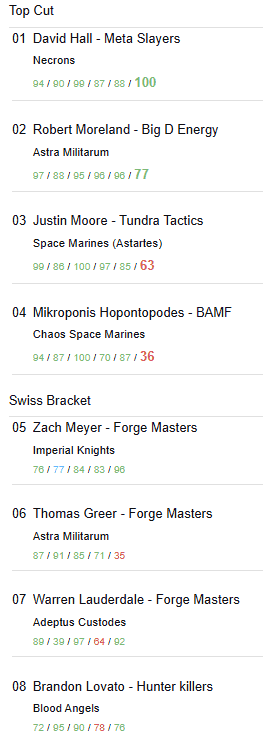
1st Place: David Hall, Necrons Army Lists
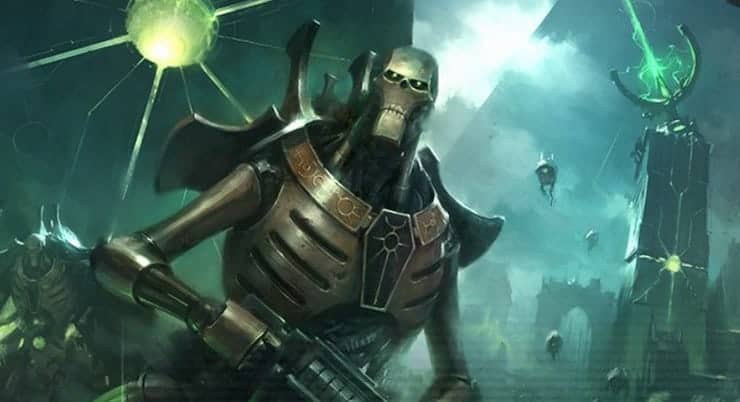
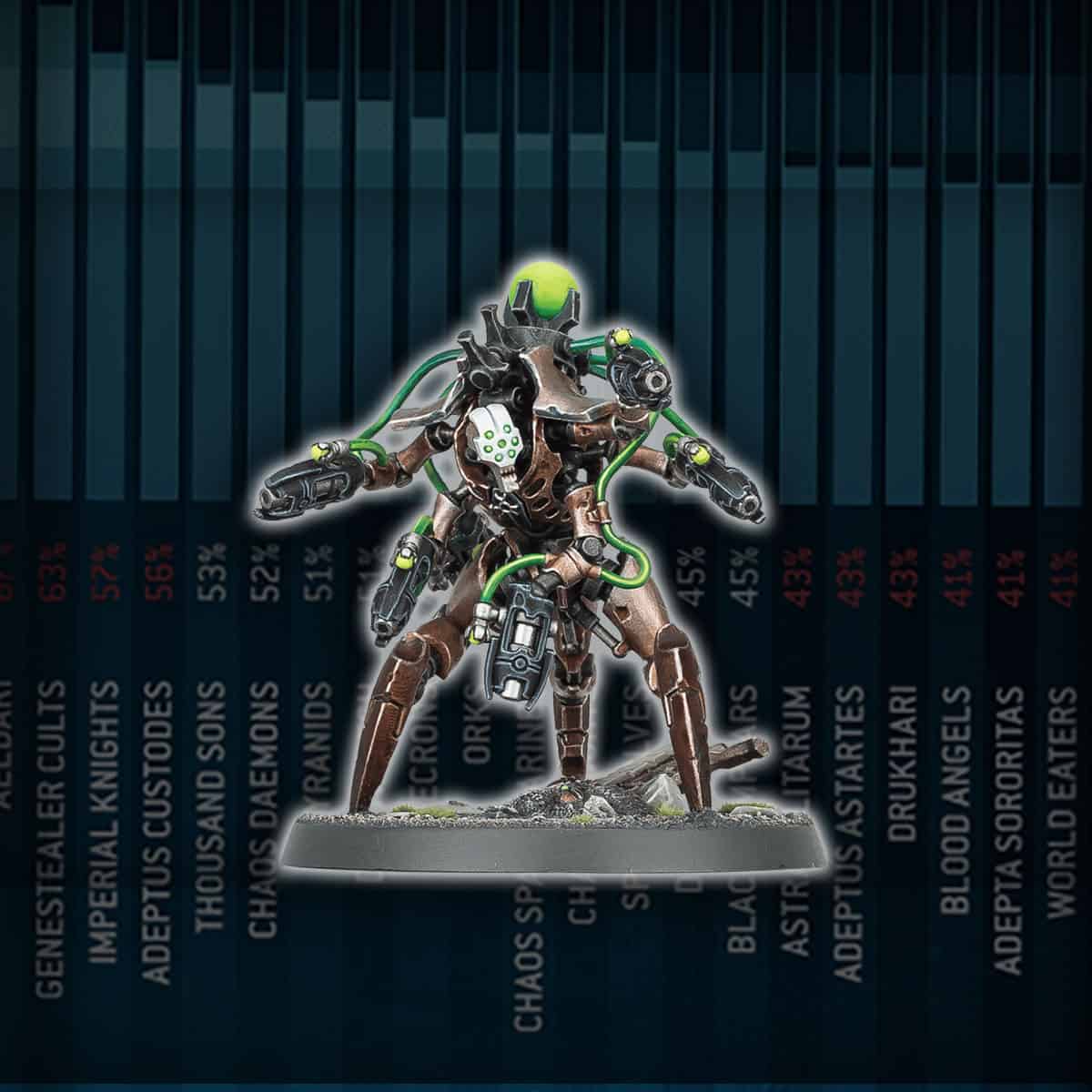
David Hall’s Necrons Pantheon of Woe army list is basically the galaxy’s meanest problem-solving method: slam four C’tan onto mid-board, dare the opponent to deal with it, and let the little units quietly stack points while everyone panics about the star gods. It is not trying to win a fair fight. It is trying to make the table feel too small, too dangerous, and too stressful for the other army to execute its plan.
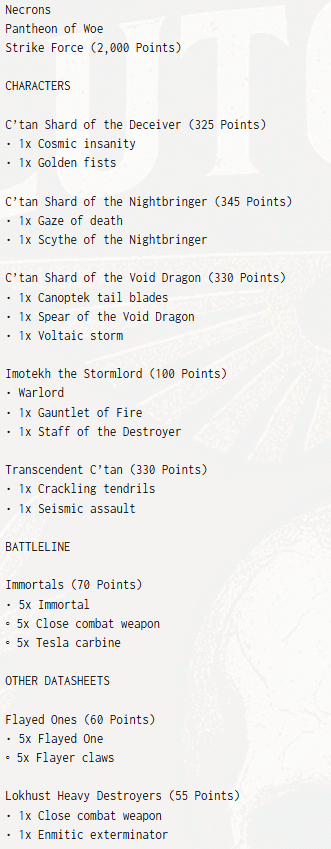
The C’tan Shard of the Deceiver helps open spaces
This one is the list’s mischief lever. The Deceiver is there to mess with deployment expectations and early positioning, and to be the C’tan that makes the opponent second-guess where the real punch is coming from.
While the other shards are happy walking straight into the middle like a wrecking ball, the Deceiver plays the “wrong answer” game: shows up where it should not, pressures angles that feel safe, and forces the opponent to either over-commit screens or accept that something important is about to get touched.
The C’tan Shard of the Nightbringer singles out individual threats
This is the list’s “delete a problem” button. Nightbringer exists to walk into the kind of unit people normally rely on as an anchor and turn it into a bad memory. It is the shard that makes elite infantry bricks, big monsters, and “this will hold forever” units suddenly look extremely mortal.
C’tan Shard of the Void Dragon helps target down enemy armor
Void Dragon is the bully for anything with an engine, a hull, or an attitude problem. This list loves seeing vehicle-heavy builds across the table because it gets to play a simple game: “that one, then that one, then that one.” Even when there are not a ton of vehicles, Void Dragon still plays a nasty role as a mid-board enforcer that punishes anything trying to contest objectives with durable bodies.
Imotekh the Stormlord is the army’s manager
Imotekh is the quiet manager holding the clipboard while the C’tan go commit crimes. He brings a real character to the list that can sit back and keep the army functioning while the shards do the heavy lifting.
He is not the headline damage dealer here, he is the piece that makes the list feel like it has an actual Necrons backbone instead of being four kaiju and a prayer.
The Transcendent C’tan is the flexible shard
This is the one that fills whatever gap the matchup creates. If the opponent tries to play cagey and avoid the big brawlers, Transcendent helps chase them down or punish them for peeking. If the opponent is trying to rush mid-board, it becomes another body that is miserable to shift and absolutely happy to trade up.
Immortals are the home-base grownups
Immortals are the sensible unit in a list that is otherwise made of cosmic nightmares. They sit on a safe objective, do basic board control, and contribute chip damage where needed. They are not here to win fights. They are here to make sure the list does not lose on points while the C’tan are busy being dramatic.
Flayed Ones offer up cheap utility
Flayed Ones are the list’s “show up and be a problem” utility knife. They are cheap, they are annoying, and they are perfect for getting in the way. They can screen, they can threaten light infantry, and they can be that irritating unit that forces the opponent to waste a real activation cleaning them up.
They support the plan by buying time. Every turn the opponent spends swatting Flayed Ones or worrying about where they might appear is a turn the C’tan gets to take better trades.
Lokhust Heavy Destroyers are the list’s efficient gun platform
It is not a centerpiece, but it matters because it gives the army a real ranged punch into the kinds of targets the Tomb Blades and Immortals only tickle. It also helps finish off units that a C’tan has mauled but not fully cleared, which is a big deal in a list that wants to keep moving forward rather than standing around to “make sure.”
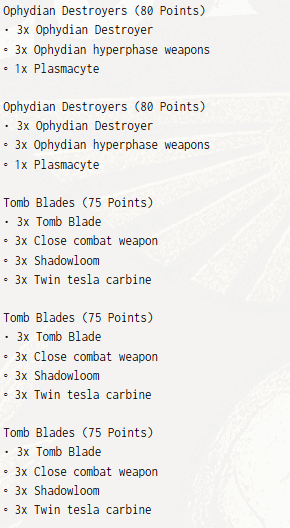
Two Ophydian Destroyers are classic Necrons utility killers
They are there to appear where the opponent did not want a fight, pick up a small scoring unit, and force the opponent to turn around. They are also excellent for trading into backfield pieces, tagging objectives, or creating those “if this lives, it scores” situations that pull resources away from the mid-board.
In this list, their job is not to be the main cause of damage. Their job is to make the opponent’s cleanup crew work overtime.
This is one of the sneaky matchup swingers: against armies that rely on fragile backfield scoring or mission play, two Ophydian units force constant respect.
Three Tomb Blades add consistency to scoring
Tomb Blades are the list’s real scoring engine. Fast, annoying, and perfectly suited to grabbing objectives, doing actions, and generally being everywhere the opponent does not want to spare attention. Shadowloom helps them stick around just long enough to be a nuisance, and tesla keeps them relevant as light infantry and chaff.
They support the plan by being the pieces that actually win the mission while the shards win the vibe check.
The redundancy of three units makes this list consistent. It makes it so that the list can lose a unit and still have plenty of speed to keep the scoreboard moving. They can also layer screens and move blocks in a way that makes it harder for the opponent to reach the C’tan with the pieces they actually want to use.
This is also where the list starts feeling unfair to slower armies. The C’tan say “come fight.” The Tomb Blades say, “Also, good luck catching this.”
How This Necrons Army List Wins
The cute part is that this is not even a “C’tan and friends army list.” It is actually “C’tan and a scoring escort.” The big shards bully the center, collapse flanks, and force bad trades. The smaller units play keep-away, tag objectives, and pop up in annoying places at exactly the wrong time for the opponent.
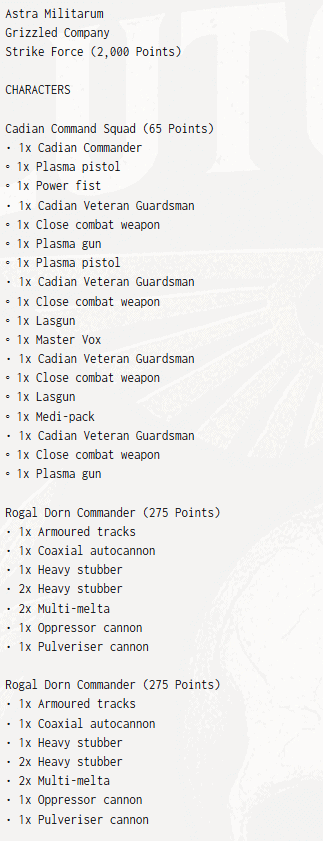
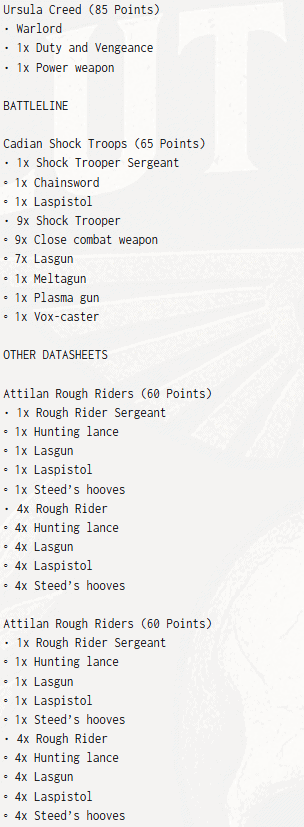
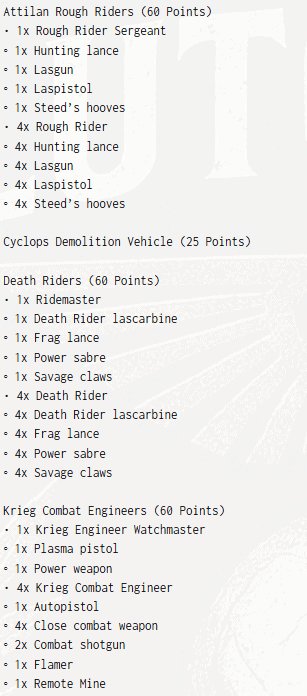
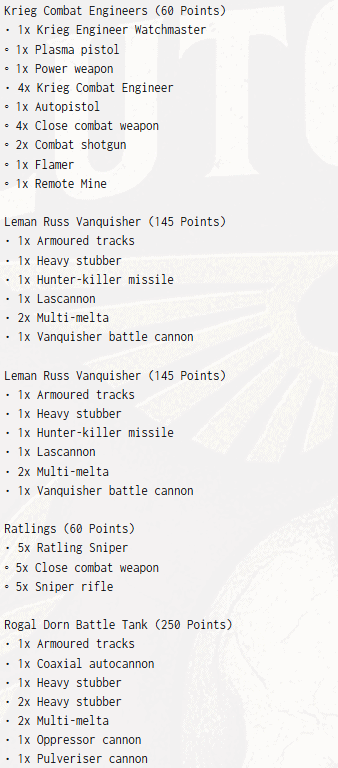
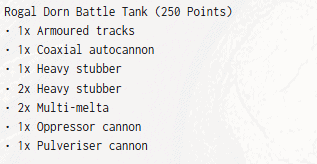
2nd Place: Robert Moreland, Astra Militarum Army Lists (Imperial Guard)

How This Astra Militarum Army List Wins
If somebody misses the days of rolling up with a parking lot full of armor and daring the opponent to do something about it, this Grizzled Company list is that energy.
Creed and a Cadian Command Squad keep the orders flowing while Rogal Dorns and Vanquishers do the heavy lifting, erasing hard targets and slamming the mid-board shut.
The supporting cast of Rough Riders and Death Riders trade up and steal space, Krieg Engineers scrap on objectives with mines and close-range nastiness, Ratlings poke key pieces, and a Cyclops sits there like a cartoon trap, just waiting for someone to step wrong.
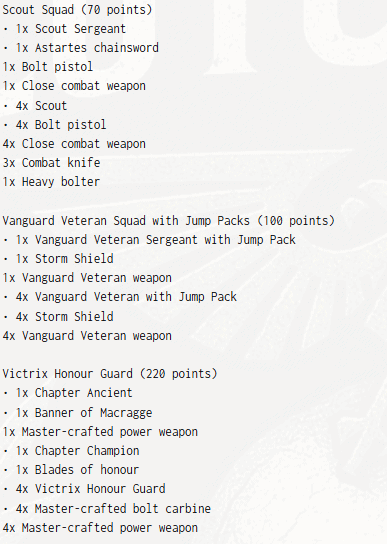
3rd Place: Justin Moore, Space Marines Army Lists (Ultramarines)
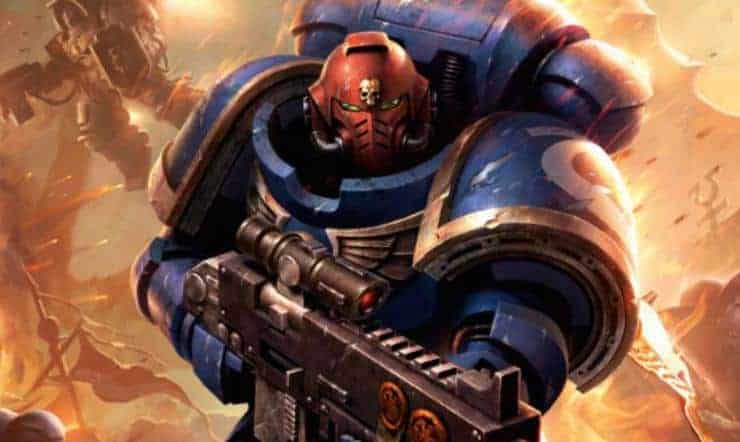
How This Ultramarines Army List Wins
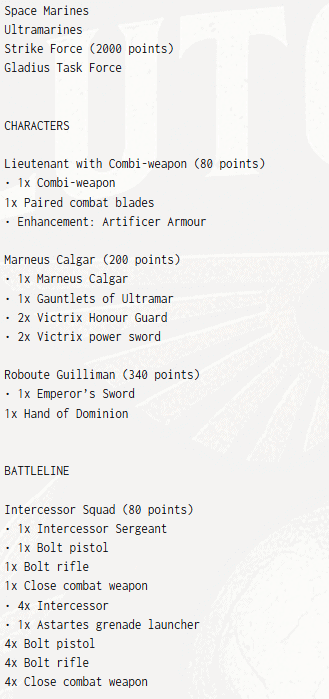
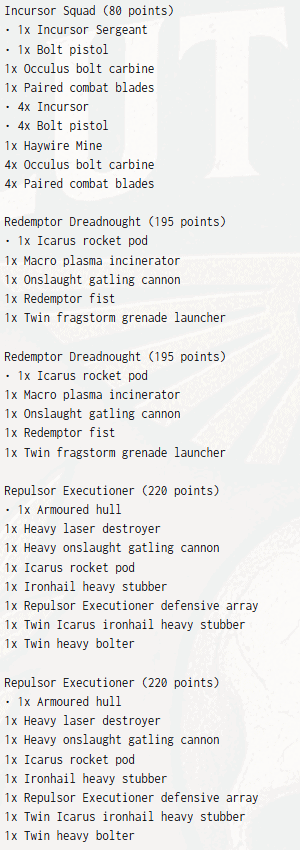
This Ultramarines Gladius build is the kind of list that wins games by making the mid-board a no-fly zone and then politely informing the opponent that every lane is covered.
Guilliman and Calgar park themselves where it matters, the Victrix crew turns into a stubborn “come deal with this” brick, and the heavy armor does the actual bullying. Double Repulsor Executioners and twin Redemptors throw out flexible, reliable firepower that deletes problem units and punishes anyone trying to play cagey behind terrain.
The sneaky Lieutenant with a combi-weapon is there to be a nuisance, picking angles and making secondary plans feel awkward, while Scouts, Incursors, and Intercessors handle the unglamorous mission work. Then the Jump Pack Vanguard shows up as the clean-up crew, trading onto an objective or finishing whatever limped away from the shooting phase.
Final Thoughts from us on Warhammer Clutch City GT Army Lists
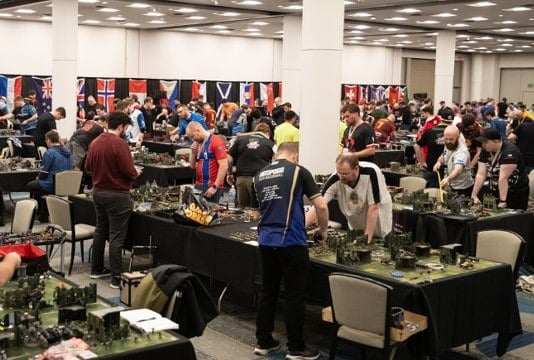
Clutch City’s podium felt like a perfect snapshot of how games get won right now: not by one cute trick, but by showing up with a plan that forces ugly choices from turn one.
Necron army list did it by turning the mid-board into a haunted house with four C’tan, then letting Tomb Blades and friends quietly run the mission like they own the place.
Next, the Astra Militarum army listwent full armored tax audit, stacking orders and steel until the opponent ran out of ways to crack the parking lot.
And finally, the Ultramarines ‘ Amy list played the clean, disciplined version of violence, locking lanes, bullying the center, and using fast pieces to mop up points once the board was already “solved.”
If these lists share a lesson, it’s this: pressure plus scoring wins events. Make the opponent spend resources on the wrong problem, keep the mission ticking, and let the big pieces do what they do best.
See all the Top Warhammer Army Lists & Latest 40k Tournament Schedule
What do you think of the results from the Warhammer 40k Clutch City GT for Necrons, Astra Militarum, and Ultramarines army lists?