
WTC 40k’s finances are under the microscope as tournament organizers explain how expected profits became a significant loss.
Losing €20,000 on a tournament isn’t necessarily a huge deal for a company that puts on a bunch of events. But planning to make six figures and ending up in the red? That’s a pretty big miss. The original Leoben event spreadsheet projected €308,100 coming in against €169,477 in costs for the 2025 event. The final financial comparison showed roughly €218,055 in income and €238,357 in expenses. That’s €90,045 less income than expected, another €68,880 in extra spending, and a whopping €158,925 swing for one event.
Both spreadsheets came out alongside the WTC’s recent statement explaining why it cut ties with co-founder Işık Belül. Of course, all this is happening while there’s already a public fight over GW hosting the event. And if you’ve ever helped fund a national team trip to the World Team Championship, this matters to you, too. Those entry fees eventually have to cover losses like this.
Sure, budgets are estimates. But when you’re off by more than the €99,805 the event made selling tickets, we think someone should’ve been checking those numbers.
- What’s happening: The WTC posted its Leoben spreadsheets alongside a statement explaining why it parted ways with co-founder Işık Belül.
- What we have seen so far: A budget showing a €138,623 profit closed at a €20,302 loss, about €90,000 short on income and €69,000 over on costs.
- What’s next: The WTC says it now has a tighter process for judging hosting bids, and we’d guess captains will want to see it work before the next venue vote (that part is our speculation).
The Leoben Budget Counted Money That Never Showed Up
First up, the bar money, because the WTC seems particularly unhappy about this one. The original budget expected €40,000 in bar sales with €13,500 in costs. That’s about €26,500 in profit right there. Except the final spreadsheet says Alpine Cup management, the company running Leoben that the WTC says Belül owns shares in, left all that money with the venue. According to the WTC statement, the rest of the team wasn’t even told how much that decision could hurt the event’s finances, much less even asked about it.
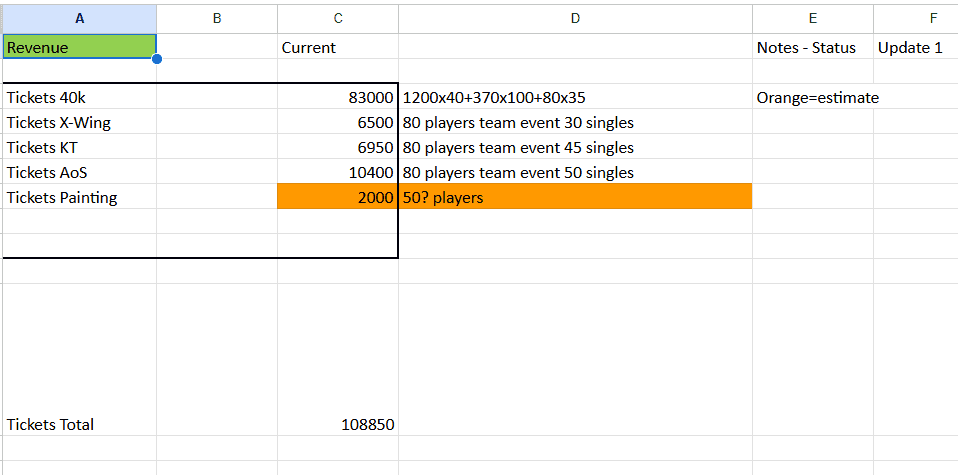
And that wasn’t the only income that never showed up. The AoS and painting events didn’t happen, wiping out €25,850. The Warmaster GT had 130 fewer players than expected, costing another €10,820. Then there’s €18,000 in secondary hotel income that never arrived, €16,250 in missing subsidies, and merchandise sales coming in €7,500 below expectations. That’s more than €78,000 in expected income that didn’t materialize, and we haven’t even included the bar money yet.
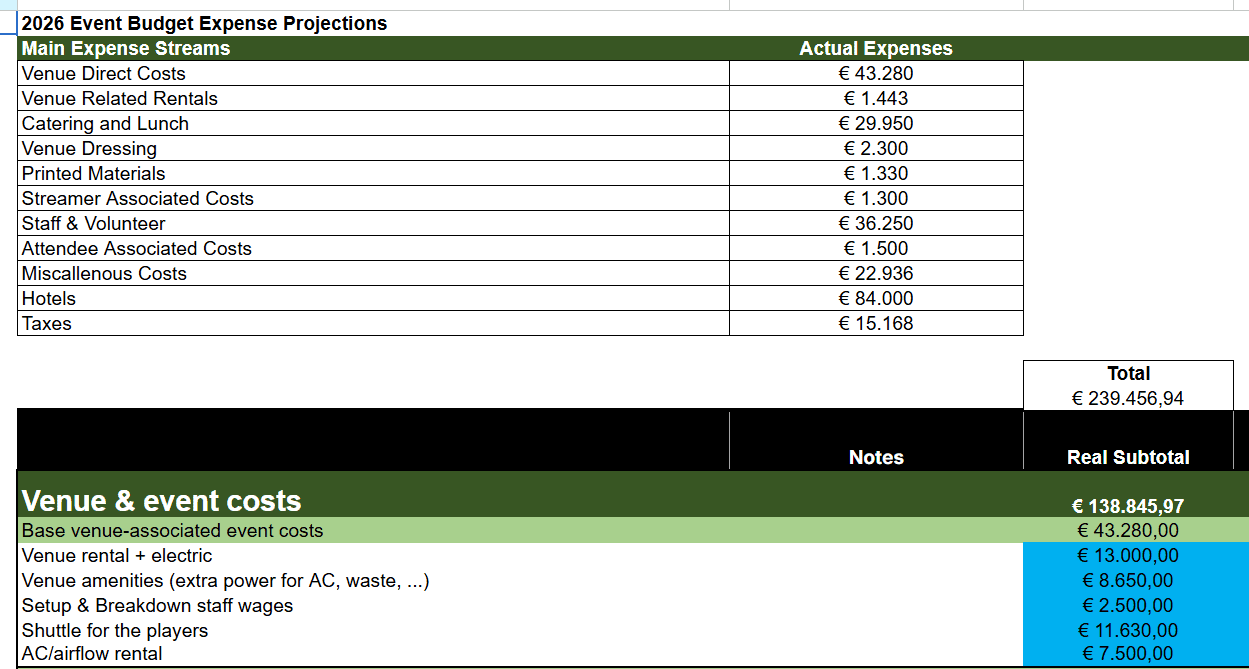
Then you’ve got the expenses. Including lunch in the ticket price added about €29,000, hotels cost €15,000 more than planned, and the venue came in €13,645 over budget. Of that venue overage, €7,500 was for air conditioning. Oh, and roughly €9,900 in taxes wasn’t budgeted for at all. If you’ve ever helped organize a local team event, you know how quickly hotel and venue costs can get away from you. But forgetting to account for taxes at an event this size? That’s a pretty big oversight.
Now here’s where the two sides really disagree. According to the WTC’s description of Belül’s own account, he largely blamed the loss on Kill Team and X-Wing not attending Leoben. But the final numbers tell a different story. Other events, additional teams, and extra staff apparently more than made up for those missing ticket sales, leaving a net gain of €9,375. The WTC also points out that everyone knew about the move back in February. So why weren’t the second-weekend hotel, transportation, and catering arrangements reduced once that was clear?
And here’s something else from that original spreadsheet. The WTC has mentioned a more conservative expected profit of €75,000 to €125,000, and that exact range appears in the budget as the “real expected profit.” So even the people putting the projections together apparently weren’t counting entirely on that €138,623 figure. Either way, the final result still missed that lower range by €95,302 to €145,302.
Nobody Seems to Have Caught the Slide Until It Was Over

So here’s the next question: who was keeping an eye on the money while all this was happening? The WTC says it kept asking for financial updates throughout the year but never received enough information to really track things. It says the detailed report didn’t arrive until after Leoben was finished. The team also says it wasn’t invited to the post-event debrief and had to piece things together using an Excel spreadsheet Belül provided.
And a couple of those expenses are worth looking at again. Remember that €7,500 air conditioning unit? The WTC says it may have been purchased instead of rented, and it might now belong to the venue. Naturally, the team wants to know who owns it and why the tournament paid for it. We’re talking about a single item worth more than a third of the entire event’s loss. There’s also €3,500 the WTC says it spent buying back leftover merchandise it had already paid to produce. As the statement puts it, that’s “effectively, WTC paying for it twice.”
Even the final spreadsheet has a problem. Its summary lists total expenses of €239,456.94, but the detailed breakdown says €238,356.96. That’s a difference of €1,099.98 with no explanation. Is it the biggest number in this whole mess? Not even close. But when you’re releasing financial records to explain what happened, people are obviously going to notice when the totals don’t match.
And that’s where the financial problems connect directly to the leadership split. The WTC points to several issues involving Belül, including potential conflicts of interest from his position at Weyland Yutani, an event supplier that signed a long-term sponsorship agreement in 2025. It also raises concerns about accountability, financial reporting tied to his Alpine Cup shareholding, and difficulties working together as a team. Of course, Belül’s earlier account challenges much of that. Based on what’s public right now, there’s no way to say definitively who’s responsible.
The WTC does acknowledge that its own procedures weren’t clear or strong enough, which is important. But that leaves a couple of pretty obvious questions. If leadership approved these budgets, who was supposed to question all that uncertain income or notice when the numbers started slipping? And why weren’t major decisions about things like the bar revenue and second-weekend expenses discussed and handled at the time, instead of becoming a problem months later?
One Bad Event Doesn’t Make the WTC Broke
Now, to be fair, the WTC makes a reasonable point about the bigger picture. It says the organization has maintained a positive net balance since 2023, with losses only during its first year in 2022 and at Leoben. Attendance has climbed from 370 people in 2022 to 1,600 in 2026, while the 40k tournament grew from 28 teams to 46. The WTC also says more partners are showing interest. So no, one bad tournament budget doesn’t mean the whole organization is broke. These spreadsheets only show what happened at Leoben, not everything in the WTC’s accounts.
Still, one event can tell you plenty about how the budgeting process works, or doesn’t. Someone needs to be able to look at a hotel estimate and say, “Hang on, are we sure about that?” before contracts get signed. The WTC says it’s been working with the Captains Council on a more structured way to evaluate future hosting bids. It’s also promising better planning, oversight, and decision-making. That all sounds good, but nobody outside the team has seen those changes put to the test yet.
And let’s not forget what’s happening around all this. Captains are considering whether GW should host the WTC, while GW has already taken over the ITC and operates its own World Championships of Warhammer. The WTC came out of the old ETC format with the idea of keeping things player-run. If it wants to make the case for staying independent, showing that its financial safeguards actually work would go a long way to accomplishing that.
Final Thoughts on the WTC 40k Finances
Look, a €20,302 loss by itself isn’t going to scare everyone away from a tournament drawing 1,600 people. What should get people’s attention is a budget that missed by almost €159,000 without anyone apparently catching how far things had gone off track. If the WTC wants captains feeling confident about the next host venue, another public statement probably isn’t enough.
People need to see budgets checked against actual bookings before contracts are signed, financial updates shared with the whole team, and final reports where the expense totals actually match.
If those changes happen, Leoben might end up being an expensive lesson that improves the WTC going forward. If they don’t, you can bet captains will be looking pretty closely at all the details before they decide to attend in 2027.
🔗 Related Reads:
- GW Targets Another Warhammer Tournament Circuit Amid Drama
- 40k Leaves the ETC: Forms World Team Championships
- Team USA Warhammer 40k: Competing at the WTC & How You Can Support or Join
- Games Workshop Officially Absorbs the ITC
- GW Moves World Championships of Warhammer out of US for 2026
- 40k Las Vegas Teams Tournament Returns Bigger & Better
- Warhammer 40k Tournaments 2026: Events & Calendar Guide
Do you think the WTC 40k team can fix how it handles money, or does Leoben change how you feel about where the event goes next?