
Games Workshop licensing quietly lost two partners this year, and they paid £5.9m to just quit and walk away
Buried deep in Games Workshop’s annual report, two partners gave notice that they weren’t continuing with their Warhammer licenses, and GW collected £5.9m in final payments from those deals.
Sure, licensing partners come and go, but GW usually doesn’t say much about it. This time, it disclosed the exits along with the fact that licensing revenue also fell 37% this year.
That doesn’t automatically mean the business is in trouble, but it’s more than a throwaway footnote. More importantly, it may show where the post-Space Marine 2 licensing boom is heading.
- Two licensees walked: GW collected £5.9m in final minimum-guarantee payments from two partners that gave notice they weren’t continuing.
- Revenue dropped 37%: licensing fell from £52.5m to £32.9m, while operating profit dropped from £49.5m to £29.9m.
- Nobody’s named: GW hasn’t said who left, and 85% of its royalty income comes from PC and console games.
Two Warhammer Licensees Just Handed Back the Keys
 GW’s CEO confirmed that two licensees gave notice they weren’t continuing with their Warhammer licenses.

Those guarantees meant the partners still owed GW an agreed amount, whether or not their projects shipped, with the £5.9m being the remaining bill attached to the deals.
GW normally keeps licensing arrangements private, so acknowledging two departures is unusual to us, because this is also a company known for burying business warnings inside record results, which makes the disclosure perhaps even more important to analysts.
GW isn’t Naming Names, and That’s a Little Sus
GW doesn’t identify either departing partner, so any specific studio or brand name is speculation. The report does say 85% of royalty income comes from PC and console games, making video games the most likely area. Warhammer also has a long history of canceled or abandoned projects, including the Dark Millennium MMO and Warhammer Online as well.
But it most likely isn’t Creative Assembly, as Total War 40k looks to be positioned very well with a very highly anticipated release.
Licensing Revenue Fell 37% in the Same Breath
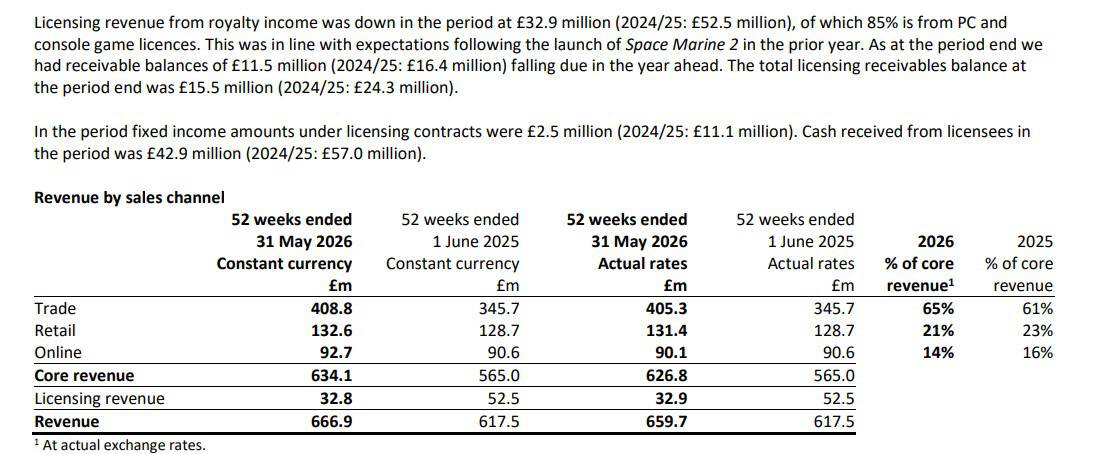 Licensing revenue also fell from £52.5m to £32.9m, a 37% decline, as the Space Marine 2 royalty spike faded, and operating profit dropped from £49.5m to £29.9m.
Older multi-year contracts also produced more minimum-guarantee installments than the new deals GW signed this year. Overall, more money came from existing agreements winding down than from fresh ones replacing them, which isn’t a strong growth signal.
 One weaker year doesn’t define the whole business, though, and GW’s financials have hit slower stretches before. Still, weaker licensing puts more pressure on Warhammer 40k 11th Edition.
The launch appears successful so far, but its full financial impact won’t show until next year. So now, whether 11th Edition can offset lower licensing revenue is now one of the biggest questions hanging over GW.
Two Partners Out, Several New Projects In
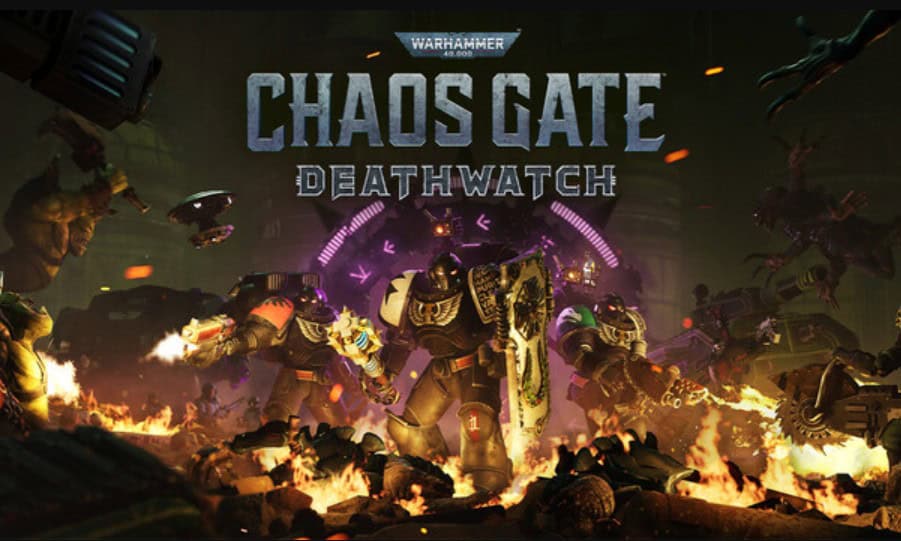 GW also announced four licensed games during the period: Warhammer: Age of Sigmar: Deathmaster, Warhammer 40,000: Chaos Gate Deathwatch, Warhammer 40,000: Boltgun Boom on mobile, and Total War: Warhammer 40,000.
The Amazon screen deal remains active as well, including the Cavill and Flanagan project and the confirmed Deathwatch animated series. GW says licensing success is broadly outside its control because partners must develop and deliver the finished projects. But a signed deal doesn’t guarantee a release, and a partner leaving mid-contract is exactly the risk GW is describing.
The GW and Amazon and Cavill series has already shown how slowly major licensing projects can move. So, in theory, if more partners leave and nothing as large as Space Marine 2 replaces the lost income, licensing may stay soft.
But honestly, that probably won’t be the case with Dawn of War 4 and Total War 40k on the horizon.
Final Thoughts on Games Workshop Licensing
These two exits could be normal turnover, or they could be an early sign that the post-Space Marine 2 licensing run is cooling off; there just isn’t enough information to know for sure.
The next report should make the direction clearer, though, because if the new games release and fresh deals replace older contracts, the departures won’t matter much. But if licensing revenue keeps falling and more partners leave, this “buried” disclosure will look a lot more important in the future.
So, until another major licensing project starts paying out, Warhammer 40k 11th Edition may have to carry more of GW’s financial growth for this year.
🔗 Related Reads:
- GW’s Record Profits Came With Business Warnings
- Games Workshop’s Financials, Broken Down
- What GW Does With Its IP
- Big Trouble for the GW, Amazon, and Cavill Series
- The Amazon Warhammer Show, Explained
- What to Expect From 2026 Warhammer Price Increases
- All Our Games Workshop Coverage
What do you think the two Games Workshop licensing exits actually signal for the years ahead?
One was probably NetEase, you might’ve forgotten the cancelled MMO news from late last year that was under development by Jacklyptic. They got shuttered as part of a broader publisher review