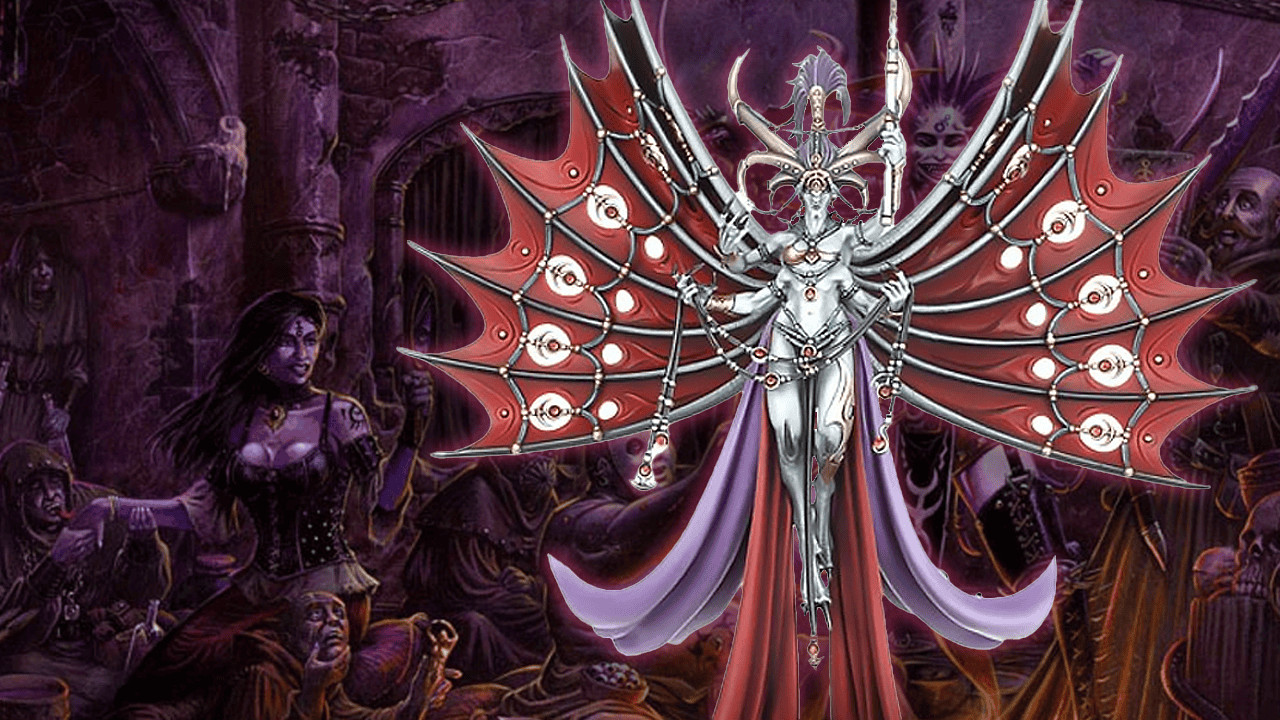
Who is Slaanesh in 40k? From the Fall of the Aeldari to the Palace of Pleasure, explore the biggest daemons around, along with practical 40k army tips.
Slaanesh is what happens when an entire civilization decides “just one more,” and the universe takes that personally.
In this guide, we’re digging into who Slaanesh is in 40k, why the Fall of the Aeldari still echoes across the galaxy, and what the Palace of Pleasure actually represents in the lore. Then we pivot to the fun part: the biggest-name daemons you’ll run into, why six is the sacred number of Slaanesh, how they play on the table, their best models, and practical 10th edition tips for building and piloting an Emperor’s Children Chaos force that leans into speed, pressure, and surgical cruelty.
So whether you’re here for Emperor’s Children swagger, daemon-led aggression, or just want your opponent to mutter “that was disgusting” in a respectful way, you’re in the right place.
- Titles: Prince of Pleasure, Dark Prince, Prince of Excess.
- Domains: excess, pleasure, pain, perfection.
- Sacred Number: 6 (because Slaanesh never does “reasonable”).
- Symbol: fused male/female glyph.
- Key Daemons: Keeper of Secrets, Daemonettes, Fiends.
- Key Followers: Emperor’s Children (Noise Marines), plus anyone who thought “too much” was a suggestion.
- Enemies & Rivalries: Khorne is the big one, with plenty of friction mixed in with Tzeentch and Nurgle.
Slaanesh in 40k: Origins, Symbols, and Followers
Updated on February 4th, 2026, by Rob Baer with new information and links to relevant content.
- Who Slaanesh is (plus common misspellings and quick lore context).
- Big rivalries with Khorne, Tzeentch, and Nurgle, and why they matter.
- The Fall of the Eldar and how it sparked Slaanesh’s birth.
- Core symbols and vibes: iconography, colors, and the sacred number six.
- Followers and daemons, plus the Palace of Pleasure, and where it sits in the Warp.
- Tactics snapshot: a quick 10th edition playstyle and what to lean into on the table.
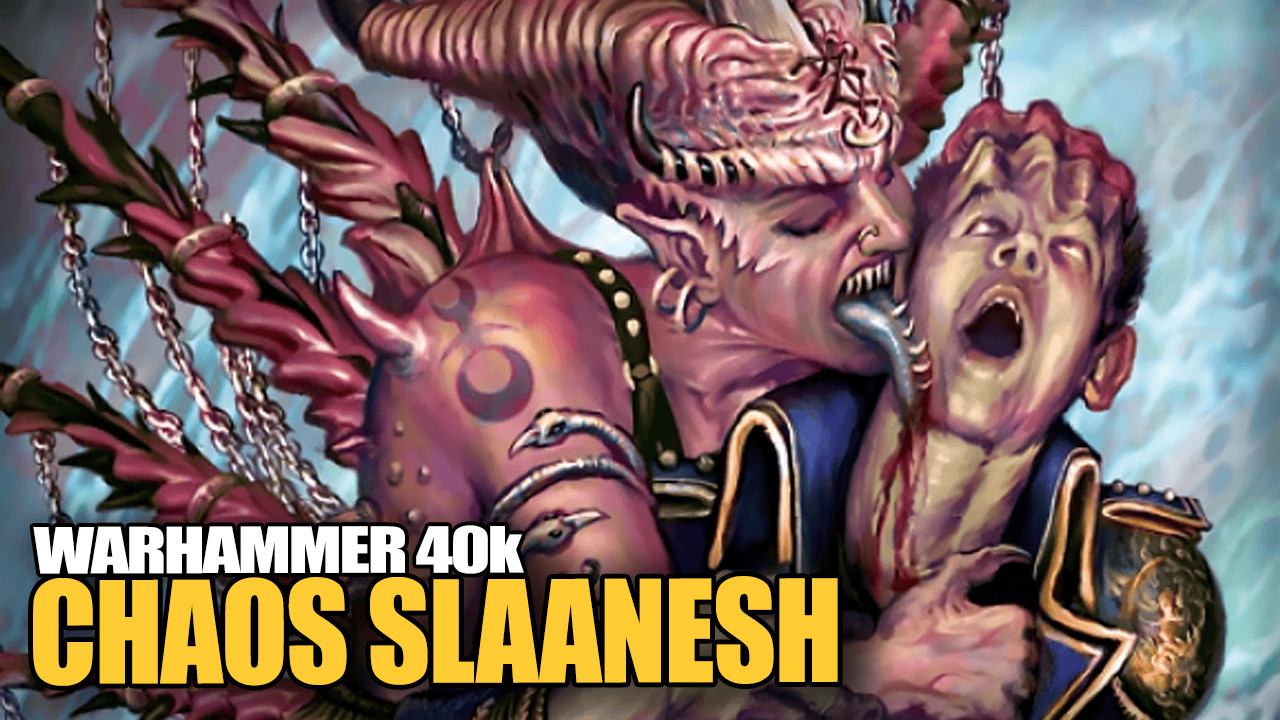
If there were a deity who knows how to throw the ultimate cosmic party, complete with glitter, doom, and a side of total destruction, Slaanesh would be the one. Born from the unchecked decadence of the Eldar empire, Slaanesh 40k is the Chaos God of pleasure, pain, and pushing every limit imaginable.
While Khorne is all about blood and skulls, and Nurgle is into disease (gross, right?), Slanesh prefers indulgence in every form.
What Is Slaanesh in 40k?
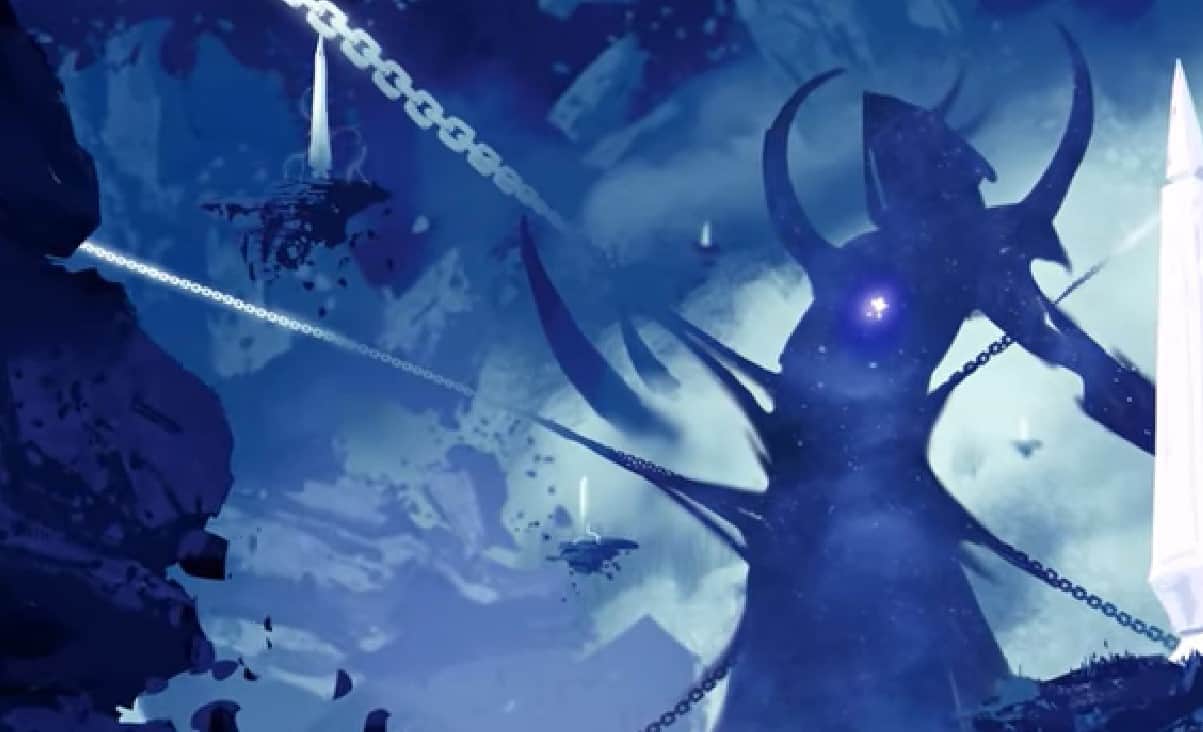
Slaanesh (often misspelled Slaneesh, Slanesh, or Slannesh) is a Chaos God of excess, temptation, and sensation, commonly titled the Prince of Pleasure and the Prince of Excess. Born from the Fall of the Eldar, Slaanesh rules over the pursuit of perfection taken too far, where indulgence blurs into obsession. Slaanesh is also tied to the sacred number six and the iconic fused-glyph symbol.
Now for the part where things get sticky.
Slaanesh is the whisper that turns “just one more” into a lifestyle choice. It is the lure of forbidden power, the rush of battle sharpened into ecstasy, and the promise that you can have everything you want right now, no consequences. Except there are always consequences. Slaanesh does not just tempt mortals and daemons with sensory overload and impossible pleasure. It hooks them with the idea that your biggest desire is not a weakness, it is your destiny.
Then it cashes the check.
Ambition becomes appetite. Victory becomes addiction. And once the Prince of Excess gets its claws in, your dreams do not just curdle into nightmares. They become the thing that drags you under. Still, credit where it is due: you will probably look incredible while Slaanesh is rearranging your soul into modern art.
What Slaanesh Represents (Excess, Pleasure, Pain, Perfection)
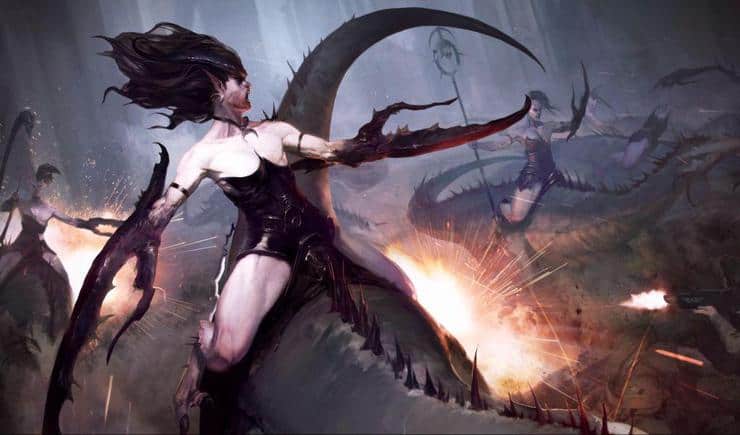 Slaanesh is the cosmic symbol of “more is more.” No moderation, no balance, just pure, unfiltered excess. The Prince of Pleasure reigns over a wide array of human (and inhuman) desires: lust, greed, gluttony, indulgence, and even perfectionism.
Basically, if it’s something you want more of, Slaanesh is here to offer it, and then take it to extremes you didn’t even know existed.
This Chaos God doesn’t just dabble in your standard vices; Slaanesh elevates every single one to an art form. Lust isn’t just about physical desire; it’s the craving for everything you can’t have, be it power, wealth, or even the thrill of danger.
Greed? It’s not just about hoarding gold but the insatiable hunger to consume and control everything in sight. Hedonism, indulgence, and gluttony are par for the course, whether you’re consuming food, emotions, or even the souls of your enemies. You want it all? Slaanesh says, “Why stop there?”
What makes Slanesh truly terrifying is the way this god shatters every boundary. There are no limits in Slaanesh’s realm, and that’s the whole point. Every mortal boundary, whether it’s physical, moral, or psychological, is something to be broken.
Pleasure and pain become one as the lines between joy and suffering blur. Want to reach perfection? Slanesh will take you there, but you’ll find that perfection comes at a high price. Spoiler alert: It’s your soul.
In short, Slaanesh is the ultimate temptation, making you want more of everything until you’re consumed by it. It’s a deliciously dangerous game of excess, where the winner takes it all… and the loser becomes a puppet to the Prince of Pleasure.
Slaanesh Rivalries in 40k (Khorne, Tzeentch, Nurgle)
Khorne vs Slaanesh in 40k
Rivalries at a glance:
Let’s break it down. If you put Khorne and Slaanesh in the same room, the only shared hobby is hating each other. Khorne is the no-nonsense Chaos God of blood, war, and skull-collecting. He is raw power, direct violence, and removing anything “unnecessary” from the equation, like nuance, restraint, or enjoying yourself.
Slaanesh is the opposite flavor of terrible, think more depravity. The Prince of Pleasure sells excess, obsession, and that slippery slope from “treat yourself” to “I have made this my entire personality.” Khorne wants combat stripped down to its ugliest essentials. Slaanesh wants the experience turned up until reality cracks.
Khorne’s pitch is loud and simple: “Blood for the Blood God!” Subtle as a chainaxe through a door. His followers are here to fight, win, and stack the skull pile higher. Style points are optional. Finesse is suspicious. If it bleeds, it counts.
Slaanesh does not kick the door in. Slaanesh leans close and whispers through it. Where Khorne charges in screaming, Slaanesh tempts with sensory overload and the promise that you do not want to stop. It is not brute force for its own sake; it is the thrill, the high, the perfection chase, the boundary you cross just to see what happens next.
That is why these ruinous powers clash so hard. Khorne sees Slaanesh as decadent and weak. Slaanesh sees Khorne as mindless and boring. Khorne’s followers want to kill you. Slaanesh’s followers want you to enjoy the whole trip on the way down.
Slaanesh vs Tzeentch and Nurgle
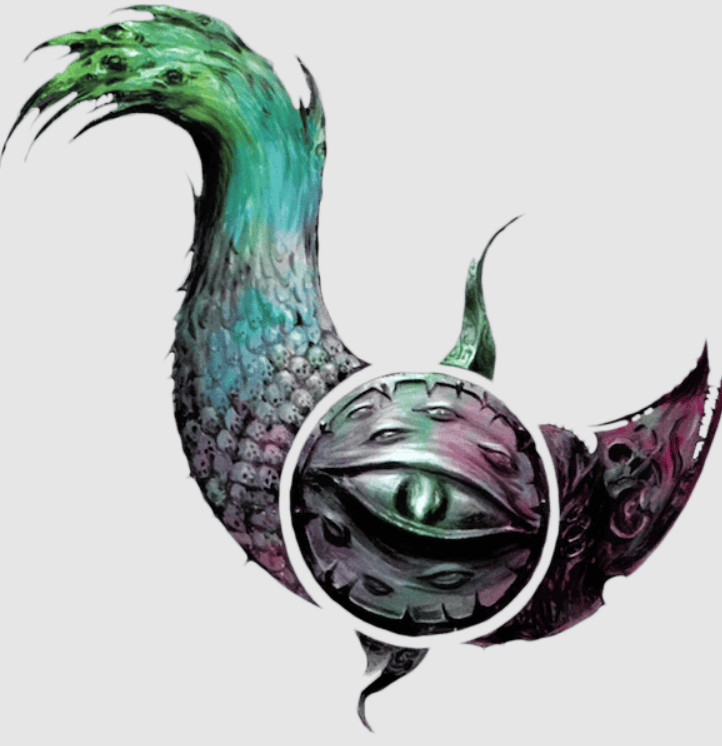 Tzeentch and Nurgle are less “knife fight on sight” and more “toxic coworker energy,” but the friction is still real.
Tzeentch, the God of Change, manipulation, and grand schemes, shares one thing with Slaanesh: both love pushing limits and warping reality. The difference is how. Tzeentch pulls strings from the shadows and calls it art. Slaanesh gets up close and personal and calls it a revelation. Tzeentch’s crowd chases knowledge, deception, and destiny. Slaanesh’s crowd chases sensation, excess, and the next impossible peak. Not friends, but they respect the craft.
Nurgle is the opposite end of the emotional spectrum. He is decay, despair, and the comfort of inevitability. For Slaanesh, who feeds on novelty and extremes, Nurgle’s vibe is stagnation with a side of rot. One promises endless highs. The other offers the slow, warm blanket of entropy. There might be a begrudging respect in the cosmic sense, but let’s be honest: Slaanesh is not RSVP’ing to Nurgle’s garden parties.
Slaanesh’s 40k Birth and the Fall of the Aeldari

Timeline of the Origins & Birth of Slaanesh:
- Eldar civilization spirals into excess
- That emotional overload ripples into the Warp
- Slaanesh awakens, born from that psychic pressure
- The Fall hits, the Eldar shatter, and the galaxy gets a brand-new scar
Once upon a time, the Eldar were not the grim, soul-stone-clutching space elves you see today. They were the apex predator of galactic high society: wealthy, powerful, and so convinced they had “won civilization” that they treated morality like optional DLC. And yes, that smug golden age is exactly what sets the stage for Slaanesh.
Picture the most excessive party you have ever heard about. Now scale it up to an empire that spans stars and has the free time, tech, and ego to chase every thrill, every artistic high, every vice, and every “what if we took it further?” impulse. The Eldar did not just indulge. They built a culture around indulgence, perfection, and sensation for its own sake.
Here’s the problem: in 40k, feelings have weight. The Warp is a reality-bending mirror fed by thought and emotion, and the Eldar were basically running a galaxy-wide psychic amplifier on maximum volume. Their reckless pursuit of extremes did not stay contained to their palaces and pleasure cults. It echoed, gathered, and condensed into something hungry.
Enter Slaanesh, and major chaos energy.
At the peak of that decadence, the Eldar unknowingly birthed the Chaos God of pleasure, pain, obsession, and excess. And when Slaanesh came screaming into existence, it did not arrive quietly. The birth shockwave tore at reality itself, ripping open a vast, Warp-tainted wound in the galaxy. Cue the Eye of Terror, which is less “mysterious region of space” and more “reality’s worst open sore,” where the Warp and the material universe bleed together, and Chaos pours through.
The aftermath is The Fall: the Eldar empire collapses in a single catastrophic moment. Entire worlds are consumed, and countless Eldar souls are devoured as Slaanesh claims its first, and favorite, feast. The survivors scatter, fleeing to distant Craftworlds or taking darker routes to avoid that fate, spending the next millennia living with the same grim truth.
Slaanesh is still out there, still hungry, and the bill for that ancient party is still coming due.
What Does Slaanesh Look Like in 40k?
 Now, you might wonder: what exactly is Slaanesh? Well, unlike some of the other Chaos Gods, who tend to stick to certain forms (we’re looking at you, Khorne, with your skull fetish), Slaanesh is all about versatility. You could say Slanesh doesn’t do “traditional” when it comes to appearances.
In Warhammer lore, Slaanesh transcends race, gender, and, well, pretty much any category you could come up with. Sometimes, Slaanesh presents as a figure who is male on one side and female on the other, with a beauty so overwhelming it can literally destroy minds. As a major chaos god, it can be whatever, whenever.
But here’s the kicker: Slaanesh can take any form they choose; male, female, both, neither, whatever it takes to lure you in. This fluidity represents the god’s total freedom from mortal concepts like identity and morality.
Slanesh’s identity is an expression of indulgence and excess. If it can tempt you, manipulate you, or consume you, Slaanesh can become it. They’re the ultimate chameleon of Chaos, shifting from one form to another depending on who or what they’re trying to seduce.
Whether you’re into beauty, terror, or something you didn’t even know you desired, Slanesh knows exactly how to push those buttons. Traditional race and gender are irrelevant to Slaanesh’s cosmic game of temptation. All that matters is excess, indulgence, and the thrill of breaking boundaries.
Slaanesh Symbol Meaning in 40k

If there’s one thing Slaanesh understands, it’s branding. Not the “slap a logo on it” kind. The “this icon is a philosophy and a dare” kind.
The Slaanesh symbol is a fusion of the classic male and female glyphs, deliberately merged into something that refuses neat boxes. It is not decoration. It is a visual summary of the Prince of Pleasure’s whole deal: transgress boundaries, chase sensation, and treat limits as suggestions, whether those limits are physical, social, or spiritual. In Slaanesh’s orbit, identity is fluid, desire is weaponized, and the line between pleasure and pain is not a line at all; it is a playground.
For devotees, the symbol is not just an emblem on a banner. It is a badge of liberation through excess, a reminder that in the Dark Prince’s realm you can be anything, want anything, and feel everything, often all at once. Horrifying? Absolutely. Stylish? Unfortunately, also yes.
Slaanesh Colors and the Sacred Number Six
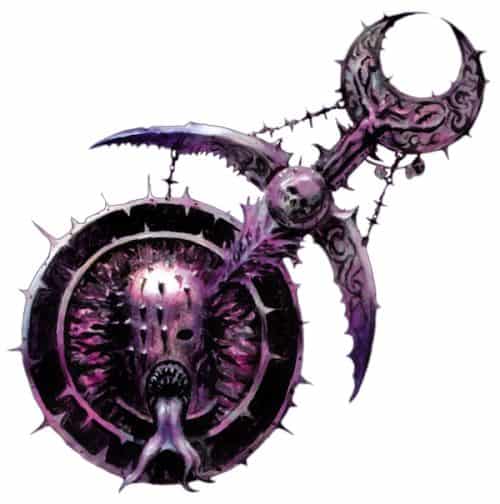
- Colors: purple and pink
- Symbol meaning: A fusion of classic male and female glyphs, representing transgression of boundaries and the unity of pleasure and pain.
- Sacred number: six (sixfold patterns show up in rituals, iconography, and the way followers like to organize things)
Slaanesh’s 40k Followers and Armies

Slaaneshi followers at a glance:
- Chaos Space Marines: Emperor’s Children (and their Noise Marines), plus Slaaneshi-leaning renegades
- Renegade warbands: perfection-obsessed, sensation-chasing, and “art murder” specialists
- Mortal cults and noble houses: hedonistic courts, secret societies, and people who turned a bad idea into a lifestyle
Quick note: This guide is focused on Slaanesh in 40k. Slaanesh also appears in Age of Sigmar, but the lore, factions, and continuity are different between settings, so do not mix the two.
Emperor’s Children and Noise Marines in 40k
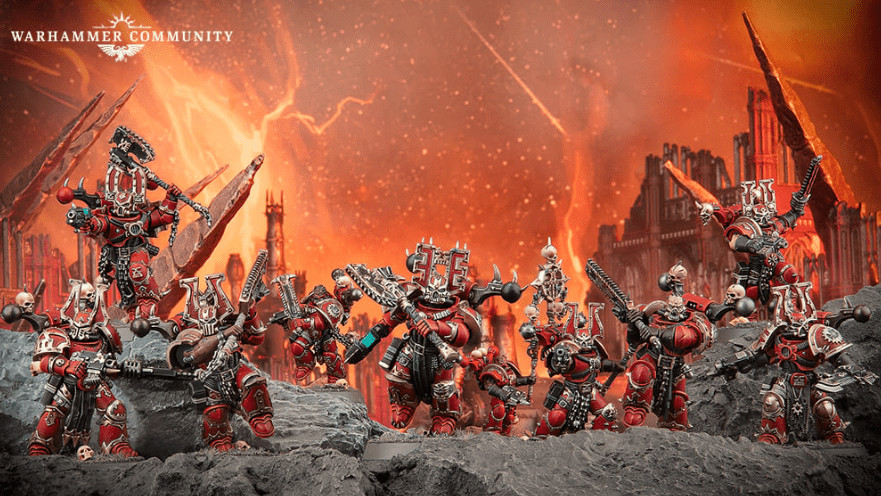
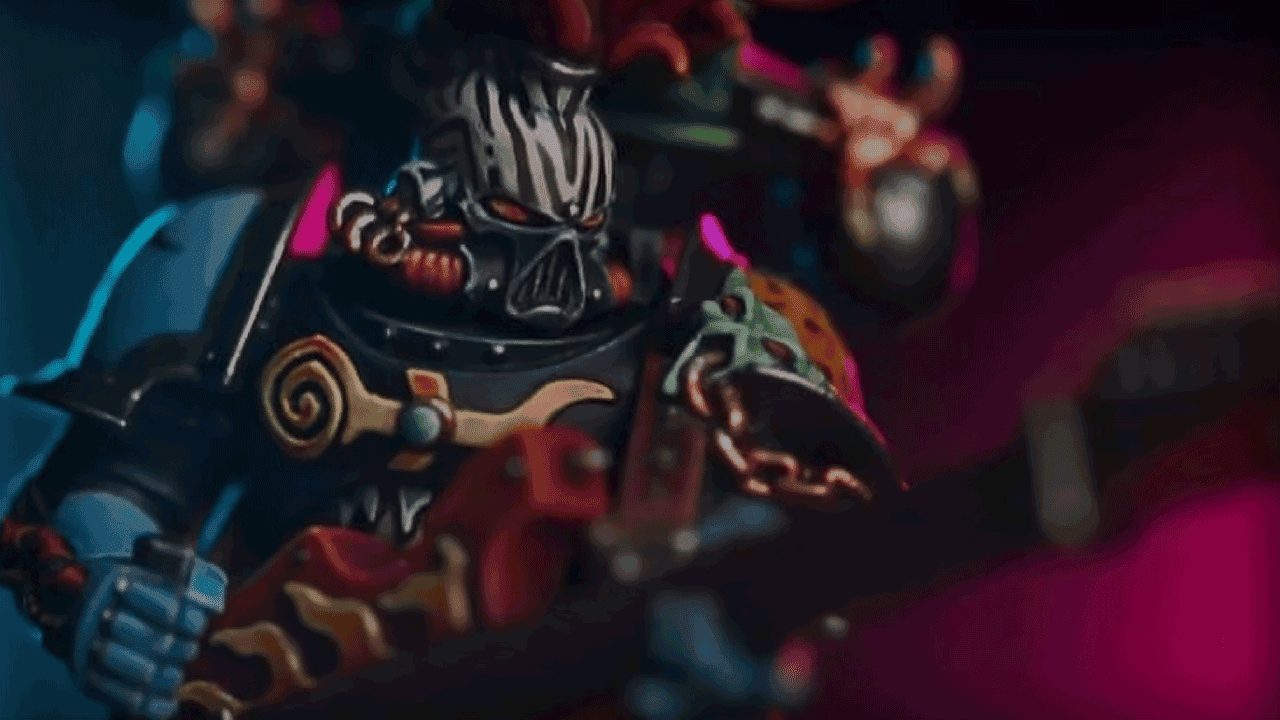 The Emperor’s Children started as the Imperium’s gold-standard Legion. Their entire brand was perfection: flawless drill, immaculate armor, and a Primarch, Fulgrim, who could win a campaign while looking like he was posing for a propaganda poster. They did not just want to be the best. They wanted to be the ideal.
That is also how Slaanesh got the hook in.
During the Horus Heresy, Fulgrim’s obsession with perfection slid from discipline into compulsion. Then the Legion found the kind of “shortcut” Chaos loves: a tainted blade, a seductive whisper, and the promise that greatness is only one more step away. Fulgrim listened. The Emperor’s Children followed. And the thing about “any cost” is that Chaos always sends the invoice.
Perfection became appetite. Appetite became excess. Their art, their battle doctrine, their rituals, their whole identity spiraled into indulgence for its own sake, because Slaanesh does not reward restraint. By the time they fully pledged themselves, they were the poster boys for excess, turning warfare into performance and cruelty into a signature.
That is where the Noise Marines come in. Sonic weaponry is not just a gimmick; it is the Legion’s thesis statement: overwhelm the senses, shred the mind, and make sure the galaxy remembers the sound of you arriving. Beautiful to them, unbearable to everyone else. The Emperor’s Children do not just kill you. They make it an experience.
Other Slaanesh-Aligned Chaos Space Marines
The Emperor’s Children are Slaanesh’s VIPs, but they are not the only Space Marines who took the deal. Plenty of renegade warbands drift into Slaanesh’s orbit because the promise is always the same: sharpen your desire, reward your obsession, and push past limits until something breaks.
- The Flawless Host: victory is not enough unless it is perfect. If there is a scratch on the armor, the battle was a failure. Slaanesh loves that mindset because perfection is just an obsession wearing a fancy cloak.
- The Violators: less poetry, more pressure. They chase brutal pleasure in the simplest way possible: carnage, excess, and zero shame.
- The Angels of Ecstasy: sensory overload as a religion. They savor every impact, every wound, every detonation, treating the battlefield like a symphony they can feel through their bones.
Different aesthetics, same destination: the worship of sensation, indulgence, and the ever-escalating need for “more.”

Slaaneshi Cults and Noble Houses
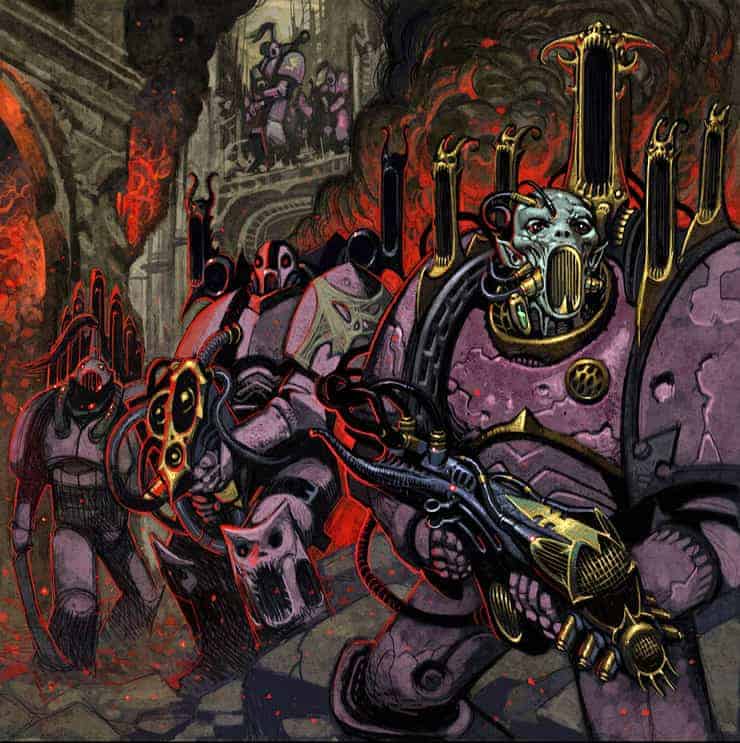 Slaanesh does not rely solely on Space Marines. Mortals fall just as hard, and often faster, because they do not have gene-forged discipline to slow the slide.
House Glaw is the classic example of a noble line going completely off the rails. Once respected, now infamous, they turned luxury into doctrine and indulgence into tradition. Their estates become dens of excess where every desire is catered to, and every boundary is treated like a dare.
Then you have groups like the Cult of the Hedonic Lord, cultists who treat devotion like a full-time occupation. Their gatherings are festivals of sensation and sacrifice, engineered to push pleasure, pain, and obsession to the edge until something answers back. They believe surrender is enlightenment, and Slaanesh is always happy to “reward” that faith with blessings that look a lot like a curse.
At every level, the worship is the same: total surrender to sensation. Space Marine or mortal, noble or gutter cultist, Slaanesh’s followers chase the next thrill and drag everyone else along for the ride, whether by temptation, terror, or a smiling promise that this time there will be no consequences.
Slaanesh Daemons in 40k (Keeper of Secrets, Daemonettes, Fiends)
Slaanesh’s daemonic host is built like a nightmare org chart: Greater Daemons (Keepers of Secrets) at the top, battleline daemons (Daemonettes) doing the dirty work, and a whole circus of specialist horrors filling in the gaps.
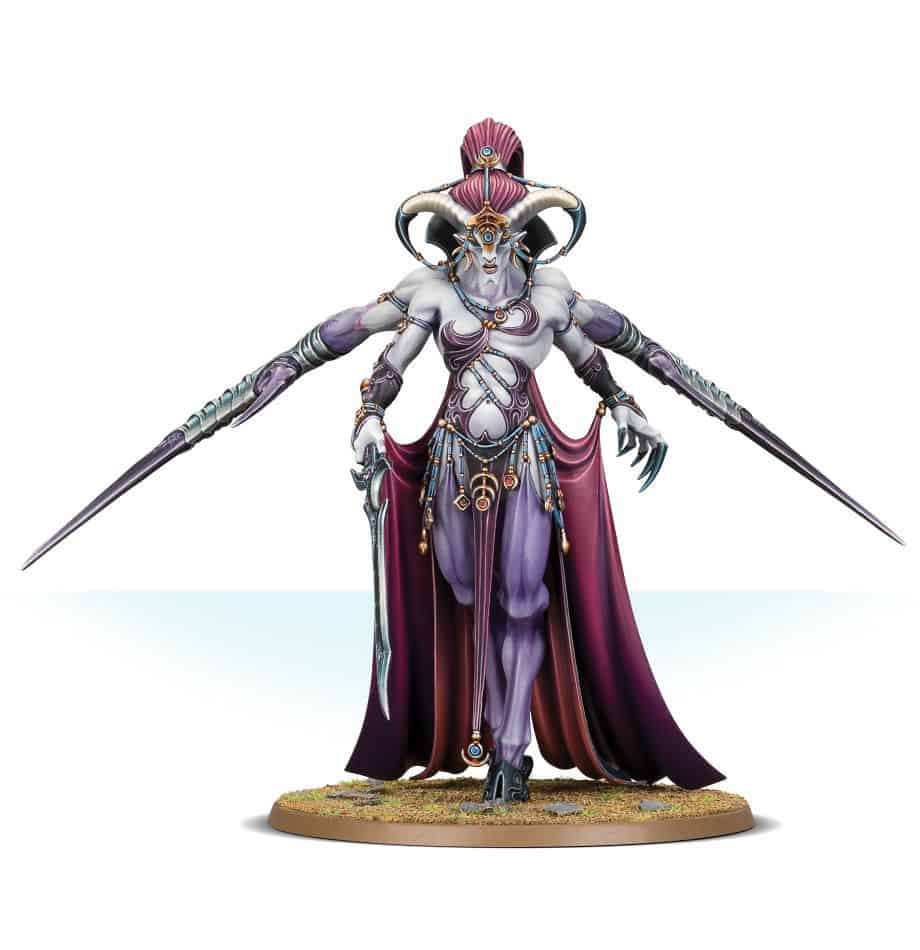
Keepers of Secrets: Slaanesh’s Greater Daemons
A Keeper of Secrets is not your average oversized daemon with a bad attitude. These are Slaanesh’s premier Greater Daemons: part apex predator, part master manipulator, and entirely committed to making sure you lose the fight before you even realize it started.
Their signature trick is shapeshifting, but not in the boring “now I have wings” way. A Keeper of Secrets can present itself as whatever will crack you fastest, from an irresistible vision to something you will spend the rest of your short life trying to forget. Two enemies can look at the same daemon and see completely different nightmares. That is the point. Slaanesh does not just want your body; it wants your certainty.
Then the blades come out.
Under the glamor and psychological warfare is a killing machine that moves with terrifying speed and precision, carving through enemies with the kind of grace that feels insulting. Keepers also love to toy with prey, twisting emotions and perceptions until you are reacting, not thinking. Imagine a cat playing with a mouse, if the cat were also a demigod of obsession and the mouse were you.
You can download the official rules here.
Daemonettes: Slaanesh’s 40k Battleline Blades
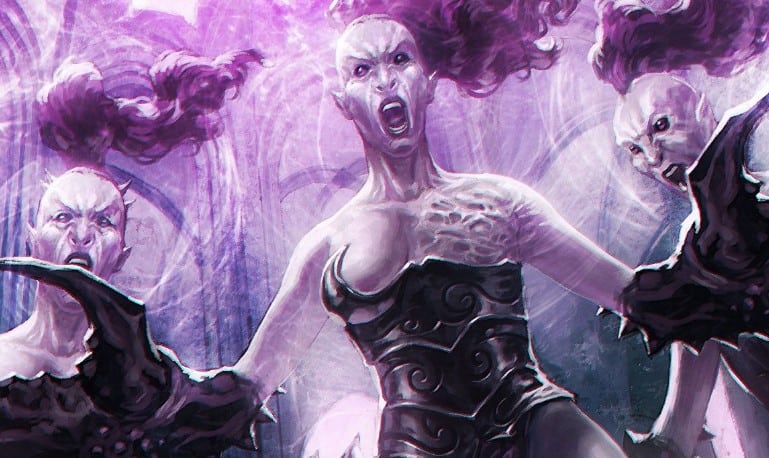
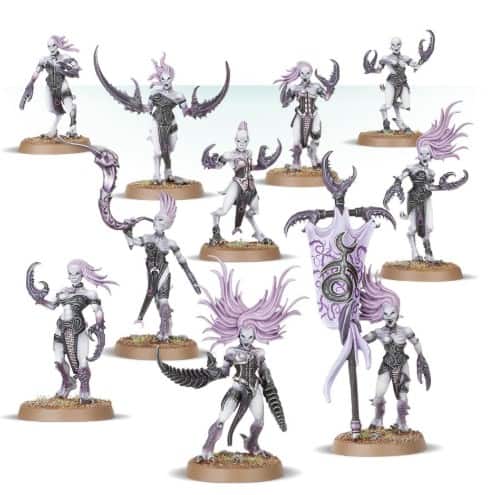 If a Keeper of Secrets is the headline act, Daemonettes are the sharp, fast, and frighteningly efficient chorus line of lesser daemons. Lithe, unsettlingly beautiful, and armed with claws that do not care about your armor save, they are designed to distract your brain while they dismantle your unit.
On the table, in the mortal realms, and in the lore, Daemonettes fight like Slaanesh fights: speed, precision, and sensory disruption. They do not charge in like a blunt instrument. They dart, they dance, they slice, and by the time your opponent processes what just happened, the squad is already in trouble. Even when they are not wiping units, they are forcing mistakes, breaking focus, and turning clean plans into panic moves.
Daemonette Hierarchy and Slaanesh’s Court
Daemonettes are not just battlefield fodder. They are also servants within Slaanesh’s court, where rank matters, and cruelty counts as good etiquette. Heralds of Slaanesh sit above the rank-and-file, directing daemonic hosts and acting as the visible “face” of Slaanesh’s will.
Higher-ranking Daemonettes often serve closer to the Palace, where their duties go beyond war into ritual, temptation, and whatever fresh horror Slaanesh considers entertainment that day.
Fiends of Slaanesh
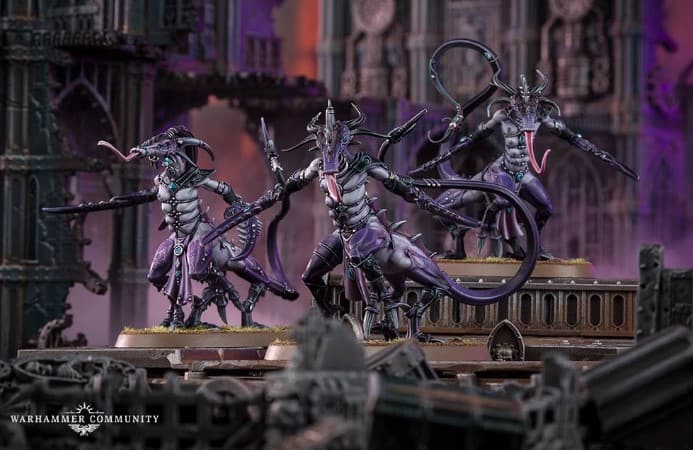 Now, if you think Daemonettes are creepy, wait until you meet the Fiends of Slaanesh. These creatures are what happens when you mix a centaur, a lizard, and a nightmare. With four legs, two massive claws, and an anteater-like tongue that can paralyze you with a touch, Fiends are the embodiment of predatory sadism.
They take pleasure not just in hunting their enemies but in playing with them, dragging out the chase and torment for as long as possible for the dark gods. They are truly part of the Legions of Excess.
In combat, Fiends are as fast as they are deadly. They excel at getting up close and personal, using their agility and bizarre anatomy to overwhelm their enemies. And once that tongue lashes out, good luck fighting back, its paralyzing effect makes it nearly impossible to defend yourself.
If Slaanesh’s army has predators, Fiends are at the top of the food chain in Warhammer.
Infernal Enrapturess
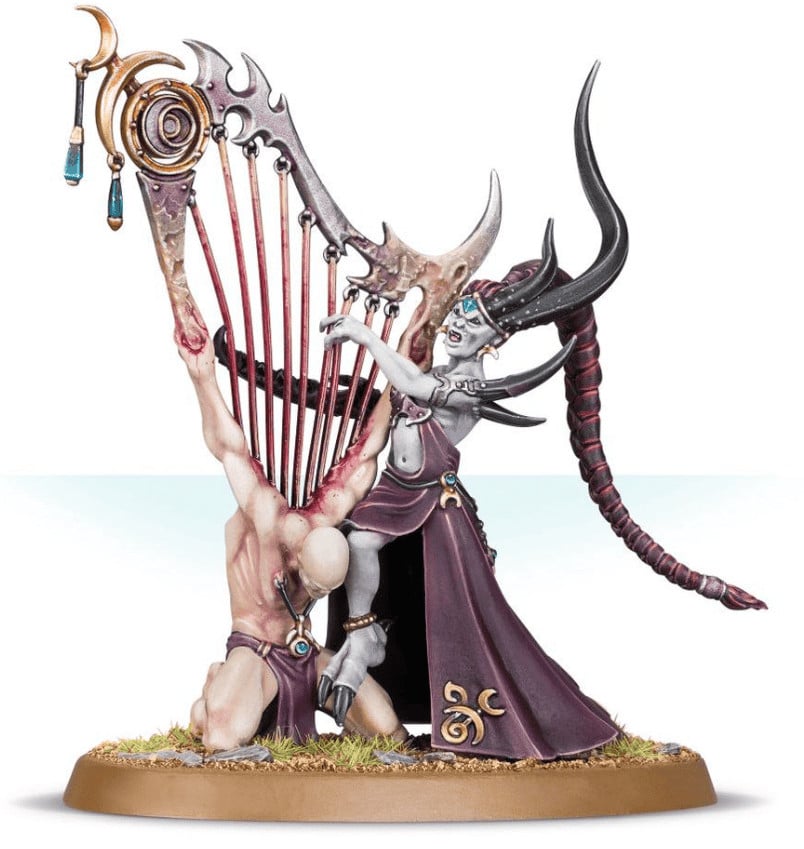 You’ve heard of battle cries, but what about a battle song? The Infernal Enrapturess is part musician, part daemon, and all bad news for anyone on the receiving end of her melody.
She wields a gruesome instrument known as the Heartstring Lyre, and it’s exactly as terrifying as it sounds. Strung with the actual heartstrings of her victims, this instrument can do more than just play a haunting tune; it can burst eardrums, boil brains, and even crack the armor of battle tanks.
But the Enrapturess’s talents go beyond destruction. Her music doesn’t just kill, it raises the dead. By playing her lyre, she can resurrect fallen daemons, bringing them back into the fight stronger than ever. On the battlefield, she’s both an offensive and defensive powerhouse, ensuring that Slaanesh’s forces never run out of soldiers (or those to bear the symbol).
Where to Buy Slaanesh Model Kits
Snag your new models from our handpicked list of retailers, and give us a high-five in support! Every qualifying purchase helps Spikey Bits keep the lights on and the fun going.
The Palace of Pleasure: Slaanesh’s 40k Realm in the Warp
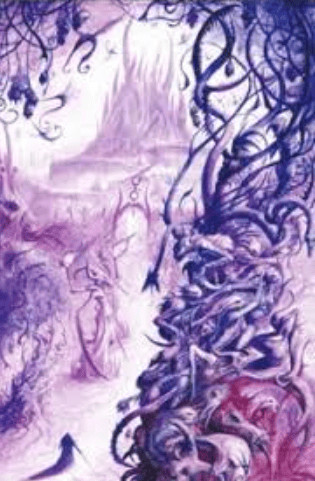 Welcome to the Palace of Pleasure, Slaanesh’s personal playground in the Warp. It is not a castle with a few fancy halls and a questionable wine cellar. It is a purpose-built trap, a decadent dimension engineered to tempt, hook, and devour anyone arrogant enough to step inside.
And because Slaanesh never does anything halfway, the Palace is carved into six circles of temptation.
The Six Circles of Temptation
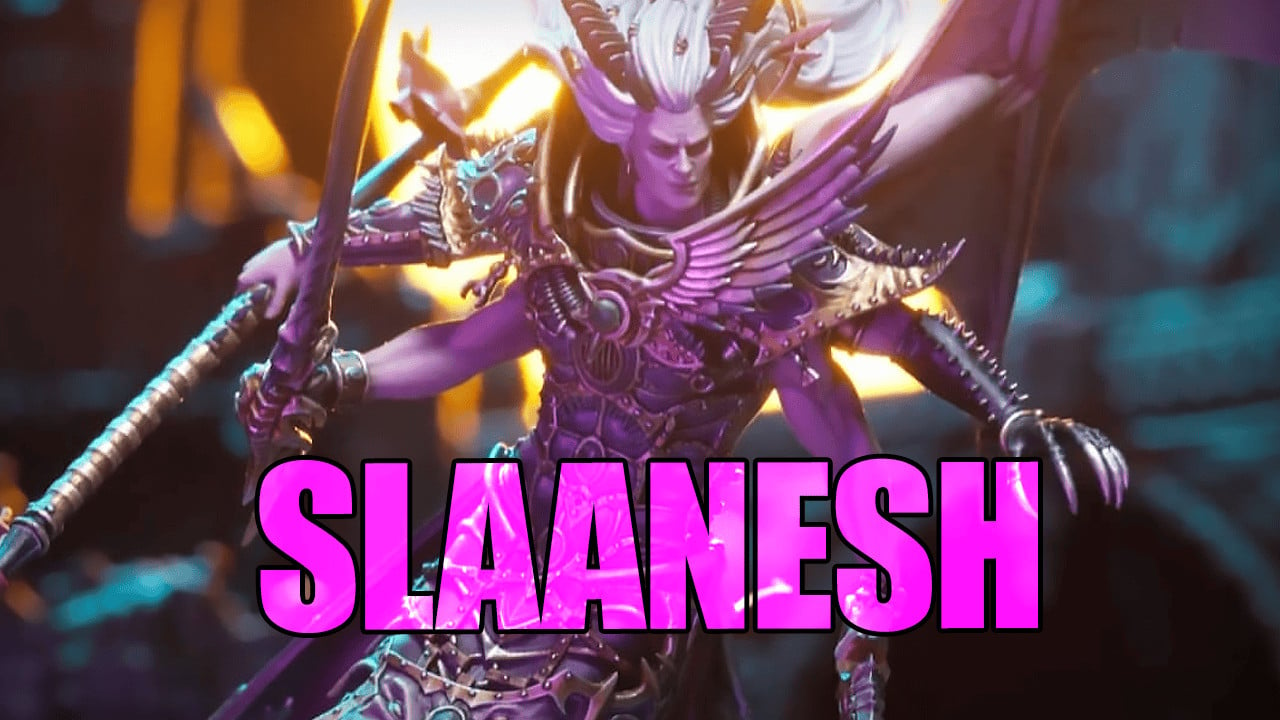
- Avidity (Greed): Mountains of treasure, rare artifacts, and everything you have ever wanted, always just out of reach. The more you grasp, the farther it slides away, turning desire into a treadmill you cannot step off. In Slaanesh’s math, wanting is the point, not having.
- Gluttony (Endless Consumption): An eternal feast with no finish line. You can eat, drink, and indulge without limit, yet satisfaction never arrives. It is not only hunger for food, but it is also hunger for more of everything, forever, until craving becomes your whole personality.
- Carnality (Irresistible Impulse): The circle that gets uncomfortably personal. It drags your deepest desires into the light and dares you to act on them, again and again, until indulgence becomes reflex. The trap is simple: the more you give in, the less “you” is left to say no.
- Paramountcy (Power): Visions of absolute control, empires kneeling, reality bending to your will. Then the twist hits: every “victory” tightens the strings. You think you are the ruler, but you are just learning how well you can dance for someone else’s amusement.
- Vainglory (Vanity): A mirror maze made of praise. Every reflection feeds your ego, every compliment pushes you deeper, until self-admiration becomes self-devouring obsession. It is the circle for anyone who cannot stop looking at the highlight reel of their own greatness.
- Bliss (Perfect Pleasure): The final offer is the cleanest lie: pure, unending pleasure, no pain, no fear, no want. Stay too long, and it becomes paralysis, a catatonic happiness you cannot leave. Slaanesh does not punish you with suffering here. It buries you with comfort.
Slaanesh’s Throne
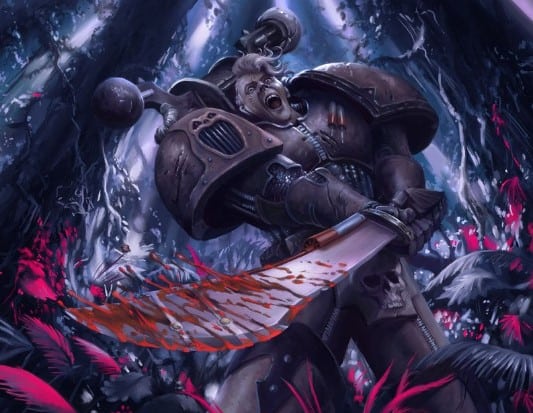 At the center of the Palace, past every circle and every trap that pretends to be a gift, lies Slaanesh’s throne. It is not just a seat of power. It is a beacon, an embodiment of beauty and perfection so intoxicating that willpower starts to feel optional.
This is the real flex: Slaanesh does not need chains. The throne does not conquer by force. It conquers by invitation. People do not fall to their knees because they are compelled. They fall because they want to. The presence alone warps thought, rewrites priorities, and turns “I should leave” into “one more moment.”
That is the Palace of Pleasure in a nutshell. You do not get dragged into Slaanesh’s realm screaming. You walk in smiling, convinced you are in control, right up until the door disappears behind you.
Slaanesh 40k Army Tactics for Tenth Edition

- Playstyle: speed, disruption, precision strikes
- Common cores: Daemonettes, Keeper of Secrets, Noise Marines
- Best for: players who like fast melee pressure, surgical trades, and sonic firepower that makes opponents regret lining up nicely
How to Build a Slaaneshi 40k Army
If you love armies that hit first, hit hard, and look offensively fabulous doing it, Slaanesh is your lane. The goal is not to stand there and “stat check” the enemy. You win by dictating tempo, forcing bad choices, and cashing in on mistakes the moment they appear.
Start with Daemonettes as your core pressure pieces. They are fast, aggressive, and built to threaten space, tag key units, and punish anyone who mispositions. They are not bricks, so do not play them like bricks. Think scalpel swarm. They get in, slice, and force your opponent to spend turns dealing with them instead of scoring or setting up their own game plan.
Then add a Keeper of Secrets as your centerpiece threat. This is the unit that turns “I might be in trouble” into “I have made a series of terrible life choices.” A Keeper is there to bully priority targets, collapse a flank, and make your opponent overcommit resources just to keep it contained. It also pairs perfectly with Slaanesh’s core plan: you apply pressure with speed, then the big monster arrives to finish the argument.
For ranged presence and mid-board control, Noise Marines bring the soundtrack and the consequences. Sonic weapons are ideal for punishing infantry, forcing saves, and turning “safe” positions into “why did I stand there?” positions. They also slot neatly into the Slaanesh identity: disruption through overwhelming output and denial of comfort.
The guiding principle is simple. Speed plus disruption. You are not trying to out-tank anyone. You are trying to out-tempo them until the game feels like it is happening to them, not with them.
How Slaanesh Wins Games: Tempo, Pressure, and Disruption
 Slaanesh armies thrive when you stay in motion and keep choices uncomfortable.
- Pressure early, but do it with intent. Daemonettes are great at tagging units, threatening objectives, and forcing screens to appear in places your opponent does not want them. Use that to open lanes for your heavier hitters, not to donate a unit for vibes.
- Trade up, then snowball. Pick fights that remove key tools: screening units, objective holders, and fragile damage dealers. Once those pieces are gone, your speed turns into board control.
- Disrupt the rhythm. Noise Marines soften targets, punish clumps, and make it dangerous to “just stand there and shoot.” Use them to create zones your opponent does not want to enter, then exploit the space that is created.
- Use the Keeper as the hammer, not the opener. Let the faster elements create the cracks. Then send the Keeper in where it hurts most, ideally into high-value units that cannot afford to get touched.
Slaanesh wins when your opponent never gets a clean turn. Strike first, strike fast, and keep them reacting.
Playing Slaanesh Units in 40k 10th Edition

Tenth edition rewards clarity of roles and clean threat projection, which fits Slaanesh like a silk glove hiding a knife.
- Daemonettes: treat them as movement-phase bullies and melee pressure, not durable anchors. Their value spikes when they are forcing your opponent to screen, fall back, or waste activations dealing with them.
- Noise Marines: lean into them as reliable damage and disruption that punishes infantry and messy positioning. They are your “stop standing there” button, and they make the mid-board feel unsafe.
- Keeper of Secrets: your premium threat that demands answers. Use it to collapse a section of the board, delete priority targets, and force overreactions that open scoring lines elsewhere.
In 10th edition, Slaanesh is at its best when you play the whole army like a timing puzzle. Give your opponent too many problems at once, then take whatever they cannot protect.
Gifts of Slaanesh in 40k (Mutations, Weapons, Marks)
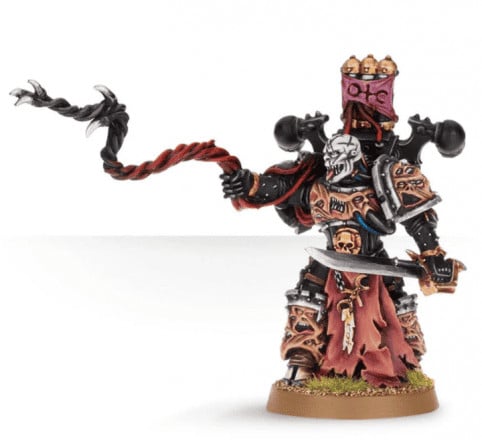
- Physical mutations: extra limbs, elegant claws, heightened senses, “beauty” sharpened into a weapon
- Daemonic weapons: sentient artifacts that kill in style and reward the wielder with sensation
- Mark of Slaanesh: supernatural allure plus an insatiable hunger for more, always more
Physical Mutations and Daemonic Blessings
Slaanesh does not hand out gifts like a random mutation grab bag. The upgrades are curated, theatrical, and cruelly practical. A devoted follower might sprout extra limbs for impossible speed or precision, or grow claws and talons that look ornate right up until they are inside someone’s armor.
A common theme is heightened senses, tuned past “useful” and straight into overload, because Slaanesh loves turning perception itself into a vice. The body becomes both canvas and weapon. Form and function, fused together, with the dial snapped off at “too much.”
Daemonic Weapons
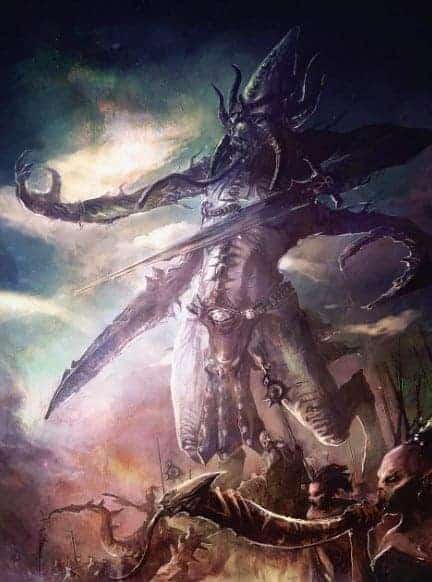 Slaaneshi champions also get the ultimate accessories: daemonic weapons that feel less like gear and more like a pact you can swing. Blades that pulse with warp-essence, whips that blur the line between pain and pleasure, and relics that do not just kill but make the act intoxicating for the wielder.
The catch, of course, is that the weapon always wants something back. Every strike feeds the sensation loop. The more you use it, the more you crave it. Slaanesh does not reward loyalty with safety. It rewards it with dependency.
Mark of Slaanesh: Power Through Pleasure
The Mark of Slaanesh is the full commitment, the blessing that says you are not dabbling anymore. It brings an unnatural allure, the kind that makes people hesitate at the worst possible time, and it turns confidence into a weapon you can aim.
But the real “gift” is the appetite it builds. The mark pushes the bearer toward constant escalation: more pleasure, more power, more intensity, more extremes. It is a blessing and a leash at the same time. Because once Slaanesh marks you, “enough” stops being a concept you can access, and restraint starts to feel like suffering.
Why Slaanesh Still Matters in 40k
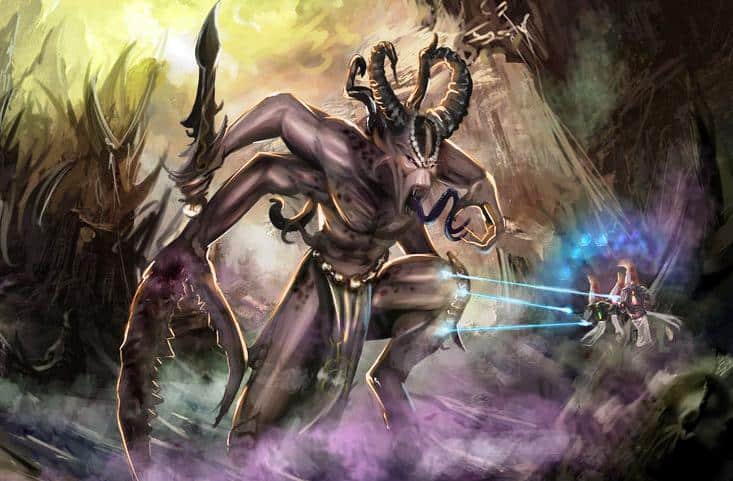 From the moment the chaos of Slaanesh burst into the Warhammer 40k universe (thanks, Eldar), their influence has only grown. What started as the fall of one race turned into a galaxy-wide legacy of indulgence, corruption, and temptation.
Whether it’s through Daemonettes carving their way across battlefields or Noise Marines shaking the ground with their sonic weaponry, Slaanesh continues to be a major force in the eternal conflict of Chaos in Warhammer. As long as mortals and daemons alike crave excess and pleasure, Slanesh will never be far behind.
More Warhammer 40k Factions Explained
What do you think about the lore and symbol for the Warhammer 40k Chaos God Slaanesh?