Warhammer is more popular than chess and other board games in some countries, according to a new global study. Here’s the data, the caveats, and whether it even matters to gamers.
For a game built on tiny plastic warriors, dice drama, and enough lore to melt a hard drive, Warhammer keeps showing up in places people do not always expect. A new global analysis claims that in a few countries, Warhammer is more popular than chess, which is the kind of headline that makes tabletop fans raise an eyebrow, grin a little, and immediately start arguing in their group chat.
According to the study, Australia, the United Kingdom, and Ireland all favor Warhammer Games over old-school staples like chess and checkers. That’s a wild result on the surface, especially when you remember chess still absolutely crushes the field overall.
Still, for hobbyists, it is a fun reminder that tabletop gaming culture doesn’t look the same across the world.
Warhammer Games, and What the Study Actually Measured
 Before anyone starts declaring Warhammer the new king of all board games, it’s worth looking at how this study arrived at its rankings.
A mix of Google Trends search data, population statistics, and Meta audience figures was used to create a Board Game Obsession Score ranging from 0 to 100. This was then used to score interest in board and tabletop games across 104 countries.
This is important because it’s not a hard census of what people are physically playing at kitchen tables, clubs, stores, or tournaments. It’s a picture of online interest and audience behavior, which is useful, but it’s not the same thing as actual play rates. Search habits vary wildly by country, and social media audience data can get messy fast. So yes, the results are interesting, but at the end of the day, they are not the final story overall, but rather an indicator of sorts.
Really, it just turns this from a boring “here are the rankings” article into a much more fun question: what does online interest tell us about where gaming culture is hottest?
Chess Still Rules the Global Gaming Table, not Warhammer
 Even with the Warhammer Henry Cavill Amazon series angle and 11th edition getting a lot of attention lately, chess remains the dominant game worldwide. The Playiro data says chess ranked first in 61 of the 104 countries analyzed, which isn’t even close.
That should surprise exactly nobody. Chess is cheap to access, global, historic, and everywhere, from phone apps to school clubs. It has the cultural staying power that most games can only dream about. So if you’re looking for the most universally recognized tabletop game on Earth, chess is still sitting on the throne with no signs of moving.
Other games had stronger regional pockets. Uno was a favorite in countries like Canada, Denmark, and Norway. Draughts (Checkers) performed well in several nations too. Then there is Warhammer, which did not dominate even a fraction of the world, but did have a big presence in a few key markets.

Why Warhammer Stands Out in English-Speaking Markets
 This is where things get spicy for hobby fans. The study says Australia scored 41.8, the UK 39.7, and Ireland 23.9, with Warhammer emerging as the favorite tabletop game in all three.
With the UK being the home turf of Games Workshop, seeing Warhammer popularity in the UK pop off is about as shocking as finding Space Marines in a starter set. Australia has had a strong hobby community for years, with active store scenes, events, painting circles, and a tournament scene. Ireland also showing up in the same camp is a nice little flex for the hobby scene there, and it makes sense given its proximity to the UK.
Why is Warhammer different than Chess?
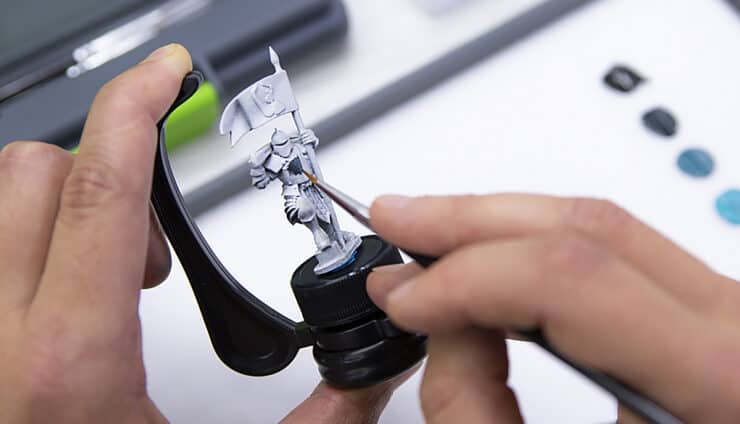
What makes Warhammer different from chess in this context is that it’s not just a game. It is a miniatures hobby, painting hobby, collection hobby, lore obsession, and social hobby rolled into one expensive, glorious pile of plastic.
Search data may actually favor something like Warhammer because players are constantly looking up rules, units, release news, painting tutorials, army ideas, and pricing. Sure, Chess is huge, but Warhammer generates hobby traffic in a completely different way.
Is Real Winners of the Study
 If you zoom out past the Warhammer headline, the country sitting at the top was Taiwan, with a Board Game Obsession Score of 89.7. That is a huge lead, and according to the study, Uno was the country’s most popular tabletop title.
Latin America also came in swinging. Chile at 72.9, Costa Rica at 70.2, and Mexico at 60.9 all ranked near the top. That tells you the story of global board game popularity by country is much bigger than the usual US and UK focus.
Meanwhile, the United States scored 41.9, with Chess as the top game. Canada landed a bit higher at 48.4, and Uno took the crown there.
Final Thoughts on Warhammer 40k Versus Chess
 The big takeaway is not that Warhammer has defeated chess in some final boss battle for tabletop supremacy.
What this study shows is that Warhammer carries significant cultural weight in certain countries, especially in English-speaking markets with established hobby ecosystems. It also shows how broad overall the tabletop scene really is.
Different countries latch onto different games based on tradition, accessibility, community, and how people engage online.
To us, Warhammer vs Chess isn’t really the story. The story is that tabletop gaming is thriving in wildly different ways across the world, and that hobby keeps finding new pockets of obsession. If Warhammer is beating chess anywhere, even just on search interest, that says a lot about how massive this hobby has become overall.
And let’s be real, that’s not bad for a game where grown adults argue over plastic soldiers and call it a perfectly normal weekend.
Warhammer Factions Explained: A Complete Guide to Every 40k Army