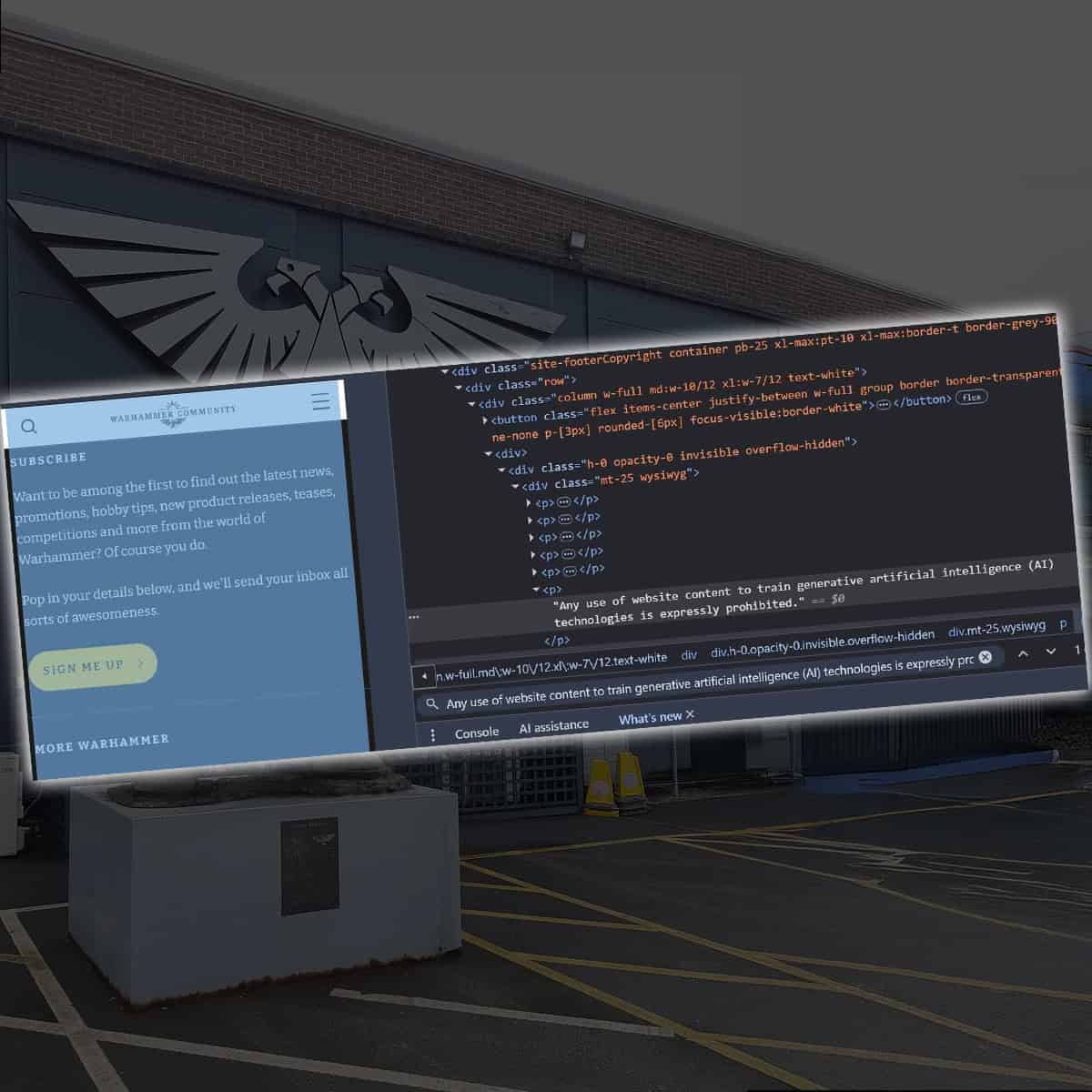
Games Workshop’s new AI training warning is the right legal move, but an awkward one given everything else GW has said about AI lately.
GW spent the last year drawing a hard line on AI, with the CEO telling investors the company was being extremely cautious about AI in the creative process. That was supposed to be the takeaway. But sitting in the page source of a recent Warhammer Community article (first spotted on the Red Terror reveal) is a notice that reads: “Any use of website content to train generative artificial intelligence (AI) technologies is expressly prohibited.”
The warning lives in the page code itself, right where crawler instructions and legal warnings belong, so GW is making a clear claim that its text, images, and lore aren’t free training food for generative AI.
We all know GW guards Warhammer like a dragon sleeping on a pile of sprues, which makes a code-level warning an interesting pivot for enforcement. The real awkward part is the timing, because hobbyists have already been asking whether AI is quietly helping out around the edges of GW’s own operation.
GW’s WarCom Code Now Warns AI Companies Off
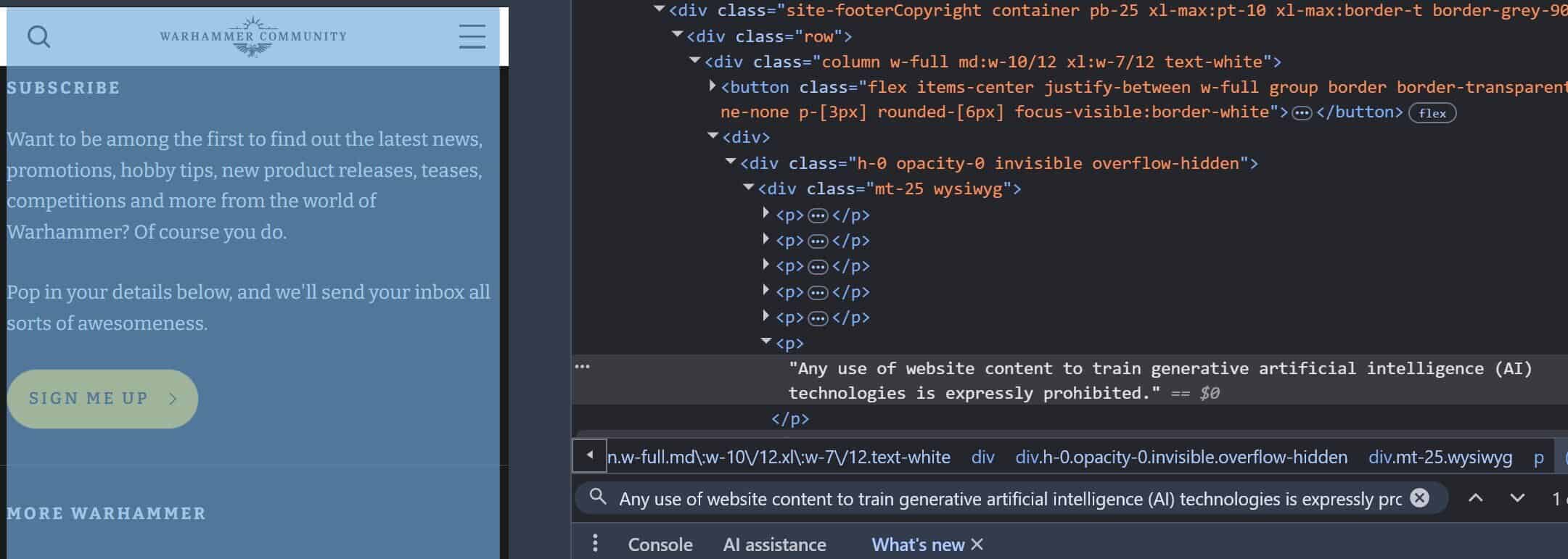
Most readers will never see this while scrolling through a model preview or a lore drop. You’d have to crack open the page source to find it. So, in practical terms, the message is for AI companies and data scrapers, and it covers exactly what Warhammer fans care about: article text, preview images, the lore, and the branded language that makes Warhammer feel like Warhammer rather than generic sci-fi with bigger shoulder pads.
Anyone who’s spent ten years arguing about whether a Black Templar is part of a Crusader chapter knows why GW guards this stuff. The plastic kits aren’t really what people are buying. They’re buying the fact that anyone walking into a local game store already knows what a Space Marine, Chaos Lord, Tyranid, or Stormcast Eternal is supposed to feel like.
That’s the art, writing, and faction identity doing real work, keeping players buying, painting, and arguing over rules at midnight.
The Warning Is Legal Armor, Not A Void Shield
A notice like this is mostly a CYA move. It tells AI companies on the record that the site owner doesn’t permit scraping for training, which matters later when GW needs to show its terms were clear and the training was unauthorized. So yes, the Warhammer Community AI ban is real, but it also isn’t a technical wall.
It’s closer to a “no trespassing” sign: useful, clear, and potentially important in a legal fight, but not the kind of thing that physically stops anyone from climbing the fence. If GW wants real protection, the warning has to be backed up with technical blocks: robots.txt rules naming the known AI crawlers and per-page metadata instructions for the rest. Even then, the legal armor depends on terms of service that spell out the no-scraping line and a company willing to chase down violators.
So while the warning is relevant, it also doesn’t mean WarCom is suddenly sealed inside a Blackstone Fortress.
The AI Debate Around GW Just Got More Awkward

The timing makes this interesting because GW already drew the line in the sand that the studio is hands-off, and the people making the models, lore, rules, and art are still human.

But the design studio is only one part of the wider Warhammer business. WarCom articles, marketing copy, social moderation, automated takedowns, and legal enforcement all sit around the studio pipeline, and that’s where the GW AI policy gets messier.
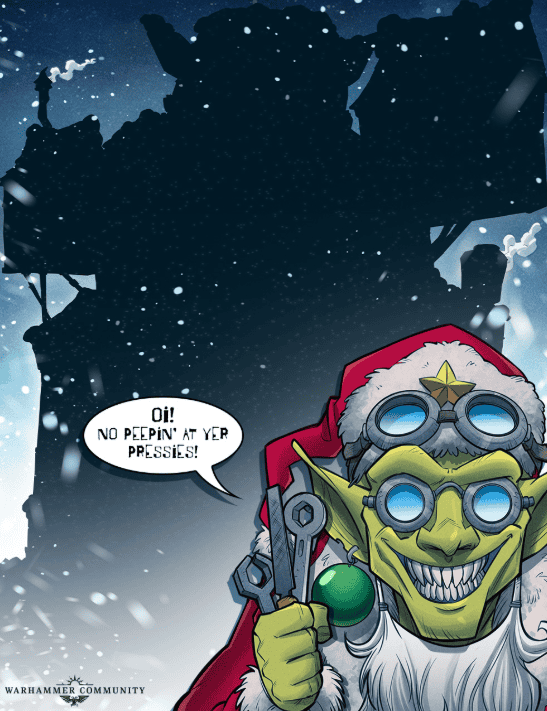
We’ve pointed out signs that AI may already be in play in those departments (like this red gobbo art with two sets of goggles). WarCom articles have also sometimes had that overly polished, oddly uniform feeling. Add in community concerns about bot-like moderation gaps and strange editorial shifts after staff changes, and the picture starts to look a little less spotless.
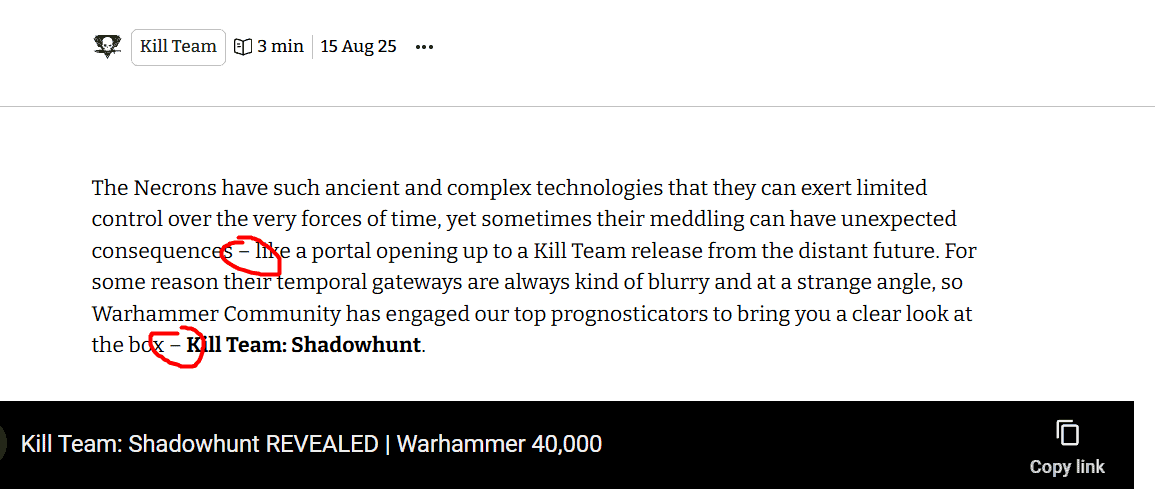
None of that proves GW has handed WarCom over to a chatbot. But it does make this new AI warning feel loaded, because GW is telling outside AI companies “do not train on our content” while fans are still asking whether GW itself is using AI-adjacent tools outside the officially protected creative zone.
Warhammer Is Exactly The Kind Of IP AI Companies Want
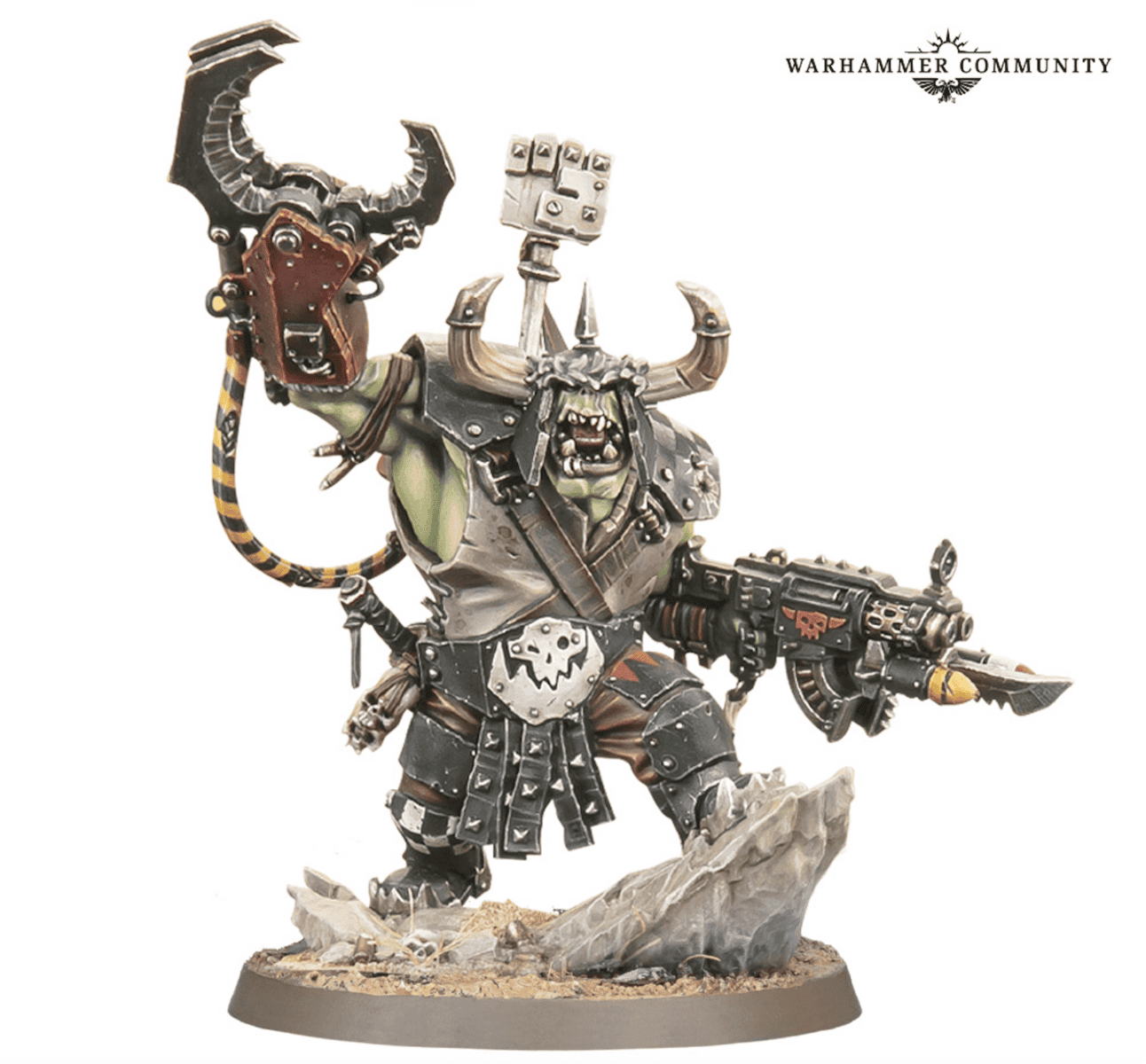
Warhammer content is rich training material because it’s so specific. The setting has decades of lore, thousands of named characters, recognizable faction aesthetics, and a tone that swings from gothic horror to dark satire without breaking stride. That’s exactly why GW would want to wall it off for Warhammer IP protection.
A generative model trained on enough of that material could spit out art, fake lore, marketplace listings, and knockoff concepts that feel close enough to the real thing to create problems.
Not exact copies, maybe, but close enough to make the legal team start warming up the drop pods. For players, this isn’t an abstract tech-policy fight. Warhammer’s identity is why collectors care about a new codex, why tournament players buy into faction updates, and why hobbyists spend hours painting heraldry no normal human would notice from three feet away.
The setting has value because it has fingerprints, and GW knows it.
Final Thoughts on Games Workshop’s AI Training Warning
Overall, we think that locking AI companies out of Warhammer content is the right defensive move, and we’re glad GW finally put the warning where machines actually read it.
The public statements about keeping AI out of the creative process are still on the record, and hobbyists keep picking apart WarCom writing, enforcement behavior, and other parts of the digital presence for signs that machine learning may already be involved behind the scenes.
That’s why what happens next may be even more crucial. If GW backs this up with a robots.txt update and a clearer terms-of-service line, the legal armor gets actual teeth, and a lawsuit becomes plausible the next time a model trains on a Warhammer dataset. If not, it’s a flag in the page source and not much else.
Honestly, the harder question is one GW hasn’t answered yet: whether the same anti-AI line applies to everything happening behind WarCom itself, not just to outside scrapers.
🔗 Related Reads:
- Games Workshop CEO Bans AI in Warhammer
- GW Let AI Take Over Warhammer’s Lore, Articles & More
- Breaking: GW Just Got Caught Using AI Art Red-Handed
- Hollywood Vs AI: What The Lawsuit Means for Warhammer
- Games Workshop Sues Ghamak Over 3D Models
- GW Freezes Assets Amid Worldwide Seller Takedown
- White Dwarf Editor Made Redundant After 75-Issue Run
Do you think Games Workshop’s AI training warning will hold up if hobbyists keep finding signs of AI inside the company’s own operation?