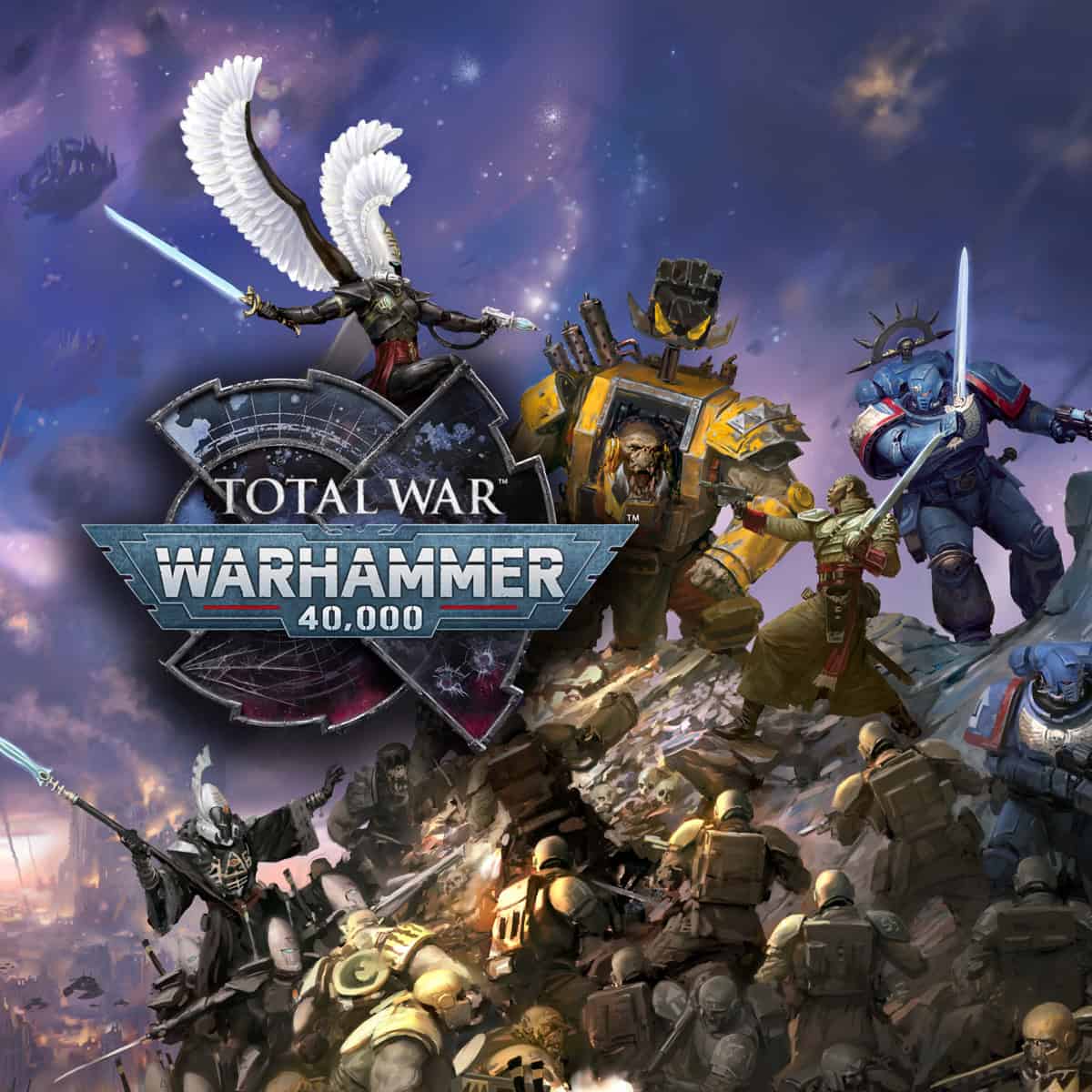
Get the inside look at the Total War 40k design strategy from planets and fleets to factions built for nonstop galactic war; this one isn’t just a reskin.
Creative Assembly has finally pulled back the curtain on how Total War Warhammer 40,000 was designed, and the big takeaway is this: they did not just bolt chainswords onto their fantasy engine and hope for the best.
This game is being built around how 40k actually functions as a setting, from planetary warfare to faction identity to the uncomfortable truth that there is never a quiet moment anywhere in the galaxy.
If you’ve been wondering how a Warhammer 40k video game can juggle planets, factions, fleets, and nonstop war without collapsing under its own ambition, this is the framework holding it all together.
Total War 40k Design: Scale Goes Vertical, Not Sideways
Updated on December 26th, 2025, by Rob Baer with the latest reveals.

The real trick to Total War 4ok’s Design is stacked scale.
Battles still play out in real time with thousands of units smashing into each other, but those fights now live inside a chain of consequences that keeps climbing upward instead of spreading outward.
- You fight brutal street battles inside hive cities.
- Those cities control regions across a planet.
- Planets sit inside star systems.
- Star systems feed into galaxy‑wide conflict zones.

Every fight pushes something higher up that stack. Take a hive city, and you gain population, resources, and a staging point for future advances. Lose a planet, and that entire front disappears. Campaigns do not wrap up neatly and fade away; they leave marks that carry forward.
That structure is what lets Total War Warhammer 40k feel huge without turning every map into empty space for the sake of scale.
Factions Break the Rules on Purpose
 Warhammer 40k factions were never meant to feel fair, and Creative Assembly clearly decided to lean into that.
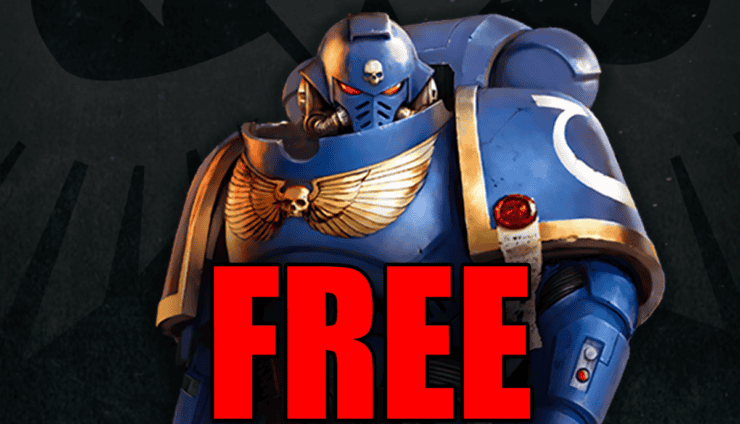
- Space Marines play as elite strike forces. Low numbers, extreme power, and limited replacement options mean every casualty matters more than it should.
- The Astra Militarum leans into classic Total War territory. Industry, supply lines, artillery, massed infantry, and planetary development sit at the core of how they fight and expand.
- Orks run on momentum. Fighting fuels growth. Slowing down leads to infighting. The Waaagh is not a flavor tag; it is a resource that has to keep moving forward.
- Aeldari fight wars they cannot afford to lose. Webway travel, stealth movement, off‑map recruitment, and objectives that are not always about conquest define how they survive at all.
This is exactly why launch factions are limited. Each one bends the campaign structure in a different direction, as trying to do too many at once would flatten those differences.
Total War 40k Design: Lore Drives Mechanics, Not Balance Sheets
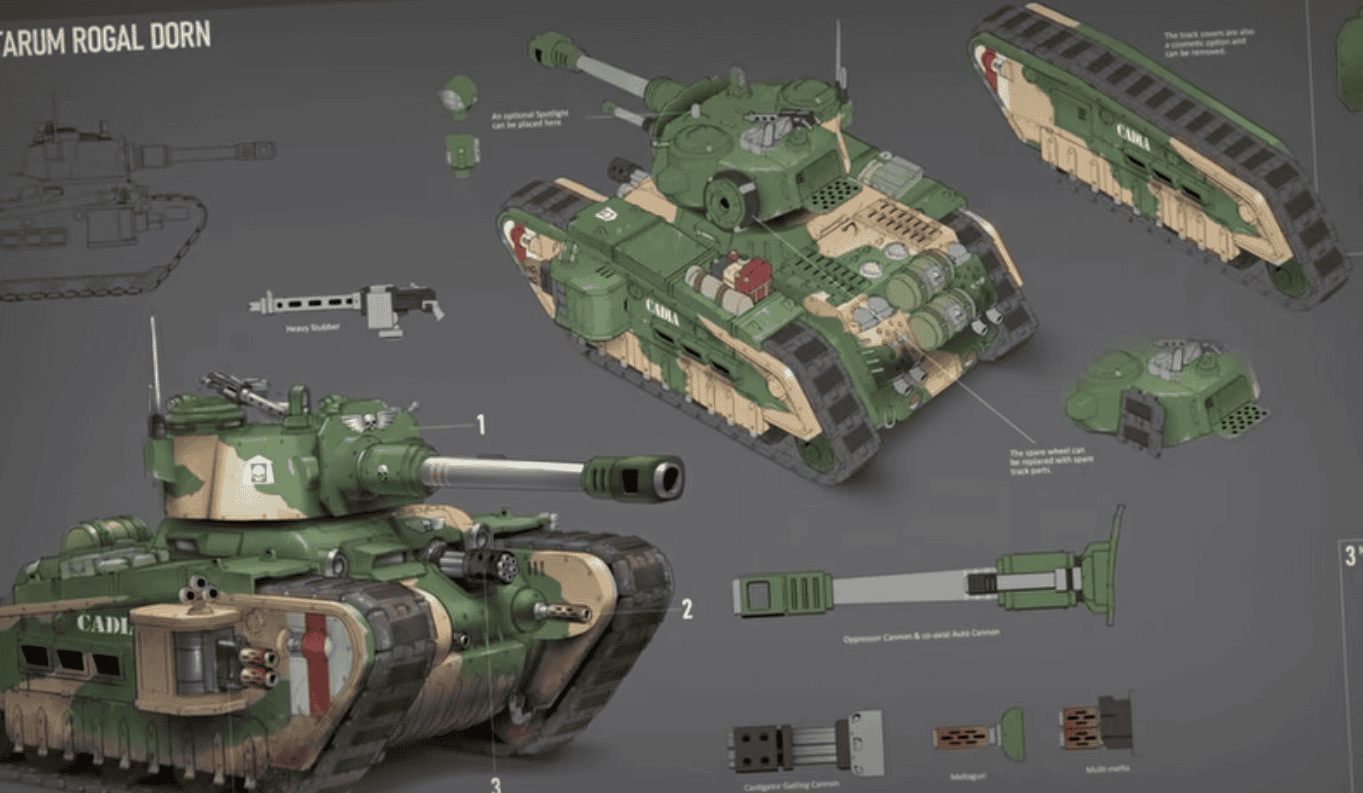 The Total War 4ok design rule here is straightforward. If the lore says something is rare, it stays rare.
Space Marines do not casually rebuild chapters.
Aeldari souls do not come back.
Orks need constant conflict to function.
Guard armies consume resources at terrifying rates.
Victory looks different depending on who you play. Holding territory might matter for one faction, but preventing a disaster might matter more to another.
That approach keeps factions from turning into the same army with different colors.
Reinforcements Are the Campaign’s Design Payoff
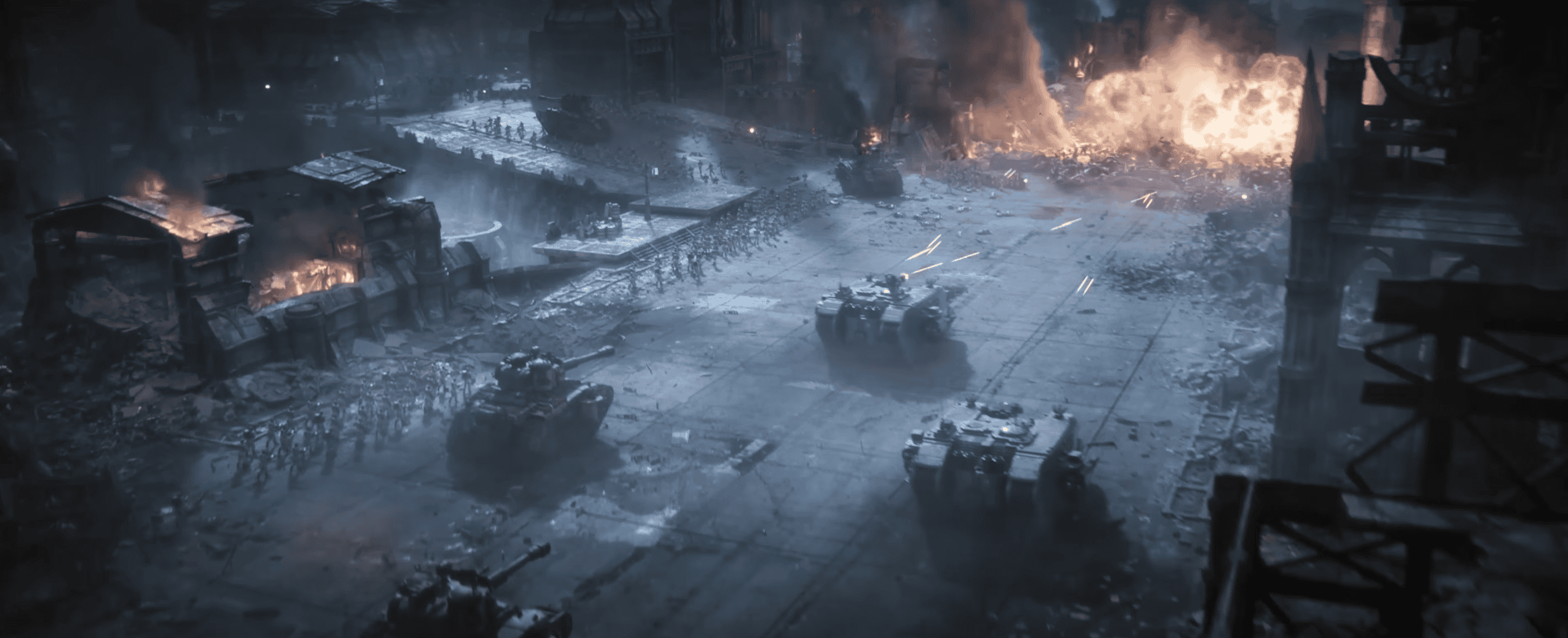
In Total War 40k Design, reinforcements are where strategy and battles really connect.
Units do not magically appear mid‑fight. They arrive from fleets, reserves, or faction‑specific mechanics that were set up earlier in the campaign.
- Space Marines slam in via drop pods and reshape the battlefield.
- Guard floods the line with fresh regiments.
- Orks teleport chaos straight into the thick of it.
- Aeldari emerge from Webway gates exactly where you do not want them.
Who you kept in reserve, where your fleets are positioned, and what assets you committed earlier all matter once the shooting starts. Battles feel earned instead of scripted.
Guns Everywhere, Punching Still Mandatory in Total War 40k

Warhammer 40k looks ranged‑heavy on paper, but anyone familiar with the setting knows how much close combat still defines it.
Front lines form. Units fire, then charge. Power fists solve problems. Cities collapse under bombardment. Tanks plow through streets that were buildings moments earlier.
The end result still feels like Total War 40k design, not a cover‑based tactics game pretending to be something else.
Planets Can Die, Permanently

This is one of the biggest shifts.
Planets can be destroyed outright. No rebuilding. No retaking. No undo button.
The Imperium treats this as a last resort, and the game reflects that mindset. Authorizations, costs, and consequences stack up before that option even becomes available. Once pressed, that planet is gone from the campaign map for good.
That single decision raises the stakes of long‑term strategy in a way Total War has never really attempted before.
Total War 40k Design: Fleets Are More Than Transports
 Space matters here, just not in dogfight form.
Fleets move armies, provide orbital fire support, unlock bombardments, and control access to systems. They interact with anomalies between worlds and shape how quickly wars spread across the map.
They function as the backbone of the Warhammer 40k campaign layer, not a side activity bolted on for flavor.
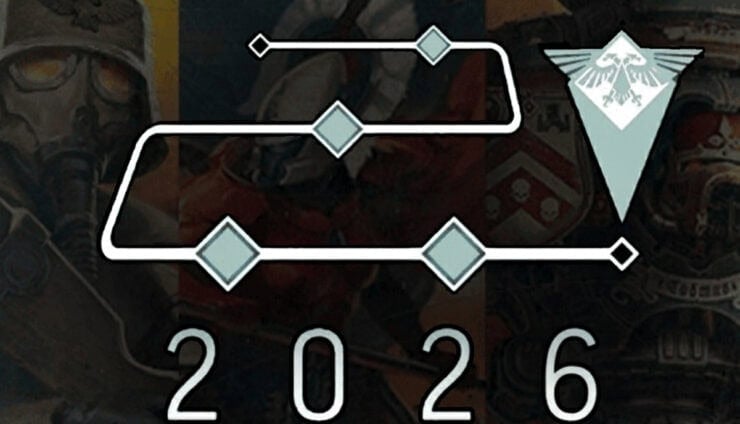
The Crusade Theater Is the Long Game
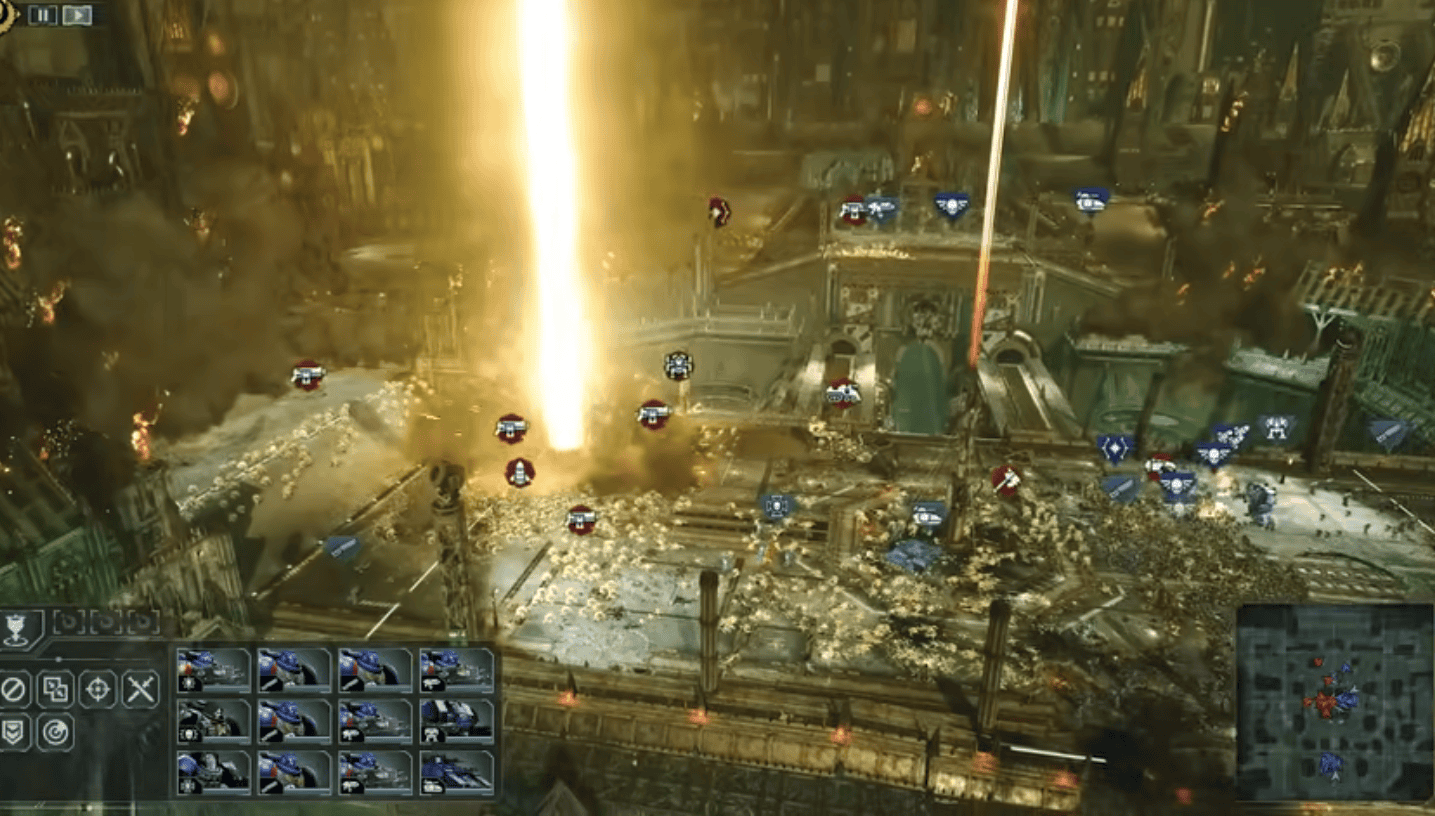
The Crusade Theater sits above standard campaigns.
Each campaign shifts the balance inside a larger conflict zone. Future campaigns inherit scars, power shifts, and outcomes from earlier wars. Your story continues across multiple playthroughs instead of resetting to a clean slate every time.
The galaxy remembers what you did.
That structure clearly supports long‑term updates, expansions, and new factions without burning players out on constant restarts.
Customization Is Part of the Design Strategy

Customization here is not just visual busywork.
Players can adjust armor colors, insignia placement, and unit identity, but the real hook is mechanical identity. Fire‑heavy Space Marines play differently from melee‑focused chapters. Guard armies built around armor behave differently from infantry hordes.
Those choices change how problems get solved, which mirrors how people build armies on the tabletop.
Why This Total War 40,000 Design Approach Actually Works

Total War Warhammer 40,000 is not trying to do everything at once. It stays focused on permanence, faction identity, and layered consequence.
Scale feeds strategy. Lore shapes mechanics. Campaigns matter beyond their own finish screen.
If Creative Assembly delivers on what they have outlined, this will not feel like a Warhammer 40k video game borrowing Total War systems. It will feel like Total War finally found a setting big enough to justify pushing the formula this far.
And yes, Orks will still krump everything in sight. Some traditions stay sacred.
See the Latest on Total War 40k Here!