
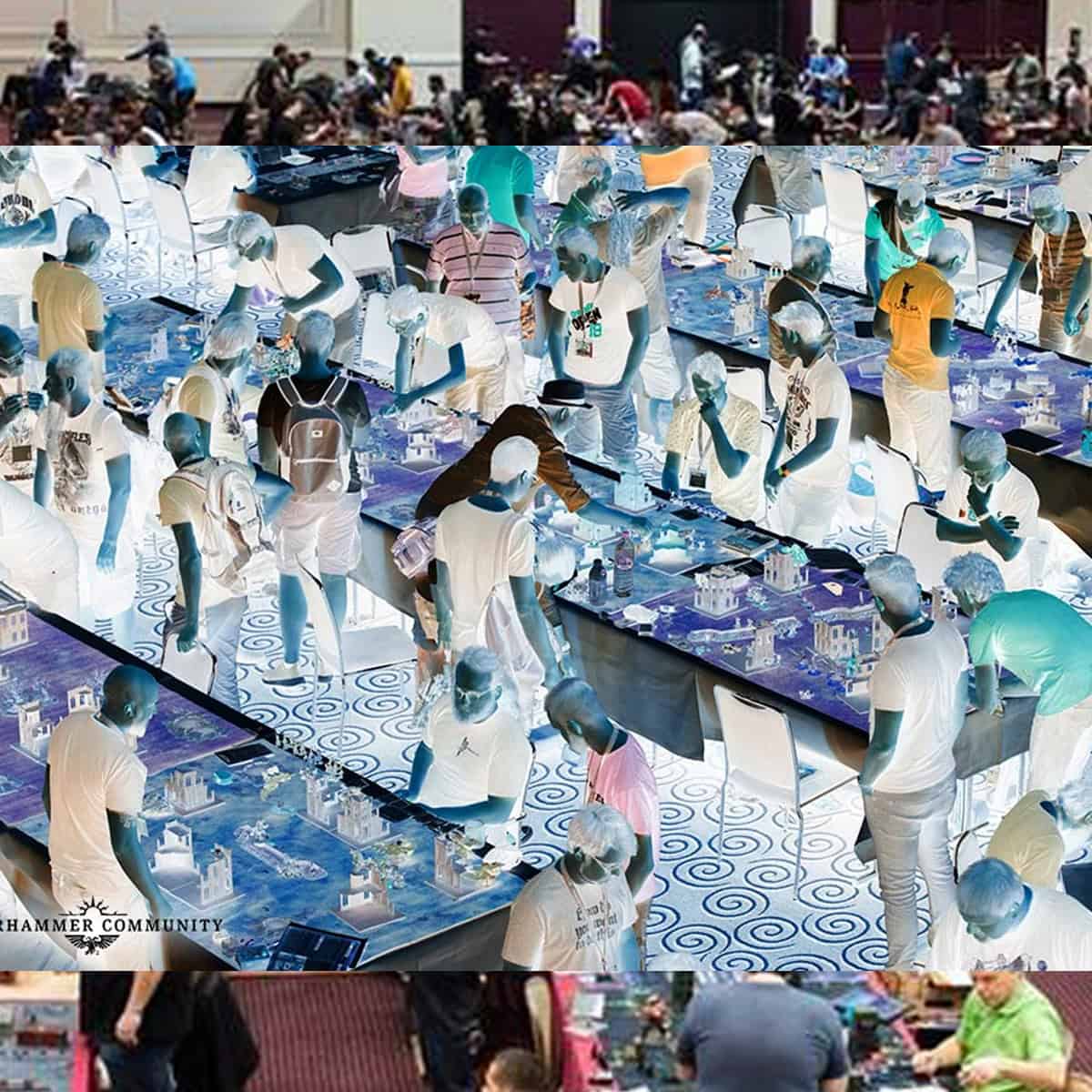
Why is Warhammer so expensive? GW now builds 40k around meta-chasers who rebuy an army every six months, leaving collectors behind.
For years, the ideal Warhammer 40k customer was “the guy” with 10,000 points of one army and a paint scheme he’d defend to the death. He knew every datasheet, used the weird characters nobody else touched, and spent months learning how every unit actually worked.
That player still exists. The game just doesn’t seem built around them anymore.
Now the ideal customer looks more like someone with a dozen smaller armies, each ready to be replaced when the rules change. When the dataslate shifts, the old force hits the secondhand market and the next project begins.
From where we’re sitting, Games Workshop has quietly built 40k around that cycle now.
- The take: GW’s ideal 40k customer has shifted from the one-army die-hard to the meta chaser who flips armies.
- The evidence: smaller rosters, disappearing units, and customization moving onto detachment sheets make armies easier to buy, play, and sell.
- What changes if we’re right: a game aimed at short-term players stops rewarding collectors who planned to stay for years.
The Ideal 40k Customer Used To Own One Army, Now They Rent A Dozen
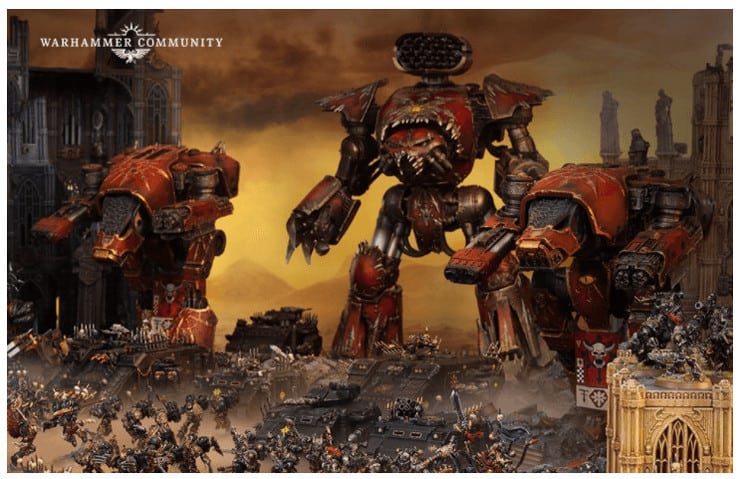
Back in the day, the die-hard collector built tens of thousands of points because the army faction itself was more important than its win rate. They learned the faction by sticking with it, running different units until they understood every matchup.
The meta chaser plays differently. There’s no ride-or-die faction, just whatever is topping the standings. They check what’s winning, buy it, and move on when the numbers change.
You don’t even need to build the whole thing from scratch. Buy an army at tabletop standard, paint a few units to fill the gaps, and you can be event-ready in a weekend. And then when the meta inevitably turns, it goes up for sale.
Without years of work tied up in the army, there’s not much reason to stay attached to it. But, for GW, someone always buying random new units is preferable to one hobbyist buying every box of Hellions when they actually go back up on the webstore.
Trimming The Weird Units Makes Balance Easier And The Game Smaller
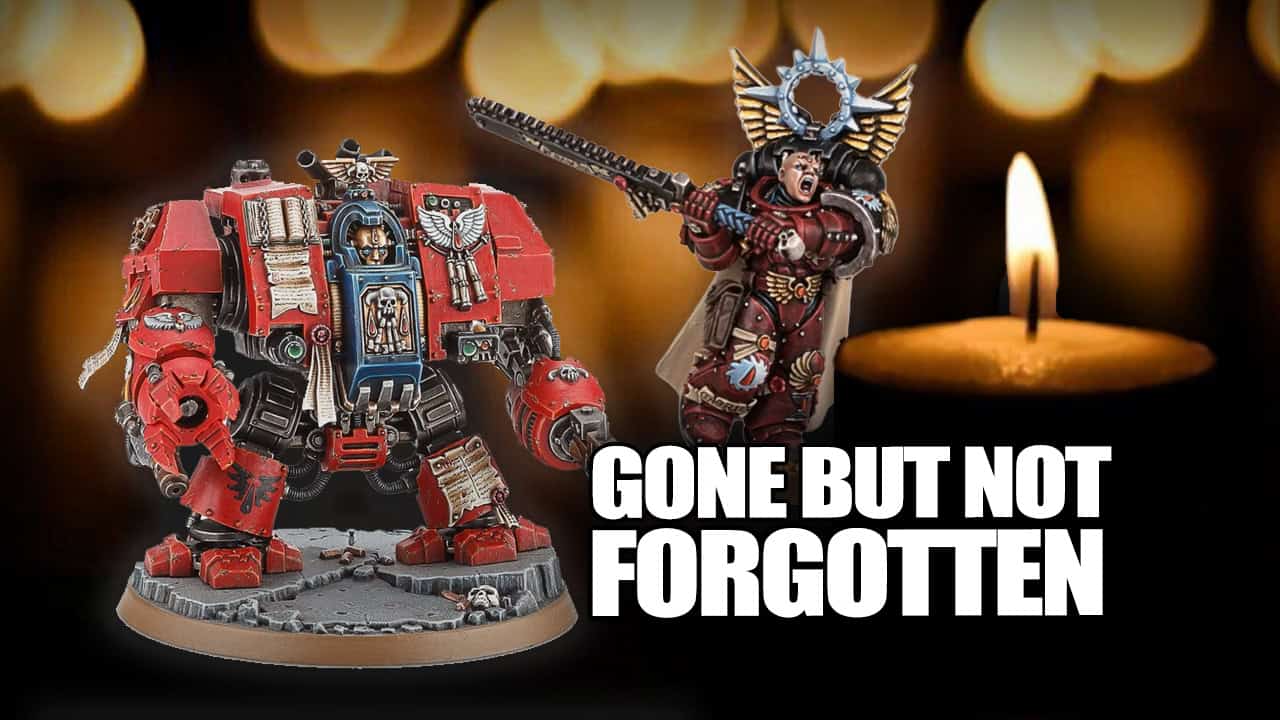 Smaller rosters are easier to balance. Every strange unit or one-off character GW pulls out of a codex removes another interaction to test. Fewer units are easier to keep near a 50% win rate.
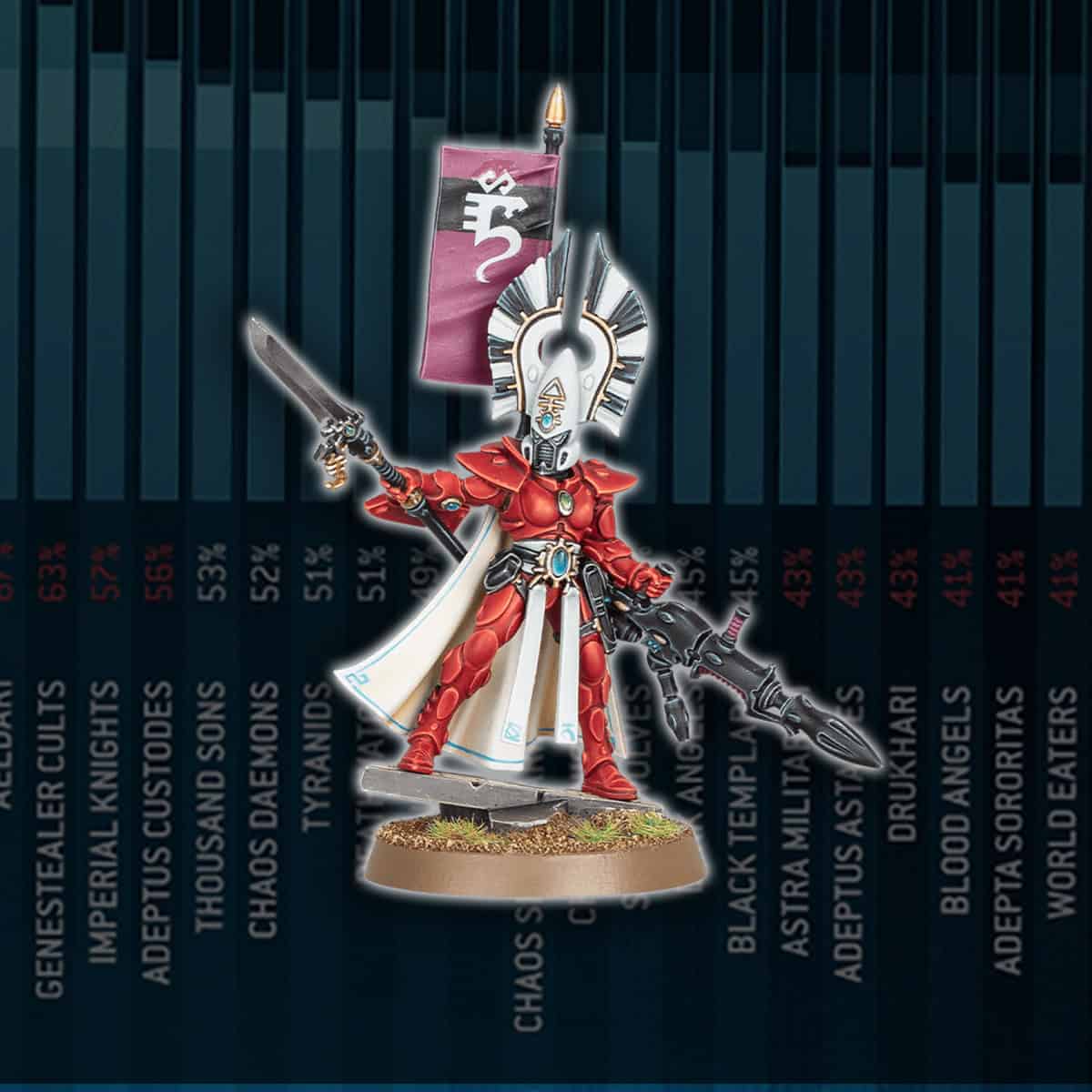
But that also makes them easier to buy in one shot, use for six months, and flip when the rules change. Customization has moved away from the models and onto the detachment sheet, so what you own matters less than the “rules package” you choose that week.
Balance gets easier for GW, sure, but collections get shallower. And honestly, one of those shows up in the sales report. So, someone buying an old odd-looking character doesn’t move the bottom line like four new units to finish a meta army for next weekend.
The Meta Chase Costs Us The Attachment That Kept Us In The Hobby Originally
 So, that player with 10,000 points of one faction was an anchor in most communities up until recently. Years of painting, collecting, and playing meant one bad dataslate wasn’t enough to make them sell everything. The player with a dozen 2k armies is always ready to move toward the next hot faction.
Attachment kept die-hard players buying, painting, and showing up for years. Replace that with a cycle of six-month armies, and you get customers who spend quickly and sometimes leave just as fast.
Now with all the recent Legends and even Wargear selection changes since 10th edition, the old Die-hards are becoming less and less common to see.
Final Thoughts on Why Warhammer 40k is So Expensive
 A smaller game may be easier to balance, but a game built for army flippers eventually stops rewarding the collectors and die-hards who were willing to stay.
Those players probably won’t announce that they’re quitting. They’ll just buy less, paint less, and slowly disappear. By the time anyone notices, store shelves will already be sold out of the latest FOMO release and whatever the latest hot meta units are.
🔗 Related Reads:
- Best & Worst Warhammer 40k Factions Ranked in the Meta
- Warhammer 40k 11th Edition Rules: Release Date, Detachments and Every Change
- Forget Wargear, 40k Detachments Are Taking Over Customization Now
- GW’s Failing FOMO Strategy: Warhammer Isn’t Selling Like Before
- How To Sell Your Used Warhammer Miniatures and Make Bank
- How to Buy Used Warhammer 40k Miniatures and Armies Cheap
- Warhammer 40k Balance Dataslate: July 2026 Rules Changes
What do you think about the Warhammer 40k meta leaving die-hard collectors behind?

I got into the hobby with the original Space Hulk game. Then started with Space Marines. Around the end of the 2nd start of the third editions. Started with a small Space Wolves army and gradually added some other Marine factions to them.
I always played for fun with some friends.
Always bought what faction and figures I thought were great looking. Not looking to build the ultimate army of any of them.
Especially once GW started this rules changing every few years. Now starting to go every few months with balance sheets and the rest
I now with the high cost of almost every single figure or box set. Have only been buying a few per year that I like the look of.
I personally think GW with all this nonsense is just chasing the money.
I think this is going to break their market. As there are alot of really good alternative models showing up at a way lower cost.
There are also quite a few companies now making Simplified rules for smaller games.
The price of Warhammer being so high is simpler to explain. GW is driven by level of greed that has become unacceptable, and the game is saturated with fragile ego fan boys with seeming disposable incomes, who would rather sacrifice integrity and win no matter what than simply enjoy the hobby. I can’t stand the current tourney player. They honestly should save some of that money on Warhammer and pay for a therapist, because frankly if winning some miniatures battle game is so apparently life or death for them, they need to actually get a life. I miss the days people played for fun and played what the truly enjoyed, whether their army won constantly or not. The greater percentage seem to be sad excuses for people whose social skills stopped growing at around age 13.
This article is me. Im a Deathwatch player, gone from ‘here’s the one squad’ to a whole army. The 30yrs ive been in this ‘hobby’ ive always gone with the way I want to build an army, the rule of cool.
This is part two of the priced me out problem I have.
How much per model, unit etc, not a problem so much as frequency.
I had been playing since rogue trader, used to buy every book, every codex, multiples of every model except special characters, used to do conversions, always painting on mo.s dining room table.
Used to think it was getting married and having kids that slowed the hobby down for me, it’s not though, it’s GW’s meta chasing pricing and frequency.
Most days I don’t even have the heart to hobby anymore.
Now I pickup an occasional mini from eBay for mordheim or quest and pine for a good old apocalypse game off 12k points or a cramped game of city fight.