Warhammer 40k 11th edition terrain rules are reshaping competitive play with new terrain footprints, objective markers, and standardized layouts, here’s everything that changed.
Games Workshop looks ready to change how players think about the battlefield in Warhammer 40k 11th edition, and this time, it’s not just another tweak to missions or points. The biggest “rumors” center on terrain rules, objective markers, and how tables will be set up for competitive play.
Most players spend plenty of time talking about codexes, detachments, and balance updates, but terrain is the part of the game that quietly controls everything else. It shapes movement, shooting lanes, staging, charges, and how safe your units really are.
Now GW is really pushing harder into terrain footprints, standardized layouts, and objective-based terrain pieces, so that 11th edition 40k could feel very different before a single dice roll even happens.
Recently, GW held a call with tournament organizers to preview 11th edition changes, primarily focused on terrain. The goal was to give major event runners early guidance on how to run their events. So, a lot of what we’re talking about today comes from that, but GW also officially confirmed parts of it as well.
GW’s 11th Edition Terrain Rules Are Getting Real Product Support
Updated on June 22, 2026, by Rob Baer with the latest rules previews and rumors.
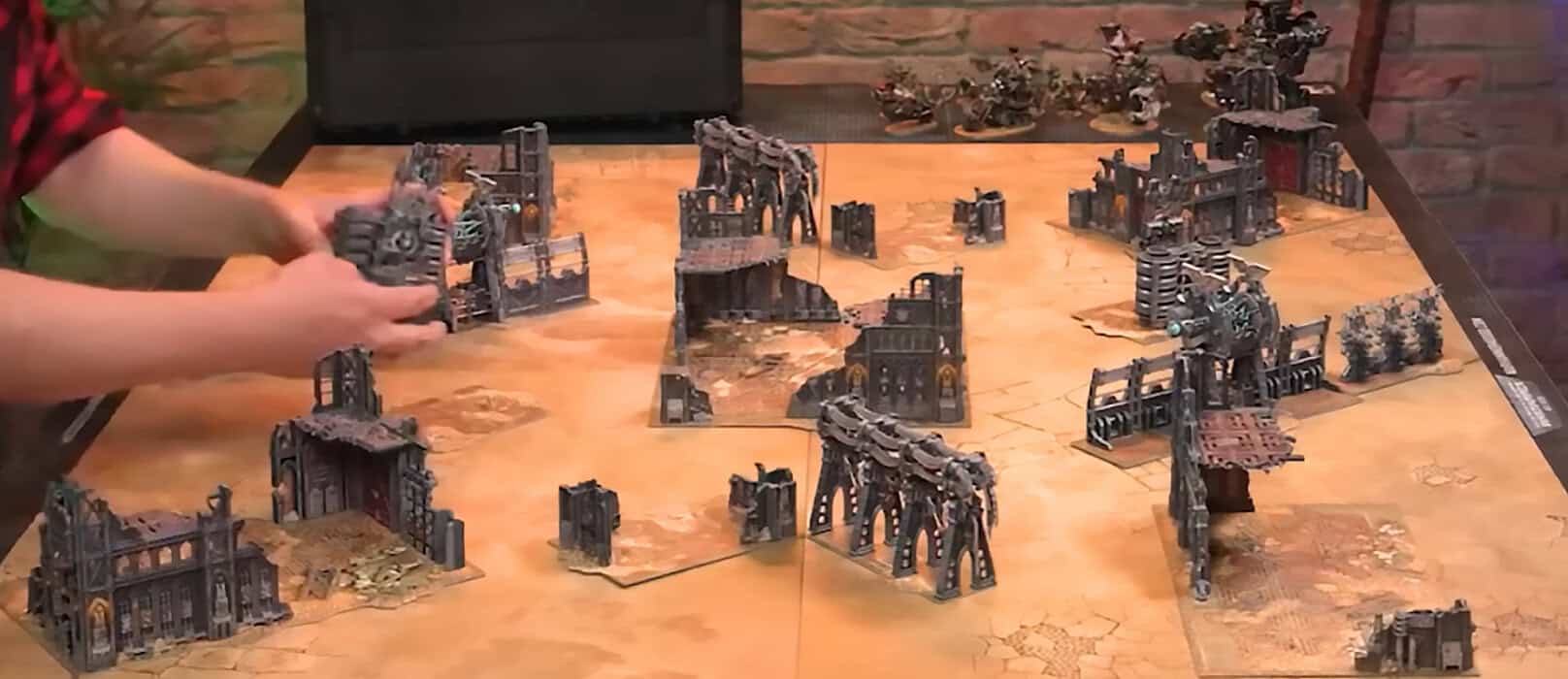
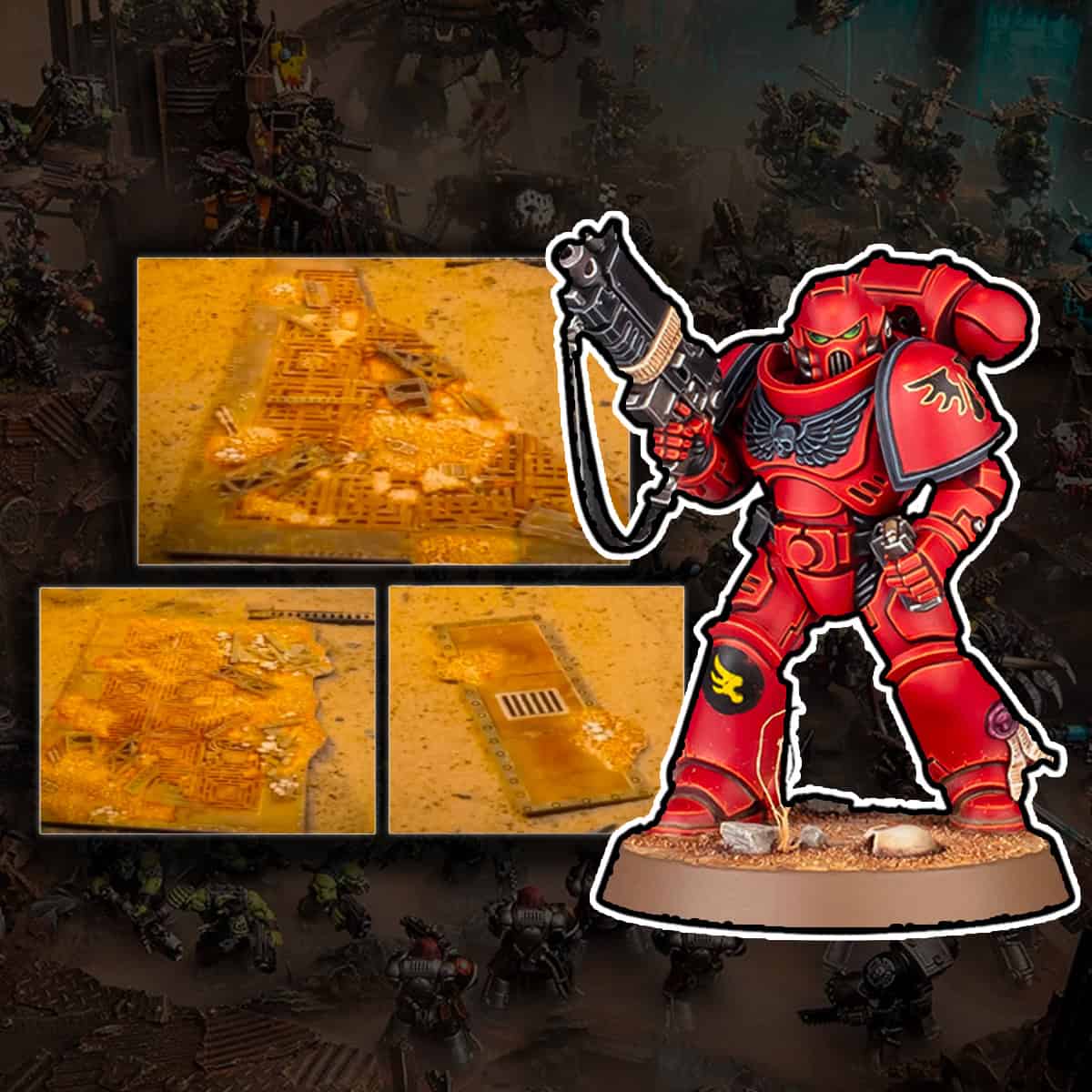
For the terrain side of 11th edition, we at least know GW isn’t just changing the rules and calling it a day. There are confirmed products coming for the new terrain footprints, and the pre-painted terrain tease shows they’re also putting actual plastic support behind the new layout, too.
The finer points of how those terrain rules will work on the table are still developing, but the product side already makes it clear this is meant to be a real part of 11th edition, not just a PDF footnote.
Terrain Area Footprints Matter More Than Ruin Shapes
 For years, competitive 40k has leaned hard on a pretty familiar table setup. Big L-shaped ruins, repeatable layouts, and lots of debates about line of sight. Sure, it worked well enough, but it also got stale. Mostly because tables started looking like variations of the same puzzle.
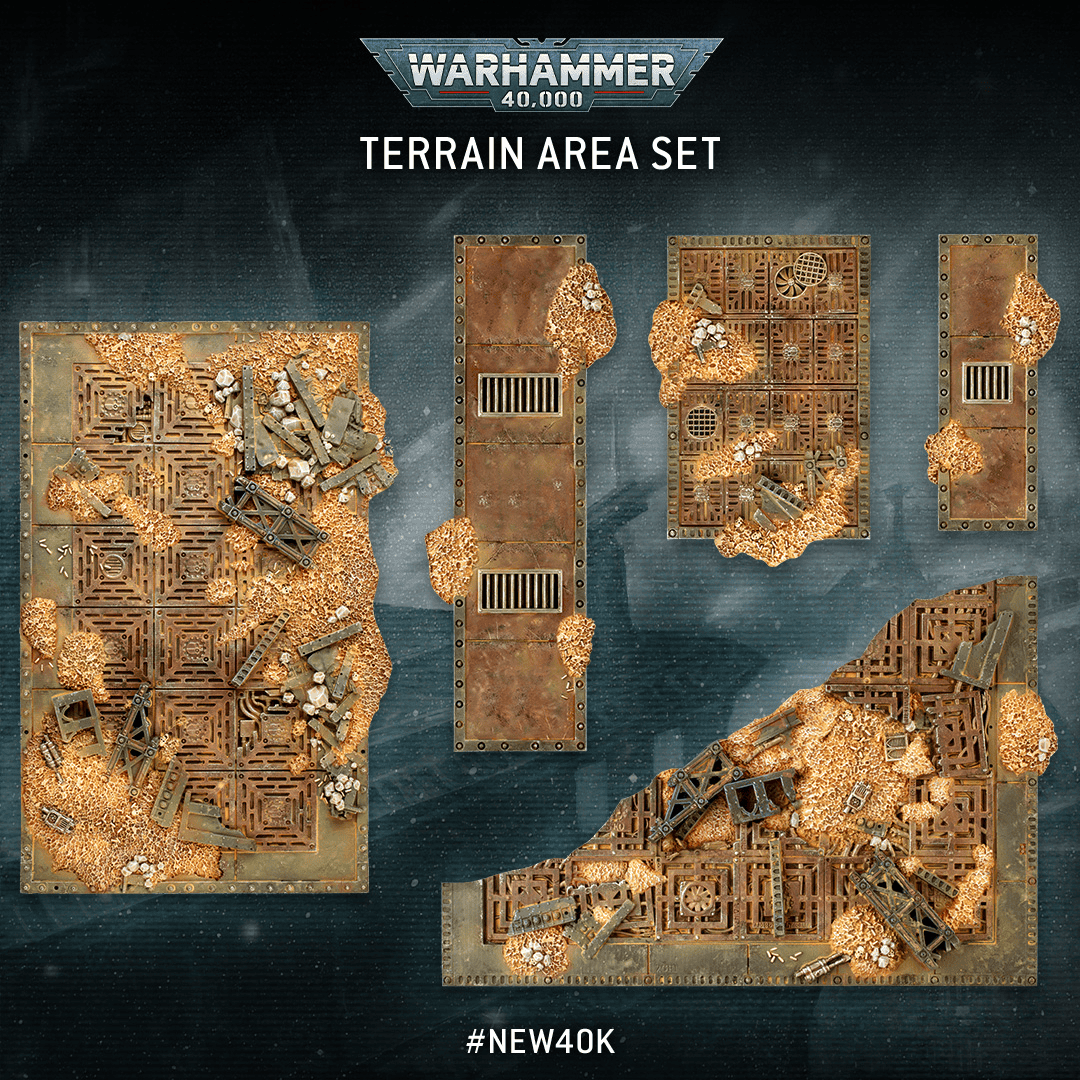
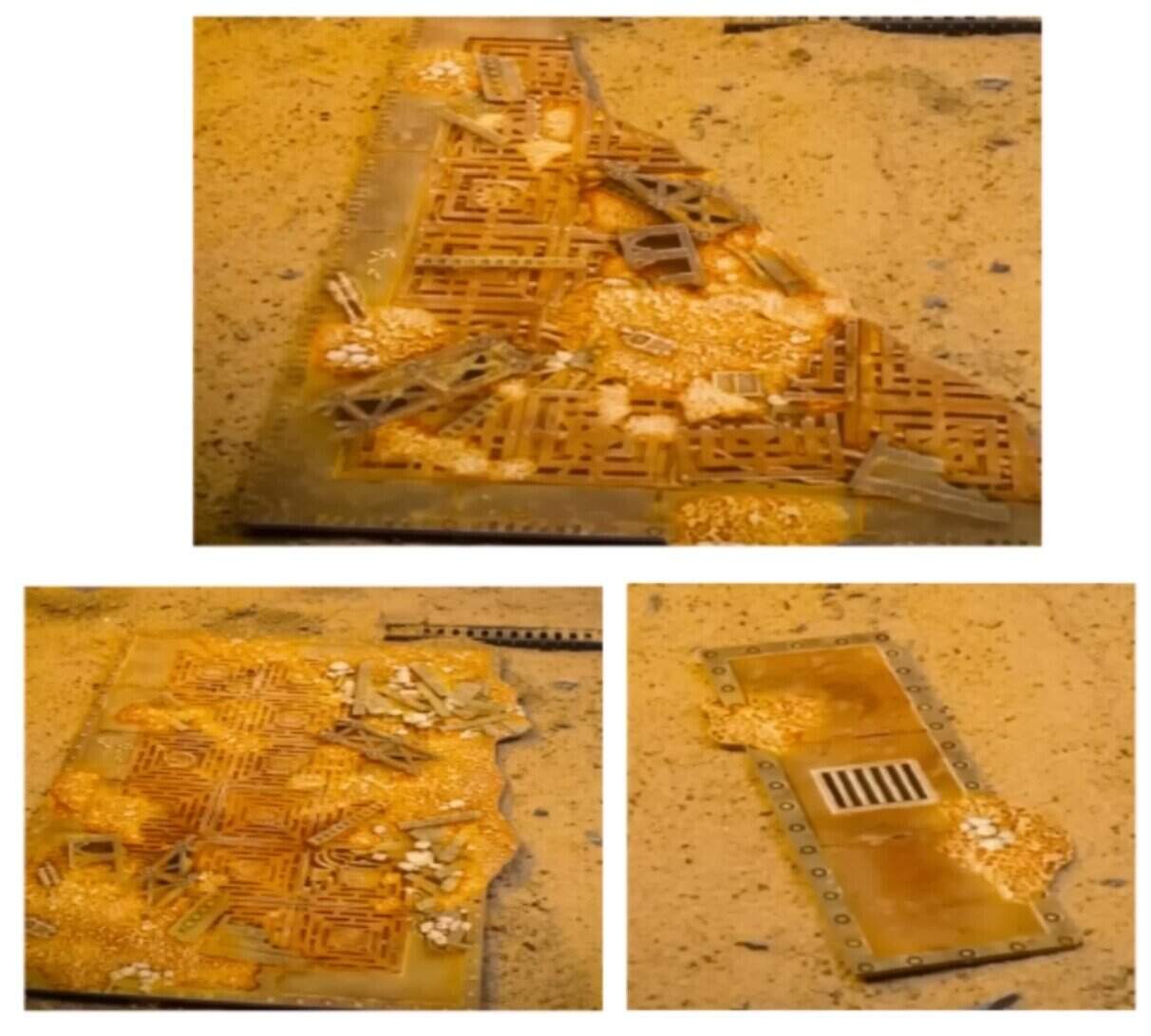 The first thing happening with 11th is a stronger focus on terrain footprints, meaning the actual base area of terrain will matter more than the exact wall configuration sitting on top of it. That has created room for more variety in how tables look while still keeping gameplay consistent. A lot of tournaments already do something similar, but making it standardized across regular play might help keep everything more consistent.
New Terrain Area Products You Can Buy For Your Table:
- Get your own Terrain Area Footprints from FLG
- Squad Marks has Terrian Area Footprints and Upgrade Kits
- Green Stuff World also has new terrain footprints for sale
- Print your own from Maker World here
11th Edition 40k Terrain Movement Breaks Things Into Clear Categories
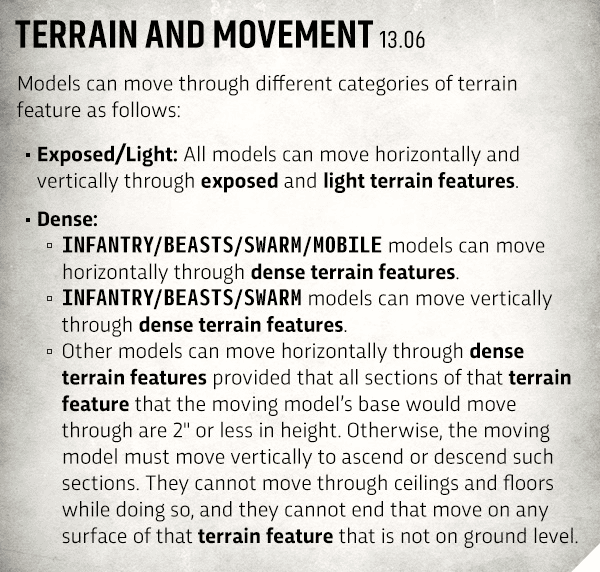 Terrain movement in 11th edition 40k looks like it’s being sorted into cleaner categories, with Exposed and Light terrain letting all models move through them horizontally and vertically without much drama. Dense terrain is where the unit keywords start to matter, as Infantry, Beasts, Swarms, and Mobile models get easier horizontal movement, while Infantry, Beasts, and Swarms also get better vertical access.
Everyone else can still move through Dense terrain in some cases, but only when the sections their base crosses are 2″ or less in height. That should make terrain easier to play around without turning every ruin, barricade, or rubble pile into a rules argument.
Fly Now Goes Over Terrain and Units Without Measuring
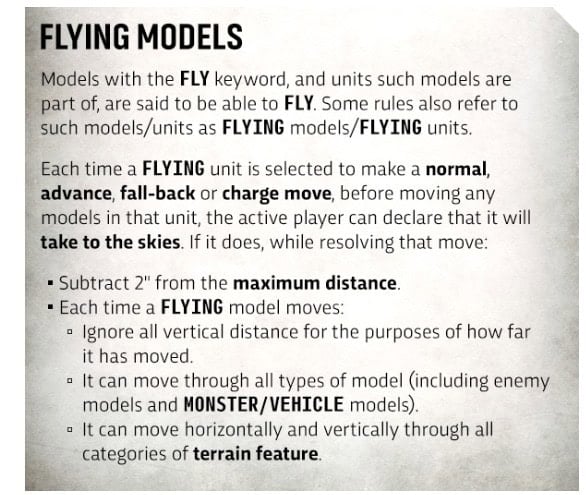 The Fly keyword in 11th edition 40k looks like it’s getting a cleaner terrain interaction, with flying models able to move over terrain and other models without measuring every climb, drop, or awkward vertical angle. Instead, they subtract 2″ from their maximum move and ignore vertical distance, which should make ruins, rooftops, and taller terrain much less fiddly during actual games.
You’re still paying a movement cost, so Fly isn’t just a free pass across the board, but it cuts out a lot of the tape-measure gymnastics that slow things down. On dense city-style tables, that could make flying units feel fast and useful without turning the movement phase into a tiny engineering project.
Objective Markers Are Changing, Circles Are Done!
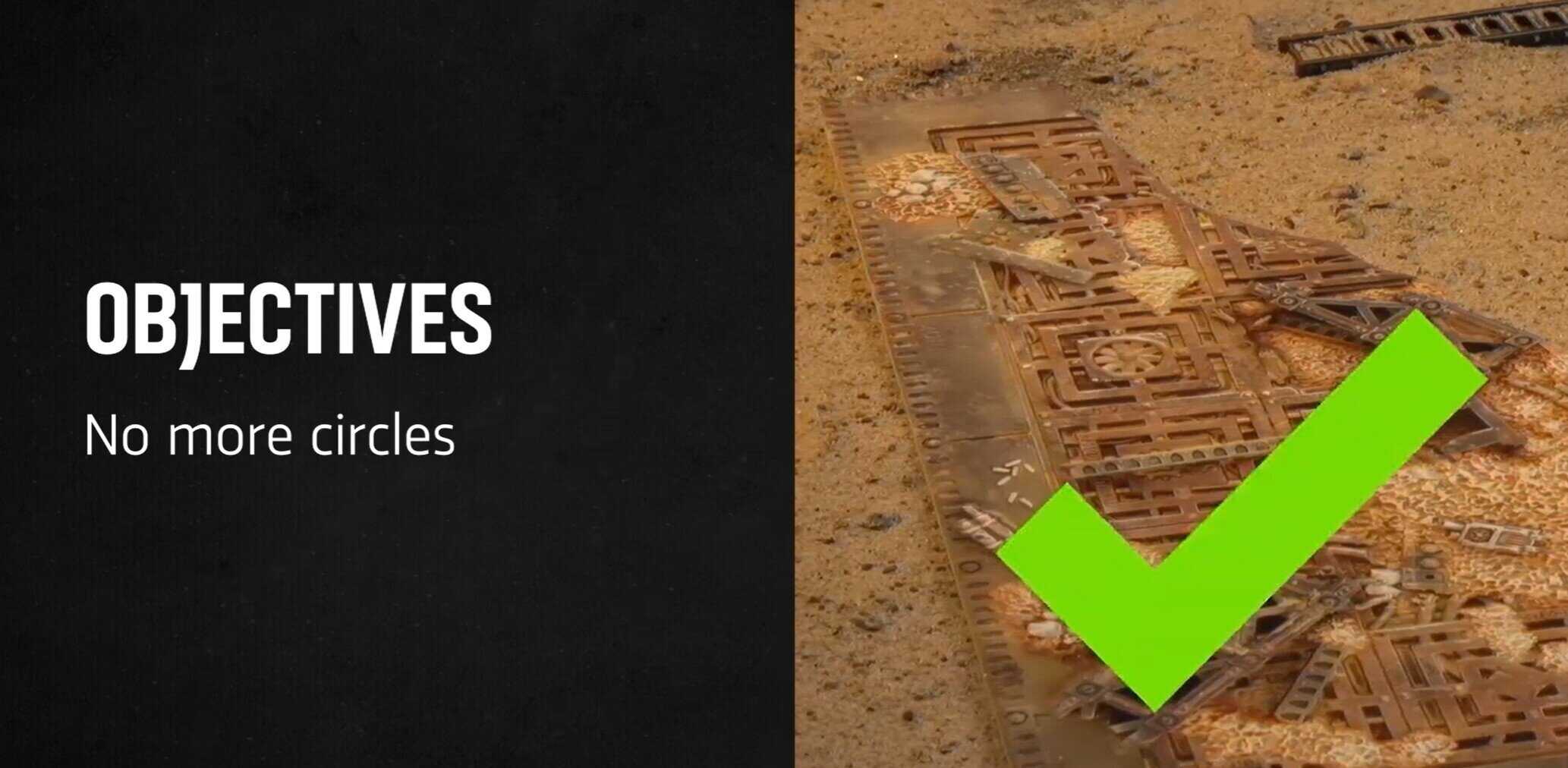 This is one of those changes that sounds minor until you actually think about what it does to the tabletop. Objectives will now score when you touch the base of the terrain, not when you get on a circle.
Traditional circular objective markers have been around for ages. They are functional, sure, but they often look weird on a fully built board. You spend time painting ruins, scatter terrain, craters, statues, and debris, then drop a flat circle in the middle like a parking spot. Now it is all going away.
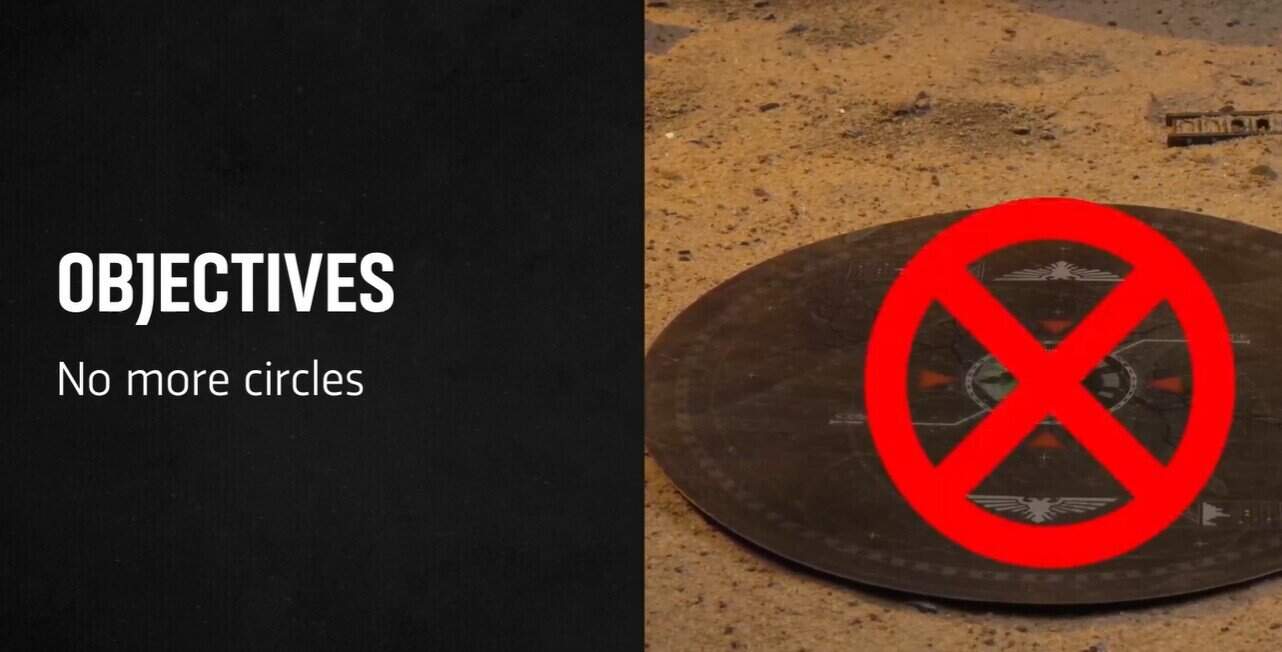 Instead, objectives are now becoming physical terrain footprints, things like bunkers, relic sites, ruins, or battlefield features that units interact with directly. Rather than controlling a floating circle, models would score by touching the edge of the footprint itself.
That’s a much better visual and gameplay idea. From a hobby standpoint, it makes the board feel more immersive. Objectives stop being abstract markers and start becoming actual locations worth fighting over. From a gameplay standpoint, it creates a more intuitive battlefield because players are contesting terrain pieces that naturally exist on the table.
This could end up being one of the most important 11th edition changes because it blends table design and mission design together in a way that feels overdue.
How Objectives Work in 11th Edition 40k Now
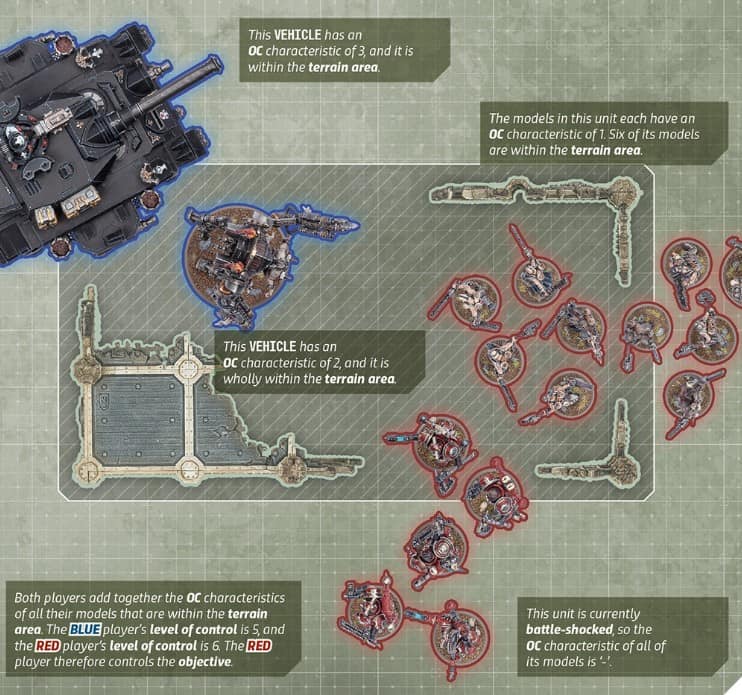 Holding an objective now often means grabbing cover at the same time, as you just need to be in a terrain feature to score. That also means your scoring units don’t have to volunteer as target practice just to do their job. Infantry, Beasts, and Swarms can get even sneakier by staying off the trigger and using the Hidden rule to avoid getting blasted at range, while bigger units like tanks and monsters can still play the objective game from safer positions behind ruins, trees, and rubble.
As you can see above, vehicles just have to be touching the terrain footprint to score.
It also gives missions a lot more flavor, since fights now look more like brutal scrums over key ruins, sacred sites, and strategic choke points instead of two armies politely arguing over a coin on the table. With missions using five or six objectives, list building gets a little more interesting, too, because now you’ve got to decide whether to spread out across the board or plant your flag on a few key hotspots and dare your opponent to come take them.
Lastly, GW mentioned you can still use 40mm bases for objectives and things like bombs. So expect some kind of “diffuse or set the bomb” type mission coming soon.
Deployment Maps Could Be More Structured Than Ever
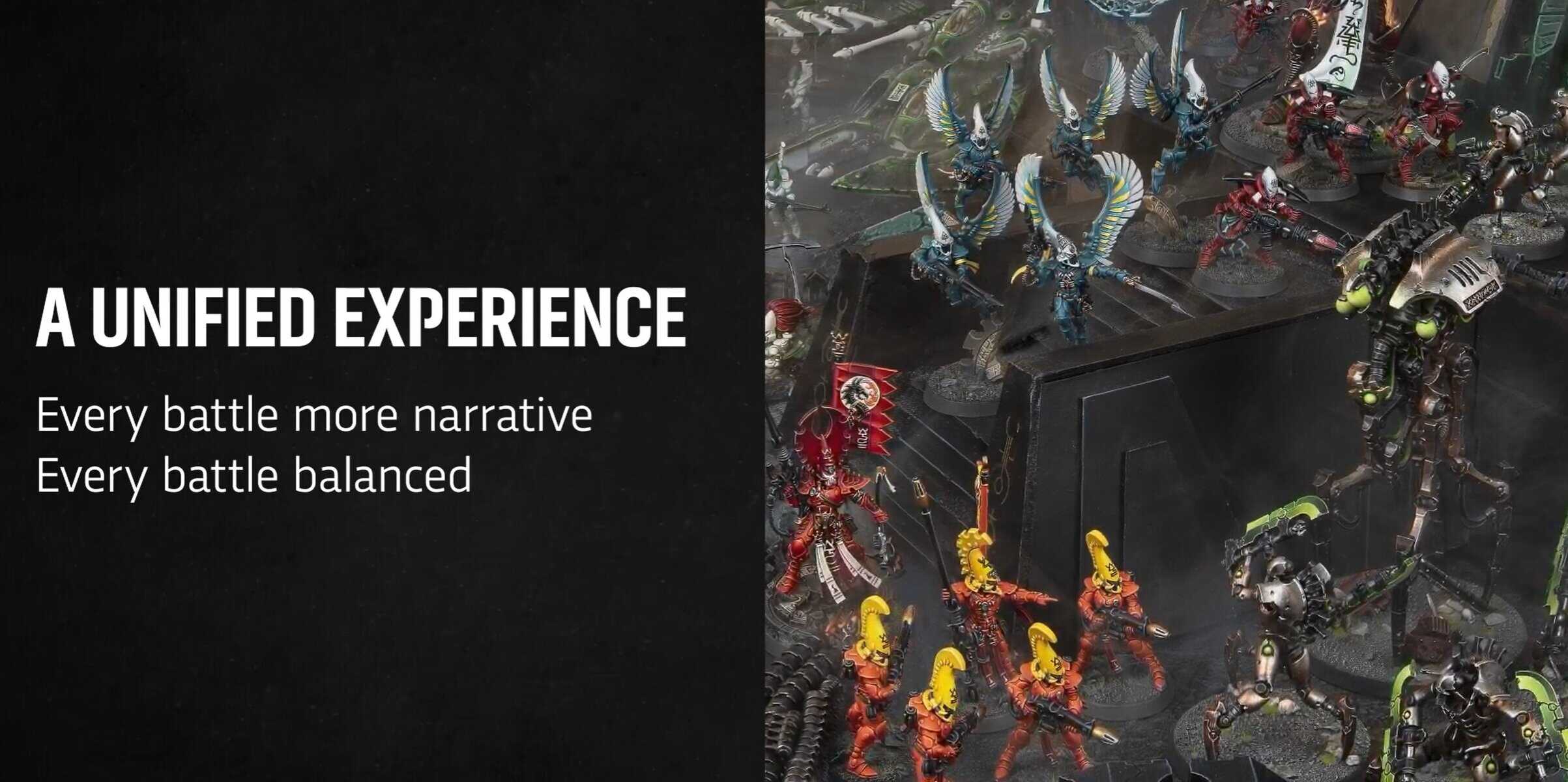 GW recently confirmed that deployment maps will come with pre-measured objective terrain placement built in. In other words, the layout doesn’t just tell you where to deploy and where the objectives sit. It will tell you where the objective footprints themselves go. Again, this is currently in tournament play, but it looks like GW is trying to add it to casual play as well.
Not only that, but the “rumors” say GW will also try to sell terrain (they already said you can buy the footprints from them) that matches the footprints and layouts exactly. Meaning you could buy a full table of terrain from GW, with everything included.
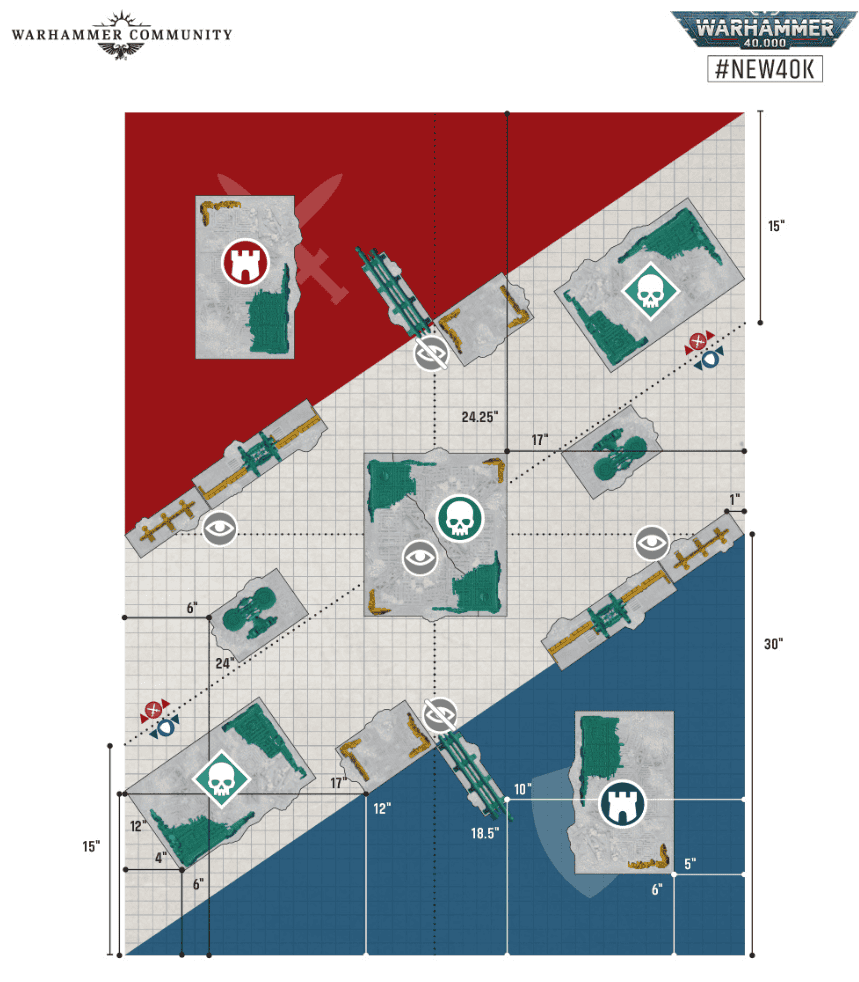 Here are the new dimensions and what terrain you’ll need:
- Four large rectangles – 7” x 11.5”
- Two large right-angle triangles – 8” x 11.5”
- Four medium rectangles – 6” x 4”
- Two long lines – 10” x 2.5”
- Four short lines – 6” x 2”
Compared to the old layout, that’s a lot more terrain to throw down:
- 6″x4″ – 4 count
- 12″x6″ – 6 count
- 10″x5″ – 2 count
That kind of control helps balance. It also means when GW tests units, missions, and points, they can do it against something closer to a universal terrain standard. This could be a big deal because one of the long-running headaches in competitive 40k has been how wildly different tables can affect outcomes.
So yes, it sounds a little more rigid, but at the same time, it also sounds fairer.
Plunging Fire & Towering Making a Comeback
 You can also use the Plunging Fire rule to give your unit a handy +1 to its Ballistic Skill, which basically cancels out the bonus from cover. Even better, though, it lets you really hammer an enemy unit that’s been left standing out in the open.
Plus, if you’re dealing with especially tall models with the TOWERING keyword, like Imperial Knights, they can bring that same Plunging Fire down on units at ground level within 12 inches.
GW Wants Standardized Competitive Terrain Layouts
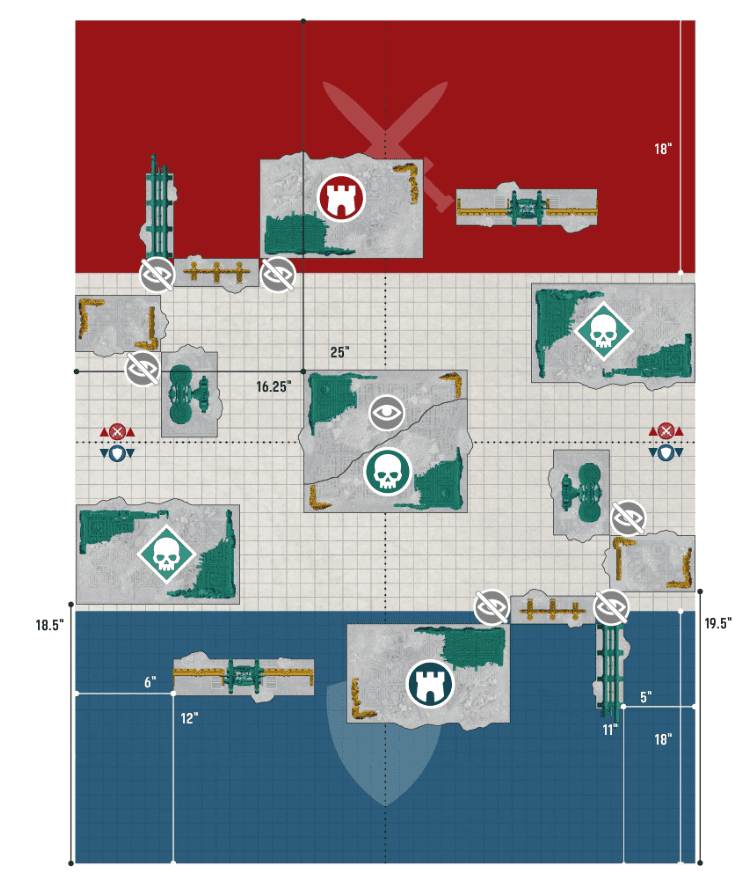 This reveal might be the real headline for tournament players. Games Workshop wants major events to start using official competitive terrain layouts, with boards featuring 16 terrain footprint-style pieces and more varied shapes than the old standard ruins (as you can see in the list above).
That includes small triangular pieces and long, narrow line-of-sight blockers that were spotted during that TO Discord call.
While most top-tier events all use similar terrain and rules, there are always different terrain philosophies, which means balance gets messy fast. One event rewards shooting castles, and another accidentally turns half the table into a parking lot for giant models. If GW wants a cleaner balance and more predictable outcomes, standardized terrain is the easiest lever they can pull.
The interesting part is that they apparently want major organizers like WTC and UKTC to buy in. Sure, they cannot force adoption, but if they can get the biggest names on board, official Warhammer 40k terrain layouts could become the new normal.
So, if you ask us, that would be one of the biggest competitive changes of the edition.
Terrain: Cover Rules Changing Hit Rolls Could Rewrite Shooting Math
 Now we know that cover in 11th edition 40k will affect Hit rolls instead of saving throws. They are also changing how units are hidden and obscured overall.
One of the biggest changes here is the new Hidden rule. It says that Infantry, Beast, and Swarm models that are inside a terrain area can stay Hidden as long as their unit didn’t shoot in the current turn or the previous player turn, which means they’ll usually start the game hidden too.
While a model is hidden, enemy units can only spot it if they’re within detection range, which is normally 15 inches. That gives you a lot more freedom when setting up, without having to stress as much about getting blasted off the table on turn one.
Right now, cover often makes durable units even more annoying because it stacks protection on top of already solid saves. In the new edition, most terrain is still Obscuring, pretty much like it works now.
You can’t see clean through an Obscuring terrain area, so even bigger models and larger units can use it to stay out of enemy fire. Infantry, Beasts, and Swarm units inside terrain also get the benefit of cover, but in 11th that works a little differently.
Instead of giving you a +1 to your armor save, it now gives your opponent a -1 penalty to their Ballistic Skill. So, instead of a target tanking more shots, the attacker simply lands fewer of them cleanly. That has a few big effects:
Shooting armies may need better positioning
Gunlines wouldn’t just care about volume of fire. They would care much more about angles, exposure, and whether they can line up shots that avoid cover penalties.
Defensive play becomes more interactive
Instead of parking a tough unit in cover and daring someone to waste firepower, players may have more reason to use terrain creatively to disrupt incoming attacks before dice even reach the wound step.
Hiding units becomes more important
If units are easier to obscure and cover, attacks become less reliable, and movement and staging become even more important. Fast armies, cagey armies, and armies that can trade from protected angles all get more interesting.
Line of Sight Gets Cleaner in 11th Edition 40k
Line of sight in 11th Edition 40k sounds a lot less fiddly, especially thanks to the new Solid keyword for terrain. Any gaps in a wall up to three inches tall now count as blocked, which means ruined windows and tiny wall cracks won’t turn every building into a sniper’s paradise. Once models get higher up in the terrain, they can still see and shoot through those upper openings, so ruins should feel more like actual ruins instead of magical bulletproof boxes.
The other big change is that models partly inside terrain can now draw line of sight normally, meaning they can see out and be seen back. That’s a big shift from 10th Edition’s awkward setup where touching the footprint could make a model visible without letting it shoot out in return. Vehicles, monsters, and fast shooting units should love this, because sliding into a ruin can now create real firing angles instead of just starting another argument about toes, windows, and imaginary walls.
Quarterly Balance Updates and 44″x 60″ Boards Are Staying Put
 Not everything appears to be changing. The current cadence of quarterly balance updates looks set to remain, and the standard 44″x60″ board size for 2,000-point games is expected to stay the same. That’s probably the right call. Those are parts of modern 40k that players have already adapted to, and there’s no need to tear up the foundation just to say the edition is new.
Keeping those pieces stable while changing terrain and mission structure makes a lot of sense. It gives GW room to reshape how games play without forcing players to relearn everything from scratch.
Why Terrain Consistency Is the Real Story of 11th Edition
The flashy headlines in a new edition usually go to factions, starter boxes, and codex rumors. This time, the real story may be the battlefield itself, honestly.
If Warhammer 40k 11th edition rules really lean into standardized terrain footprints, physical objective features, official competitive layouts, and cover that changes hit math, then terrain will stop being the quiet background system and become the central framework of the edition.
It affects every army, matchup, mission, and event. Plus, it even changes how boards are built, how lists are written, and how games are played turn by turn.
And for once, that might actually make 40k feel better on both sides of the hobby. Competitive players get more consistency. Hobbyists get more thematic tables. Event organizers get clearer guidance. Casual players get objectives that look like real battlefield targets instead of plastic circles dropped on the mat.
Where to Get Your Own 11th Edition Terrain Area Layouts
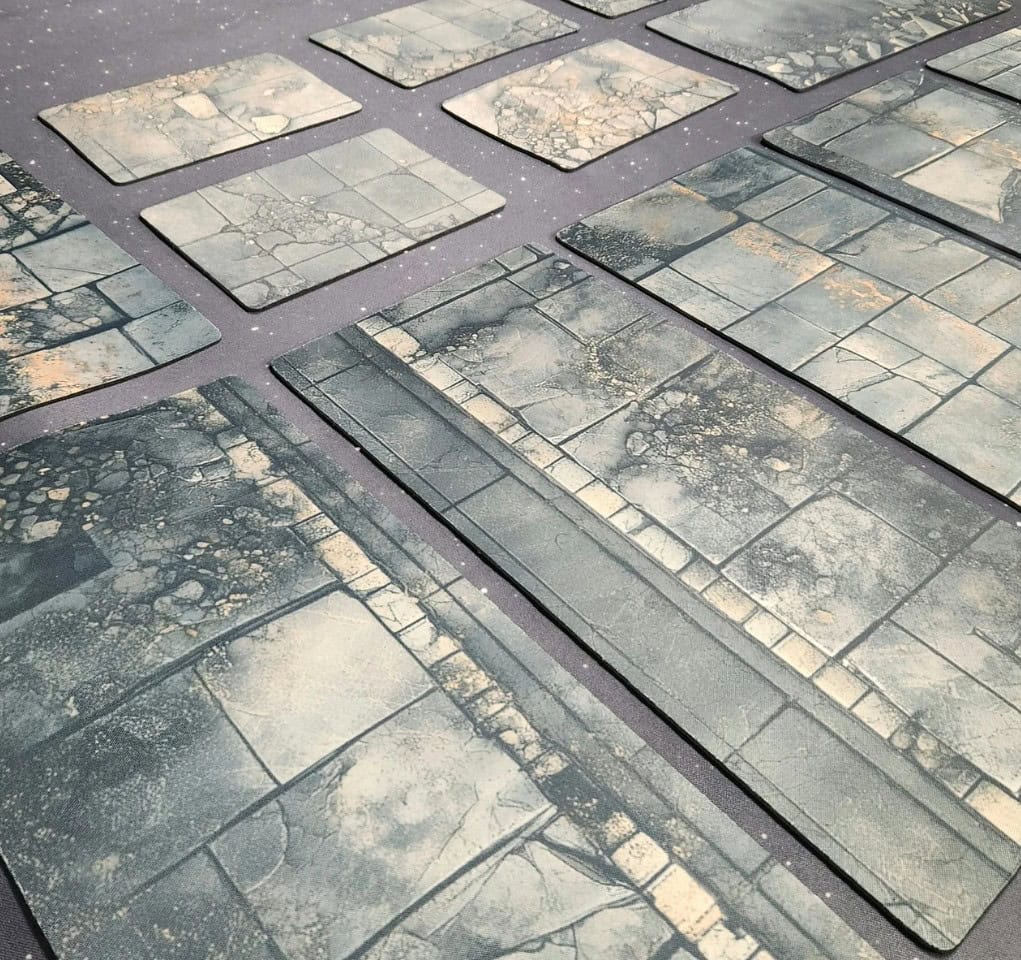
As of this writing, Games Workshop has not offered a product for the new 11th Edition Terrain Areas yet. We’ll update this post when they do, though it will probably only be available while stocks last.
However, you can order the new Terrain Areas right now from these independent companies:
- Terrain Area Footprints from FLG
- Squad Marks 11th Edition Layouts
- GreenStuff World also has new Terrain Areas
- Game Mat EU Terrain Offerings
🔗 Related Reads:
- Best Warhammer 40k Terrain To Buy
- Event Companion Has New 40k Terrain Layouts
- Folding Game Table That’s Perfect To Play Warhammer On
- 40k 11th Edition Starter Set Details
- 40k Release Schedule Roadmap
- New Combat Patrol Boxes
- Best Warhammer 40k Army List Builders