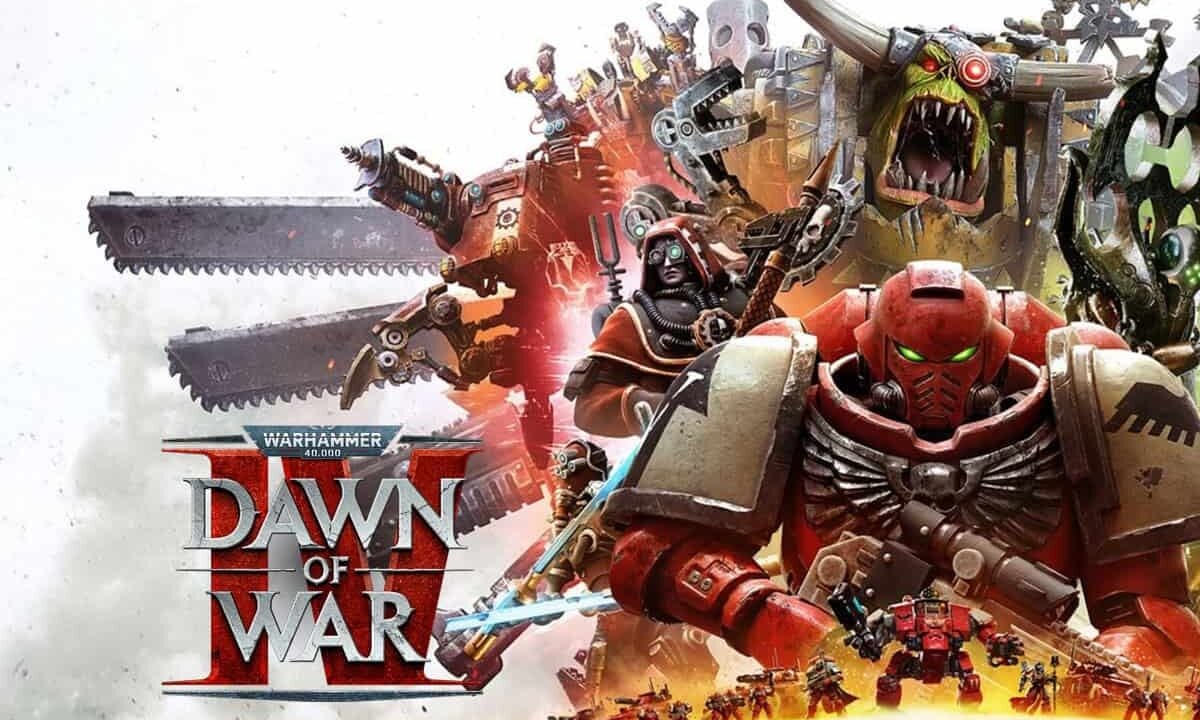
The Dawn of War 4 multiplayer gameplay showed off a full Space Marines vs Orks match, and the Ork base-crawl mechanic changes how map control works.
If you want to know whether Dawn of War 4 is actually getting back to what people wanted, don’t start with the big trailer reveals. Watch the Orks when they move out of their main base, becasue now they can drop structures anywhere on the map. Not just inside some tight little HQ build zone, they can do it anywhere now.
That one choice says a lot about the multiplayer version. If Orks can drag their base across the battlefield, map control matters again. Forward pressure works differently by faction in DOW 4 now, and after years of people still grumbling about Dawn of War 3 turning the series into a MOBA, this looks like a better version already.
The extended showcase ran for about 20 minutes on a small map pulled from live multiplayer, with the developers focusing on scale, pacing, and faction identity. More importantly, also looks like the first Dawn of War in nearly a decade, where each army’s tabletop identity shines through in gameplay rather than just as a skin.
The Ork Base Crawl is the Big Takeaway
- The take: Ork base-crawling is the mechanic that makes Dawn of War 4 look like a proper classic RTS again, with map control instead of lane pressure.
- The evidence: The rest of the multiplayer loop supports it, from power nodes with attached generators to asymmetric faction tools and late-game set pieces like Gorkanauts and Thunderhawks.
- What changes if we are right: This could be the Dawn of War sequel fans have wanted since Dawn of War 1, with each faction’s tabletop identity finally treated like the design brief instead of an afterthought.
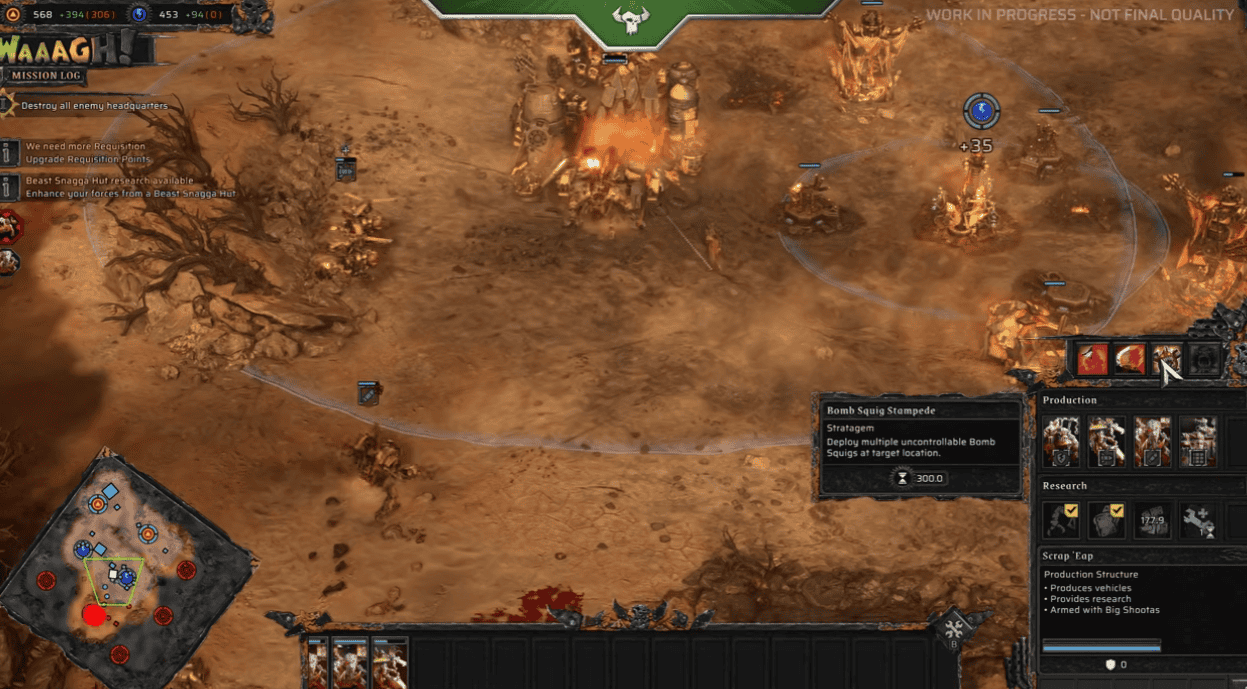 Ork infantry can build structures almost anywhere on the map, and those buildings are cheap and armed. Bomb Squig pens are the clearest example. Drop one on a flank, and it sends explosive squigs at anything that wanders too close, without the player babysitting it. That’s a real Orky mechanic, not just a turret with green paint.
For a Marine player, that means the map is never fully safe. Orks can start secondary bases on the far side of a power node and force fights where they’ve got the numbers. Which is exactly how Orks are supposed to play. They don’t want clean, even trades. They want to swamp you when the shooting starts, and the game is giving them a system that actually supports that.
Every RTS can let a horde faction make more bodies. Letting that faction build the map out from under you is different. That’s map control as a faction trait, not just a cheaper unit roster. It also explains why the featured match ran twenty minutes on a small map. When one side can set up forward bases, pressure doesn’t politely wait for the late game. You have to answer it right away.
The Marine Answer Says the Rest
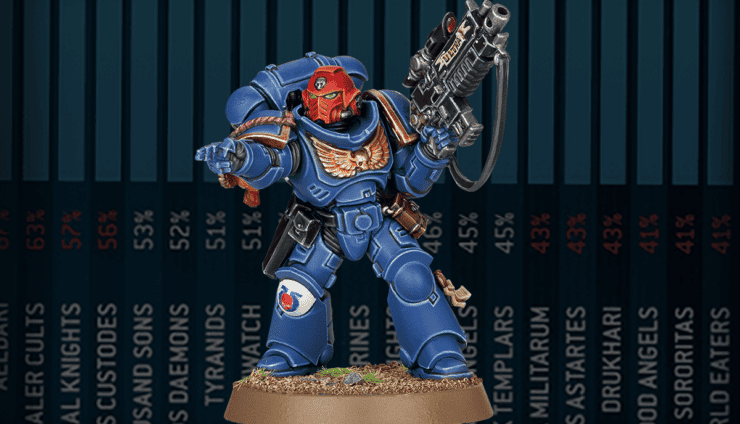
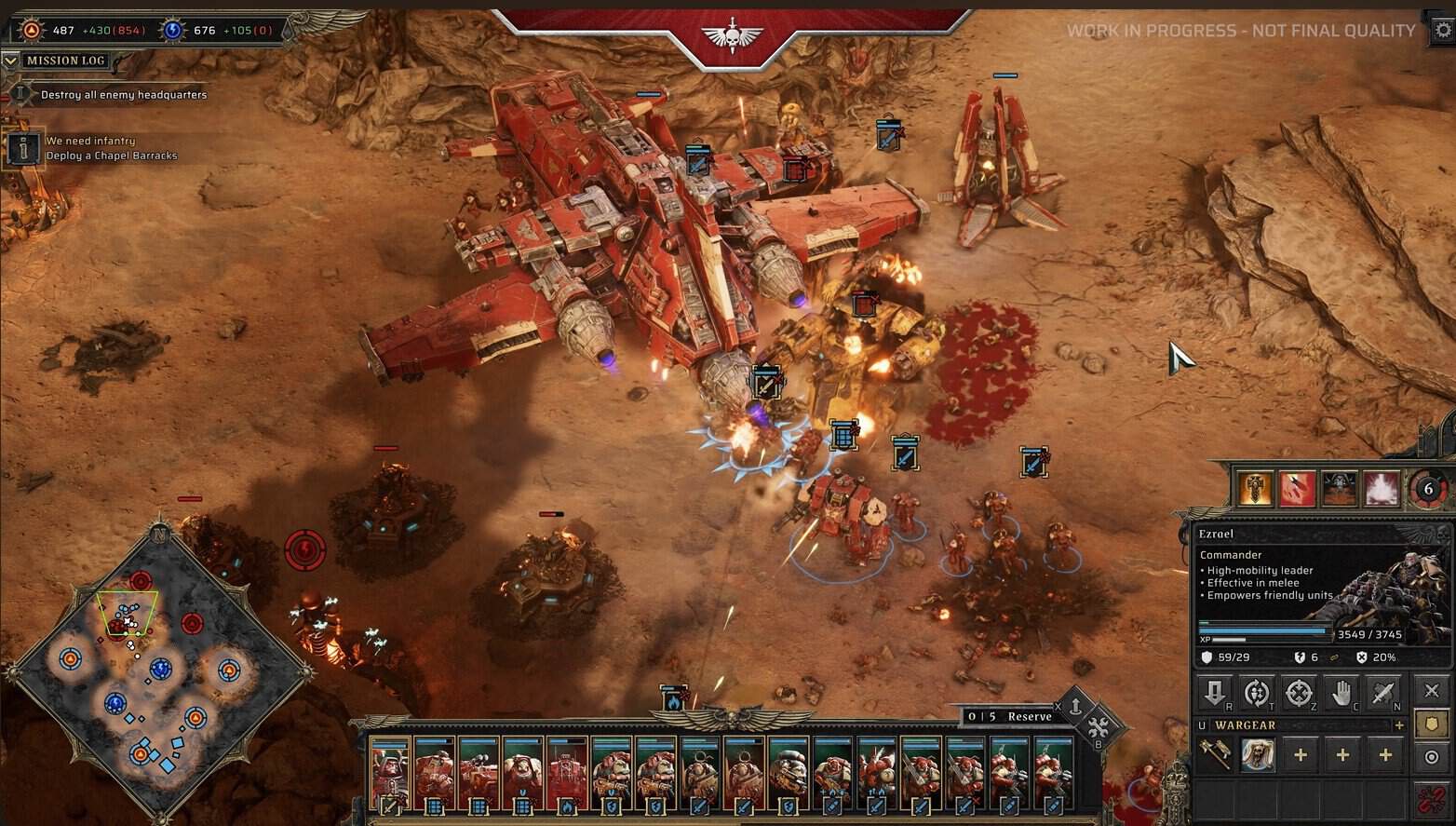 Marines get the elite response, and the build looks right so far. They produce units in reserve, then drop them from orbit wherever they’re needed. Even cooler is that the Hammerfall Bunker drops instantly to hold a threatened position. That’s the classic elite-faction setup with fewer bodies, better timing, and the ability to show up exactly where the fight is breaking.
If the tabletop is any indicator, that lines up with how the best 40k games have usually handled elite armies. Best of all, that’s not the same in-game mechanic wearing a different hat. It’s a real answer to the Ork crawl where they push the map outward with cheap forward bases, and now the Marines punch back with orbital reserves.
Both factions spread the fight across the map, but they’re not playing the same way. If you’ve been playing your favorite Space Marine Chapter for years and, more recently, had your Space Marines fight Orks from the 11th Edition Armageddon box, this plays similarly on the table as it does in the video game!
The economy layer to power all this also looks similar to the tabletop. Power nodes (aka objectives) are the main strategic prize because stealing one flips control of its attached generators. Requisition points can be upgraded with defenses, but power nodes can’t defend themselves, so they stay vulnerable.
Research costs time rather than resources, so the upgrade order depends on what’s happening on the map. Wargear can be swapped on the fly, so a Marine squad can start anti-infantry and pivot later. Auto-reinforcement heals units in the field, but it’s expensive. Even demolishing a building before it finishes gives a resource refund, which is the kind of small but useful detail that shows the designers are actually playing their own game too.
The Waaagh Buildup Finally Reads Like Real 40k
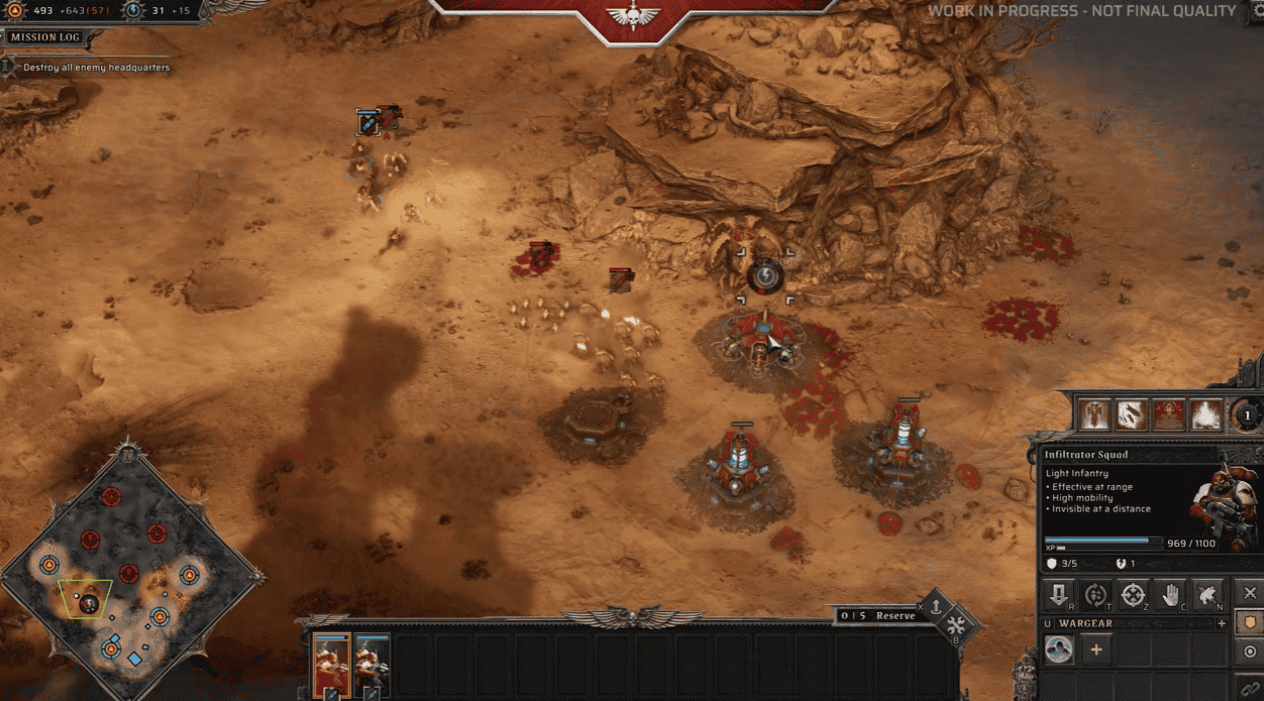 Orks build toward maximum WAAAGH!, and hitting that unlocks their full multiplayer arsenal.
Late game has the big stuff you’d expect. Gorkanauts stomping around, Thunderhawks doing what Thunderhawks do, Drop Pods landing on people’s heads, bombing runs, and orbital bombardments, etc.
On bigger maps, matches can run close to an hour, and 2v2, 3v3, and free-for-all are all confirmed. Commanders in skirmish and multiplayer are generic in the final build too, which helps steer the whole thing away from the DOW3 hero-brawl problem so many people hated.
Final Thoughts on Dawn of War 4 Multiplayer
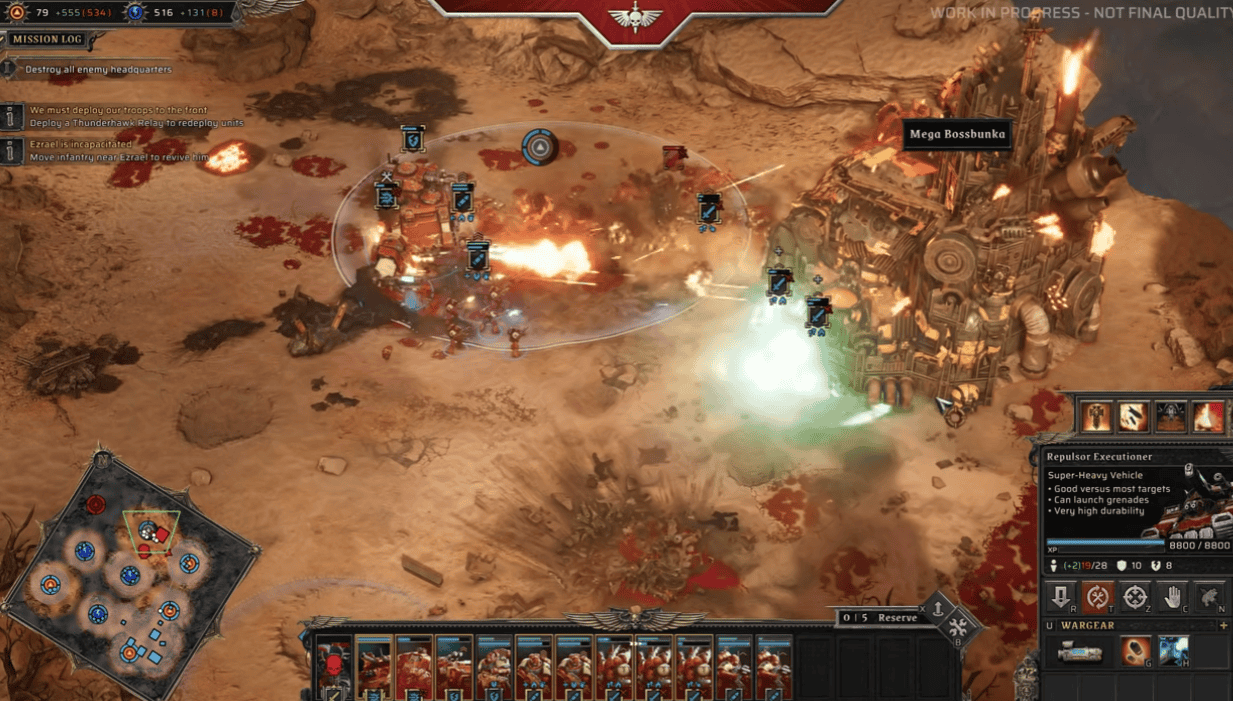 We’re not calling this a return to form quite yet. This is still curated multiplayer footage from a scripted showcase, and publishers always show the match where the game looks its best.
We also haven’t seen Necrons or Adeptus Mechanicus yet, the code under real load, or what happens when players get their hands on it and start breaking the meta.
But the Ork base crawl isn’t the kind of thing you fake in a demo. It’s a design commitment that the multiplayer loop is built around it, and the Marine kit is built to answer it. That’s faction identity shining through, which is exactly what Dawn of War 3 refused to let happen.
If the other two factions get this same level of treatment, this might be the Dawn of War sequel people have been waiting for since the first game. But if they don’t, the next showcase will probably make that obvious fast.
🔗 Related Reads:
- Warhammer 40k Dawn of War 4 Update: Release Window, Factions & What We Know
- Dawn of War 4 Has One Job: Don’t Repeat Dawn of War III
- 40k Factions Explained: Orks Army Playstyles Guide WAAAGH!
- Warhammer 40k Orks Codex is 11th Edition’s First Drop
- Best Warhammer 40k Games (Top 5 Ranked + Honorable Mentions)
- Total War Warhammer 40k Is Real And Coming For Your Free Time
- Are We Surprised Relic Abandoned Dawn of War III?
What do you think of the Ork base crawl in Dawn of War 4 multiplayer?