Games Workshop’s stock slide raises an awkward Warhammer question: is GW selling more, or are hobbyists simply paying more?
GW just posted a record year, so why are investors getting twitchy? The headline numbers look great, but they’re asking what’s behind them, and the shares have slid from a £219.40 close on June 26 to around £165 this week.
The Financial Times asked whether Warhammer is still winning on its Alphaville blog this morning. After reading it, we kept coming back to questions we have been asking here for years. Prices keep going up, independent stores carry more and more of the load, and getting GW to explain much of anything is the real challenge.
We’ve covered share price trouble before, including the fan revolt that hit GW’s stock. And we’re hardly calling GW doomed; the company clearly still prints money. But when the financial press starts asking the same questions as online commenters, store owners, and even us, we should all listen up to what they have to say.
- What’s happening: Games Workshop stock is down about 24.5% from its June 26 peak, even after record FY26 revenue and profit, and the FT is now openly asking whether growth is slowing.
- What we have seen so far: Sales per GW store and per trade account look to have turned negative, a big chunk of trade growth came from about 1,000 new store accounts, and new Armageddon boxes are selling on eBay well under the 15% discount floor.
- What’s next: GW’s half-year results, expected around January 12, 2027, should show whether this is six rough months or the start of a trend.
The FT Just Asked What Store Owners Have Been Asking
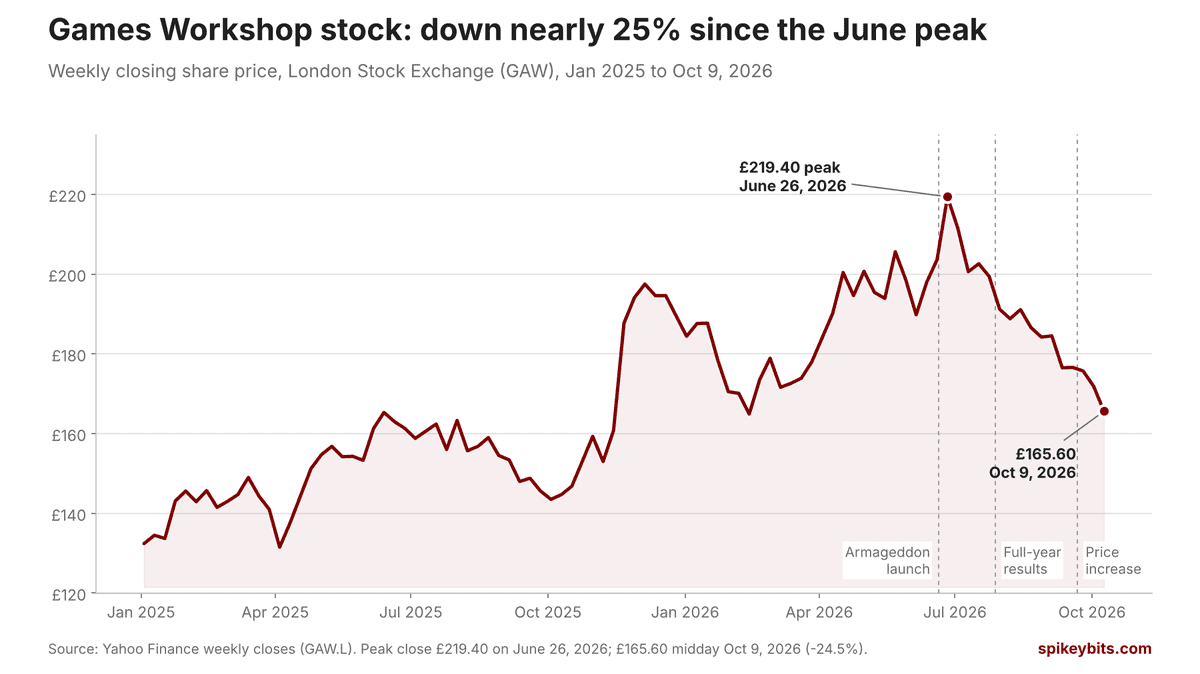
FT writer Bryce Elder points out that GW’s price-to-earnings multiple has come down by about 10 turns. Even after the drop, though, you’re still looking at roughly 27 times earnings. The FT reckons that’s pricey and points out the growth forecasts propping it up come from just three analysts: Peel Hunt (GW’s own broker), Jefferies, and Edison.
The store numbers are what caught our eye, though. According to the their end of year report, sales growth per GW-owned store went negative in the second half of the 2025-26 financial year. That hasn’t happened since the pandemic, and online sales didn’t make up the difference.
Over on the independent store side, revenue per trade account looks to have gone negative in the latest period too, and those shops now account for 65% of GW’s sales. With both sides bringing in less per store, something else has to be keeping the overall number growing.
So where’s it coming from?
Record Numbers Can Still Hide a Growth Problem
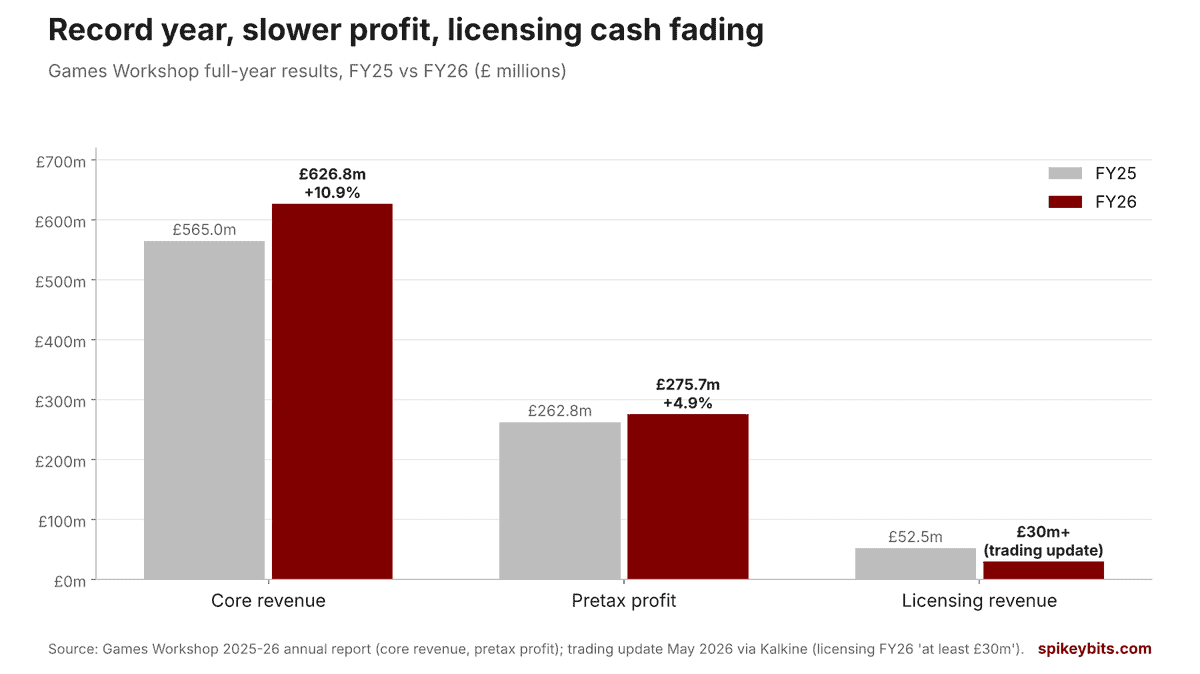
Giving GW credit where its due, the annual report shows core revenue up 10.9% to £626.8 million and pretax profit up 4.9% to £275.7 million. That’s plenty of money coming in. Trade’s share of the business is why we asked whether GW’s biggest customers are being treated the worst. Licensing is going the other way, down from £52.5 million to “at least £30 million” according to GW’s May trading update. Which isnt unexpected to be honest, and we covered that slide when GW’s licensing and dividends stumbled at results time.
Then you look at Edison’s FY26 note. Trade revenue grew about 18% in constant currency, but GW also added roughly 1,000 net new trade accounts. That’s about 12% more stores than the year before. Meanwhile, GW’s own retail stores grew about three percent and online grew about two percent.
But, both went backward in the UK and Australia/New Zealand.
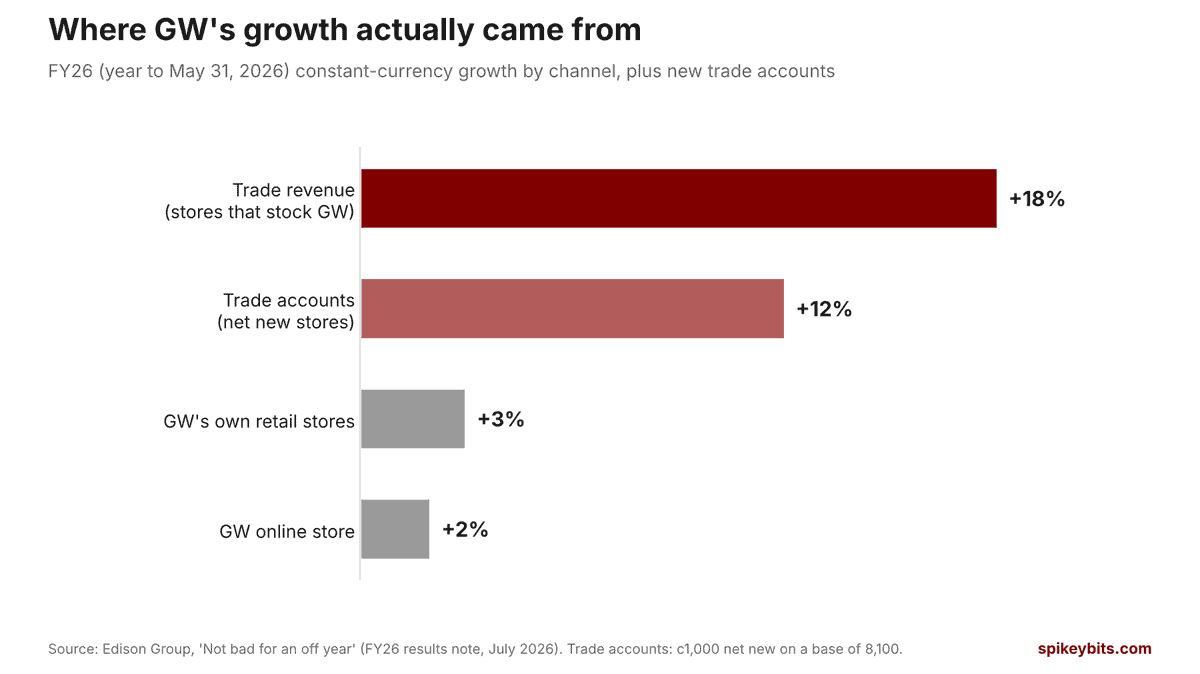
So a lot of that trade growth looks like it came from getting more shops on board, rather than existing shops selling more. That’s our math, not Edison’s. It also fits what GW’s CEO said in January, when he admitted some of the company’s most established UK and US stores were in like-for-like decline.
Are regular customers coming back for more, or are we looking at opening orders from new accounts plus higher prices on the same boxes? Nobody’s suggesting anything shady with the books, but when you raise prices, and signup 1000 new accounts to thousands of dollars in “started packages” that math can add up fast.
We’s just like to know which of those things is doing the most, numbers wise here.
GW Makes Money, but is the Stock Worth the Price?
The bigger question isn’t whether GW can turn a profit. It clearly can. It’s whether those future profits are worth what investors are paying for the shares today.
A traditional retailer wouldn’t normally get this valuation, and neither would a traditional manufacturer. GW does both, but being a bit of each doesn’t automatically make it better at either. The real question is how much evidence is there that Games Workshop deserves the extra premium?
Sure, The Warhammer’s IP, the stock’s momentum, and a bit of FOMO can help explain why investors pay more. They don’t settle whether the business underneath is worth that price. If investors can find more predictable, reliable earnings elsewhere for less, GW needs to give them a reason to pay extra.
On the funding side, GW’s already paying its own way. Its FY26 annual report says it funds operations entirely from free cash flow.
For the year ended May 31, 2026, GW brought in £267.7 million in operating cash after tax. Subtract capital asset spending, product development, and lease principal and interest payments, and our calculation leaves about £203.3 million before dividends.
So, there’s also real cash coming out of this business.
And for the roughly £4.5 million raised from issuing shares, the share capital note puts that under the employee sharesave scheme. That’s employees buying shares through the scheme, rather than GW needing a tech-style fundraiser to keep things running.
The company also reports no external borrowing, and it ended the year with £182.9 million in cash and £56 million in lease liabilities. There are leases to pay, but the report doesn’t show a pile of bank loans waiting to get more expensive. So understandably, GW says its interest rate risk isn’t significant.
So overall you have to give GW credit for paying its own bills, but that still doesn’t make its shares a bargain at any price.
Getting Armageddon Into Stores Was the Easy Part
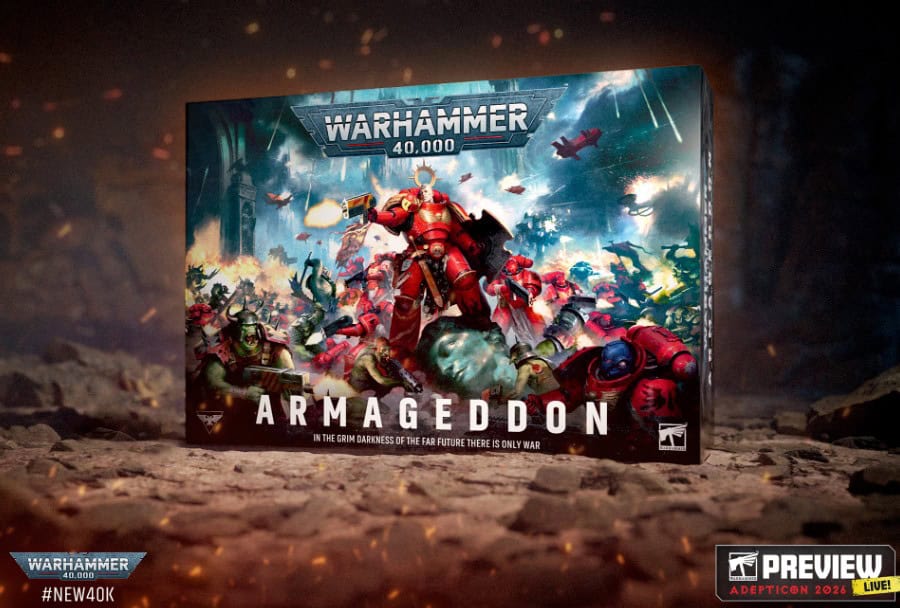
Back in June, we gave GW credit for the Armageddon launch. The allocations made sense, and there was no exclusive direct-order bait. We still stand by that. Getting boxes into stores went well, but getting customers to take them home is the other half of the job.
And those record annual results can’t tell us how the box is doing. GW’s financial year ended May 31, three weeks before Armageddon hit shelves on June 20.
The FT called demand “mid at best” and we agree with what our polls of stores and distrubotrs over the last month or so. At £185, the box costs 23% more than the 10th Edition launch box, and you get fewer models. The older Leviathan box still sells above retail on eBay, while the new one is easy enough to find discounted.
We checked the US sales ourselves on the secondary market. GW charges $295 for Armageddon here. Take off the 15% discount stores are allowed to advertise, and you’re at $250.75. Of the 34 new, sealed launch boxes sold on eBay between September 2 and October 8, 28 went for less than that. The median was $230, and the lowest was $195.50 before shipping. Amazon has it sitting at $250.75.
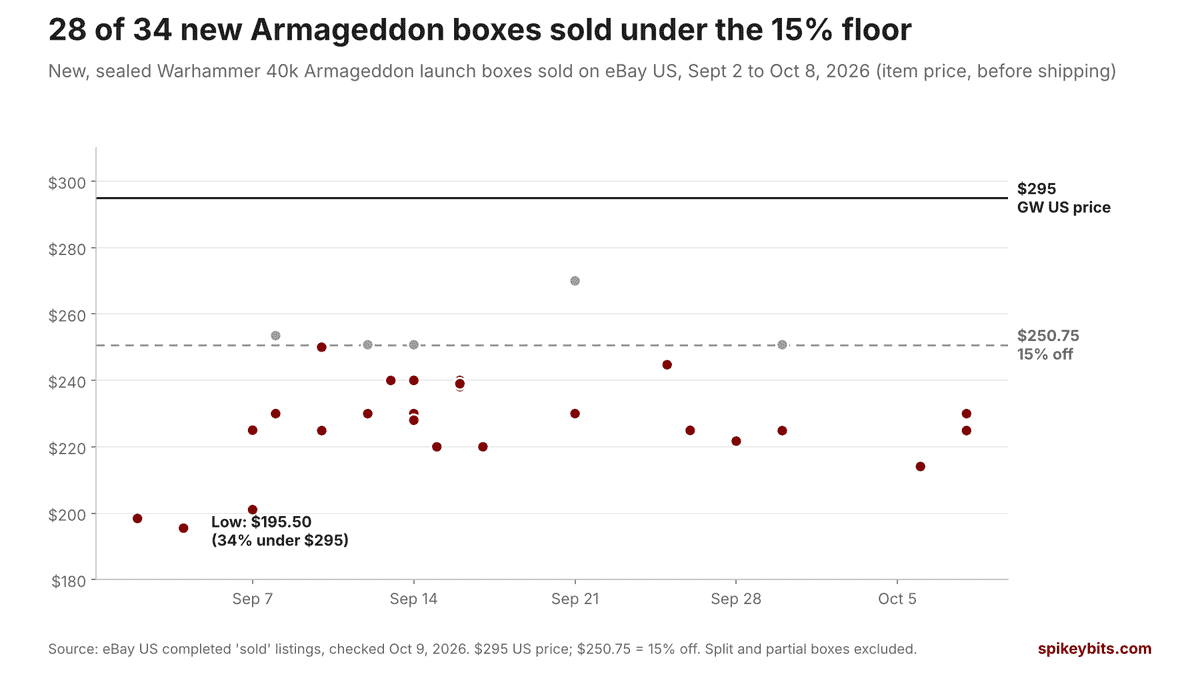
Sealed launch boxes going for more than 20% under MSRP three months after release? That looks like leftover stock becasue somone ordered more than they could sell, and a shop can’t pay for its next order with cash that’s still tied up in unsold boxes.
Tone Pro is Good Paint With an Awkward Rollout

ICv2 columnist and store owner Scott Thorne says selected full-range paint stockists ( the so called 360 stockist level) got Tone Pro racks forced on them with about three days’ notice. Nobody asked them first. And while he does expects the paints to sell, as customers are already asking about them, the whole thing seems a little heavy handed from GW.
Where’s the rack going? Where’s the money coming from? A rack, 150 paints, and the accessories all need floor space, staff time, and cash, right in the middle of holiday buying season. Sure, GW picked the date, but the shops footing the bill have their own buying schedules to work around.
It almost seems like they could be trying to pull a big “win” out of their finicial hat too with this, right around the same time as their stock is sliding.
Worse, there is plenty of competition in that paint aisle too. Tone Pro’s five numbered tones are going to get compared with Army Painter’s six-color Flexible Triads. Then you’ve got Monument’s Pro Acryl in 22ml bottles, while the Tone Pro lineup comes in 12ml pots at $6.75. We said it looked like Fanatic mixed with Pro Acryl at the reveal, and Tone Pro pricing still runs about twice what those rivals charge.
It’s also worth mentioning the ordering terms most hobbyists never see. Independent stores buy at about 43% off RRP, and the minimum opening order is £1,250. That order has to include GW’s Best Seller Foundation Range. After a year, supposedly shops in the UK can earn bigger discounts if they let GW monitor their stock and auto-order.
The FT’s bear case is pretty straightforward: GW has signed up plenty of side-hustle retailers, and if sales flatten, they get stuck with extra stock and stop reordering.
The bear case the Financial Times lays out is pretty straightforward and we’ve said the same thing with Hyundai dealerships and Antique stores started carrying Wahammer: GW may have signed up too many retailers who treat Warhammer as a side hustle, and online sellers are using their extra discount to move volume on thin margins.
Once sales flatten, independent stores get stuck with extra stock, and the growth starts running backward.
GW lists about 9,100 partner stores worldwide, but that’s every account. How many actually carry the full paint range is anyones guess, and only GW knows how many racks auto shipped to them.
Higher Prices Make the Revenue Look Better Than What’s Happening at the Register
We’ve now had two autumn price increases in a row. The 2025 increase took effect October 6, and the 2026 price increases landed September 21 with a 3.9% on average this time. Some must-have HQ models got a bigger bump, with Space Marine Captains up 7.4% to £29.
GW has US tariffs to pay too, about £13 million a year according to Reuters. Price increases are part of how it plans to cover that, sure, but charging more brings in more revenue even if no new hobbyist walks through the door.
Shop orders can muddy the picture as well. Because if you know a price increase is coming, you’ll stock up while you can still pay the old price. S0 then stores place orders that would’ve placed later, and the next few months of revnue can actually be soft, but get covered up by holiday sales restocks.
GW’s Silence Leaves Everyone Guessing
As the FT points out, GW doesn’t do results-day conference calls the way most big listed companies do, and its guidance rarely goes past saying trading is in line with the board’s expectations. It mostly leaves the results to do the talking.
That’s easier to live with when everything’s going up, but when the numbers wobble, people would quite like an explanation.
Hobbyists know that feeling too as The Necromunda RPG got a full reveal, then disappeared from GW’s own preview roundup without a word. Is it cancelled? That doesn’t prove it, but nobody’s told us what’s going on. Then there was the Chaos Black Primer recall in South Korea over detected lead. Our report was about the affected Korean product, not every Citadel spray worldwide, but a clear answer from GW about which batches were affected would’ve saved a lot of panic.
And if you’re thinking about your next army purchase, there’s model support to consider. GW just sent 17 Space Marine units to Legends. Put that alongside rising prices and products disappearing without an explanation, and you can see why hobbyists might stop and think before making another big purchase.
Customers have kept buying through every increase though, so GW should be asking how much it can keep leaning on that loyalty, and what it’s doing to earn the next purchase instead of just expecting it.
Final Thoughts on Games Workshop Stock Now

Six rough months don’t wipe out decades of GW getting it right, and the Finicial Times says as much too. Still, it’s harder to shrug off the complaints about over-commercialisation when the per-store figures look like this.
We’d watch three things heading into January’s half-year results: revenue per trade account, sales per GW store, and Armageddon’s eBay prices.
Investors have their own reason to pay attention too as the FT says a normal retail-sector valuation using Jefferies’ numbers would mean roughly 40% more downside, and investors won’t wait around either.
Investors have their own reason to pay attention though now too. Using Jefferies’ forecasts as an example, the FT works out that if GW were valued like a typical retailer with no change to expected profits, the shares would have roughly another 40% to fall.
GW can keep making money and still have shares that cost too much, but in this economy, investors may need an answer to both to stay on board.
(Keep in mind, none of this is investment advice. We just count boxes and talk about toy soldiers.)
🔗 Related Reads:
- News of the GW ‘Fan Revolt’ has Hit Wall Street
- Games Workshop’s Biggest Customers Are Being Treated the Worst
- Games Workshop’s Revenue Stumbles: What’s Next for 40k?
- Looks Like GW Finally Got One Right For Customers and Retailers
- Warhammer Tone Pro Paint Costs Twice as Much as Its Biggest Rivals
- New 2026 Warhammer Price Increases: Complete List Breakdown
Do you think Games Workshop stock is falling because the hobby is slowing down, or because GW finally pushed prices too far?