The Warhammer 40k competitive scene is falling apart as major tournaments use conflicting rules. Here’s why GW’s silence is breaking the game and what needs to change.
Warhammer 40k is supposed to be a global game, but right now it feels like two entirely different versions are being played on opposite sides of the Atlantic.
Two of the biggest events in the scene, The London Grand Tournament and the Las Vegas Open, have just proved that major competitions are running with completely different rule sets.
Not minor tweaks or funky house rules, but core differences that impact how armies function at their foundation.
If GW doesn’t step in soon, the tournament scene might fracture beyond repair, and that’s bad news for everyone who actually wants to roll dice on a level field.
Competitive Warhammer 40k: Same Game, Different Rules
 Right now, the competitive Warhammer 40k scene isn’t just messy, it’s chaos in power armor.
The biggest offender? Space Marines. The poster boys of the 41st Millennium are the only faction still juggling subfactions, supplemental codexes, and tons of new special detachments, a tangled mess of rules that somehow keeps getting worse instead of better.
The Space Marine Rule Disaster
 Here’s the issue: Codex-compliant chapters like Salamanders and Ravenguard got their own detachments with buffs to make people play them, +1 to wound against their Oath of Moment target, when they play within Codex Space Marines rules.
That’s the reward for not dipping into the extra supplements or special chapter units.
 But the latest wave of detachments released for these chapters? They’re not clearly listed under Codex Space Marines. The app says they are. The Munitorum Field Manual says they are.
The official Codex Astartes document says they aren’t. In the giant FAQ, they were not in the errata.
So, half in, half out, which is it?
This simple question decides whether entire chapters are playable at high-level events. One ruling gives them teeth, the other pulls them out. And Games Workshop hasn’t clarified it for the competitive Warhammer 40k community in weeks.
40k Tournament Chaos and Community Confusion

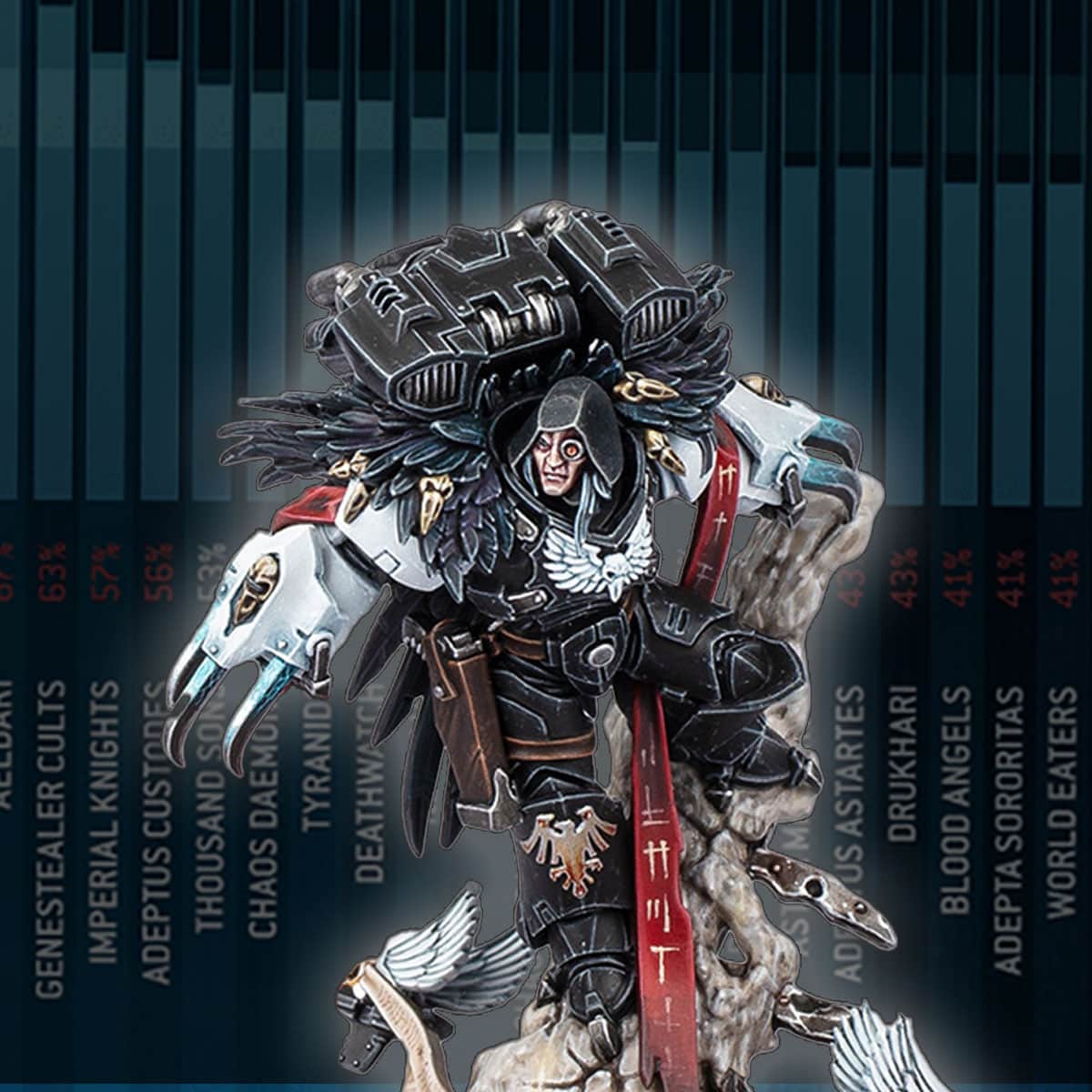
Picture from TacticalTortoise.
Because of that silence, major tournaments have been forced to pick sides. One ruled that the detachments get the buff, the other ruled they don’t. Thousands of players built lists, prepped strategies, and traveled across the world, only to find that their army worked one way in London and another way in Vegas.
That’s not a healthy competitive ecosystem. That’s a recipe for frustration.
Even worse, smaller rules issues keep piling up. A Tyranid unit literally vanished from the Munitorum Field Manual.
Does that mean it’s banned? Was it a typo? No one knows.
Communication from Games Workshop has been nonexistent, so competitive Warhammer 40k players are left scouring Discord leaks and Reddit threads for guidance.
When your best rules clarifications come from blurry screenshots of a judge’s DM, something has gone very wrong.
GW: A Company That Won’t Communicate
 Mistakes happen in big games; no one’s denying that. But when the company refuses to fix them quickly, the whole system starts to rot. The Warhammer 40k rules are constantly changing anyway, with quarterly balance updates, new points adjustments, and fresh detachments dropping like confetti. If the developers can rewrite datasheets that often, they can certainly patch a missing detachment entry.
Instead, Warhammer 40k’s competitive players are left spinning their wheels.
Tournament organizers have to act like referees for a game whose publisher won’t step onto the field. And the longer this goes on, the more it starts to look like a symptom of something worse inside Games Workshop.
Where Did the Events Team Go?
 Let’s be honest, since Games Workshop took over the ITC, things haven’t exactly improved.
There’s less communication, fewer consistent rulings, and a growing sense that the events department just isn’t present anymore. They have been using more and more AI for articles on WHC. Store and customer emails go unanswered.
Store owners can’t get official info. Major tournaments make contradictory calls.
If that sounds familiar, it’s because we’ve been here before. Back in the early 2010s, GW basically abandoned organized play, and the community stepped up with the INAT, a collaborative rules system created by big-name TOs like FLG and Adepticon to standardize tournament rulings.
Now, after years of corporate meddling and budget cuts, it feels like we’ve come full circle. Games Workshop seems to have the infrastructure but not the leadership to keep the competitive Warhammer 40k scene consistent.
Which hurts when they keep recording record profits. Why can’t they give support where needed?
This Hurts Everyone, Not Just Competitive Warhammer 40k
 This isn’t just a problem for the tournament or competitive Warhammer 40k crowd. Casual players get caught in the same mess. When rules aren’t clear, you have to start every game with an awkward pre-fight debate: “So… are we using the buff or not?” That confusion sours friendly games and drives new players away from the hobby entirely.
Warhammer’s strength has always been its community, but when that community can’t even agree on how the game works, frustration turns into fatigue. And fatigue turns into people packing up their armies and moving on.
Games Workshop Needs to Step Up
 Games Workshop doesn’t need to overhaul competitive Warhammer 40k. They don’t need another massive balance shake-up or an emergency codex dump. They just need to fix their mistakes when they happen and communicate with their players when things go wrong.
For a company that thrives on fan loyalty and community goodwill, silence is the worst move possible. If the developers don’t act soon, competitive 40k could fracture beyond repair.
Final Thoughts on Competitive Warhammer 40k
Competitive Warhammer 40k isn’t dying, but it’s definitely limping, and Games Workshop is the one tightening the tourniquet. Between contradictory rulings, missing updates, and poor communication, the company risks undoing years of growth in the competitive scene.
If this continues, the community will do what it’s always done when GW drops the ball: fix it themselves. But for a game of this scale, players shouldn’t have to.
It’s time for Games Workshop to clean up the mess before 40k’s biggest tournaments start feeling like entirely different games.
See the Latest Dataslate Changes Here