
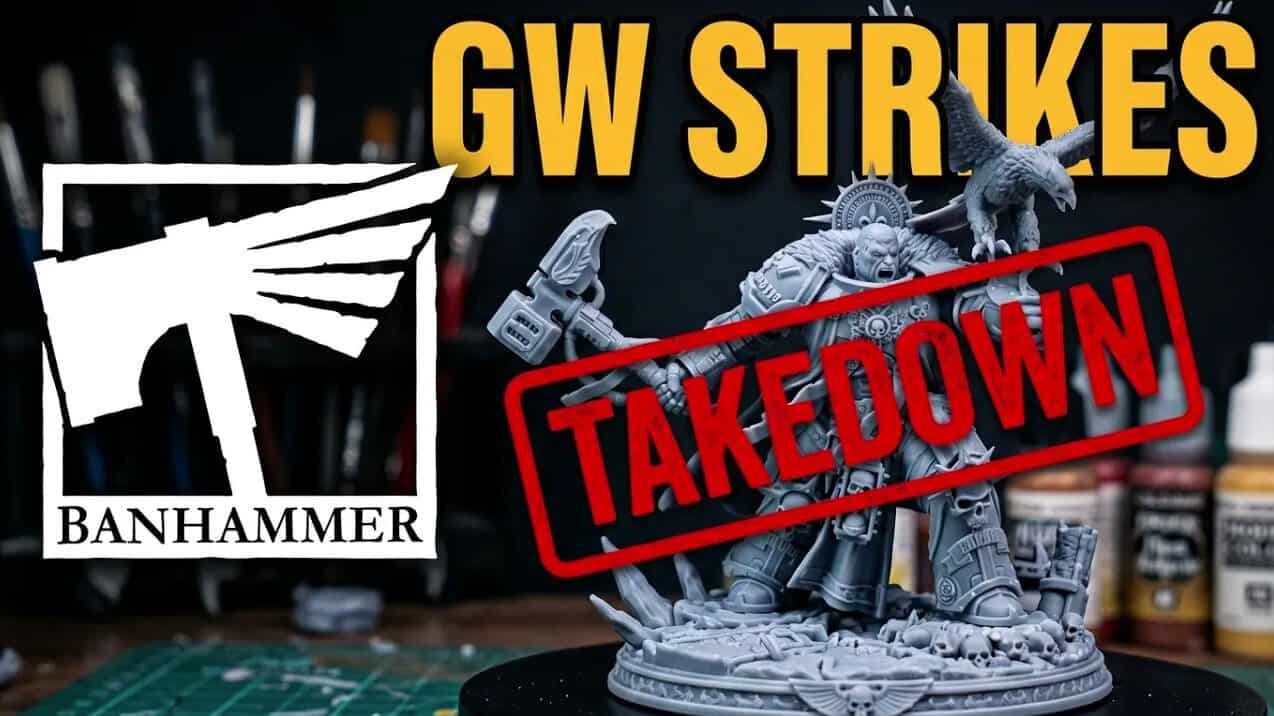
Games Workshop’s latest Warhammer 40k 3D print notice targets more than proxy minis, naming 39 MyMiniFactory URLs for terrain, basing tools, and more.
A texture roller and a proxy Space Marine aren’t the same problem, but the notice Games Workshop sent MyMiniFactory in September puts them in the same pile. GW wants the marketplace to remove or disable nearly three dozen URLs “as expedient[ly] as possible,” and once you look through what they actually are, “proxy miniatures” are the smallest group. Sixteen are terrain or terrain accessories, while only five are miniatures or proxies.
That mix is what makes this one different from the usual takedown story. The timing is interesting: this comes just a couple of months after GW started handing out its own 40k terrain layouts for free, and GW went after people who print their own models, while GW itself continues to 3D prints its own models.
Sixteen Terrain Listings and a Texture Roller Aren’t a Bootleg Sweep GW
Updated on September 25th, 2026, by Rob Baer with the latest on this case.
- The notice: GW asked MyMiniFactory to remove or disable 39 URLs on September 4, 2026, leaning on two claimed UK trademark registrations and nothing else.
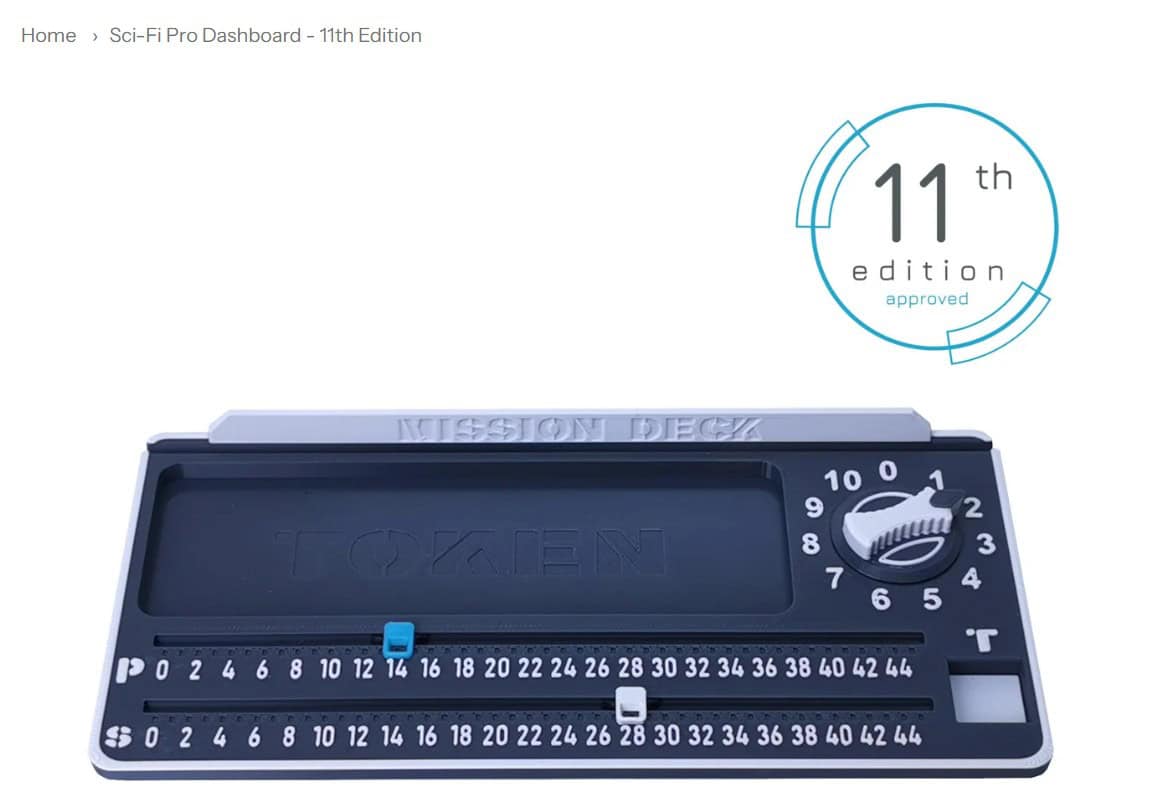
- The product mix: 16 terrain and terrain accessories, eight bases and basing tools, seven dashboards and tokens, five miniatures or proxies, three free game packs.
- The bigger issue: if GW’s reading holds, the risk sits in the wording on the listing rather than the design underneath it, which puts every “for Warhammer 40k” STL page in the same boat.
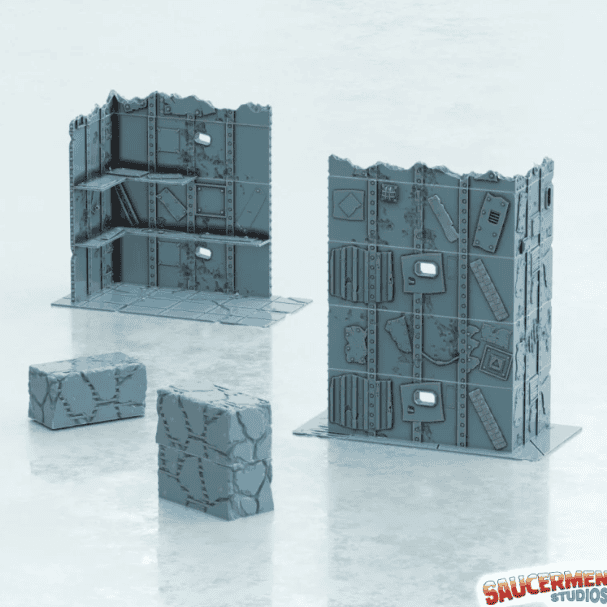 Sort through the 39 takedown requests, and you get 16 terrain and terrain accessories, eight bases and basing tools, seven dashboards and tokens, five miniatures or proxies, and three free GridRunner packs. Most hobbyists who see a 3D printing takedown headline probably picture proxy minis, but that’s just five of the 39 URLs here.
Two examples: a snake-skin texture roller is a tool you push into putty, and an 11th Edition terrain footprint is basically a piece of paper with a shape on it. Neither one replaces a kit, and neither competes with a boxed terrain set the way a printed Space Marine competes with a Space Marine you can buy from GW.
That’s a pretty big difference in the hobby, because people have spent years separating printed GW-style minis from the terrain, bases, and tools they use around them. The alternative miniatures and STL file scene has spent years drawing a line between printing a model GW sells and something that is designed to be compatible with Warhammer, but not a 1:1 copy of something that already exists.
GW also just built its own free terrain layouts into the game, so this notice makes those “products” look a lot less important to GW than they are to the people actually using them.
The Notice Never Names a Single Copied Sculpt
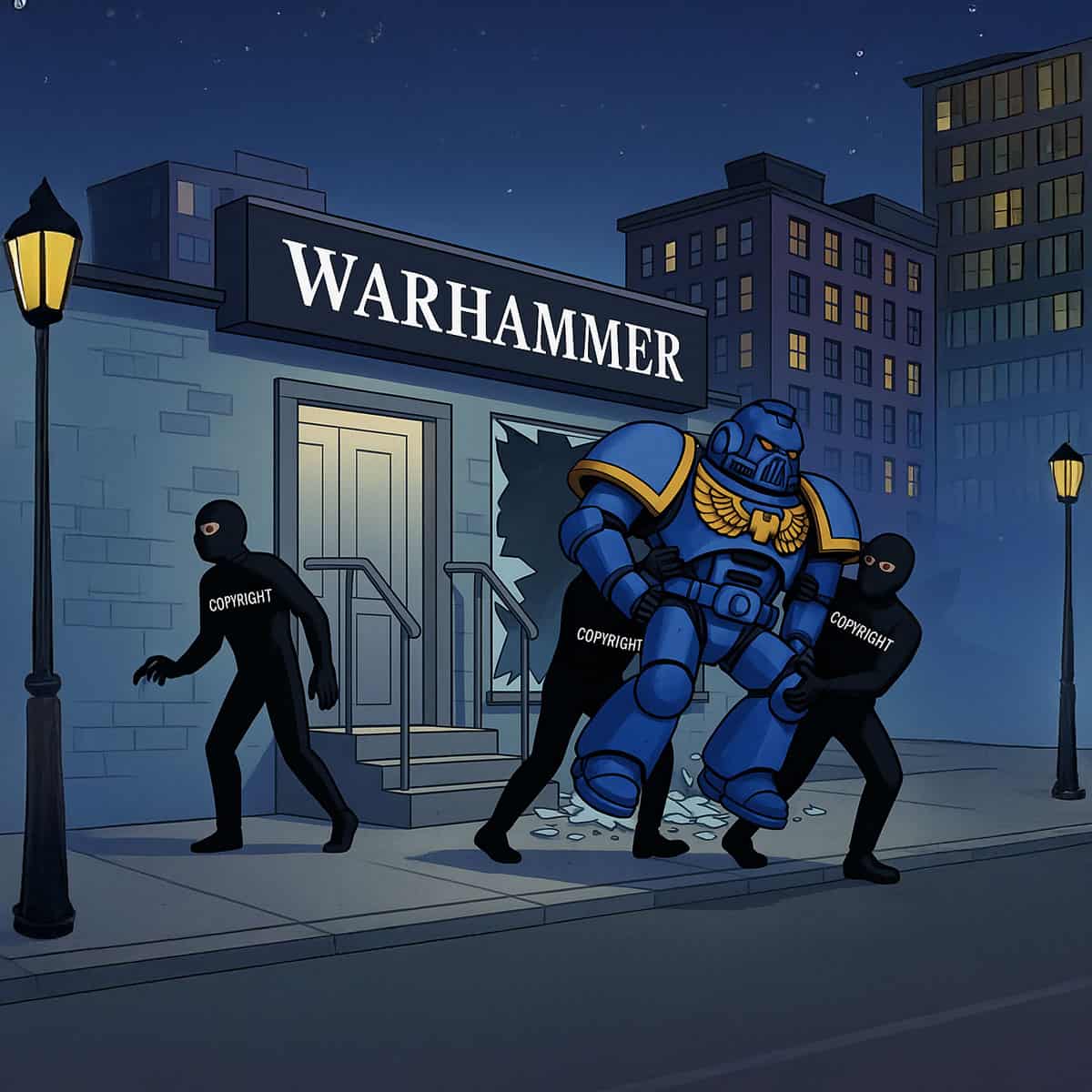
The bigger issue is that this whole notice is a trademark claim. It cites two claimed UK registrations, one covering Warhammer and one covering the 40k mark, and that’s where the claim abruptly stops being fact and may start being “harassment.” It doesn’t identify a copied sculpture, copyrighted artwork, registered design, or counterfeit kit.
And once you look at the URLs, you can see exactly where that claim is coming from. Of the 39, 25 contain “Warhammer,” 24 contain “40k,” and 10 carry both. Every URL GW handed over uses one of the two words named in the notice.
Sounds like a possible AI scan, right?
Either way, there’s also nothing behind the letter in the way people usually picture when they hear “legal action.” Nobody has filed a lawsuit or attached a damages demand, and the only sign that MyMiniFactory accepted the claims is that most of the product URLs named in the notice now return a 404 web error.
That’s a very different setup from the Ghamak case, where the allegations at least have to survive a judge, or the massive 40k STL leak, where actual files were the issue. GW has also walked claims back before when sellers pushed back.
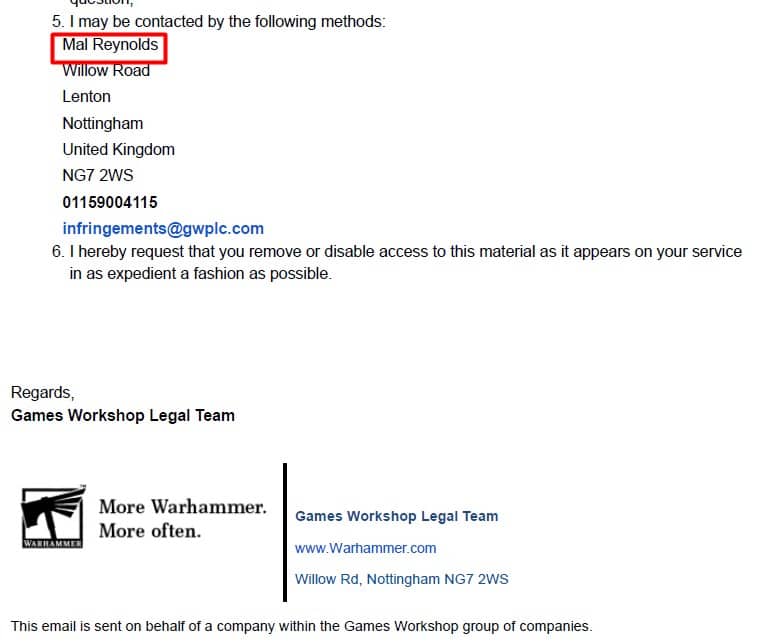
One thing that does give us pause: the contact on the notice is listed as “Mal Reynolds,” which also happens to be the name of a fairly famous fictional space captain.
Perhaps someone on GW’s Legal team didnt want to use their actual name in the notice?
Either way, that doesn’t mean the notice is fake, especially since the email we received uses the gwplc.com domain and the Willow Road, Lenton address matches GW’s corporate contact page. For now, we’re treating it as unconfirmed until GW or MyMiniFactory says otherwise.
Referential Use is the Core of The Issue
 Plenty of the targeted pages say “compatible with,” “suitable for,” or “for Warhammer 40k.” That wording presents the thing as an accessory for GW’s game rather than a GW product, which is exactly the distinction Section 11(2)(c) of the UK Trade Marks Act is built around. Referential use can be permissible when it’s needed to identify what a product is for, particularly accessories, as long as the use follows honest commercial practices.
That doesn’t give creators a free pass, either. It’s a defense that has to be argued, and GW has an obvious counter: some of these titles are stuffed with “Warhammer,” “40k,” edition numbers, faction names, and whatever else the seller thought would rank. At some point, a title can stop explaining compatibility and start leaning on the marks, and GW would probably argue several of these crossed that line.
Both things can be true at once, though, too. Some sellers may have pushed the wording too far, but “any use of the words equals infringement” is probably a bad take on what’s happening here. So, if you’ve been shopping for alternative STLs or other 3D prints because the latest release you wanted was sold out, this is the distinction to watch out for in your searches.
One Notice Does the Work of Thirty-Nine Lawsuits
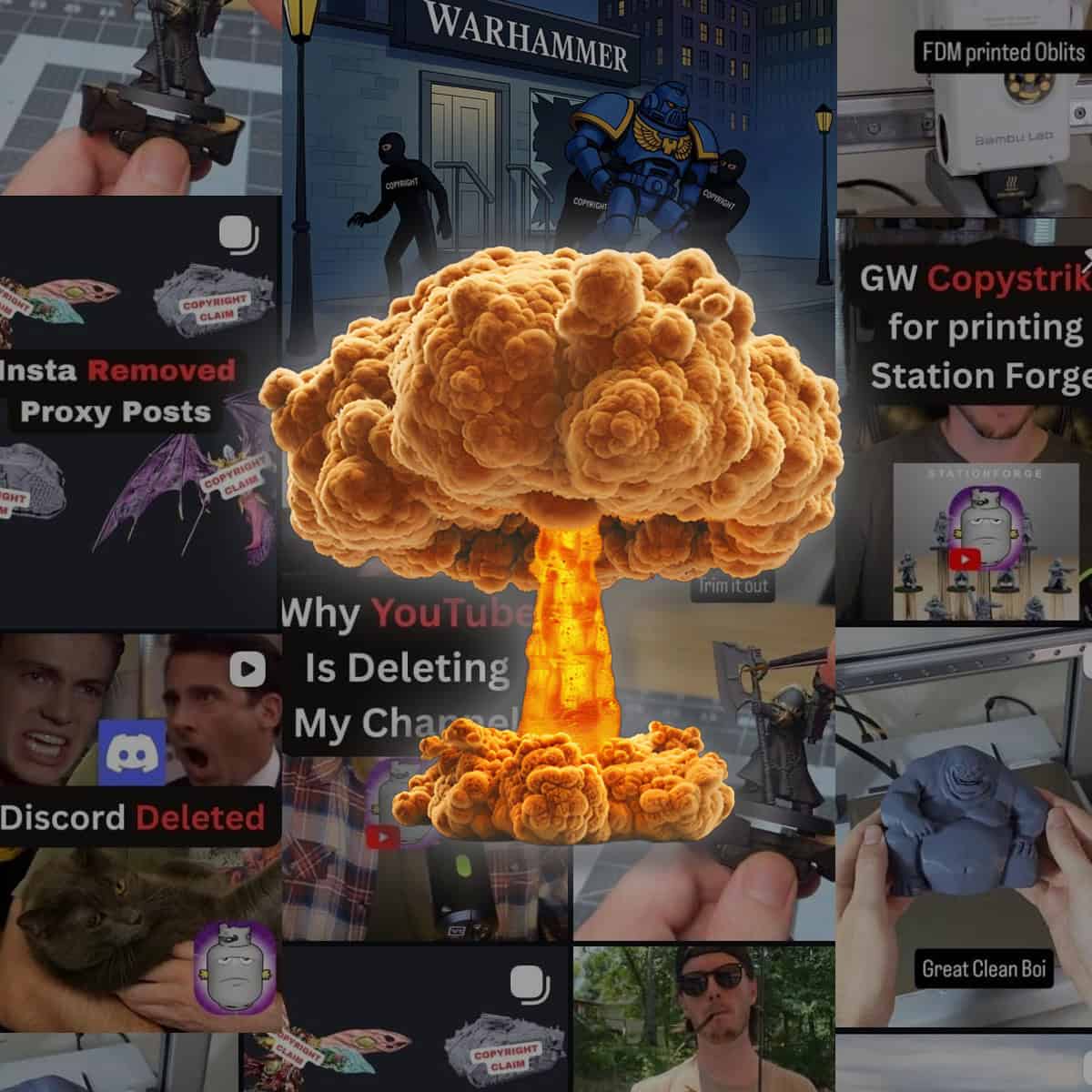 One email can put pressure on dozens of creators at once, while GW apparently never has to prove a single allegation to anybody. No filings, no discovery, no judge reading the listing titles. Just a request and a platform deciding whether the fight is worth it.
We’ve watched this scale up before, from the 2021 push against 3D artists through the global seller takedown that froze assets. It isn’t only a GW move, as Bandai ran a version of the same play on Gundam Assemble prints before the game even went live.
MyMiniFactory’s own IP policy adds another twist. It says paid IP-protected content needs authorization, but that “Free Objects are considered fan art and are not subject to the policy,” per the policy itself. Three of the targeted GridRunner packs are free, so the platform’s own rules clearly don’t stop an outside complaint from landing on designers either, from the looks of it.
Final Thoughts on the latest Warhammer 40k 3D Print Notice

Five proxy-mini listings out of 39 makes this a lot broader than the 3D-print takedown most people are probably picturing. The notice reaches terrain, basing tools, dashboards, and the words sellers use to tell hobbyists what all of that stuff works with.
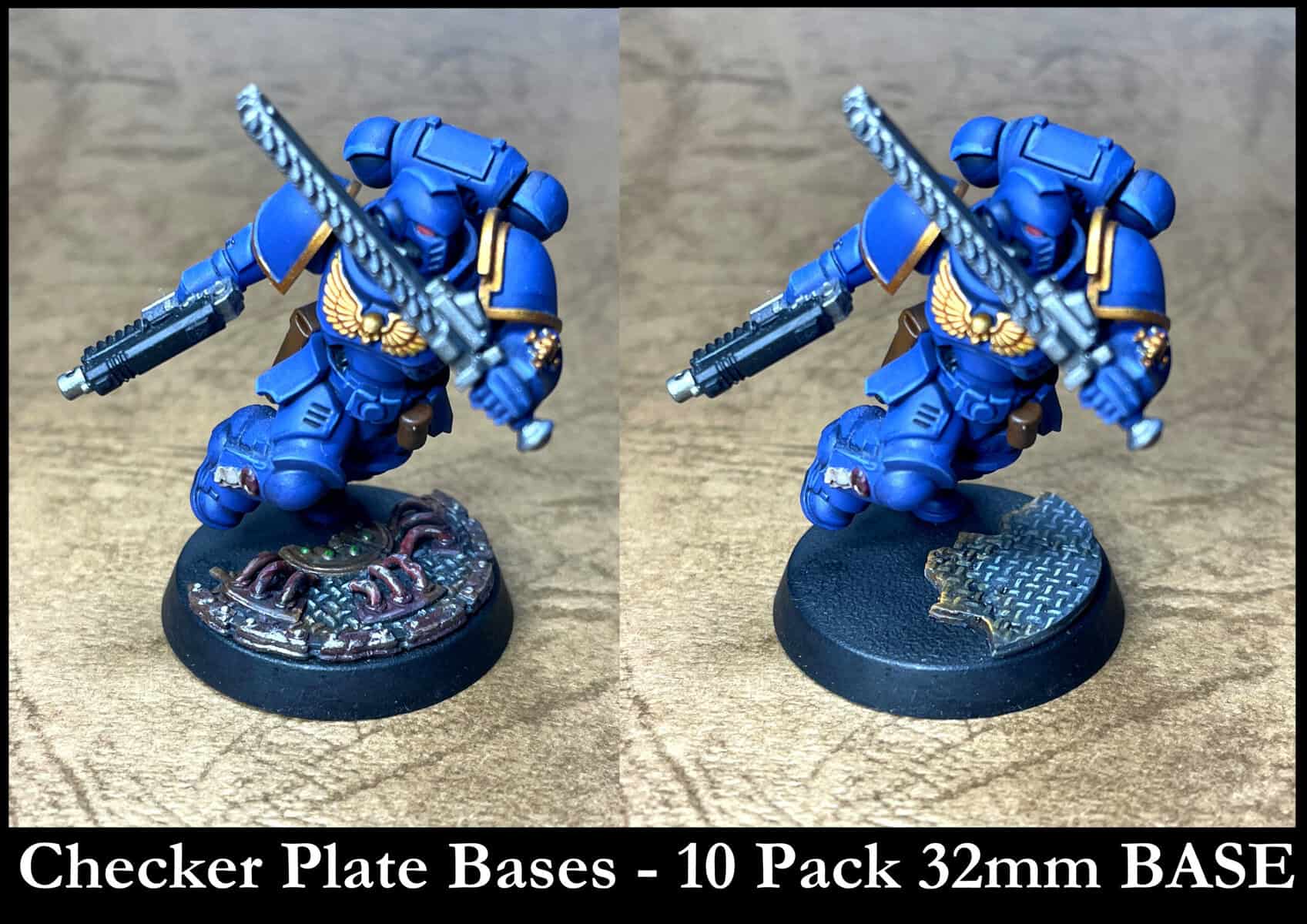
So sellers’ pivot to all this will probably start showing up in product listings going forward. If these creators start stripping “Warhammer” and “40k” out of titles while leaving the files themselves up, like the checker-plate bases on Cults, then the overall effect of these takedowns isnt really the disappearance of the STLs GW was targeting at all.
It’s a change in how sellers are allowed, or willing, to describe their products overall.
🔗 Related Reads:
- Ghamak Has New Evidence Against GW’s 3D Printing Warhammer Case
- GW Gives Away Free 40k Terrain Layouts, With One Big Catch
- MyMiniFactory Acquiring Thingiverse Could Change STL Printing Forever
- Yes, GW 3D Prints All Their Warhammer Models & Prosecutes Everyone Else
- Bandai Copies GW, Kills Off 3D Printing Gundam Assemble Miniatures Before It Starts
- Why Warhammer’s Always Sold Out (& the 3D Printing Fix)
- 50 Best Warhammer 40k Alternative Miniatures & STLs (2026)
What do you think about GW targeting terrain and basing tools instead of proxy miniatures?
I think its about time GW wound there neck in.
They are obviously feeling the pinch as the gaming public look for affordable ways to continue gaming. I appreciate the using “Warhammer” or “40K” is more than a bit cheeky, but who’s next I my self am a terrain builder at a local club am I going to get it in the back of the neck for “making” terrain for Warhammer and 40K and stating it at the club? Are clubs going to audited to ensure that GW games are only played using GW products. I see the lads playing 40K (something I haven’t played for 25+ years)at the club and see limited tables and options. I like the fact that two of our guys play outside the box one with a printed pumped up SM army (playing these before Primaris arrived) and one playing with Station forge Grim guard.
I just got pinged on the decals front by them, but not directly from GW, but from Convey IT on the behalf of GW
A little over a year ago, we were hit with a cease-and-desist letter from Games Workshop. We were making the same broad categories of products that hundreds, if not thousands, of other designers make, including custom shoulder pads that GW did not offer and upgrade parts that could only be used after a customer had already purchased a GW kit.
However, none of that seemed to matter. The customer had bought the original kit, our parts did not replace that kit, and many of the products filled gaps GW had chosen not to fill. From GW’s perspective, the aftermarket sale itself was still treated as money taken from them.
That is not merely my interpretation. During the Chapterhouse trial, GW’s Head of Legal and Licensing was asked whether Chapterhouse making money from products using GW trademarks damaged GW because “that should be your money.” His answer was “Yeah.” Contemporary reporting summarized his testimony even more bluntly as “anytime Chapterhouse made money, that was money GW should have made.”
That attitude explains a great deal about what we are seeing now.
The frustrating part is how unevenly that position appears to be enforced. Small creators can lose years of work through a letter or marketplace complaint they cannot afford to challenge, while larger companies such as Puppetswar, Kromlech and Bits of War, and Pop Goes the Monkey continue offering many of the same broad types of compatible parts and alternative products. Whether that difference is intentional or simply the result of selective enforcement, the practical outcome is the same. Smaller creators are the easiest and least expensive targets.
This new round appears to go beyond proxy miniatures and into terrain, bases, texture rollers, dashboards, tokens, and other hobby accessories. That should concern everyone in the independent tabletop market. If a company can claim control over not only its characters and artwork but also the surrounding tools and accessories people use while playing its game, the claimed boundary of its market becomes almost limitless.
My prediction is that this is not happening by accident. When enforcement begins expanding into a new product category, I look for GW or one of its licensees to begin selling more products in that category. We saw independent cosplay creators targeted before officially licensed cosplay products appeared. Now terrain, basing tools, gaming aids, and accessories are being targeted. I would not be surprised to see more official or licensed products rolling out in those areas soon. No pun intended.
GW has every right to protect its actual intellectual property. Copied sculptures, stolen artwork, counterfeit products, and misleading listings should be addressed. But protecting intellectual property is not the same as claiming the entire surrounding hobby market or treating every dollar earned by an independent creator as a dollar that rightfully belonged to GW.
This is not only about what happened to 39 listings. It is about how easily a corporation can remove a small creator’s livelihood without first proving its claims before a court, and how little practical ability most creators have to fight back.
Sorry to hear that happened to you. You make a lot of good points, and I tend to agree with many of them.
We really need the guy that leaked several dozen kits worth of scans last year to come back.
GW cant put the genie back in the bottle…3D printing is here, its cheaper (once you get set up), and there are far more designs than they can offer out there. They are using the threat of legal power like a bludgeon, while they continually make the hobby space volatile to the consumer. Time to learn a lesson again.
No link to the notice?
It was submitted anonymously by one of the parties involved.
Last I.checked gothic style architecture was not copyrightable…