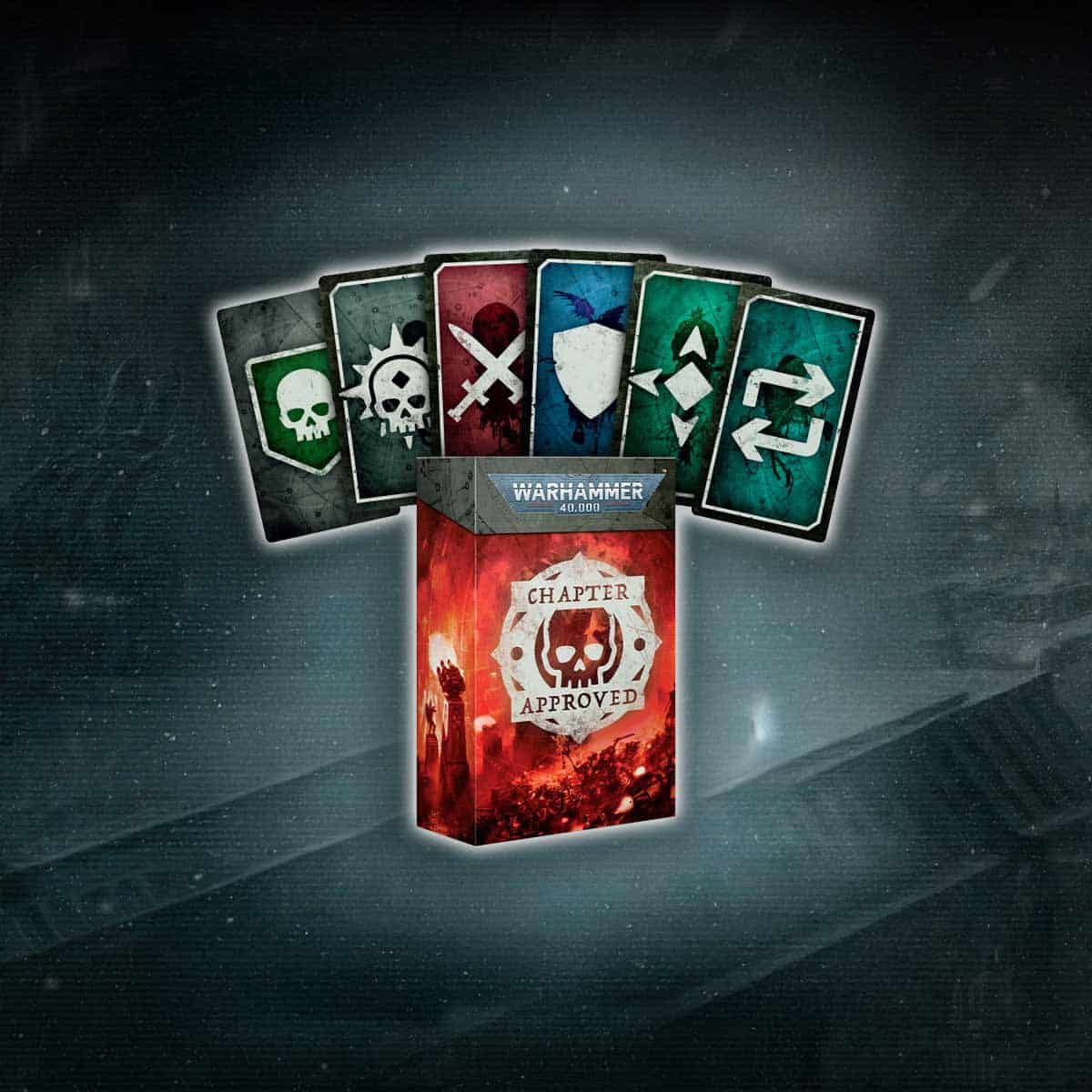
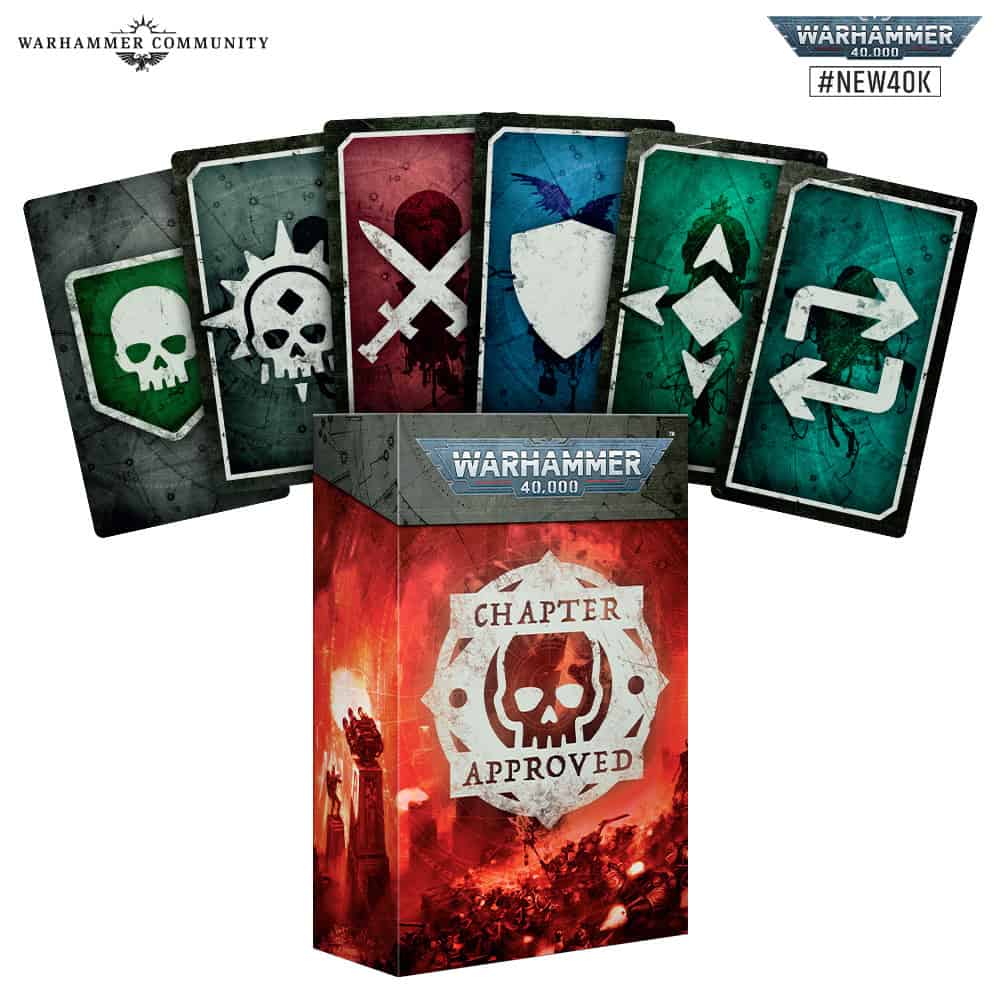
The 2026 Chapter Approved Mission Deck ties every 11th edition 40k mission to a Force Disposition, making your army’s identity actually matter on the tabletop.
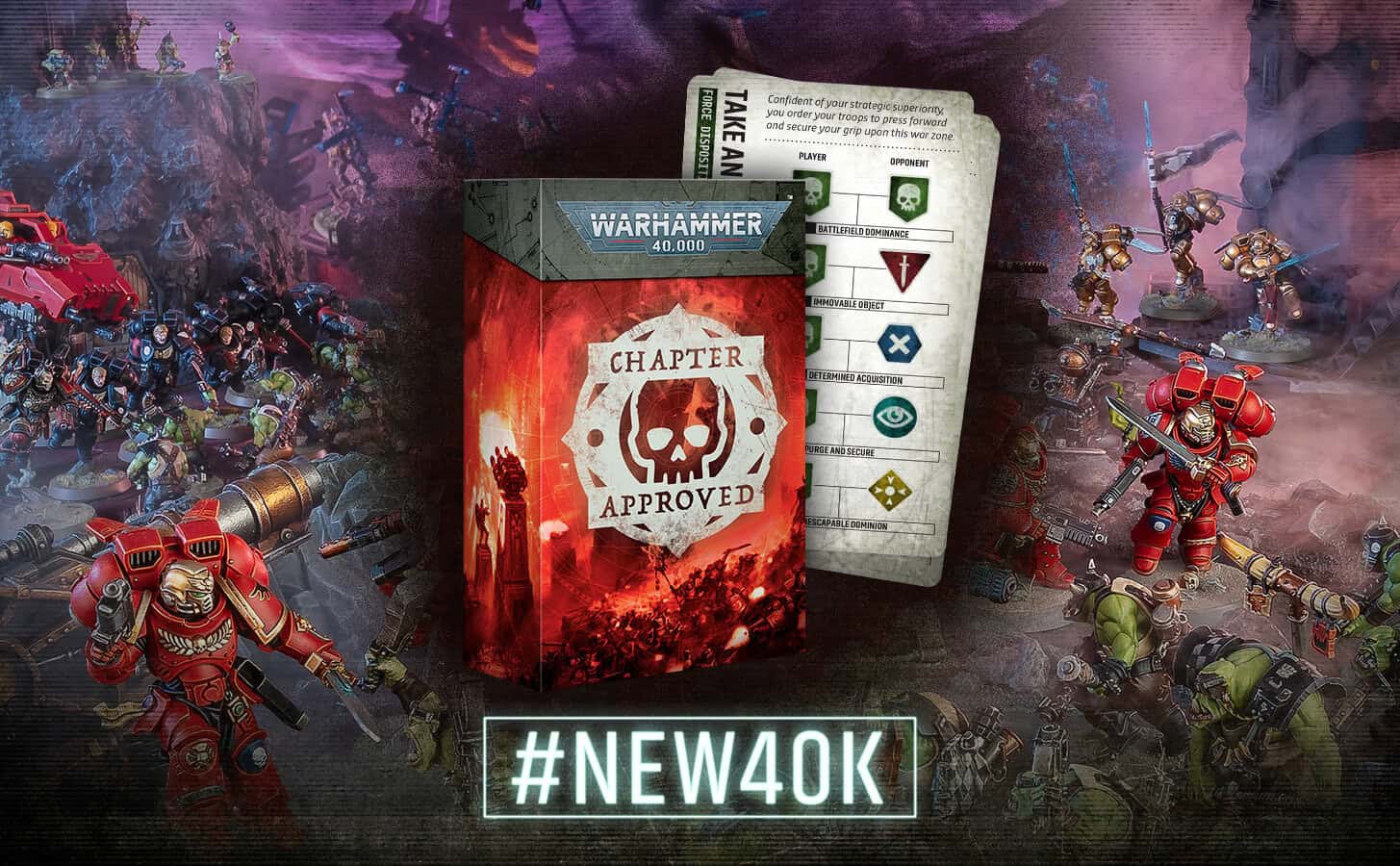
Games Workshop lifted the lid on the new Chapter Approved deck for Warhammer 40k 11th edition, and the new edition’s mission system is built from five Force Dispositions. Each of you and your detachments are tied to one, and the two together decide what the missions will be, without any guesswork.
A Take and Hold army digging in versus a Reconnaissance force trying to slip the perimeter is not the same game as Take and Hold versus Purge the Foe. So now, the missions change based on your armies, not the other way around.
Honestly, it’s a much bigger change than the rest of 11th Edition’s rules tune-up. Most of 11e is a cleanup pass on the phases you already know, but the Chapter Approved deck rewires how a game of 40k feels from list-building to the last turn.
Plus, now we know how the deck works with the Warhammer 40k Event Companion for 2026-27, (aka the old Tournament Companion) pairing the dispositions with table layouts for tournaments.
- Force Dispositions are the new way missions are generated: five strategic roles (Take and Hold, Purge the Foe, Reconnaissance, Disruption, Priority Assets), one per detachment, and your matchup against the opponent’s pick is what shapes the mission. Use with the Event Companion for tournaments and similar events.
- The Mission Deck has 15 matchups plus new Twist cards: twists can hand your whole army Hidden, change the mission mid-game, or remix what you’re playing for.
- Secondary Mission Cards stop punishing bad draws: you now draw two every turn, the 15-point cap stays, and you no longer have to score a card you only half-completed.
Force Dispositions Set the Orders Before the Dice Hit the Table
Updated on June 15 2026, by Rob Baer with the latest release details
2026-27 Chapter Approved Mission Deck Release Date & Retail Price
- Release Date: June 27th 2026
- Chapter Approved Mission Deck Retail Price (MSRP/RRP): $35 (USD).
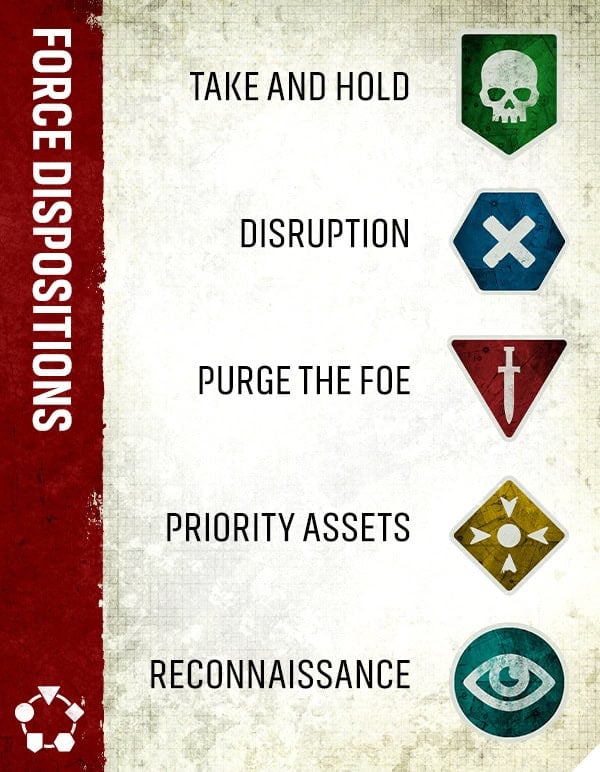
There are five Force Dispositions in the new edition, and every detachment in the game gets one. They cover the orders you’d probably give an army on the table: holding ground, killing whatever’s in front of you, reconnaissance, sabotage, or sitting on priority assets and refusing to move. So, whichever Disposition your detachment is tied to, those are the orders your army is operating under.
With the new detachment system, you can play interesting games, as an army built around two detachments can carry two different Dispositions into pickup games. Take and Hold in one, Priority Assets in the other, and you pick which one your army is playing as before the game starts. So, if you’re the kind of player who fights the same opponent every week, you can flip Dispositions between games and the matchup changes character without rebuilding the list.
Casual Play Gets 15 Mission Matchups and a New Twist Deck
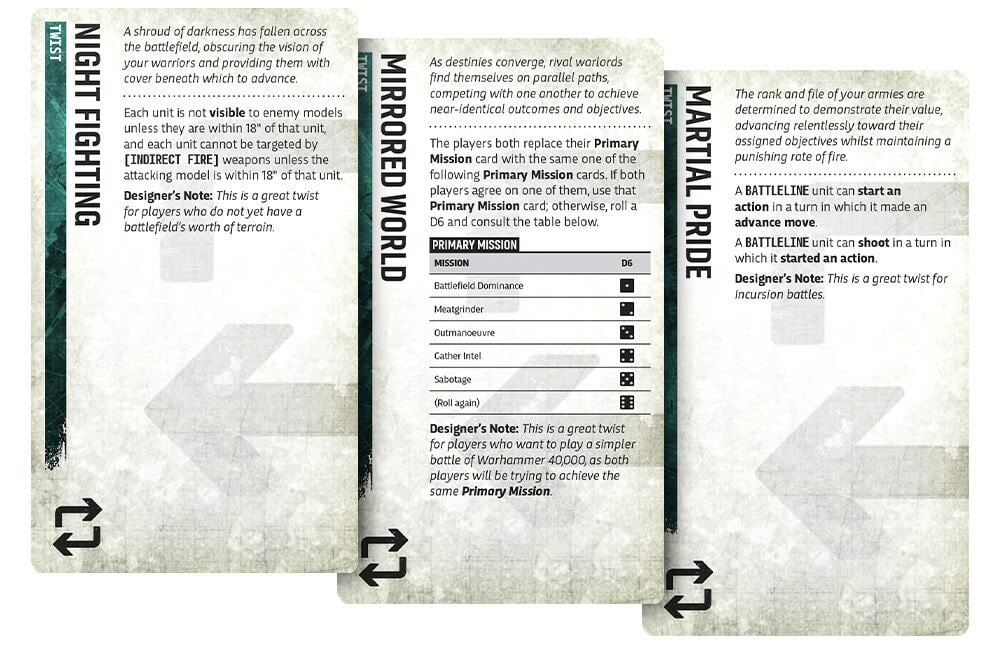
The Mission Deck contains 15 individual matchups built from the five Dispositions, each with its own deployment and objectives. Coupled with the ability to switch Dispositions between games in casual play, that’s a real swing in variety (at least it seems like it) without losing the clean matched-play structure 10th edition wired in.
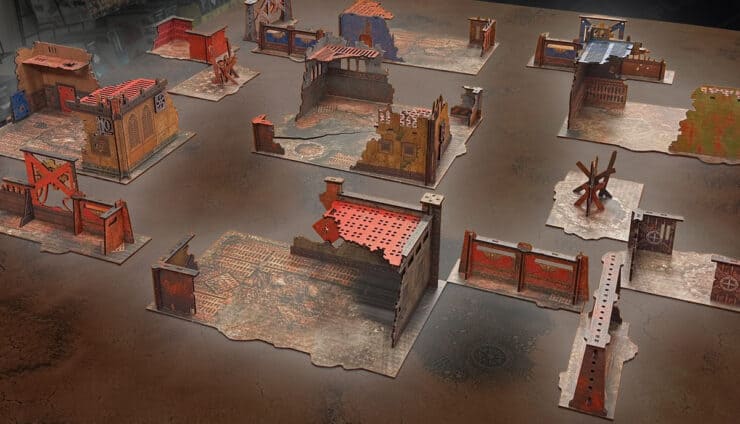
There are also brand new Twist cards in the box, which are a separate component from the missions themselves. Twists can change a rule for the whole game (giving an entire army Hidden, for example) or shuffle what you’re playing for. Casual play also gets a set of simplified terrain maps, so you can crack the Armageddon Starter Set and be rolling dice in minutes instead of arguing about ruin placement with the new maps.
Secondary Mission Cards Stop Punishing You for Bad Luck
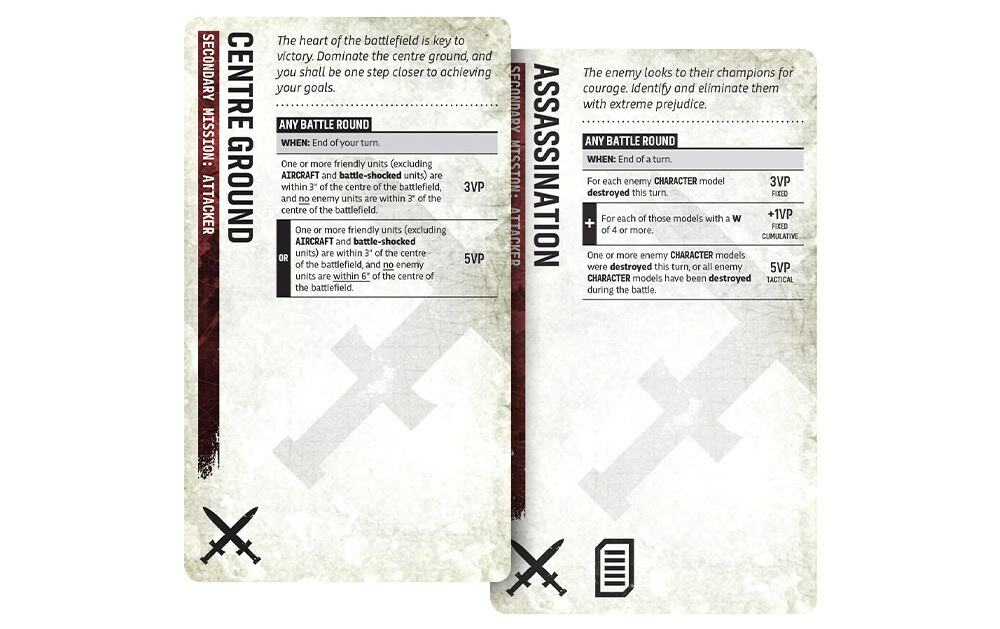
The other big shift is to Secondary Mission Cards, and it’s a quiet quality-of-life fix that (some) players have been asking for. You now draw two new Secondaries during every Command Phase, regardless of what’s in your hand and what you scored last turn. The 15-point per-turn cap is still there, so you can’t sandbag the whole game for a final-turn dunk, but a bad opening draw no longer locks you out of points for half the match.
You are also no longer forced to score a card. If you’ve only racked up partial credit, you can hold the card until you can max it. Now, for some games, that’s still going to mean a turn five swing that flips things upside down, but in other games, you could sit on a card too long and run out of units before you can cash it in. So there is a bit of decision to scoring now that the last edition didnt quite have.
The Event Companion Locks in One Disposition Per Player
The Event Companion is the organized-play side of the same system, and GW has confirmed it’s coming as a free PDF soon. For tournament play, every player picks one Disposition for their whole army from the options their detachments give them, instead of swapping between games. Same 15 missions, but now the matchup you signed up for is the matchup you play all weekend.
The Event Companion also brings three different terrain layouts for each of the 15 missions, with guidelines about which layout fires in which round. GW says these have been playtested specifically against the balance for each army, and that community data from these layouts is going to feed back into points updates over the season. So, that’s a big change from the old Tournament Companion, which leaned on TOs to figure out which terrain belonged on which table.
Why the Chapter Approved Deck 2026 Changes the Feel of 11th Edition
The phase-by-phase combat changes GW has previewed for 11th edition are more or less polish at this point, but the new Chapter Approved 2026 deck isn’t. Pulling the mission shape out of “both armies play the same scenario” and dropping it into “two armies arrive with different orders” is as close 40k has come to asymmetric play since Crusade showed up in 9th. But unlike Crusade, this version is the default for matched play, not a side mode.
Final Thoughts on the Chapter Approved Deck 2026: Biggest 40k Mission Overhaul in Years
Two things will get tested fast once the deck is in players’ hands. First is whether the five Dispositions stay balanced once tournament data starts coming in, because GW is now in a position to nudge points and detachment access to fix a Disposition that’s running away with events. Second is whether the “held in hand” Secondary rule produces too many turn-five swing games or settles into a fresher way to play.
Either way, both of those answers will come from the table, and not from GW’s influencers or previews.
The other big question mark is the Event Companion PDF itself. But until that’s live, the casual-play picture is the only one we can see clearly, and we have to take GW’s word for the organized play portion of 11th for right now.
The Chapter Approved deck ships in the Armageddon Starter Set and separately soon after, so look for more updates from actual games of Warhammer 40k soon!
🔗 Related Reads:
- 40k Chapter Approved Event Companion: 2026-27 Guide
- See All the Latest 11th Edition Rules Changes Here
- 11th Edition 40k Q&A FAQ Reveals Big Changes for 2026
- The 11th Edition Armageddon Starter Set Breakdown
- New 11th Edition Terrain Rules