Games Workshop is officially a dinosaur, as AI allows hobbyists to clone GW previews and 3D print Warhammer models in days, long before the official kits ever hit shelves.
GW built the modern miniatures hobby on a simple deal. They design the models, make the plastic, ship it to stores, and the rest of us spend weekends building, painting, and arguing about line of sight. That deal worked great when the only way to get a new mini was to buy the new kit.
Now, 3D printing and AI-powered tools are rewriting that agreement in real time.
The scary part for Games Workshop is not “someone printed a proxy.” That ship sailed years ago. The scary part is speed. A new model gets previewed, the official kit will not hit shelves for weeks or months, then a talented hobbyist recreates it from the preview and prints it days later.
That changes everything from GW’s preview strategy to distribution and enforcement. Now it even turns the release calendar into an open invitation for digital sculptors to race GW to the table and 3D print Warhammer models before the official release even happens.
GW’s New Problem: Hobbyists 3D Print Warhammer Models From Previews
Updated on February 24th, 2026, by Rob Baer with a new video.
 Games Workshop has spent decades mastering the hype cycle. Tease a silhouette, drop a spicy Warhammer Community preview, watch the internet melt, then cash in on preorders.
That whole playbook assumes one big thing: that the preview window is safe. In2026, that assumption is getting bodied by the same tech wave that has already reshaped fan art, kitbashing, and homebrew design.
The uncomfortable truth is this: a high-quality preview image can now become a printable starting point shockingly fast. Not perfect, not one click, not “press button, receive mini.”
But fast enough that the old “preview today, preorder later” timeline starts looking like an open invitation for hobbyists to 3D print Warhammer models from those very same teasers.
The New Problem: Preview Images Turn Into Models In Hours
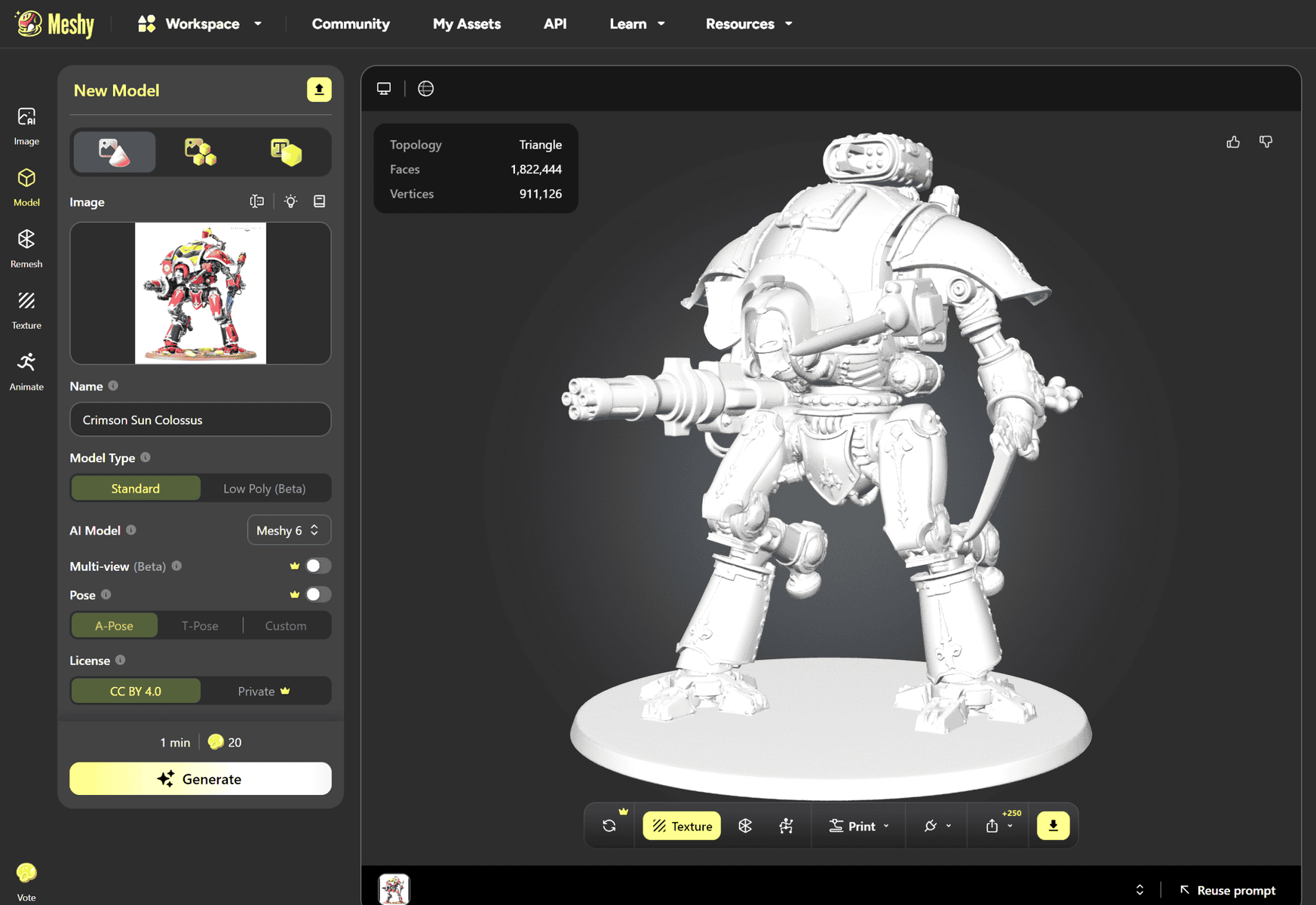
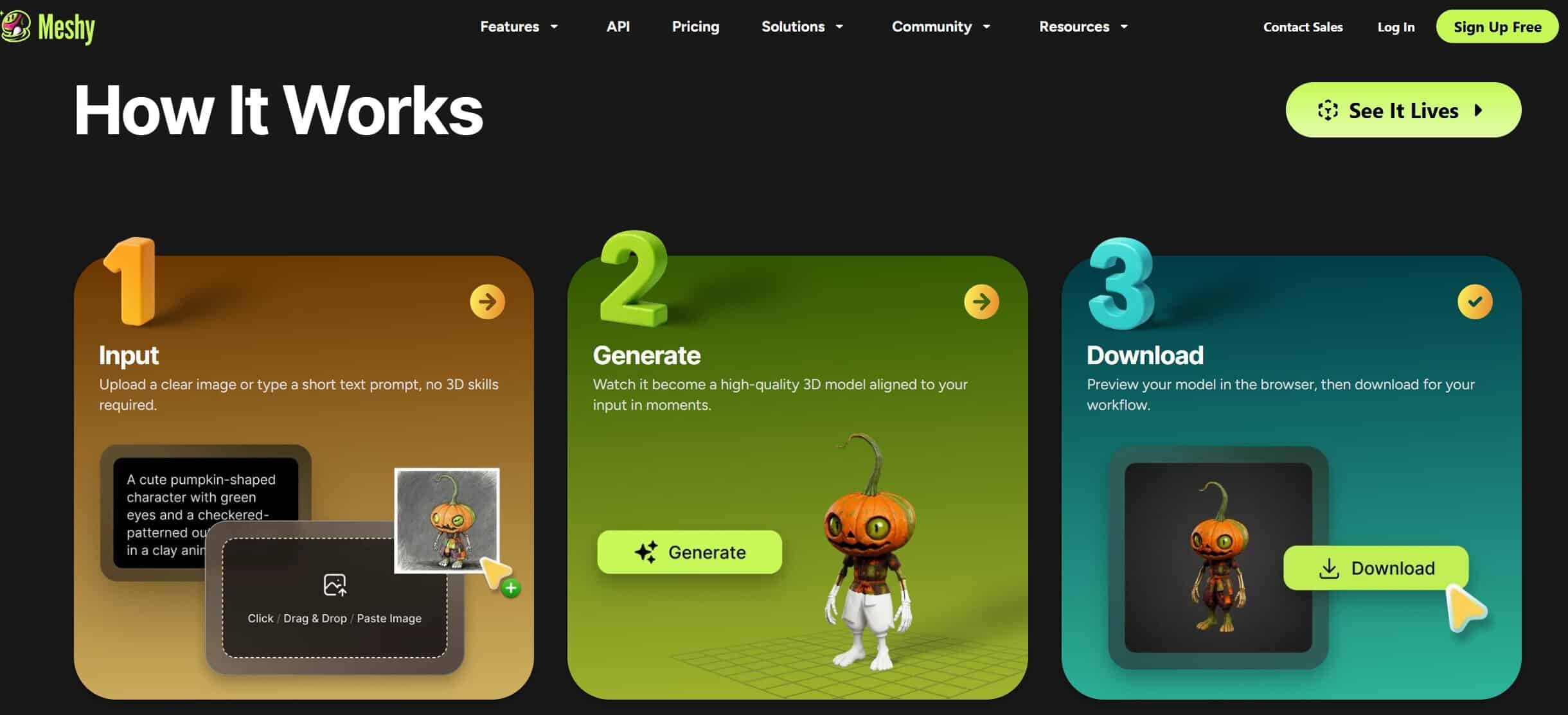 The real story here is not the previews themselves; it is what happens the moment a clean image hits the internet, and Meshy AI (or other similar AI tools) gets involved. This tool, and others like it, are making the jump from “cool render on Warhammer Community” to “workable 3D file” way faster than most people in the tabletop space want to admit.
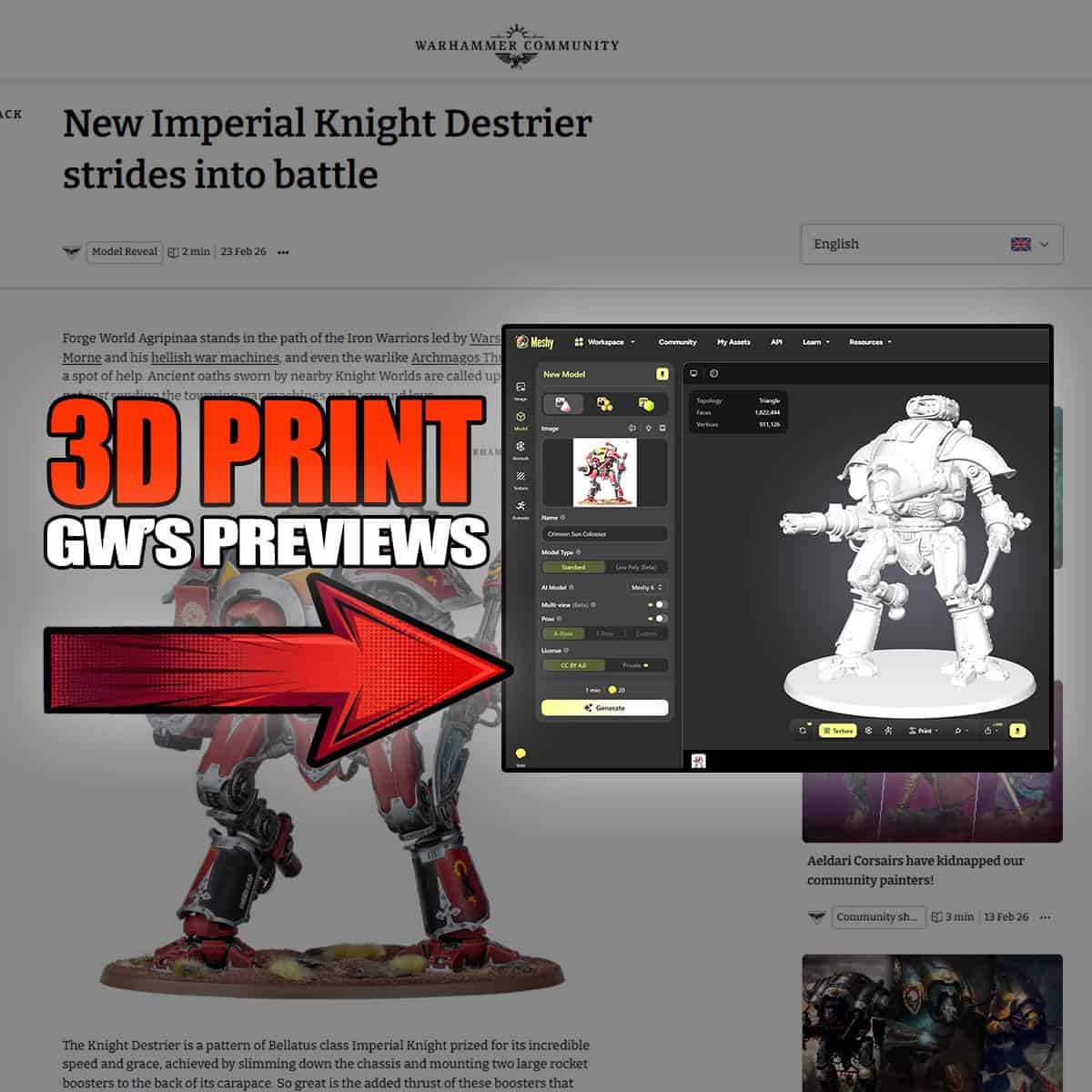
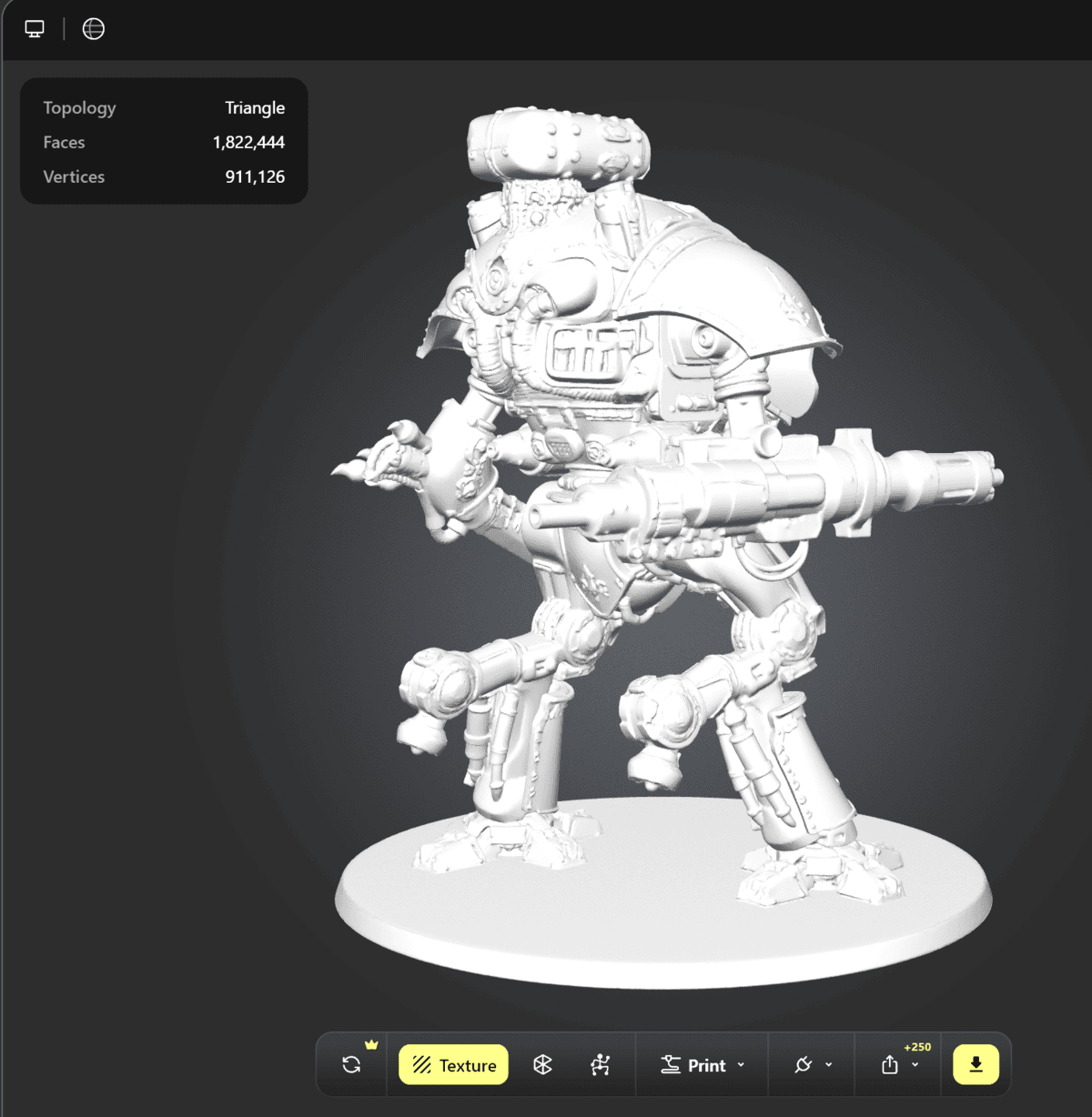
This Knight Destrier was just revealed, and already, it can be pretty close to replicated, if you so desire.
Give Meshy a clear screenshot, drag and drop, and you can generate a rough-but-usable base mesh in a short time. It’s not perfect, and it’s not one-click to a tournament-ready miniature.
But the point is the same: AI tools like this collapse the hardest part of the process to 3D print Warhammer models. That is, getting a starting structure that closely matches the silhouette and proportions to build on.
 And once you factor in the reality of the modern 3D printing hobby, it gets spicy:
- People already have libraries of bits: power fists, chain weapons, shoulder pads, helmets, backpacks, purity seals, you name it.
- The “hard part” is often just the core silhouette and proportions.
- When the base mesh exists, experienced hobbyists can digitally kitbash the same way we do on the desk, just faster and more repeatable.
So while it is not “copy, paste, and done,” the gap between Warhammer preview images and 3D-printed alternatives is shrinking rapidly thanks to new AI tools for modeling.
The first night of a reveal is now enough time for “close enough” models to start circulating. Especially when they release full-scale images and basically every detail.
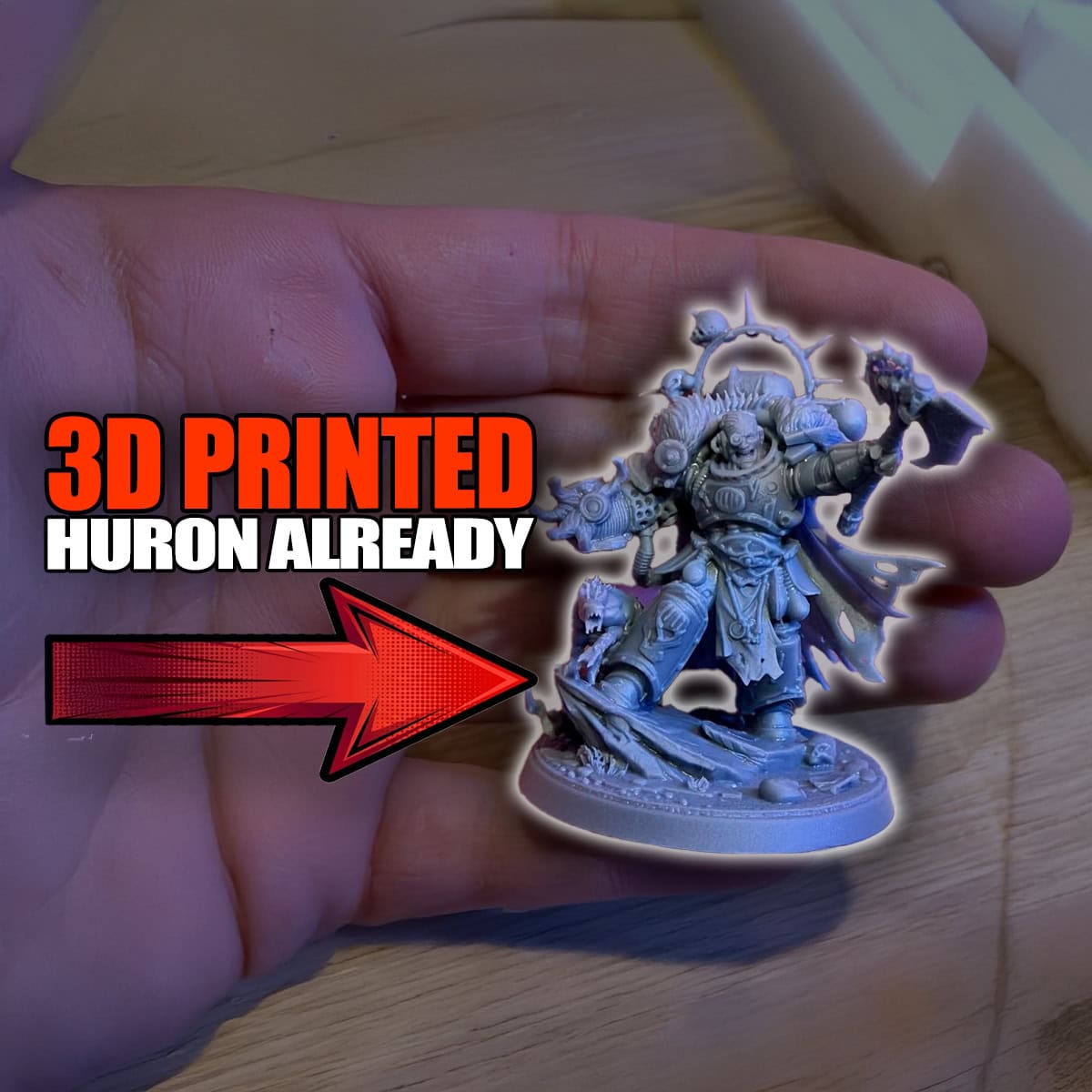
Huron 3D Printed Well Before the Release
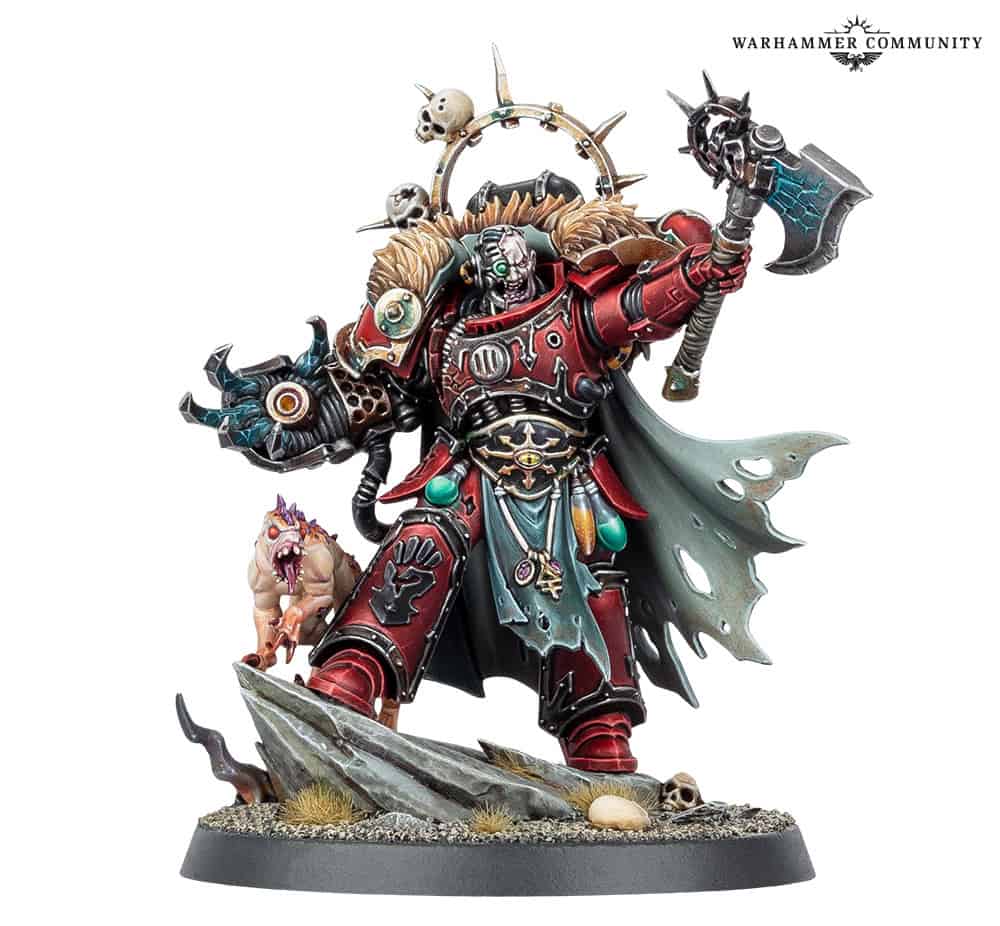
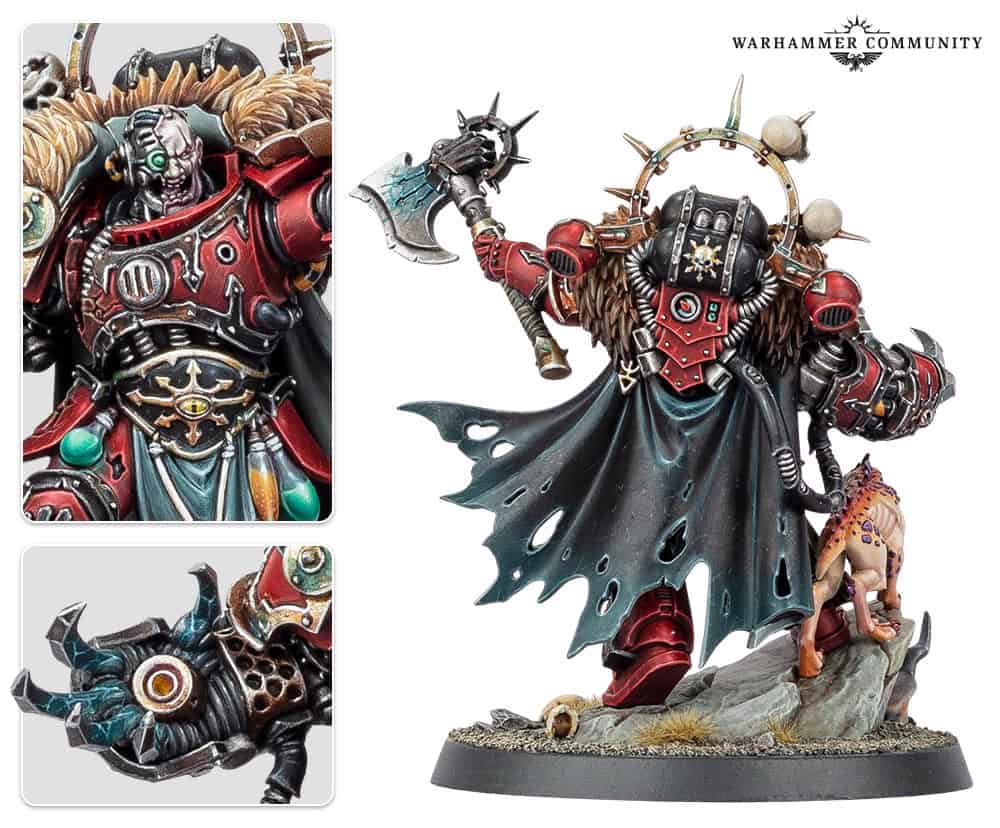
 If you’ve been in the hobby long enough, you’ve seen knockoffs, recasts, and “totally not a Space Marine” resin sculpts. This moment is different. A hobbyist recently made the new Huron model, and it was eventually posted here. Sure, there are some slight deformities you can see zoomed in at this size, but it looks basically the same to us.
Now, anyone can look at preview images, take a scan, or use AI to match the silhouette, nail the armor plates, mimic the pose, and produce a convincing replica from scratch.
No factory. No sprues. No shipping container. Just a file, a printer, and MAYBE a whole weekend.
 That is a nightmare scenario for a company selling physical kits on a delayed pipeline. GW previews are marketing, sure. But now they serve as reference materials for competing digital products and 3D printing models!
 We already showed how fans can use art and modern tools to jump from concept to physical model fast. Just like that, an AI-assisted, 3D printed Votann Titan project that got shared around the community for a bit.
The wild thing is that this technique scales. One person can do it. A small group can do it faster. A whole scene can do it at industrial speed.
AI and 3D Printing Warhammer Turn Months Away Into “Ready Tonight.”
3D printing is the production method, and now AI is the accelerator. Here’s what AI changes for miniature design, even for people without traditional sculpting chops:
- Reference cleanup: AI tools can sharpen, up-res, and angle-correct preview images to make them easier to model from.
- Shape blocking: AI-assisted workflows can rough in proportions and geometry, saving hours before fine detail work starts.
- Iteration speed: fast test prints let designers tweak details in a tight loop until the model looks “close enough” on the table.
- Distribution velocity: a single STL upload can reach thousands of printers overnight.
GW sells plastic miniatures, but the competition is not just other companies selling alternatives. The competition is a file that travels at internet speed, and then 3D printing models.
Leaks Make the 3d Printed Warhammer Problem Worse
 GW has dealt with leaks for years. Sometimes it’s blurry photos. Sometimes it’s rules. Sometimes it is something bigger, like a major dump of digital files getting out into the wild, with unclear origins.
When leaks force early reveals, GW gets pushed into showing minis farther out from release. That extra time gap is a gift to artists who love 3d printed Warhammer models. More time to sculpt, refine, print, and spread files before the official kit drops.
If those leaks are unintentional (there has been a theory forever that GW puts the leaks out on purpose), a fix is required. A leaky pipeline creates a predictable pattern: early reveal, long wait, unofficial prints hit tables, official kit arrives in a market that already scratched the itch.
GW’s Crackdowns Feel Scattershot Towards 3D Printing Models
 GW has been swinging the legal hammer for years. Takedowns, lawsuits, and pressure campaigns are not new. The difference now is volume.
More new releases mean more 3D printing models, and more new creators to make them. More creators mean more files. More files mean more storefronts, private groups, and “link in bio” distribution. A legal strategy that focuses on one seller at a time starts to look like whack-a-mole. And recently, they did file a suit against hundreds of sellers at once and won $10m in the process, which is probably going to be the new norm.
From the outside, it can feel messy. Some targets get hit hard, others slip through, and plenty of legit sellers get nervous about conversions, kitbashes, and bits that live in a gray area. That kind of climate does not help community goodwill, and goodwill is currency in a hobby that runs on passion projects.
From a business and perhaps even a survival perspective, GW has to keep enforcing. The question is whether enforcement is going to just be the way they deal with it, or if they will actually evolve their whole business model in time.
What GW Can Change Fast Without Burning the Marketing Machine
 GW does not need to abandon previews to thwart 3D printing Warhammer models. Previews sell hype. Hype sells boxes. The trick is to stop handing digital sculptors a perfect head start.
Tighten the Preview-to-Release Window
The longer the gap, the easier the race. A shorter window reduces the time available for replica sculpts to get polished and spread. If a model gets shown, it should be close to release. Weeks, not months.
Improve Distribution Pace and Stock Depth
A long wait paired with “sold out in ten minutes” trains buyers to look elsewhere. A smoother supply plan keeps excited customers inside the official ecosystem.
Treat Leaks Like a Business Risk, Not a PR Annoyance
If internal security or vendor processes are leaking, that is revenue leaving the building. Tightening that pipeline protects kits, not just secrets.
Pick enforcement targets that actually matter
Going after hobbyists making one-off conversions is bad optics. Going after high-volume sellers pushing near-identical replica STLs is where enforcement has teeth. Focus on the commercial pipeline, not the casual kitbasher or people selling obviously influenced but not identical files.
Will GW Ever Sell Official STL Files for 3D Printing Models?

People ask this all the time. The honest answer is “probably not,” at least not in the way fans imagine.
GW’s business model is built around plastic production, retail partnerships, and a premium brand image. Selling STLs so players could just have unlimited access to 3D printing models they needed for their armies would undercut parts of that structure,

But Games Workshop DOES need to evolve at some point. There are easy middle paths that could work if GW ever wanted to test the waters:
- licensed accessory files: scenic bases, tokens, objective markers
- upgrade bits: shoulder pads, icons, faction details
- terrain and hobby tools: stuff that supports the game without replacing the core kits
- partner platforms: controlled distribution with watermarking and account-based access
If GW never goes digital, it may still continue to fall behind. There are consequences in a hobby where digital manufacturing keeps getting cheaper.
3d Printed Warhammer Pros and Cons: Where the Hobby Wins, and Where GW Sweats
 Pros
Pros
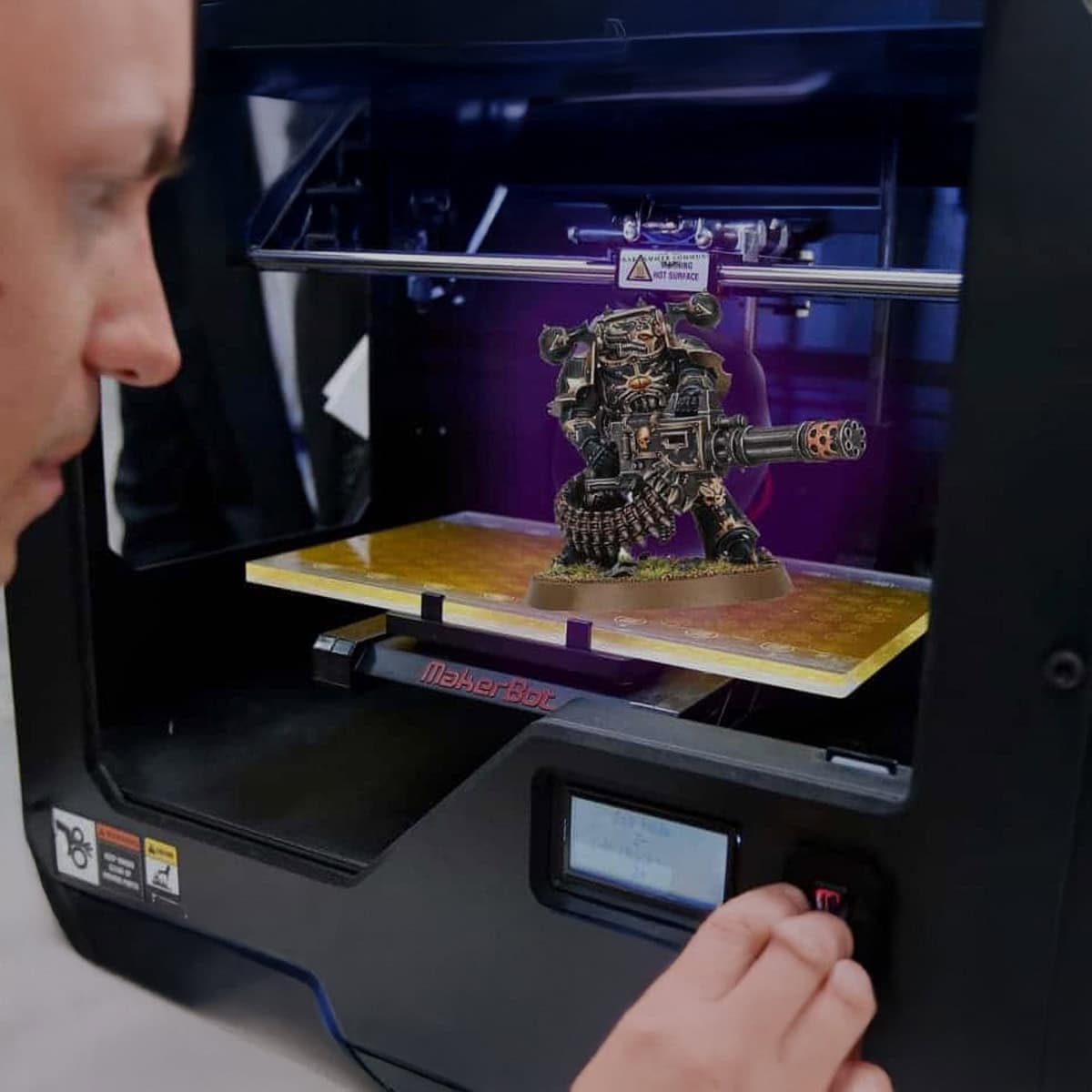
- Lower barrier to entry: cheap 3d printed warhammer armies can get new players on tables fast
- More creativity: custom bits and unique sculpts push hobby projects into wild territory
- Faster iteration: players can tailor lists with niche models and themed units
Cons
- Less demand for official kits: veteran and dedicated players might buy fewer GW boxes
- Pressure on stores: if sales shift to files and resin, local retail takes the hit
- Brand dilution: a flood of “close enough” models blurs the visual identity GW relies on
This will not bankrupt the hobby. It just shifts where money flows. It shifts how people enter. It shifts what “supporting the game” looks like. Remember downloading songs in the early 2000’s? This is the 3Dmodel equivalent of that.
Final Thoughts on GW Moving To Digital STLs, and 3D printing Warhammer models
GW is not helpless here. The company still owns the world, the rules, the art direction, and the cultural gravity of 40k. But the old rhythm of “preview now, ship later” is getting punished by digital sculpting speed, and 3D printing models. AI makes that speed even faster. Every long-gap reveal becomes a countdown clock for hobbyists to 3D print Warhammer replicas.
While it might not seem like a serious problem right now, AI and 3D printers are evolving rapidly; in just a year, things could be very different.
See the Latest GW Suit Against Hundreds of Sellers