GW’s new Dominatus deck for Warhammer 40k turns a full campaign into a card-driven weekend event without the Crusade notebook.
Most narrative campaigns in 40k die the same way. Somebody at the table is tracking a Crusade roster, their buddy at the other table forgets which Battle Scar his Hellblasters picked up two games ago, and the whole thing kind of stops mattering by week three.
From what Games Workshop is showing, the new Dominatus deck for Warhammer 40k 11th Edition wants to fix that, and give you a full multiplayer campaign you can run start to finish over a weekend.
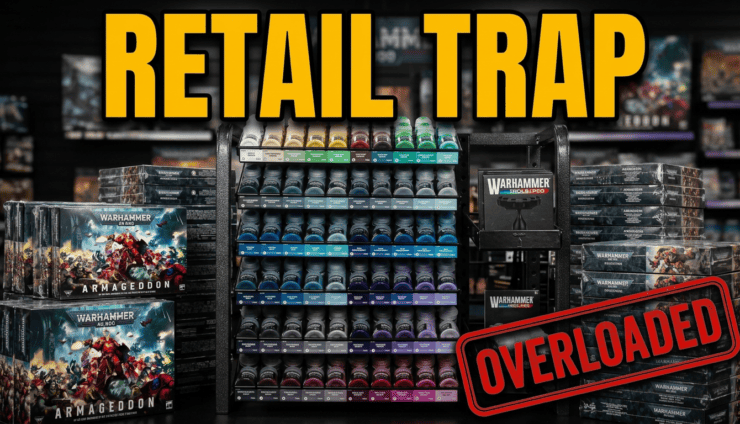
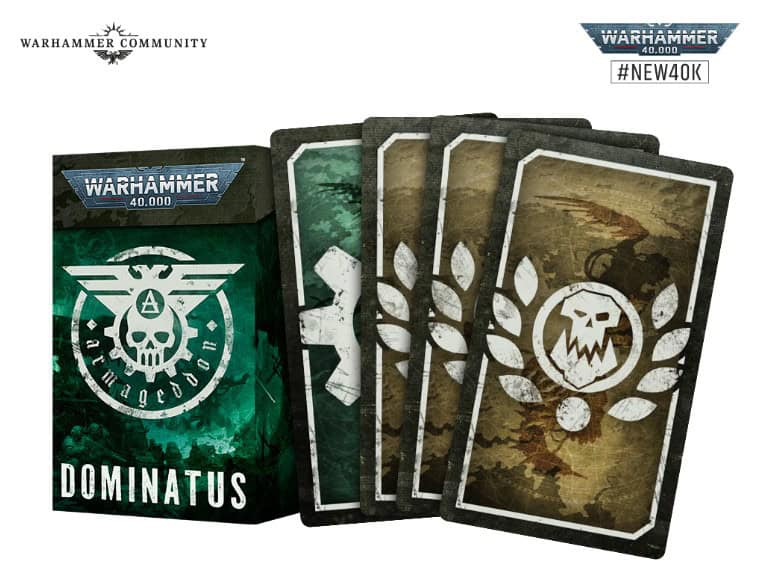
GW is selling the deck two ways: packed inside the Warhammer 40k Armageddon launch box, and standalone next to the Core Rules and the Chapter Approved Mission deck. If you’ve ever wanted to run a 40k campaign at your FLGS or a buddy’s basement, gather two or three allies, and have it actually feel like the games connect to something bigger, this is the system GW is handing you.
- Multiplayer by design: players split into two or three alliances (Liberators, Oppressors, and optionally Raiders) instead of being locked into a one-on-one mini-campaign.
- Three phases, three locations: each phase has a contested location with special war zone rules and a bonus for whichever alliance controls it.
- Cards replace notebooks: winners get Battle Honour cards, losers get Battle Skill cards, and the upgrades stick with chosen units for the rest of the campaign.
- Agendas drive the narrative: each alliance gets its own goals to chase, and the Agenda Achieved count at the end of each phase decides who’s in ascendancy.
- Two-day event ready: two battles in Phases 1 and 2, plus a single Phase 3 finale, fits a Saturday-Sunday or weekday tournament slot.
Dominatus Trades the Crusade Slog for a Card-Driven Weekend Campaign
Crusade is great in theory, but the bookkeeping is brutal: battle scars, agendas, requisition points, experience tracking, and a roster you’re supposed to keep current across weeks or months of play. Then, of course, you have your paper campaigns with maps and more, but this deck isn’t really trying to replace that.
With Dominatus, most of the bookkeeping gets thrown out of the window. The whole linking layer between your games (your upgrades, your alliance progress, your campaign-defining moments) sits in cards you pick up after each battle. You don’t track anything on a sheet or an app. Just shuffle, you draw, you keep the cards your unit earned, and that’s literally campaign.
Best of all, GW says you only need the Dominatus deck, the Core Rules, and the Chapter Approved Mission deck to run it. So that’s a low-friction way into narrative 40k that the format hasn’t really had before.
How a Dominatus Campaign Actually Plays Out
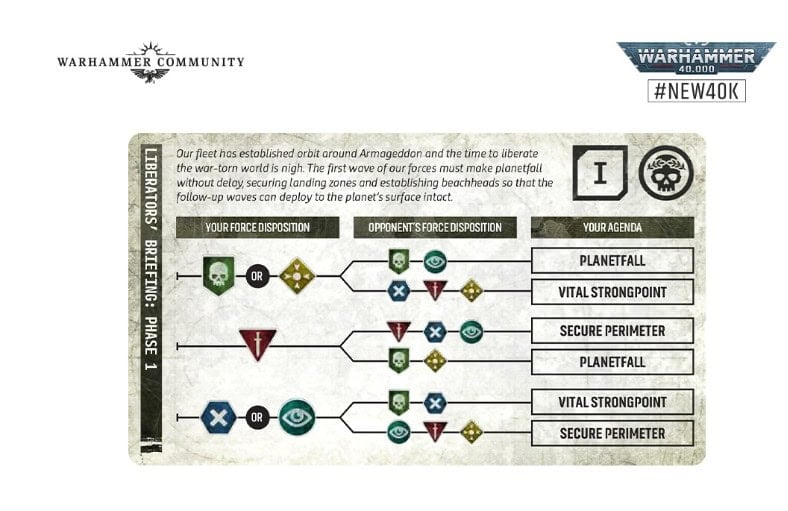 The three-alliance setup is good because two-team narrative campaigns always collapse into “me vs. my one buddy” inside two games. Players split into roughly equal alliances: Liberators, Oppressors, and Raiders (if you want a third side in the fight). From there, you roll a D6 to pick the Phase 1 location, read your alliance’s Briefing card, and lock in your Agenda for the game.
Random location picks are the right call, too, since the alternative is somebody’s alliance captain spending an hour pre-gaming the location bonuses before anyone deploys.
A standard campaign runs 2,000-point Strike Force armies and uses missions out of the Chapter Approved Mission deck, except you can swap your Primary Mission for an Agenda specific to your alliance. That’s where the format actually gets interesting because you can chase an Agenda over a Primary Mission, so you’re playing for the story instead of just grinding objectives. Which is also reflected in the upgrade card you get to bank.
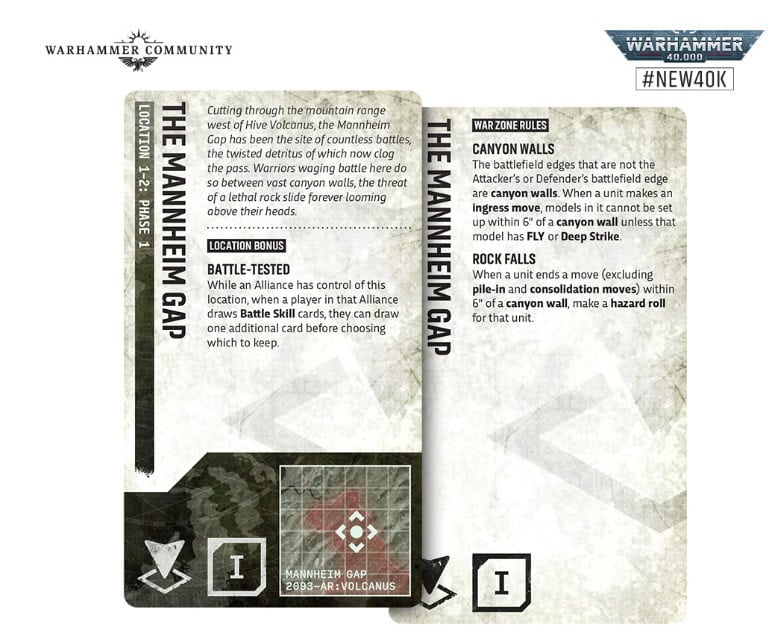 Each phase wraps after two battles per player, then everyone reconvenes for the tally. The alliance with the most Battle Honour cards locks in control of the location for the rest of the campaign. Ascendancy goes to whoever stacked the most Agenda Achieved cards, and that alliance gets a Relic card too. So you’ve got two ways to win the phase: the alliance that just won its games, and the alliance that played the story.
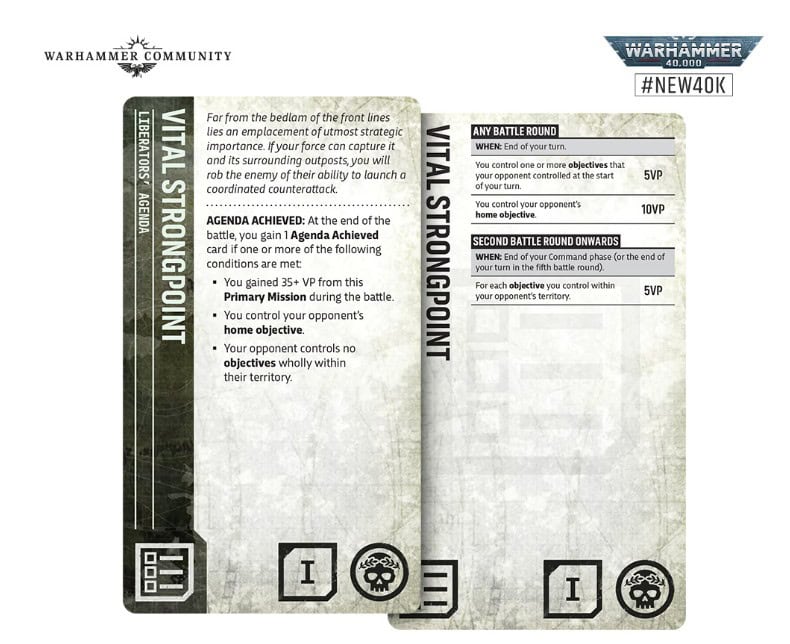 Then Phase 2 fires off with a new location, a new Briefing, and new Agendas. By the time you hit Phase 3, you’ve got a stack of unit upgrades from the earlier games feeding into one climactic battle. The narrative result of that final fight is shaped by how the earlier phases went, which is where the real campaign payoff lives.
Battle Honour and Skill Cards Carry the Dominatus Campaign Rules
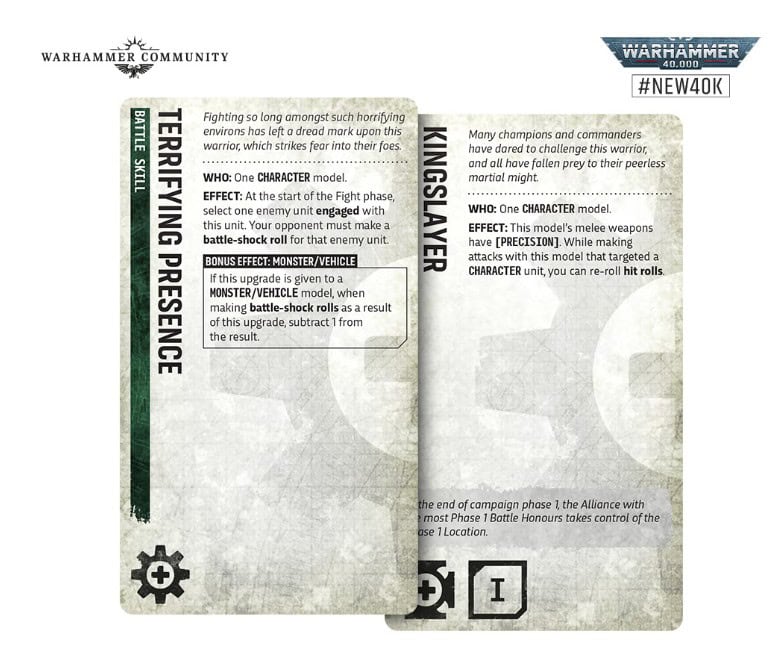 Here’s where the Dominatus campaign rules get pretty clever. Every battle gives both players something. The winner draws a Battle Honour card, the loser draws a Battle Skill card. Both are real upgrades (better OC, weapon abilities, redeployment tricks), and both stick on a chosen unit for the rest of the campaign.
Losing your first game doesn’t actually put you too far behind for the weekend, because the loser’s Battle Skill card is still a genuine upgrade. You come back into Phase 2 with a unit that’s actively better than when the campaign started. Which is the thing that keeps narrative campaigns alive past the third game when somebody’s 0-2 and ready to roll over.
Once the campaign wraps up, you can mix up the alliances, shuffle the deck, and run it again with entirely different locations and Agendas. Or you add on more players and more games per phase and stretch it across a longer event.
Final Thoughts on the Dominatus Deck for Warhammer 40k
If Dominatus catches on, the local store calendar could look different this time next year. Less one-and-done tournament play, more two-day narrative weekends with prizes for whoever actually told the better story instead of grinding the most objective points. That would be a real shift in what the average FLGS event slate looks like now.
The bigger question is whether GW backs Dominatus with more expansions and new cards, or if they just let it die out eventually. A second deck themed around a future flashpoint would turn this into the new narrative spine for 11th edition. The alternative, of course, is that it releases, gets a launch box bump, and then quietly sits there as an Armageddon-flavored novelty.
Either way, pulling it out of the box AND selling it separately on day one signals GW sees this as a system, not a one-off.
🔗 Related Reads:
- 40k Armageddon: The Return of Yarrick, Showdown With Wazdakka
- Warhammer 40k Armageddon Starter Set: Contents and Value
- 11th Edition 40k Armageddon Starter Set Box: Contents, Rumors + Predictions
- Return of Yarrick, 40k Armageddon Releases: Available Now
- Updated Warhammer 40k 2026 Roadmap, Release Schedule