Codex Space Marines detachments give Gravis two ways to own the middle, as Heavy Intercessors get a lot harder to move off an objective.
GW finally showed actual rules for the new Codex: Space Marine detachments, and Gravis players got most of the good stuff so far. The first preview covers fifteen detachments, but only two came with enough rules to really get into. Both are built around Gravis Marines, though: one helps the slow boys get across the table, and the other makes them miserable to remove once they’re sitting on an objective.
That’s pretty much how the 11th Edition rollout has gone so far. GW shows off the part it wants everyone talking about first, then leaves the rest hanging until the next preview or pre-sale.
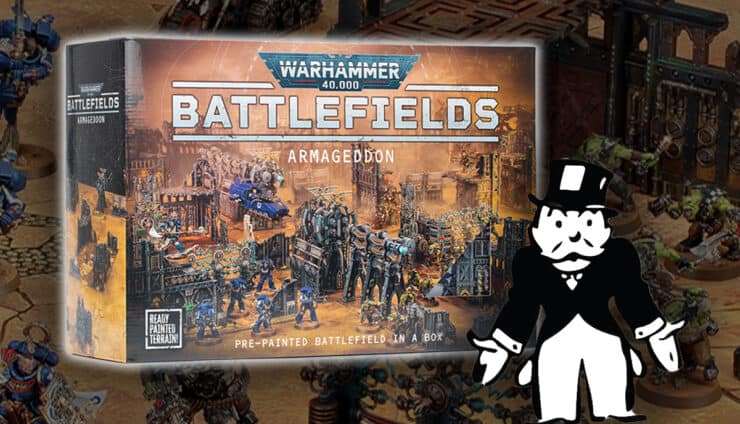
Either way, Space Marines are leading the 2026 codex schedule right now; they’re all over the Armageddon box, and they just watched 17 units head to Legends. So, getting fifteen detachments in the new book gives Marine players just as many options to work with as the Ork players did in their new codex at least.
- Detachment split: 15 detachments across Combat Doctrine builds, armor-type builds, and specialist-unit builds.
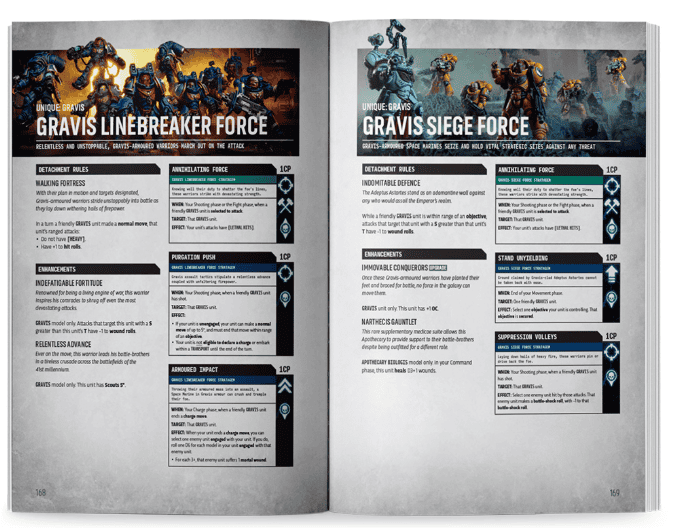
- Gravis pair: Linebreaker Force moves Heavy weapons at full speed, while Siege Force combines a ward with an OC-stripping stratagem.
- First Founding: Blood Angels, Black Templars, Dark Angels, Deathwatch, and Space Wolves get holdover updates instead of merged rules, per the 2026 codex schedule.
New Combat Doctrine-Based Detachments
Updated on September 11th, 2026, by Rob Baer with the new 11th edition Space Marine Detachment rules.
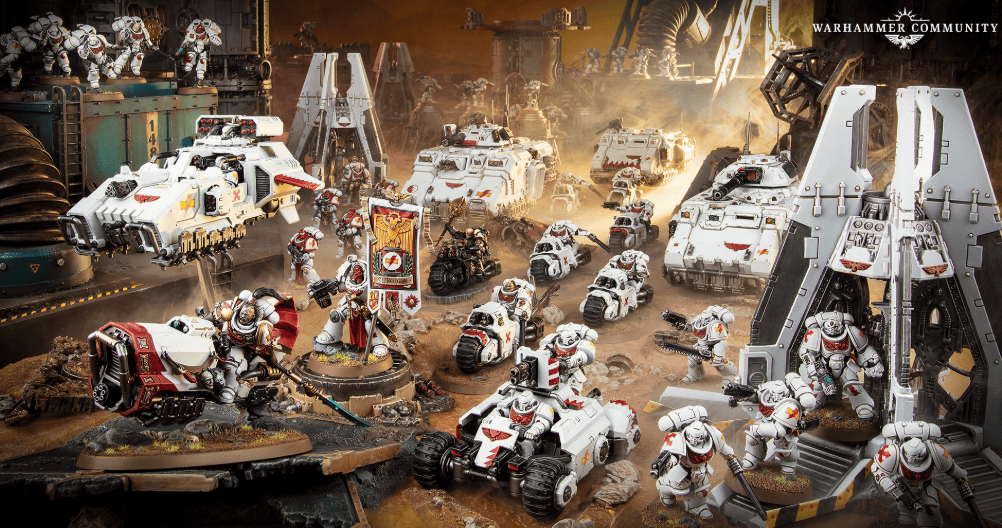
The new Combat Doctrine detachments give you a few ways to spend your detachment points, but you do have to pick a theme of sorts to build from. The Gladius Task Force costs 3DP and keeps things broad, with an extra use of any one Combat Doctrine per game plus four enhancements and six stratagems.
The other three Brethren detachments cost 1DP each and lean harder into one specific Doctrine, with enhancements built around doing that particular job better.
- Gladius Task Force: 3DP, one extra use of any Doctrine, four enhancements, six stratagems.
- Assault Brethren: built for the player who wants the chainsword to do the talking.
- Tactical Brethren: survivability tools for holding the front line longer.
- Devastator Brethren: better shooting, sometimes on your opponent’s turn.
There is a real restriction tucked into those Brethren choices, though. All three have the Unique: Doctrines tag, so taking one locks you out of the other two for that list. Which is similar to how the chapter detachments gave Marine players a pile of new options.
You are getting flexibility, but just not all of it at once, sadly.
Gravis Linebreaker Force Lets the Heavy Guns Run
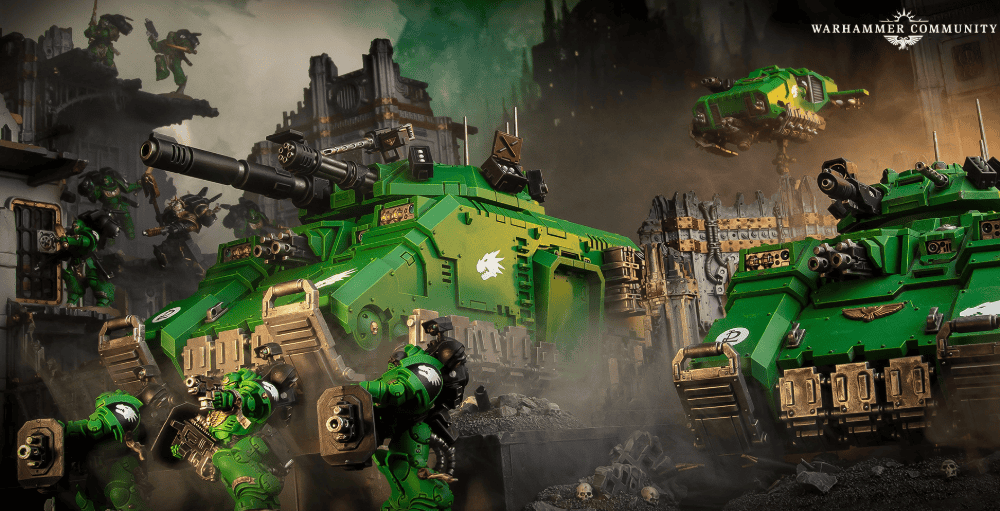
Gravis has never needed help being tough. But getting the army where it needs to go without giving up the Heavy bonus is the annoying part, and Linebreaker helps solve that problem. Heavy Intercessors and Eradicators with Heavy Bolters can now move their full distance and still keep the accuracy bonus from Heavy, so advancing these bricks doesn’t come with the usual shooting penalty now.
- Full move, full accuracy: Heavy Intercessors and Eradicators with Heavy Bolters ignore the Heavy trade-off.
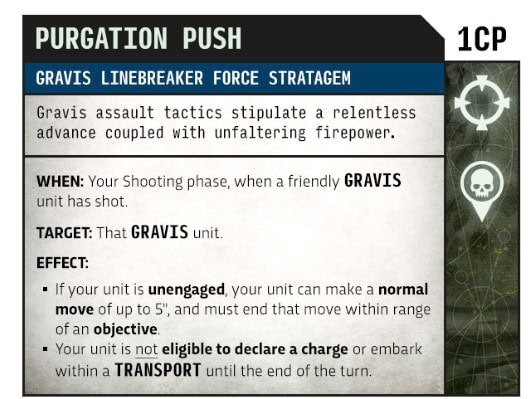
- Purgation Push: a last-ditch burst of speed onto a nearby objective after shooting.
With a natural 5″ Movement, Gravis units have always paid for all that armor by taking their sweet time getting anywhere. Heavy Intercessors can hold ground just fine once they’re standing on it, but getting there can eat a turn you really wanted for something else. Purgation Push changes all that now, because you can shoot a unit off an objective, then use the extra movement to get your own Marines onto it instead of staring at an empty point from five inches away.
Gravis Siege Force Turns the Middle Into Something You Can’t Pry Open
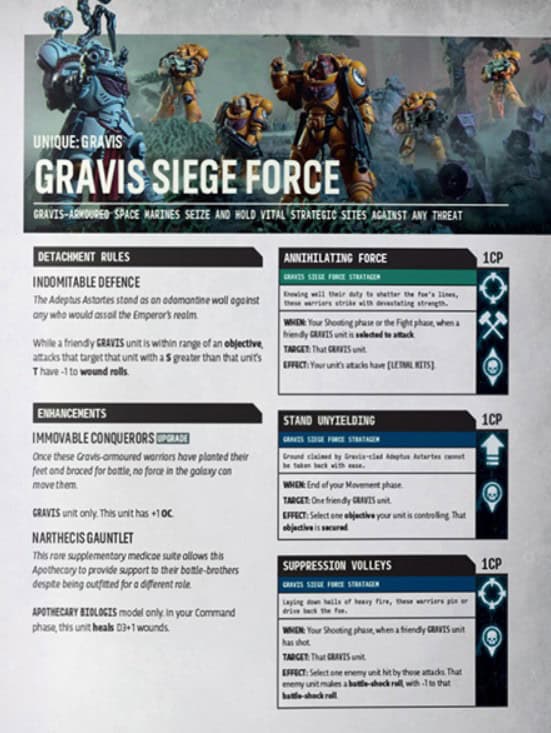
Siege Force is for the Gravis player who gets onto the middle and stays for the whole game. It gives marine players a ward, a way to wreck enemy Objective Control, and an enhancement that pushes its own OC higher. That’s pretty good when the unit using it was already built to soak up punishment to start with!
- Indomitable Defense: a ward that cuts wounds from exactly the high-power weapons people aim at your chunkiest lads.
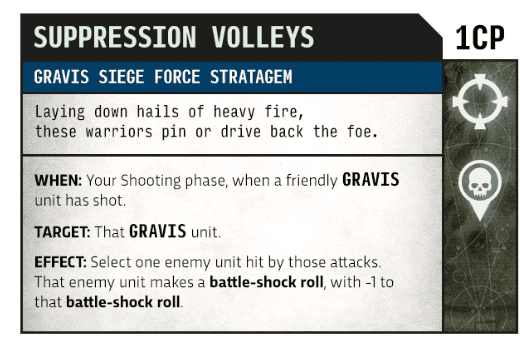
- Suppression Volley: breaks cohesion and drops an enemy unit’s OC to -.
- OC enhancement: any Gravis unit gets a bump to its own Objective Control.
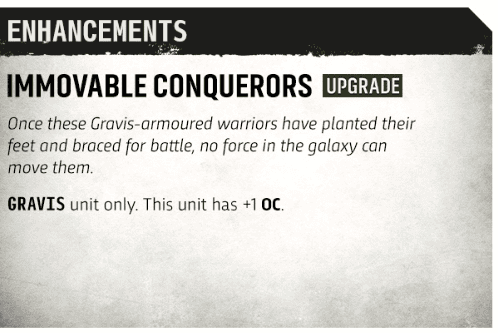
Suppression Volley is the rule we’d keep an eye on because it can win objectives without bothering to finish off the unit standing there. Knock its OC down to – and those models stop counting, while your own Gravis Marines can even get an OC boost from the enhancement.
That’s a rough way to lose points, especially when you’ve already spent the time trying to chew through the Marines contesting it. With 11th Edition leaning hard on objectives, Siege Force is built to play that game all day. The overall theme also makes sense with a codex that cuts model counts while buffing what’s left.
The Other Space Marine Detachments are Still Just One-Liners
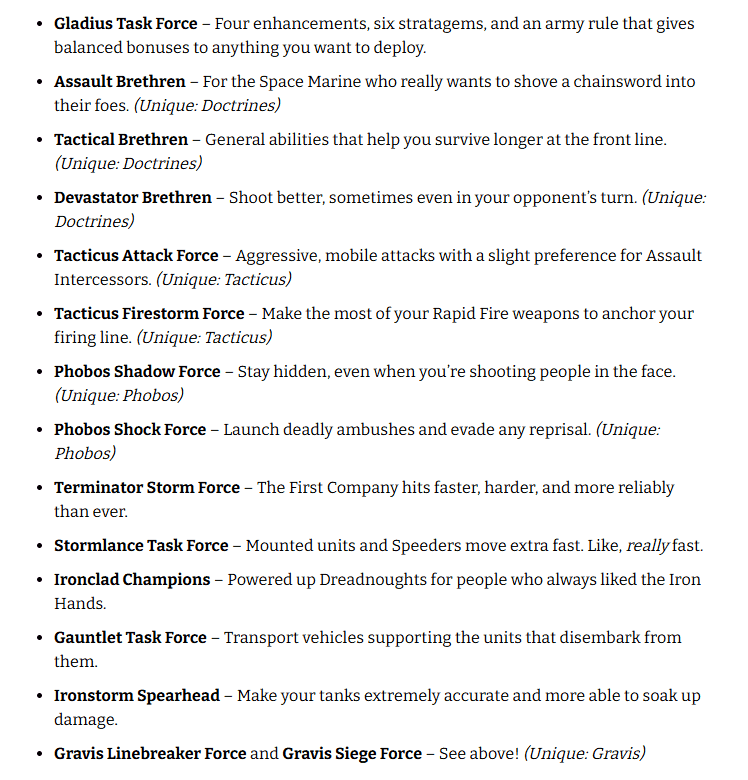
Unfortunately, GW still hasn’t revealed the rest of the Space Marine Detachments yet. All the rest only got a sentence apiece for their previews, which is enough to tell us what they’re aimed at without showing how good any of them actually are.
- Tacticus Attack Force wants aggressive, mobile play with a soft spot for Assault Intercessors
- Tacticus Firestorm Force builds around Rapid Fire weapons
- Phobos Shadow Force stays hidden while shooting
- Phobos Shock Force wants to ambush something before ducking the return hit.
- Terminator Storm Force speeds up the First Company
- Stormlance Task Force gets bikes and Speeders moving
- Ironclad Champions powers up Dreadnoughts
- Gauntlet Task Force connects transports with the units climbing out of them
- Ironstorm Spearhead makes tanks extremely accurate while helping them soak damage.
First Founding Chapters Get a Holding Pattern, Not a Merge
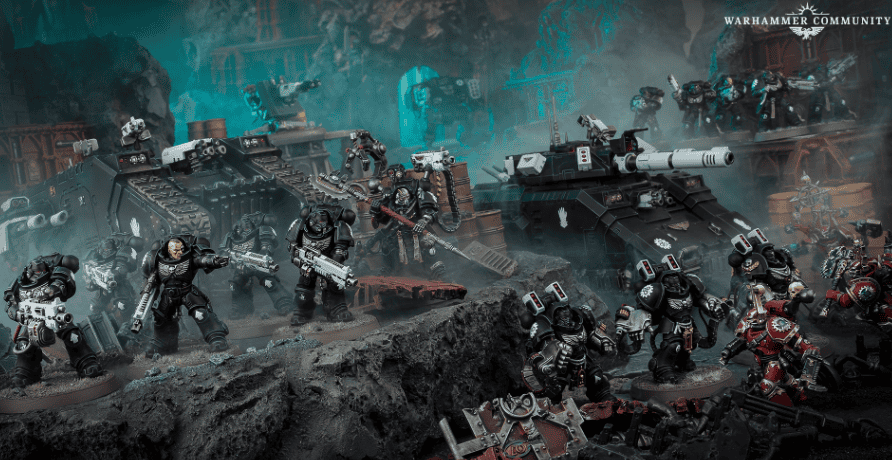
Blood Angels, Black Templars, Dark Angels, Deathwatch, and Space Wolves players finally got an answer about what they’re supposed to do with the new Marine codex too. They won’t be expected to bolt old rules onto the new book and juggle two sets of rules at once either!
GW says those chapters are getting updates to carry them until their own codexes land, with more details coming next week.
Final Thoughts on Codex Space Marines Detachments
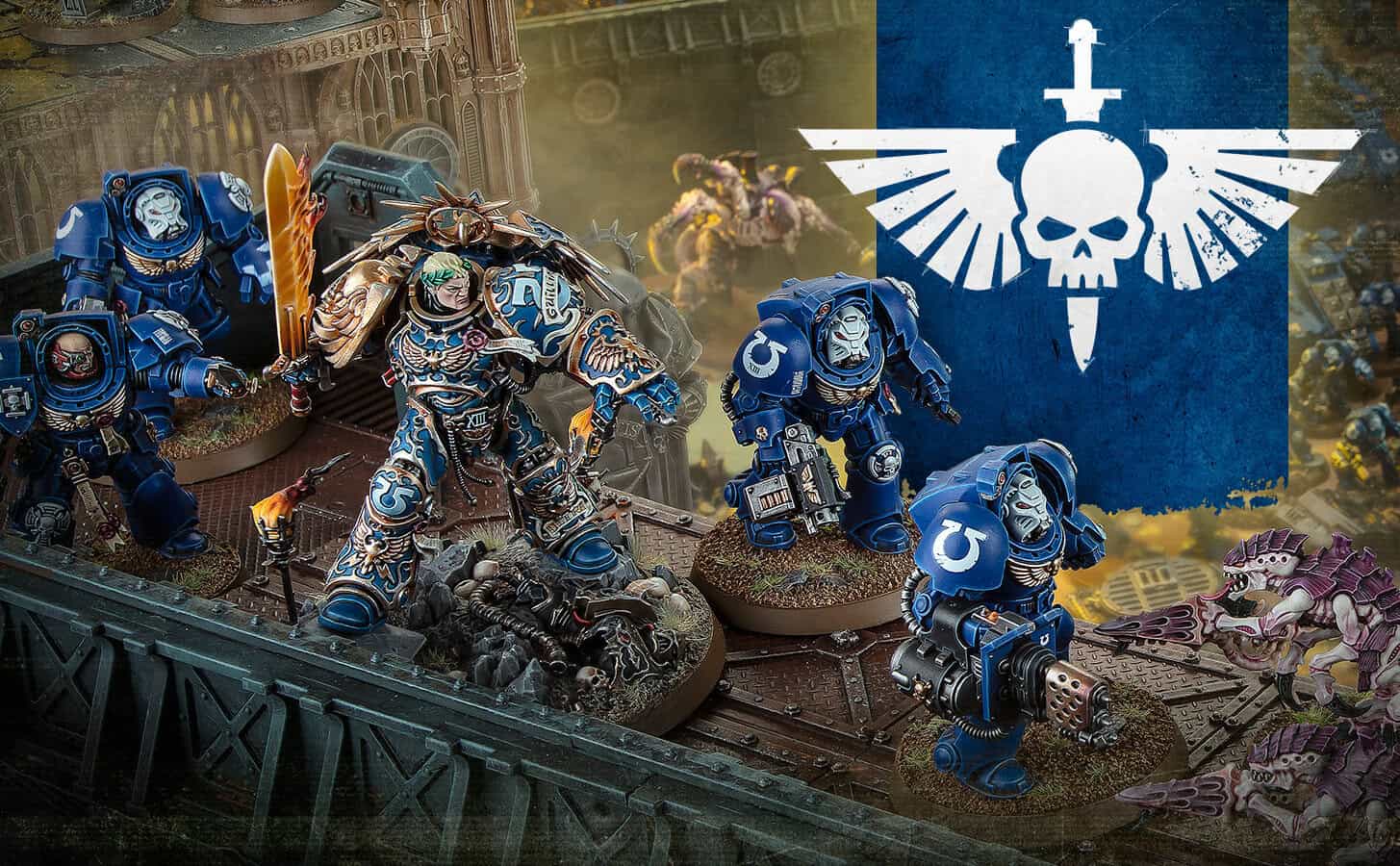
Overall, the new codex is still hiding a lot of the details, so there isn’t much point in trying to crown a best Space Marine detachment from a pile of teaser sentences. The Gravis rules, however, give players something to start building lists around right now. So, if you’ve already got shelves full of Heavy Intercessors, you probably are very excited to see the rest of the codex now.
The next thing worth watching is what GW actually wrote for things like the Terminator Storm Force and Ironstorm Spearhead. “Hits harder and more reliably” and “extremely accurate” can cover a whole lot of ground once points, enhancements, and stratagems come into consideration.
Either way, with the rest of the 11th Edition codex run still stretching out ahead, Space Marine players at least get to start arguing about this book first now.
🔗 Related Reads:
- Warhammer 40k 11th Edition Rules: Release Date, Detachments + Every Change
- New 40k Codex Release Schedule: 2026 Roadmap for 11th Edition
- GW Sends 17 Space Marine Units to Legends
- New Eradicators with Heavy Bolters Rules
- 7 Space Marine Faction Packs Arrive With New Detachments + Rules
- New 11th Edition Space Marines Detachments for Every Major Chapter
- New Space Marine Codex Buffs Marines but Cuts Model Counts
Which Gravis detachment are you building first, Linebreaker or Siege Force?