Heroclix sales are ahead of almost every other miniature game besides Warhammer 40k, in our recent retailer poll, raising eyebrows for Games Workshop and other manufacturers.
Big miniatures games aren’t all moving the same way at retail right now, and that should make a few hobby companies start thinking about thier offerings a little harder than normal.
Based on our retailer polling, Warhammer 40k is still the big dog by a hilarious margin. No surprise there, but once you step outside that power-armored castle, the picture gets weird pretty fast. Heroclix is reportedly outselling every Games Workshop miniature game except 40k, Horus Heresy, and Age of Sigmar among the retailers we polled.
Sure, that’s not the usual online hobby engagement metric, but retail doesn’t care who has the loudest subreddit. It only cares what actually moves, and the numbers right now show Warhammer 40k isn’t just winning, it’s carrying the entire genre on its back.
40k is Still The Moutain Top of Miniatures Sales
Updated on June 2, 2026, by Rob Baer, with the Latest
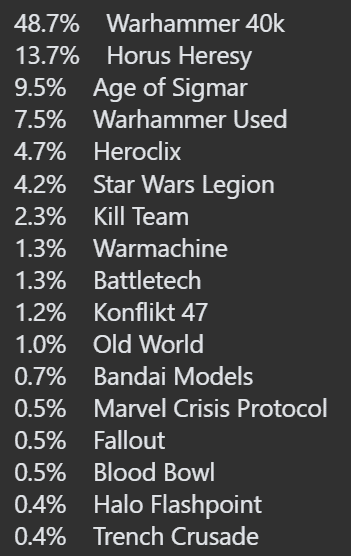 Here’s the overall miniatures sales breakdown by game from the larger independent retailers we polled in major metro areas. Honestly, it starts exactly where most people would expect: Warhammer 40k on top at 48.7%, but the rest of the games are not even close.
After that, the drop-off is significant. Horus Heresy comes in at 13.7% (nearly 1/3 of 40k), Age of Sigmar at 9.5%, and Warhammer Used minis in generalat 7.5%. Next Heroclix lands at 4.7%, ahead of Star Wars Legion at 4.2%, Kill Team at 2.3%, Warmachine and Battletech at 1.3% each, Konflikt 47 at 1.2%, and Old World at 1.0%.
That Heroclix number is the eyebrow-raiser, to be fair. It’s not usually part of the same miniature-game grouping as Age of Sigmar, Horus Heresy, Kill Team, or Old World. But apparently, at some stores, it’s doing the one thing retailers care about most: selling.
That doesn’t mean those other games are dead, either. A local scene can make a smaller game feel huge if a dozen regulars are showing up, painting armies, and running events. But stores don’t pay invoices with vibes, they pay them with sell-through, reorders, and products that don’t sit on shelves long enough to become terrain themselves.
Heroclix Beating Bigger Hobby Games Says A Lot
 Heroclix at 4.7% is interesting because it’s not usually treated like a miniatures retail threat. It doesn’t have the same army-building prestige, painting culture, or big launch hype as traditional tabletop wargames. But recognizable characters, collectible appeal, and lower-friction purchases are doing some serious work at the register.
For the games behind those numbers, see our rundown of the top tabletop wargames and games like 40k.
A customer grabbing a Marvel or DC figure expansion that they are familiar with is a very different sales ask than convincing someone to start a new army, buy rules, build models, paint them, and find an opponent. However, based on the numbers, that idea hasn’t really translated to Marvel Crisis Protocol. Maybe that’s because even though the characters are familiar, you still have to build a full force and hobby on them as well, not just “crack a pack.”
Either way, that’s one of the big reasons this data feels wild, because it suggests that an impulse-friendly, character-driven product can outperform games with much louder hobby-table appeal.
GW’s Own Sales Mix Makes The 40k Dependence Obvious
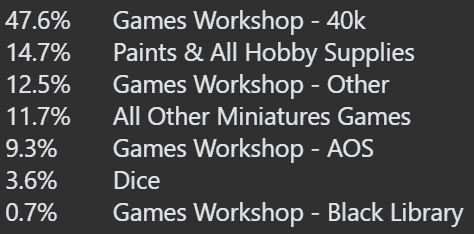 The Games Workshop-only breakdown from retailers we polled really brings the tent-pole aspect of their lineup to light. Warhammer 40k accounts for roughtly 47.6% of GW-related sales. Paints and all hobby supplies come in second at 14.7%, followed by Games Workshop “Other” at 12.5%, all other miniatures games at 11.7%, Age of Sigmar at 9.3%, dice at 3.6%, and Black Library at 0.7%.
That is a pretty big “tell” from retailers because, currently, within GW’s own ecosystem, 40k isn’t just leading sales, it’s anchoring the whole thing.
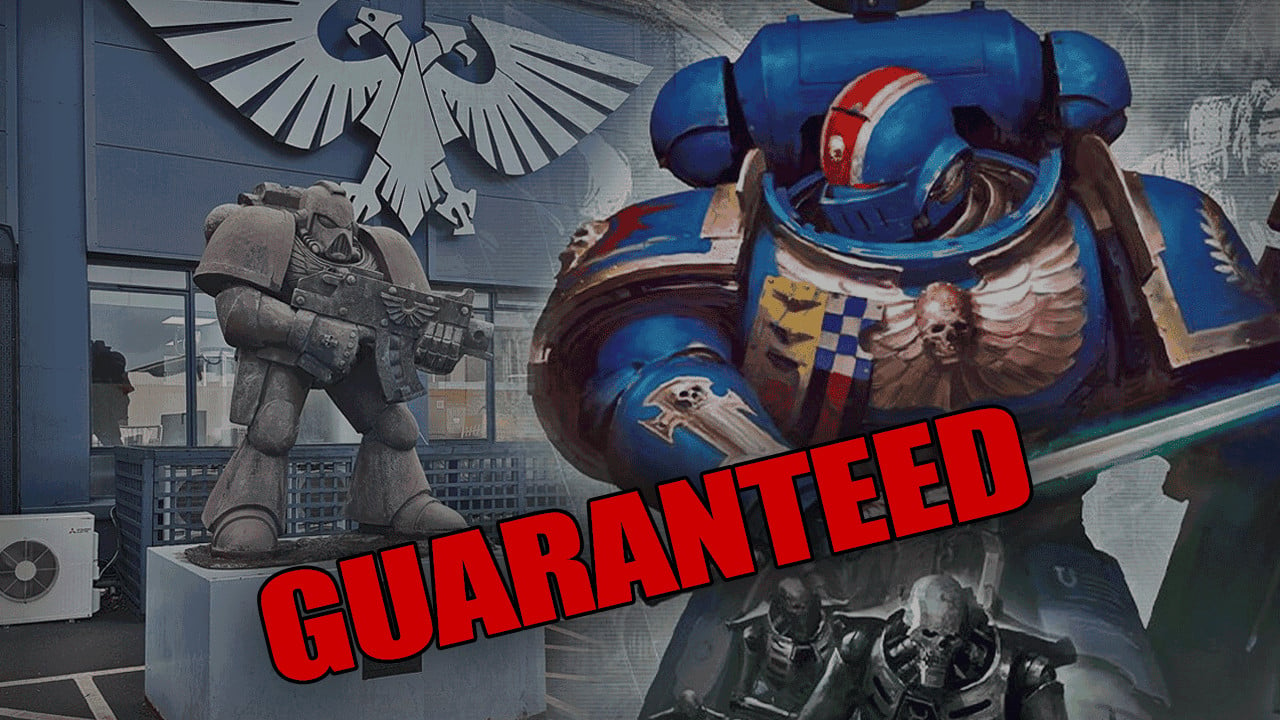
The real awkward part is that paints and hobby supplies look to be outselling Age of Sigmar and every other Warhammer game category on their own. Some of that makes total sense, though, as everyone needs glue, primer, brushes, washes, texture paint, etc. Don’t forget that hobby supplies also cross game lines too, making them among the safest things a store can stock.
But when paints and the “other” categories are outperforming major miniatures lines in your stable, it raises a real question about where the revenue is coming from. Are players building new armies, or are they mostly buying supplies to chip away at the pile of shame they already own?
Those are very different hobby economies altogether, if you ask us.
TCGs Are Still Destroying Miniature Game Sales
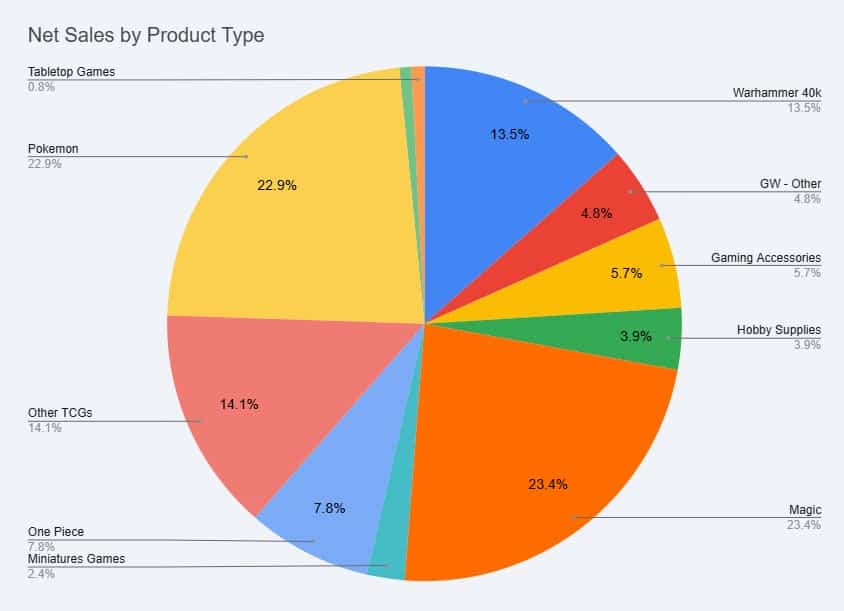
Retailers also reported that trading card games are outselling miniatures by ratios starting around 4:1. That’s not exactly breaking news, but it’s in a lot of ways what is propping up gaming stores when GW allocations hit the hardest.
TCGs are easier to restock, easier to demo, sell, and just easier for a casual customer to understand. Someone can walk into a store with $20 and always leave with something useful when it comes to card games. A miniatures customer often needs a box, glue, clippers, paint, time, rules, an opponent, and enough table space to actually use what they bought.
But that’s not a flaw in miniature gaming; that’s just the hobby in general. However, from a retail perspective, the friction is real when actually trying to stock these products.
A store can run Commander night, sell sleeves, crack boosters, move snacks, and ring up ten transactions before the 40k player has finished explaining which detachment they’re trying next, lol. Sure, miniatures build loyal communities and bigger-ticket purchases, but they’re slower, more space-heavy, and more dependent on local organizers keeping the scene alive.
Bundle Boxes Are Becoming A Harder Sell
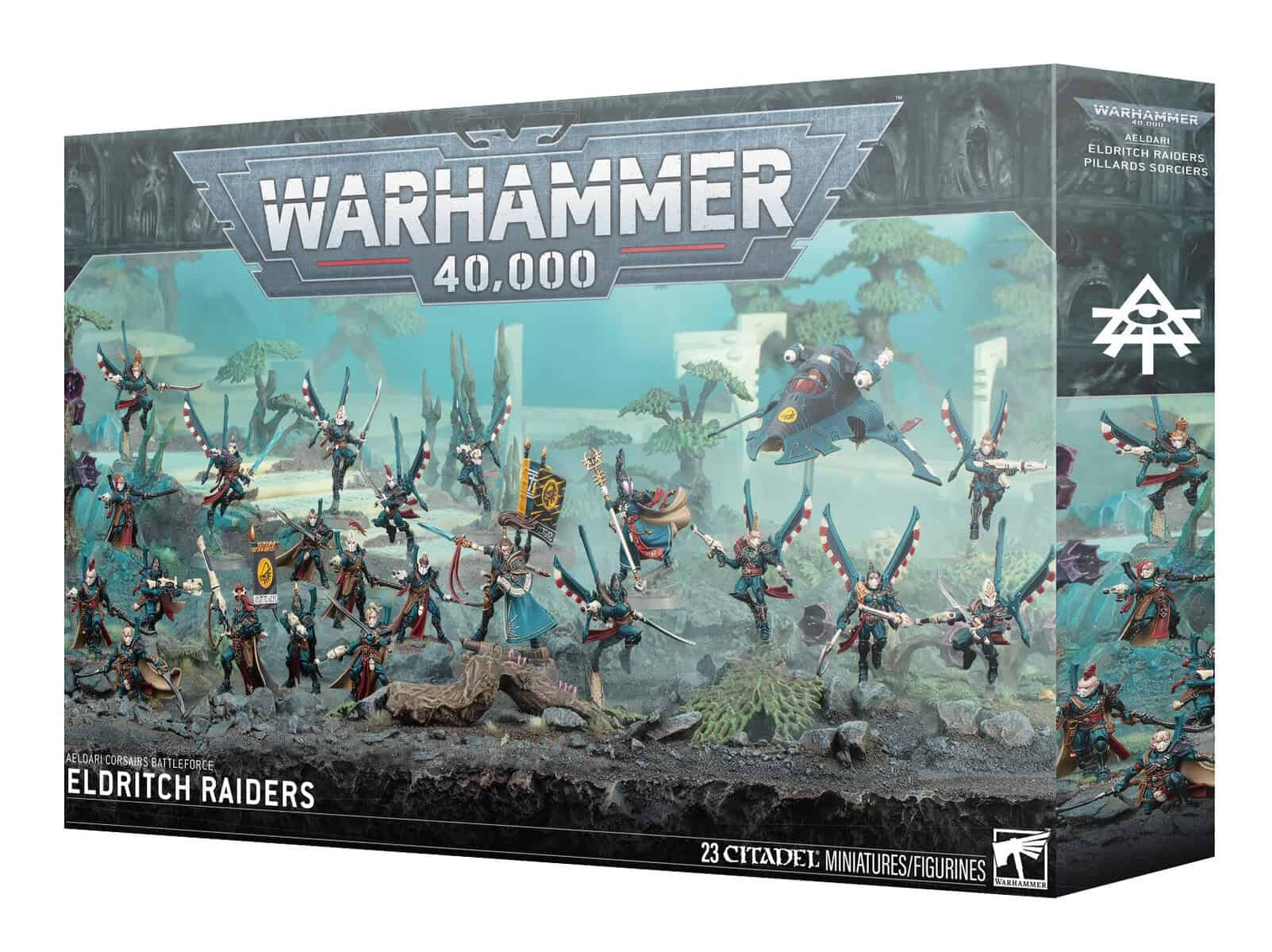 One of the more concerning retailer notes is that many are reporting poor sales of bundle boxes through the first half of 2026. That tracks with what a lot of hobbyists have already been grumbling about: big launch boxes are exciting, but they’re not automatic sellouts anymore.
The value has to be obvious, and the models have to be desirable to get traction in this economy. More importantly, the factions need active players, and the timing can’t crash into another wallet-melting release. And at this point, plenty of players are just more selective with their hobby dollars overall.
A $200-plus box is not an impulse buy (the Aeldari Corsairs Eldritch Raiders box above is still on GW’s site despite being a limited release) for most people right now. It’s a “do I need this, can I split it, will these models be good, and do I already have 40 unbuilt minis at home?” kind of buy.
If the answer gets too complicated, that box will just sit on store shelves for right now.
That same mentality is especially rough outside the 40k game space. Retailers can take bigger risks on 40k because even those slower products usually have a wider customer base. With smaller indie games, a bundle box can become a shelf ornament fast if the local scene doesn’t show up, and according to these numbers, it often doesn’t.
Stores Are Getting More Cautious Outside 40k
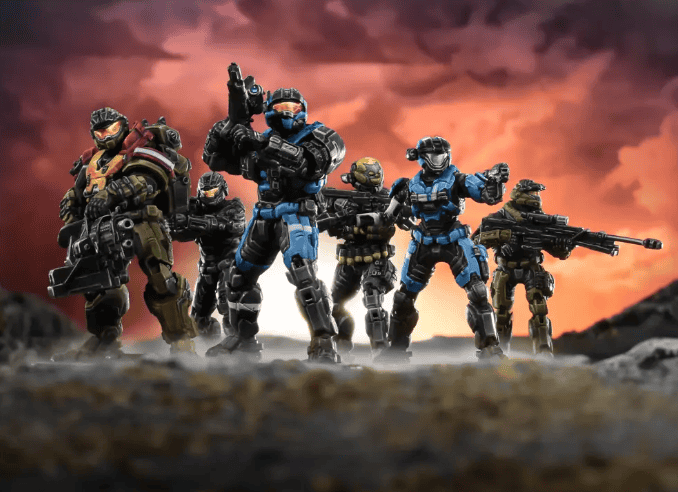 The retailer mood right now seems pretty clear: 40k is safe, everything else (including Starcraft) has to prove itself.
Some stores we spoke with are even considering cutting back on miniatures outside 40k, while others have already stopped carrying certain lines or moved them into special-order territory. And that’s not because store owners hate other games. Most store owners are tabletop nerds, too, and they’d love to carry more cool models if customers bought them consistently.
In this economy, though, “cool” has to share a table with “actually sells.”
That creates a tougher road for anything that isn’t Warhammer 40k. Age of Sigmar still has a real community, but it’s not 40k. Horus Heresy has prestige and big-model appeal, but it’s still more niche. Old World evokes nostalgia, but nostalgia doesn’t automatically translate into weekly sales. Kill Team is popular online in TTS, but local store performance can swing hard depending on whether there’s an active skirmish crowd.
Overall, players may start seeing fewer demo nights, fewer organized events, and more “we can order that for you” answers when they ask about anything beyond the main 40k wall.
Armageddon Could Help, But Retailers Are Still Nervous
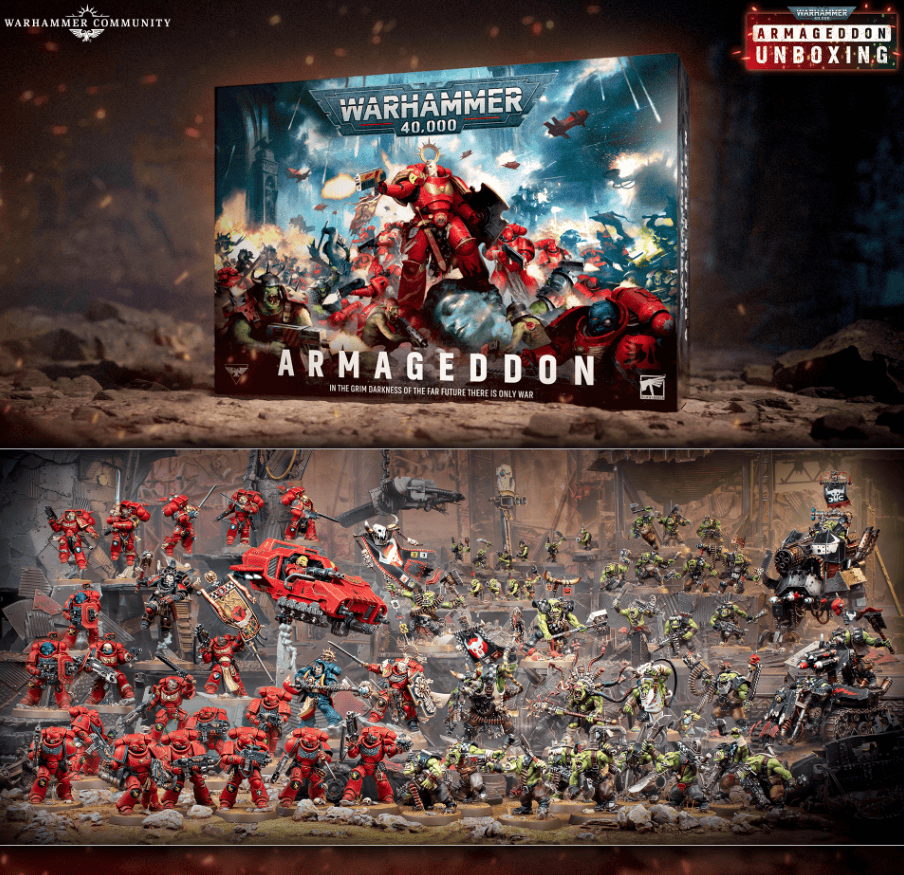
The upcoming Armageddon release (and 11th Edition in general) has retailers excited, and that makes sense. It has 40k, nostalgia, Space Marines, Orks, and plenty of hobby appeal. That’s the kind of release that can wake up lapsed collectors, get veteran players spending again, and give stores something big to build displays around.
But excitement mixed with apprehension says a lot.
After months of mixed bundle performance, allocation weirdness, and uneven sell-through across miniature lines, stores want Armageddon to hit. They just don’t want to be left guessing how much product they’ll receive, what will actually sell through, and whether follow-up stock will arrive before customer hype cools off.
StarCraft is another big question mark, too. It isn’t included in this data because it’s not in stores yet, and retailers still don’t seem to know exactly what they’ll have available to sell. That uncertainty is rough. If stores can’t plan stock, events, and customer expectations, a launch that should be exciting can turn into another conversation about distributors, allocations, and whether direct-to-consumer customers or retailers get served first.
Final Thoughts From Us on How Miniatures Retail is Splitting Into Two VERY Broad Categories
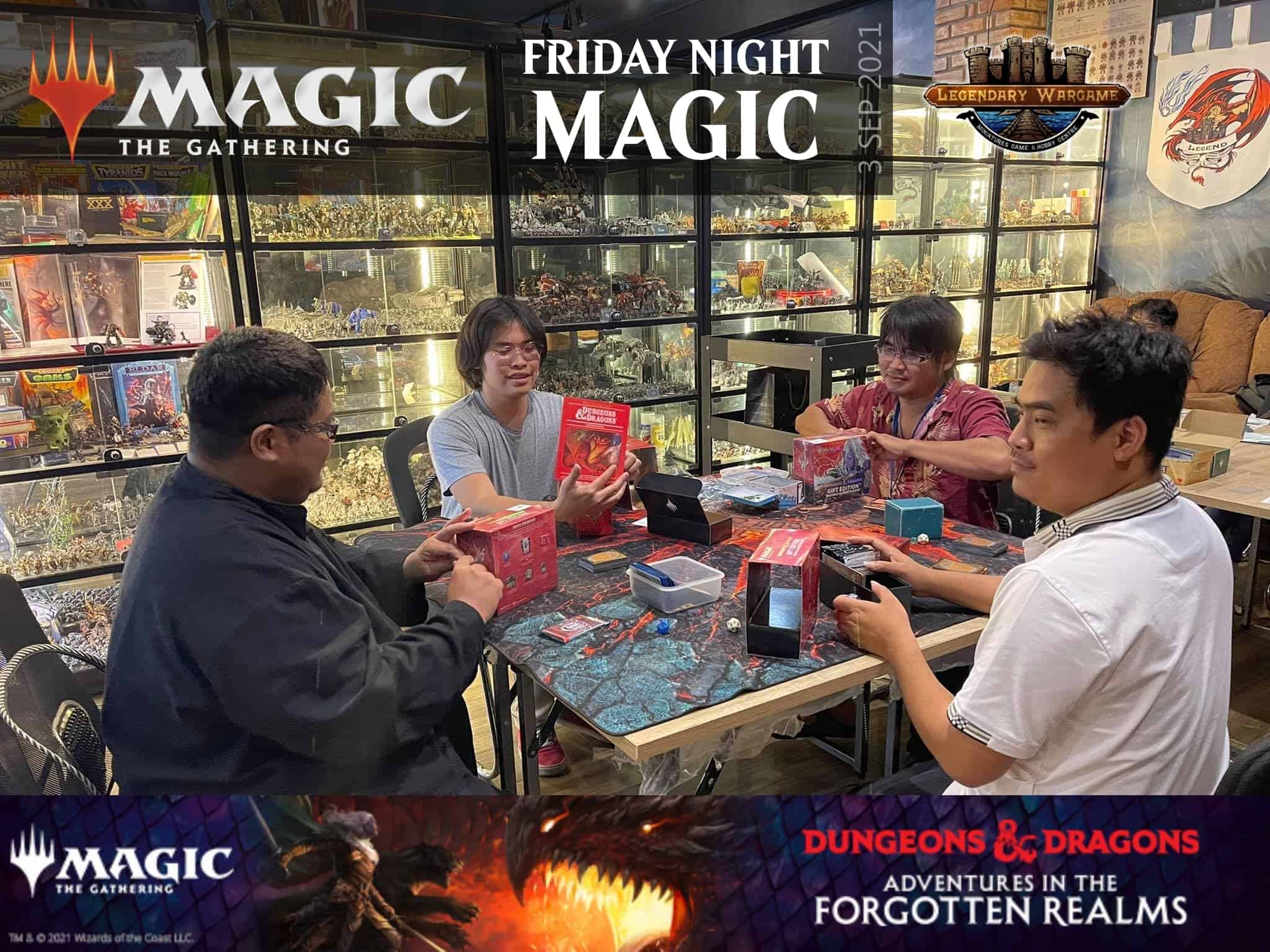
The good news is that this retailer polling does not say miniatures are doomed at all; stores are still selling plenty of models.
The more realistic conclusion is that miniature sales at retail are splitting into tiers harder than ever. Warhammer 40k is still the gravity well, along with paints, supplies, and hobby basics that remain strong because every player needs them.
Meanwhile, everything else in miniatures has to fight harder for shelf space, community attention, and customer cash. Behind the register, TCGs continue to dominate the broader tabletop retail market overall with players and collectors.
For players, that may mean fewer non-40k products on shelves unless local scenes actively support them, and for retailers, it means tighter inventory decisions and less patience for slow boxes.
Finally, for publishers, it means that brand recognition alone might not be enough, even as GW’s own non-40k categories face tougher competition from other miniature lines and the economy in general.
🔗 Related Reads:
- If you liked this, you may like more Games Workshop Editorial Articles
- Save more with our Cheap Hobby Deals List
- All the latest Warhammer Battleforce releases