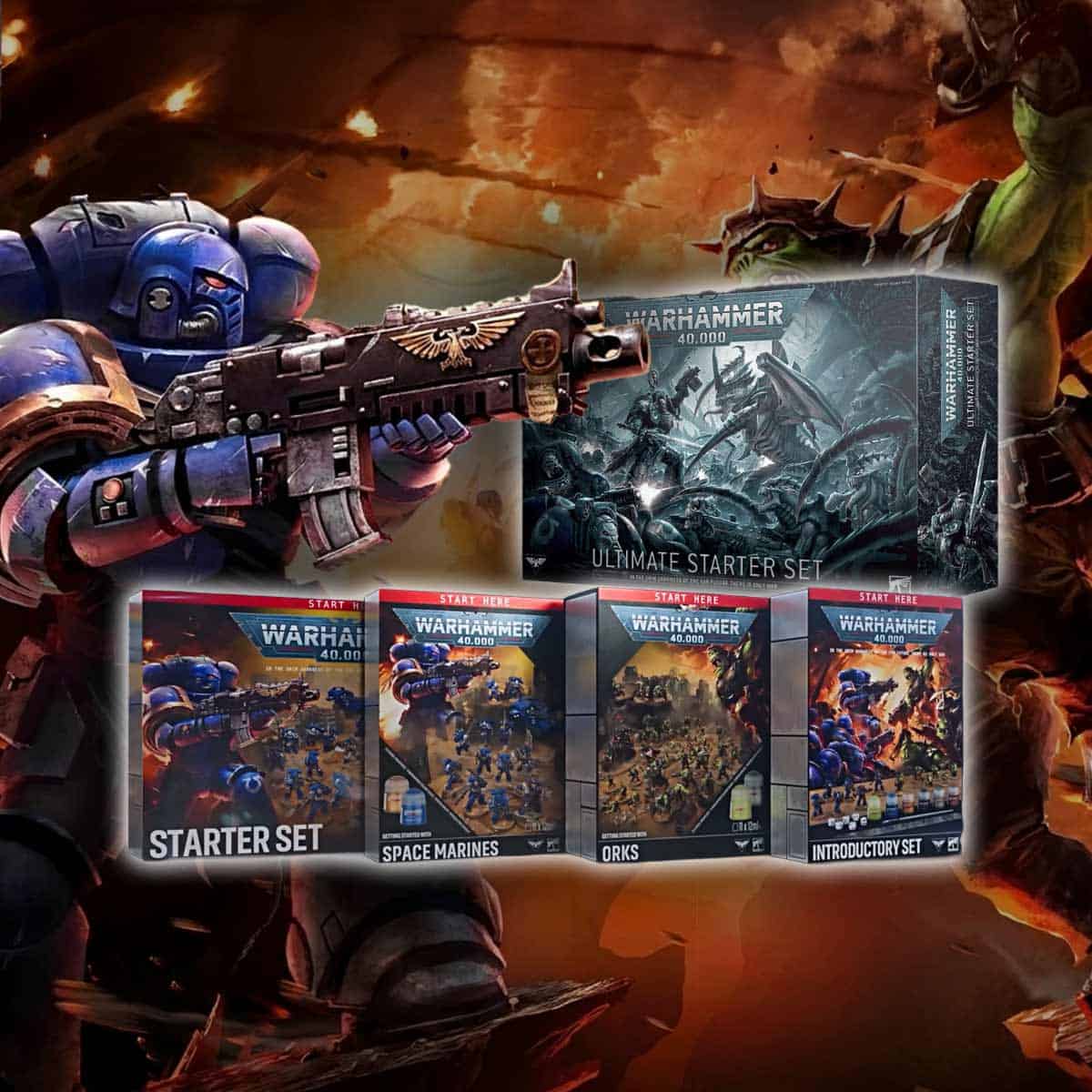
Best Warhammer 40k starter set 2026: Armageddon packs $1,032 in value for $295 as we compare Leviathan, Combat Patrol, Starter & Intro Sets by real savings.
Trying to figure out the best Warhammer 40k starter set to grab now? With the new Armageddon launch box dropping for 11th Edition, the overall values look completely different now. We break down every option, compare prices and contents, and call out the real deals.
So, whether you’re getting into the game for the first time or you’re trying to convert a friend with the power of tiny plastic warriors, this breakdown keeps things simple.
With so many options out now, from quick-start 40k Combat Patrol boxes to full-blown army bundles, it’s easy to get overwhelmed. That’s where this guide comes in.
Which Warhammer 40k Starter Set Is the Best in 2026?
Updated on September 24th, 2026, by Rob Baer with corrected Starter Set contents, a full 11th Edition Starter Set breakdown, and rechecked value math on every box.
Getting into Warhammer 40k can feel like trying to decode a small library of rules, so a good Warhammer 40k Starter Set goes a long way.
The good news is Games Workshop has rolled out several options, each built to get you playing fast with solid models and everything you need to hit the table. The new Armageddon box for 11th Edition gives you more plastic, lore, and rules in a single box than the Leviathan starter ever did.
We’re going through every current Warhammer 40k Starter Set to see which ones offer the best value, the best armies, and the cleanest path into the hobby. Some sets pack in paints and tools or go heavier on gameplay, and some just stack stupid amounts of plastic value.
Quick Pick: Choose the Right Starter Set in 30 Seconds
- Best overall value (new for 2026): Armageddon Starter Set (over $1,000 in value, edition-launch models)
- Best all-round if you don’t want to wait: Starter Set (best balance of learning + playing)
- Best “all-in” (terrain + bigger forces): Combat Patrol Starter Set (formerly Ultimate Starter Set)
- Best if you own zero hobby supplies: Introductory Set (paints and tools included)
- Best value if you find it near MSRP: Leviathan (hunt required)
Warhammer 40k Starter Set Comparison Table (2026)
| Set | MSRP | Minis | Rules/book | Play aids | Terrain | Paints/tools | Best for |
| Armageddon (11th Ed launch) | $295 | 61 | Core Rules booklet + hardback Lore book | Mission decks, datacards, transfers | No | No | Max value + edition launch |
| Starter Set | $250 | 46 | Starter Handbook | Dice, rulers, mat, terrain, ref sheets | yes | No | Best overall first buy |
| Combat Patrol Starter Set (formerly Ultimate) | $210 | 44 | Handbook + core rules booklet | Dice, tokens, ruler, boards | Yes | No | Two Combat Patrols + terrain (11th Ed-ready name) |
| Leviathan | $250 (MSRP) | 72 | Full rulebook (varies by listing) | Launch box extras | No | No | Max value if price is sane |
| Introductory Set | $77 | 12 | Handbook | Mat, dice, tokens, markers | Card Terrain | Yes | Brand new hobbyist with nothing |
| Space Marine 2 Recruit Edition | $65 | 12 | Handbook | Starter-style extras | No | Yes | Only if found at retail |
| Getting Started with Orks | $170 | 13 | Introductory book | No | No | Yes | Someone starting an Orks army, and you need paints |
| Getting Started with Space Marines | $170 | 13 | Introductory book | No | No | Yes | Someone starting a Space Marines army, and you need paints |
Starter Set vs Combat Patrol: Which Is Better for New Players?
- Choose the Armageddon, Starter Set, or Combat Patrol Starter Set if you want two different armies, are trying to teach a friend, or want the most guided “learn then play” experience.
- Choose Combat Patrol if you already know your faction and only want one army right now.
- Starter boxes generally split well, which makes them perfect for buddy buys and getting games in fast.
#1 Warhammer 40k Armageddon Starter Set Review: Over $1,000 in Value at $295 MSRP
Prices checked: September 2026.
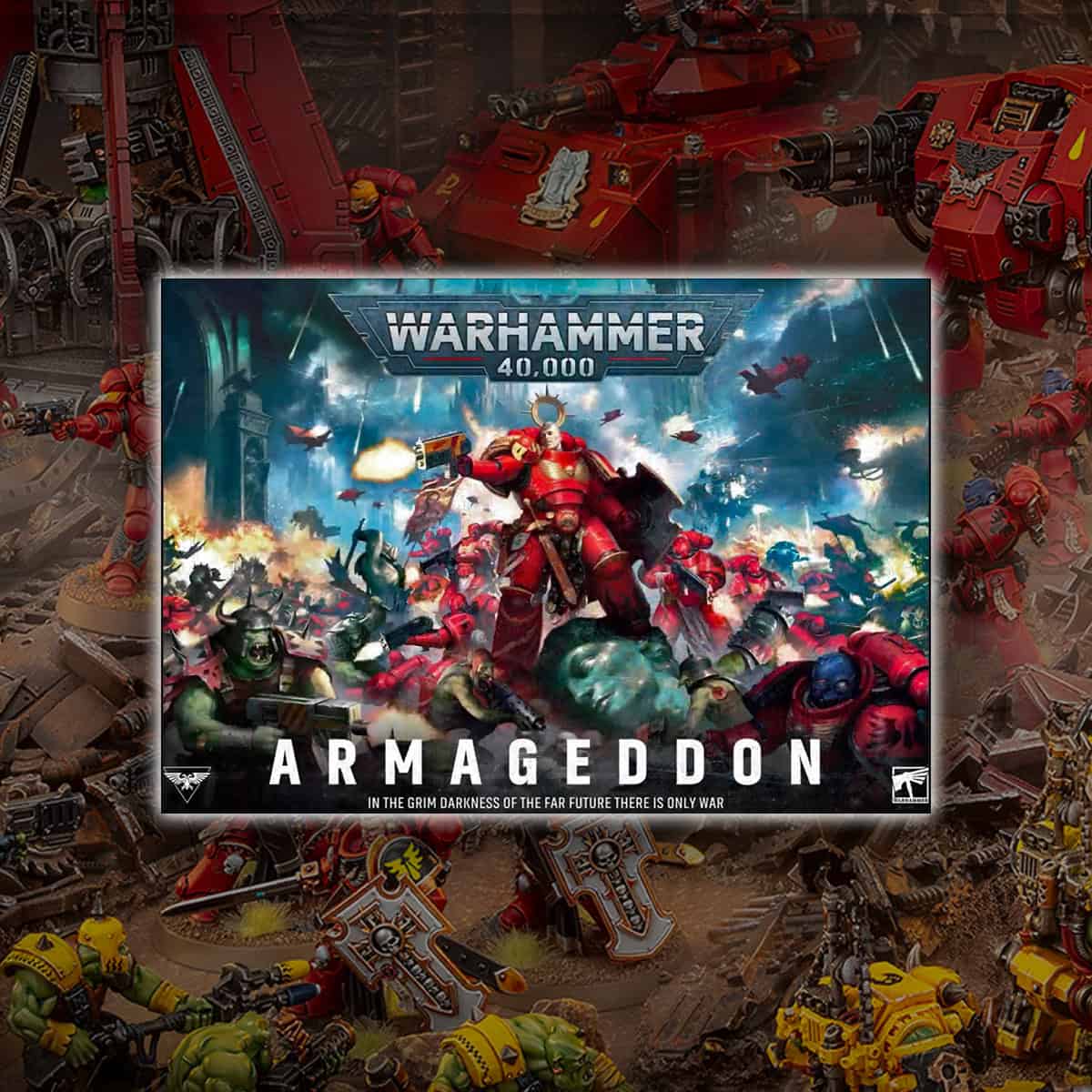
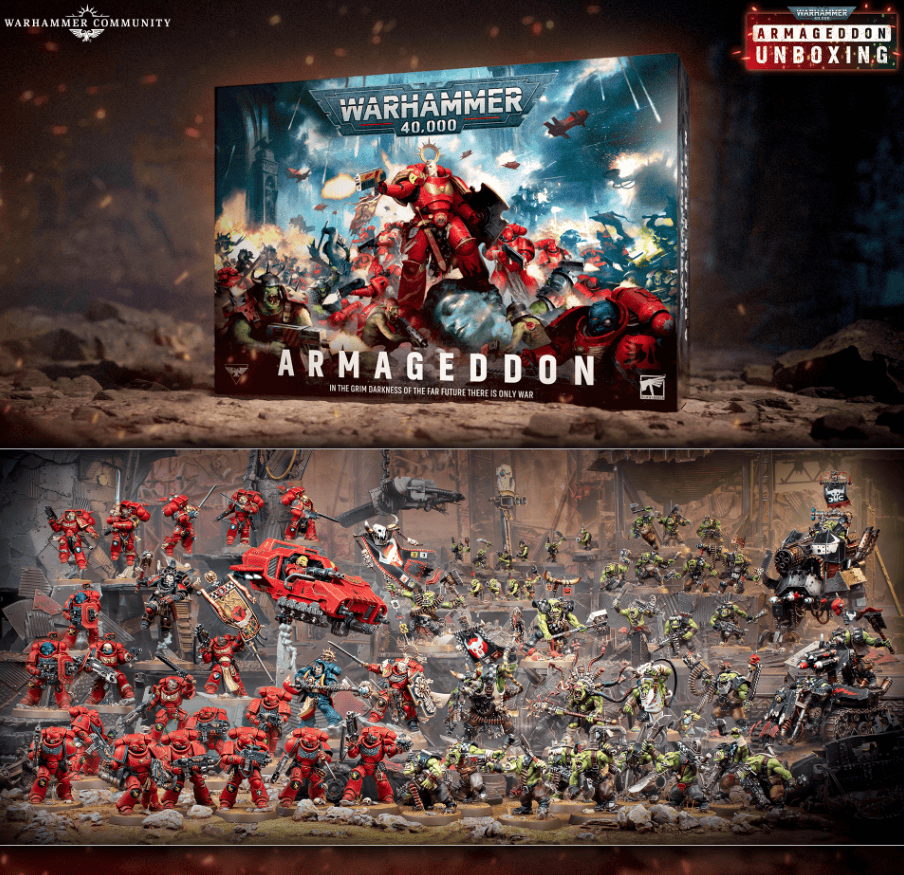
The Warhammer 40k Armageddon Starter Set is the 11th Edition launch box, and honestly, the value stack inside is the biggest Games Workshop has ever put on day-one shelves. Orks throw down against Space Marines, and the box comes with 23 new push-fit Space Marines, 38 push-fit Orks, the 11th Edition Core Rules booklet, the hardback Armageddon: Operation Imperator lore book, two mission decks, datacards, and transfers.
That’s 61 minis, brand-new sculpts, a hardback lore book, and the full 11th Edition Core Rules for basically the price of two Combat Patrols.
Best For, What You Get, Who Should Skip
- Best for: anyone starting Space Marines or Orks, jumping into 11th Edition on day one, or two friends splitting the biggest pile of plastic on the shelf.
- What you get: 61 new push-fit miniatures, the 11th Edition Core Rules, a full lore book, two mission decks (Chapter Approved + Dominatus narrative), datacards, and transfers.
- Skip if: you don’t want either faction and have no friend to split with. The value is really only there if you’re keeping both halves or trading one away.
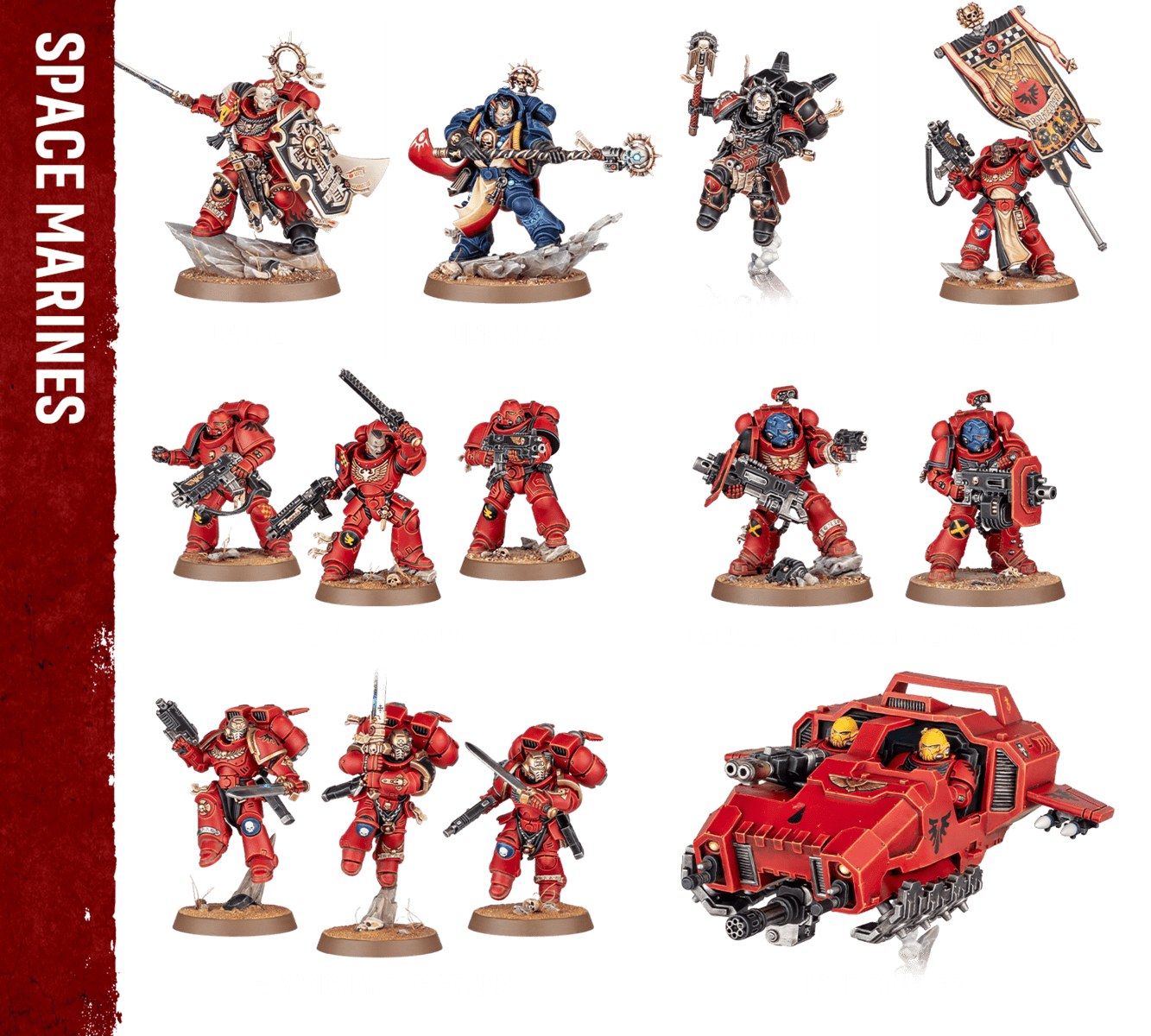
Space Marines (23 minis):
- Captain with Relic Shield $43.50
- Librarian $43.50
- Chaplain with Jump Pack $25
- Ancient with Armageddon banner $25
- 10x Intercessor Squad $67.50
- 5x Vanguard Veterans $67.50
- 3x Eradicator Squad with Heavy Bolters $65
- Land Speeder (updated) $65
Space Marine Estimated Value: $402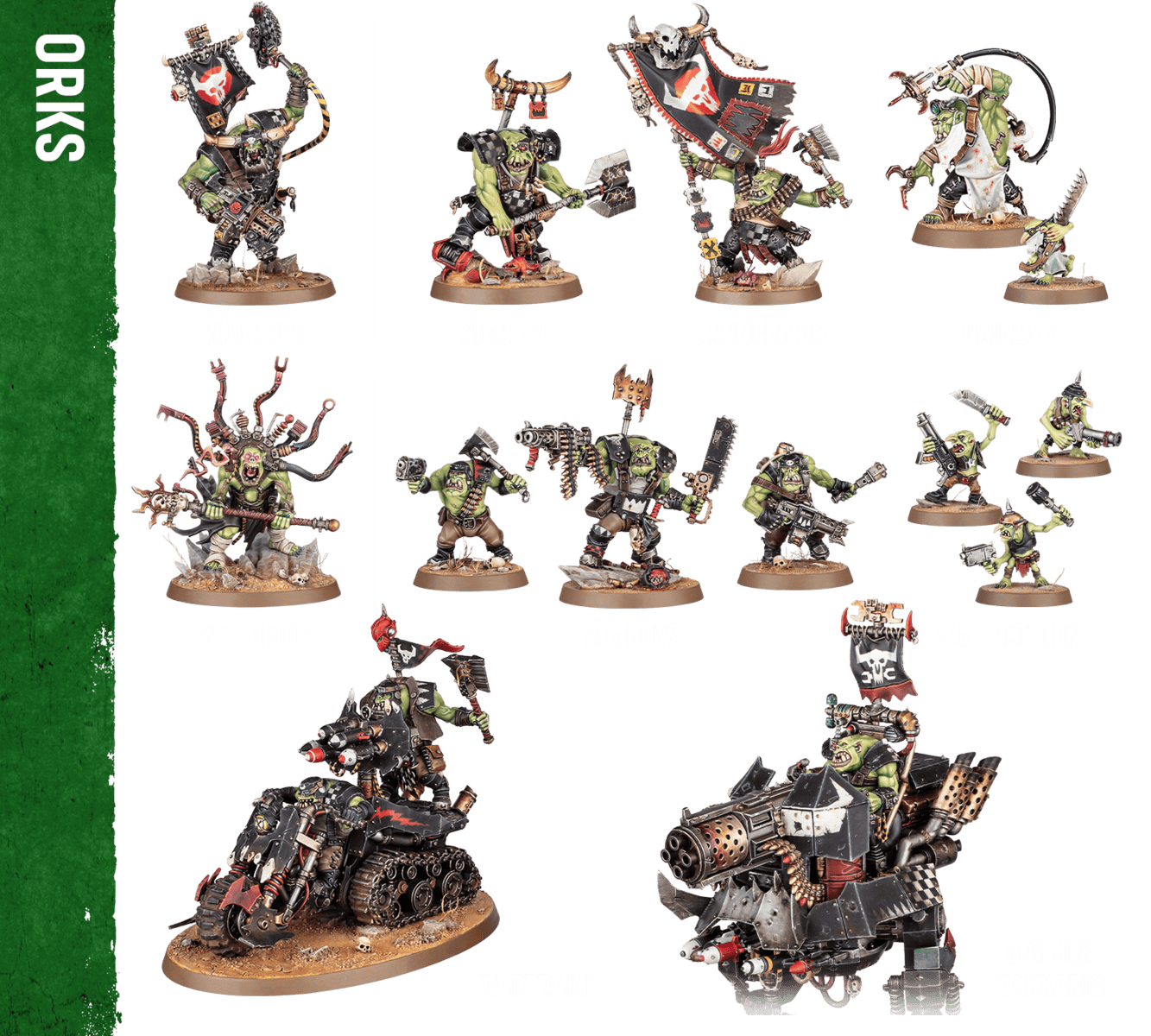
Orks (38 minis):
- Warboss $43.50
- Bigboss $34
- Bannernob $34
- Painboy (with Grot assistant) $34
- Weirdboy $43.50
- 20x Boyz $130
- 10x Gretchin $27
- Wartrakk $67.50
- Big Mek Dakkarig $82
Ork Estimated Value: $452
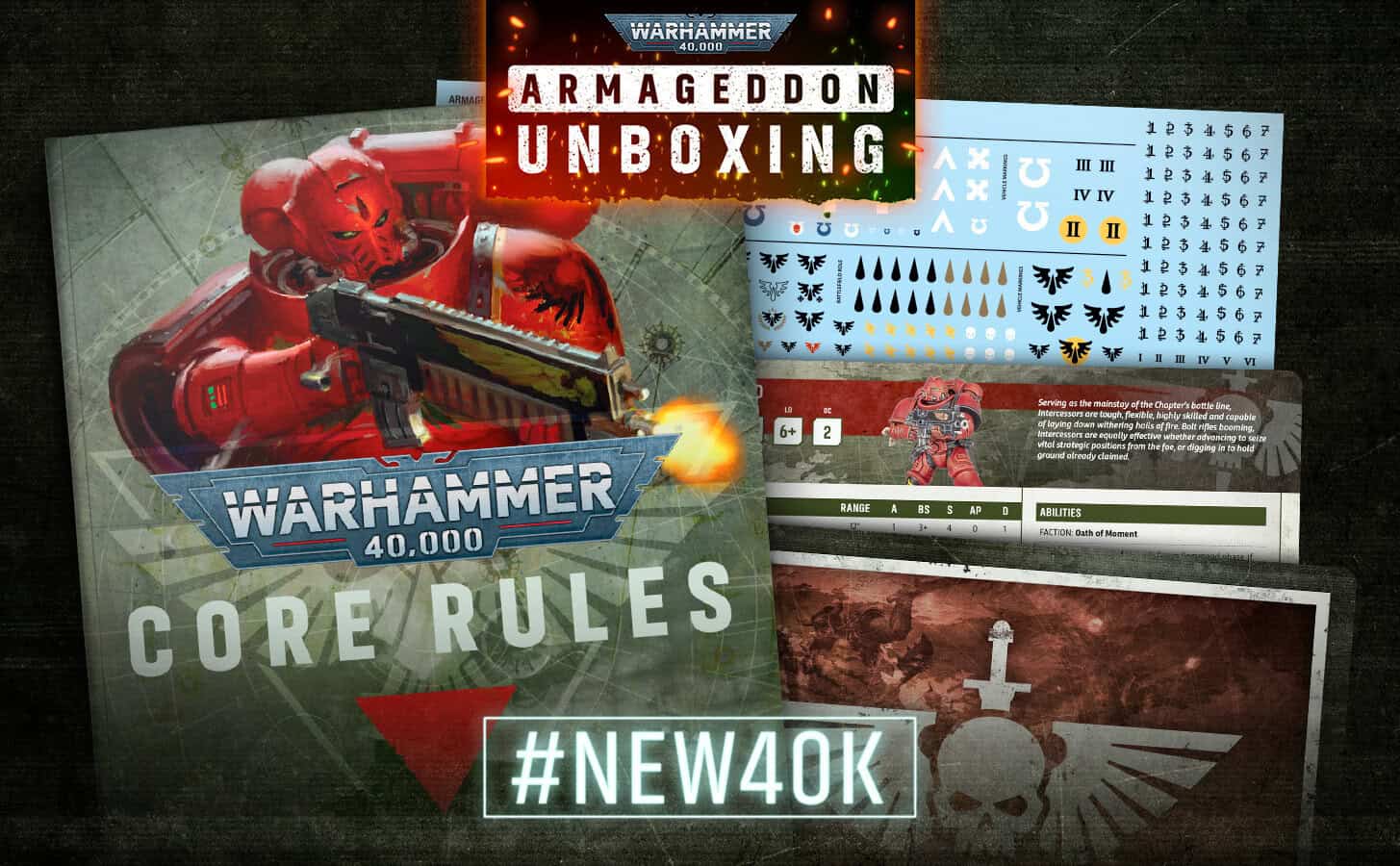
Rules, Lore, and Decks:
- Core Rules Book & Datacards $25
- Armageddon: Operation Imperator lore book $40
- Dominatus Narrative Campaign Deck $35
- Chapter Approved 2026-27 Mission Deck $35
Books & Decks Estimated Value: $135
- Total Estimated MSRP Value: $1,032.50
- Total Value Versus $295 MSRP: $737.50 in savings (about $435 in models per faction if you split it)
For the full per-line breakdown, see our full Armageddon contents and value breakdown.
Armageddon Price Sanity Check (What We’d Pay in 2026)
- At MSRP ($295): instant buy. Honestly, this is the highest-value 40k starter Games Workshop has ever released.
- Independent retailers with 15-20% off: even better. Pre-order pricing usually trims another $30 to $40 off the cost.
- Way above MSRP after launch: skip it. The Starter Set is a better value at that point.
Is the Warhammer 40k Armageddon Starter Set Worth Buying?
Short answer: absolutely yes.
The downside:
It’s bigger than most first-time players need, so if you’re brand new and short on time, the regular Starter Set is still a saner first project. Push-fit models also mean you’re not getting full multi-pose flexibility on the day-one sculpts.
The upside:
You get 61 new minis, a rulebook, a lore book, two mission decks, and the classic Orks vs Space Marines fight on Armageddon, all in one box. The plastic alone clears $900 if you price it out individually, and the rules and lore push the total past $1,100. Split it with a friend, and you each walk with around $461 in models for roughly $150.
Bottom line:
If you can grab Armageddon at or near $295, the math says this is the best Warhammer 40k Starter Set Games Workshop has ever produced. See our 11th edition release roadmap and the 11th edition release date breakdown for the exact release timing.
#2 Leviathan Warhammer 40k Starter Set Breakdown: Value & Price Reality Check ($250 MSRP)
Prices checked: September 2026
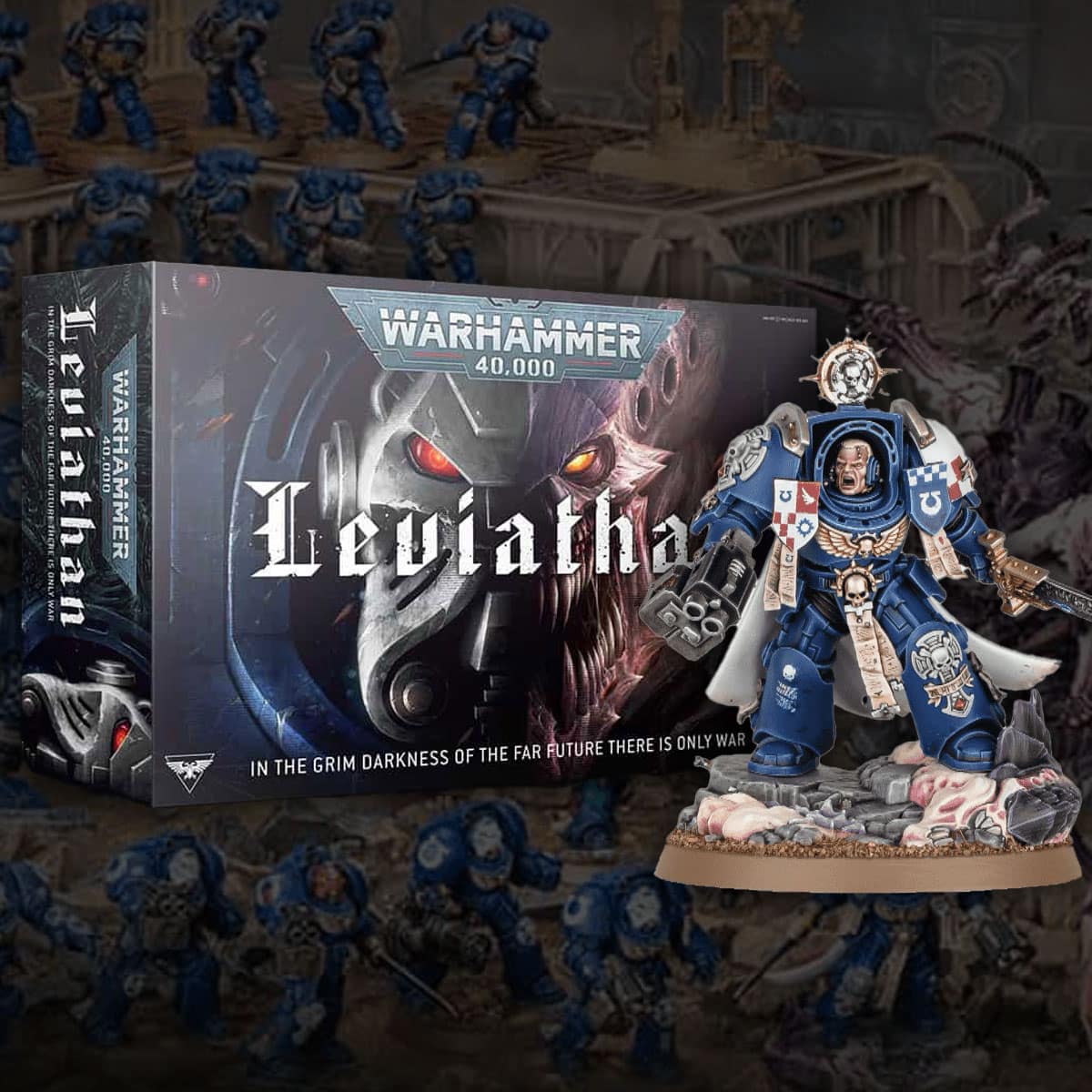
Notably, this 10th Edition launch box is harder to find but still has one of the highest values of any older starter. If you can find this anywhere near the original price, you should probably buy it. The problem is that most listings are not anywhere near the original price anymore, especially now that Armageddon has taken over the “newest edition launch” slot.
Leviathan Price Sanity Check (What We’d Pay in 2026)
- At or near MSRP: instant buy.
- A bit above MSRP: only if you want both factions and you actually plan to build them.
- Way above MSRP: buy Armageddon or the Starter Set instead and start playing now.
Here are the overall contents for the Leviathan box. We’ll break it down by faction, starting with the Space Marines.
- Captain in Terminator Armor $44
- Librarian in Terminator Armor $42
- Lieutenant with Combi-flamer $37
- Apothecary Biologis $40
- Sternguard Veterans $62.50
- Infernus Squad $60 (based on Intercessors)
- Space Marines Terminators $65
- Ballistus Dreadnought $70
Total Estimated Value: $420.50

Now let’s go into the Tyranid side of things…
- Screamer-Killer $60 ($105 for 2)
- Neurotyrant $60
- Neurogaunts $42
- Winged Tyranid Prime $42
- Von Ryan’s Leapers $52
- Termagants $90 (2 $45 boxes)
- Barbgaunts $45
- Psychophage $60
Total Value: $451
We’ll add in the price for the rulebook, but the other accessories are more of a value add than anything else.
- Total Value of Both Halves: $871.50 Rulebook ($60)?
- Total Value Versus $250 MSRP: $681.50 (That’s $340.75 split between both factions)
Is the Warhammer 40k Leviathan Starter Set Worth it?
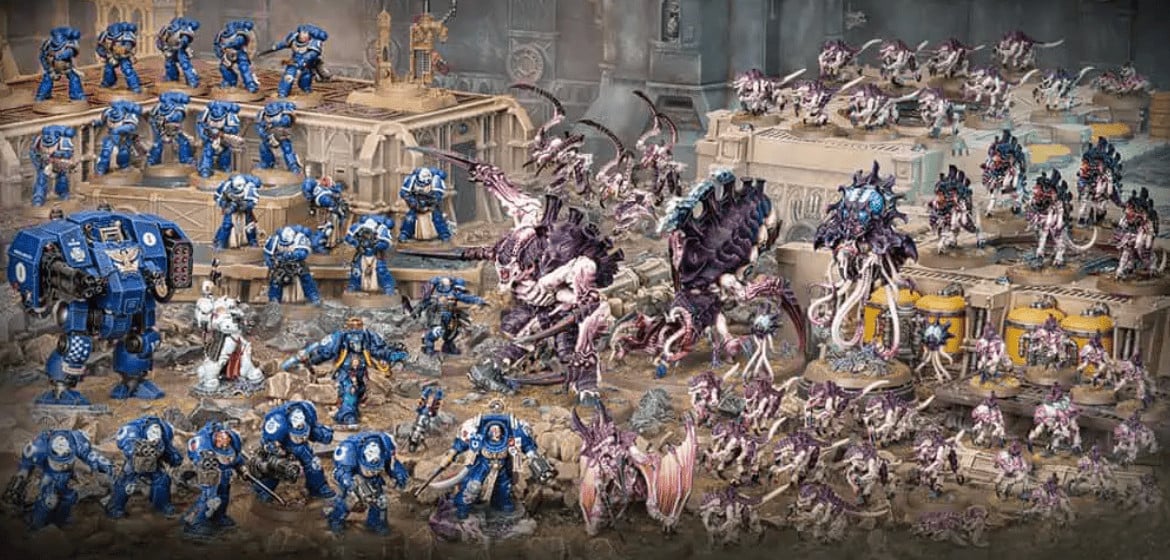
Short answer: yes, if you can find it at a reasonable price.
The downside:
Leviathan is nearly impossible to find at retail now, and Armageddon has taken its “newest edition launch” crown. The scarcity is the main reason it’s not at the top of the list anymore.
The upside:
If you score it for $250 or even $300, the value is still ridiculous. Splitting it with a friend means you each spend about $125 and walk away with more than $400 in models.
Bottom line:
For a 10th Edition box, this is still one of the best value Warhammer 40k Starter Sets Games Workshop has ever released. If you see it at a sane price, grab it.
#3 Warhammer 40k Starter Set Review: Price, Contents, & Who It’s For ($250)
Prices checked: September 2026
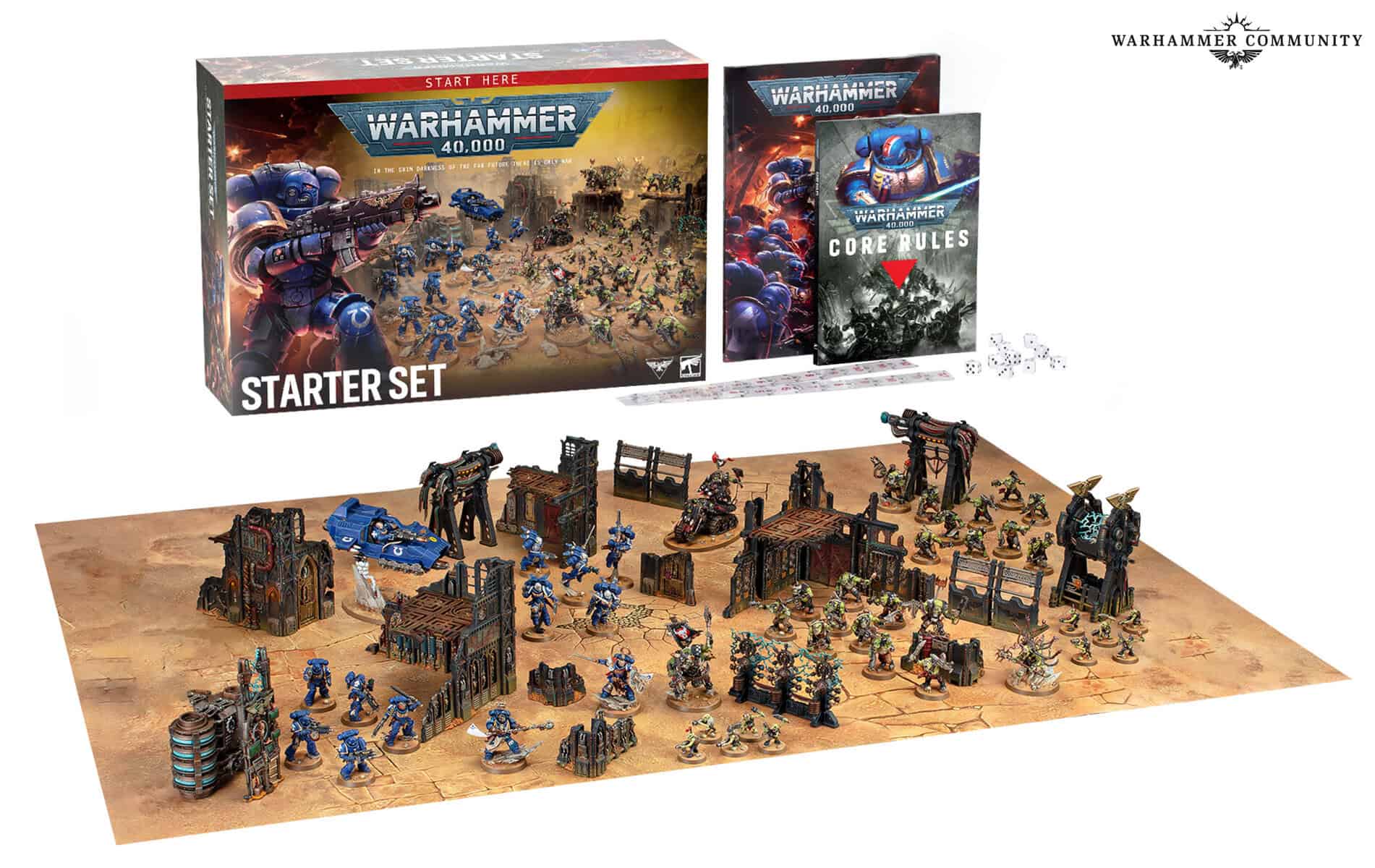
The Warhammer 40k Starter Set hits that overall sweet spot. It’s great if you’re familiar with tabletop games and already have your own paints and tools, but you need more Warhammer 40,000 models and don’t want the full Armageddon box.
Inside, you get the core rules Starter Handbook with meatier rules than the Intro Set, two quick-reference sheets, ten dice, two range rulers, a full set of Combat Patrol terrain, and a cardboard mat to battle on.
Then there are the 46 push-fit minis, split 13 Space Marines against 33 Orks. The Space Marines are a Captain with a Relic Shield, a Librarian, five Intercessors, five Vanguard Veterans, and a Land Speeder. The Orks are a Warboss, a Weirdboy, 20 Boyz, 10 Gretchin, and a War Trakk.
What’s in the Warhammer 40k 11th Edition Starter Set?
The Warhammer 40,000 Starter Set is the $250 11th Edition box, and it holds 46 push-fit miniatures: 13 Space Marines against 33 Orks. Alongside the models you get push-fit Battlefield Armageddon terrain, two foldout cardboard game boards, a Core Rules booklet, the Starter Set Handbook, two double-sided reference sheets, two range rulers, and ten dice.
That’s the whole game in one box; two Combat Patrol-sized forces, a table to fight over, and the rules to play. It is not the Armageddon launch box and it is not the Introductory Set: Armageddon is $295 for 61 models and no terrain, and the Introductory Set is $77 for 12 models and card terrain. If someone says “the 11th Edition starter set” without qualifying it, this $250 box is what they mean.
Best For, What You Get, Who Should Skip
- Best for: brand-new players who want a clean “learn + play” box, especially if you can split it with a friend.
- What you get: two small forces, terrain, guided rules, dice and rulers, and a quick-start play surface so you can actually start rolling dice.
- Skip if: you want the biggest pile of plastic possible (Armageddon) or you want bigger forces plus terrain out of the gate (Combat Patrol Starter Set, formerly Ultimate).
Space Marines:
- 1x Captain with Relic Shield $43.50
- 1x Librarian $43.50
- 5x Intercessor Squad (half box) $35
- 5x Vanguard Veterans $65
- 1x Land Speeder $60
Total Estimated Value: $247
Orks:
- 1x Warboss $43.50
- 1x Weirdboy $43.50
- 20x Boyz $120
- 10x Gretchin $27
- 1x War Trakk $60
Dice, rulers, and mat: Added value
Total Value: $294
Terrain Value: $90 (the terrain comes unpainted; it’s not the new table-ready version)
- Total Value of Both Halves + the terrain + the rulebook ($25): $656
- Total Value Versus $250 MSRP: $406
Is This Warhammer Starter Set Worth Buying?
Short answer: yes, with a couple of things to keep in mind.
The downside:
The Orks get more total models and value, so the box looks a bit lopsided at first glance (but the points are almost the same). These are also push-fit sculpts reused from armageddon, so nothing here is brand new.
The upside:
The overall savings are extremely strong, and both factions walk away with a decent pile of minis (but the Orks do get way more to paint). If you split the box, the value feels even better since each player gets a solid force for spending a little over $100 each.
Bottom line:
If you want an easy and affordable way to start either army without buying Armageddon, this starter delivers plenty of plastic for the price.
#4 Warhammer 40k Combat Patrol Starter Set Guide (formerly Ultimate Starter Set): Value, Contents, & Best Use ($210)
Prices checked: September 2026

The 11th Edition Starter Rebrand Begins (Confirmed)
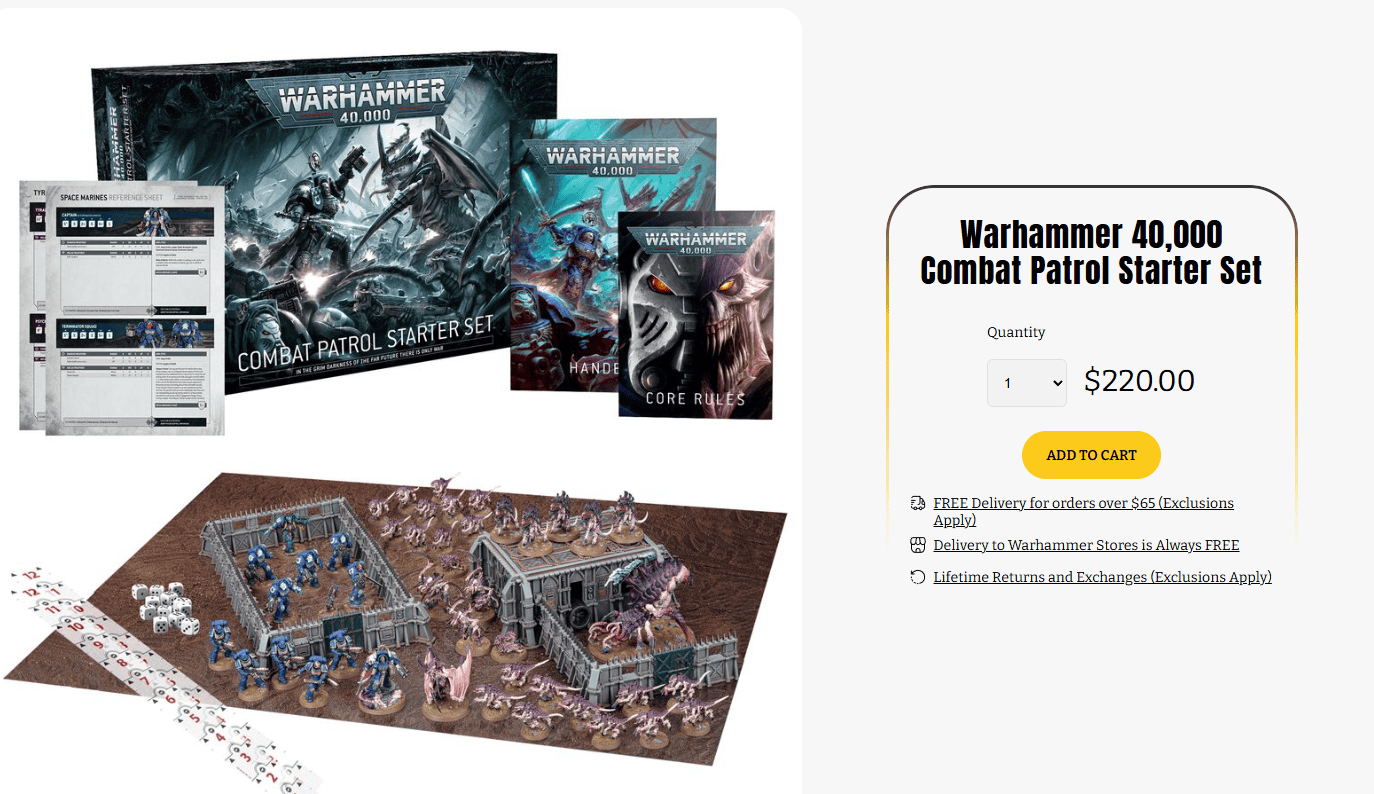
Ultimate Starter Set has been retitled to the Warhammer 40,000 Combat Patrol Starter Set. Same minis, matchup, and $210 value, just a new label probably meant to prevent “wrong edition” confusion once the next rules cycle lands.
GW even warns that orders might arrive in the old packaging, which is your clue that this change started midstream. Translation: they are burning through existing warehouse stock rather than binning it.
GW generally turns the new big starter set into the three smaller starters a few months after launch. This rebrand gives them room to keep this product in the store and run their usual starter sets (but the other products might get taken off the store in 11th).
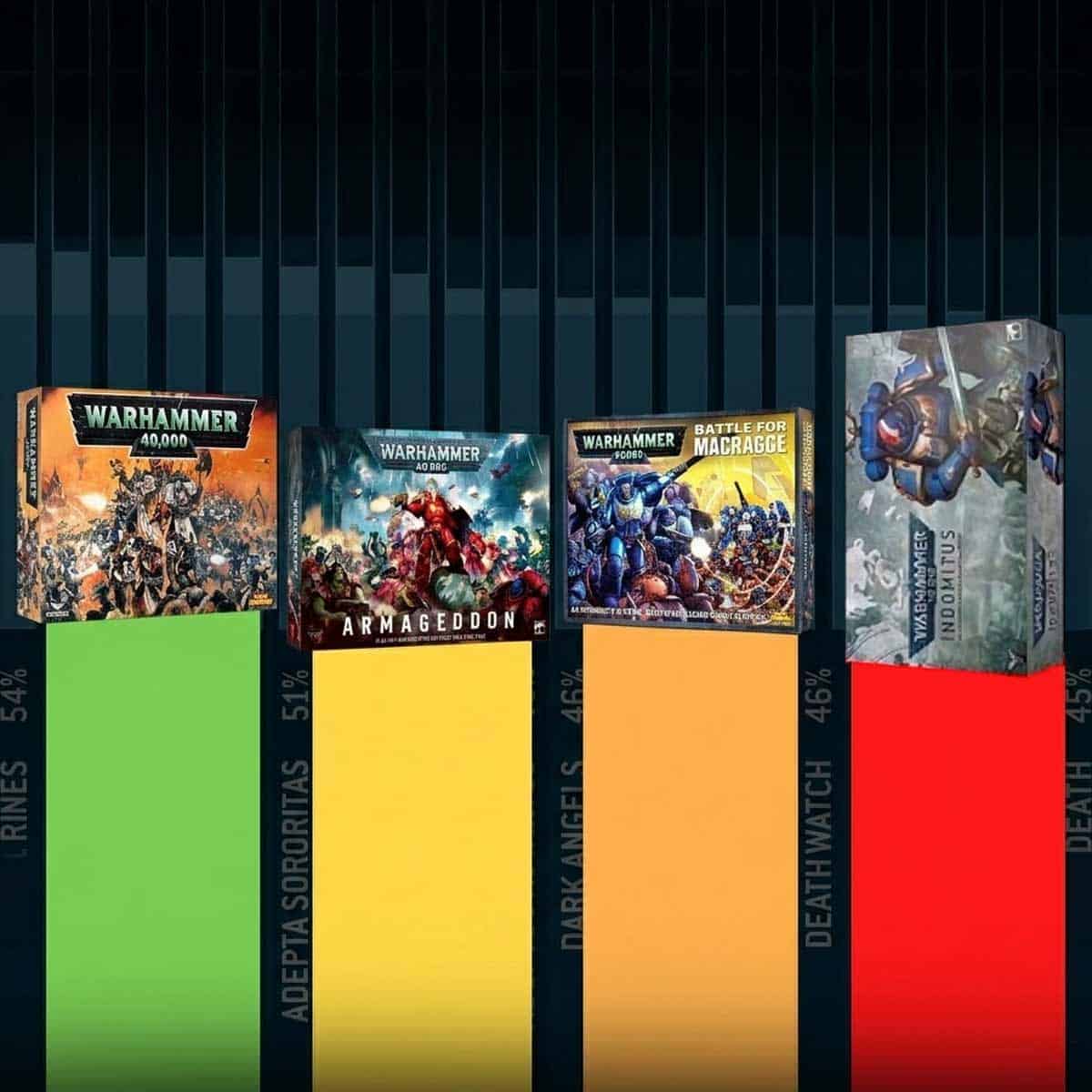
In 9th Edition, everything was based on Indomitus, then 10th Edition replaced Necrons with Tyranids and new Space Marine minis. With Armageddon coming next, expect this Combat Patrol Starter Set to stick around as the bridge product into 11th Edition.
What’s in the Box and Who It’s For
If you want terrain plus a more complete out-of-the-box experience without jumping all the way to Armageddon, this is the all-in pick.
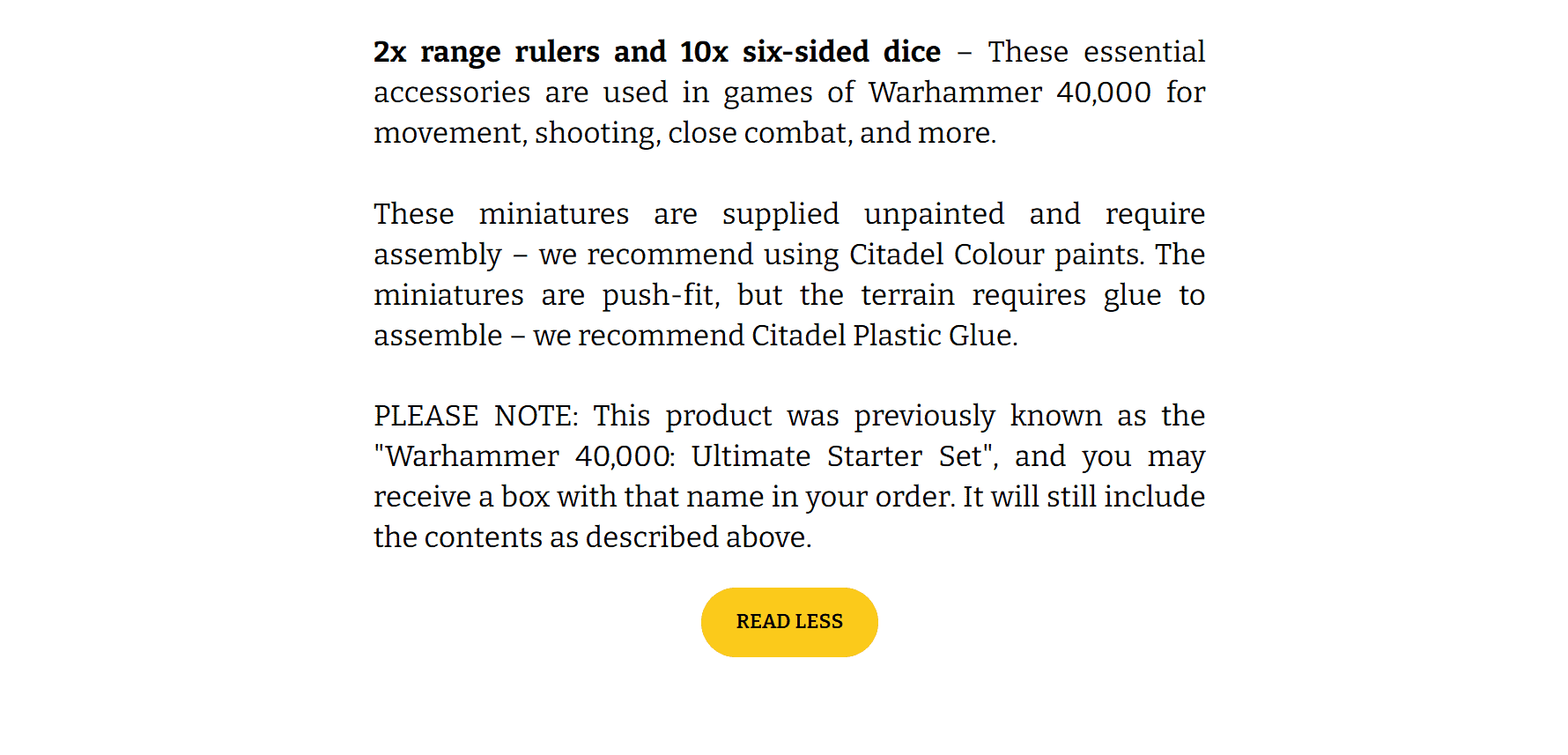
It’s basically the Starter Set but cranked up. You get everything from the regular box, plus six more minis to round out full Combat Patrols for both Space Marines and Tyranids.
It also throws in terrain, an STC Hab Bunker, and eight chunky stockades, plus two double-sided game boards to play on.
As with the smaller sets, you still get the handbook, and this box includes the full Core Rules Booklet (also available as a free download). That means you have what you need to play, plus all the Combat Patrol rules and six ready-to-go missions. Add dice, tokens, a ruler, and a Space Marine transfer sheet, and you are set.
Best For, What You Get, Who Should Skip
- Best for: two players who want bigger forces, terrain, and a more “complete game night” setup.
- What you get: two Combat Patrol-sized forces, boards, terrain, missions, and all the play aids you need.
- Skip if: you want raw value (Armageddon or Leviathan) or you just want the best dollar-per-mini deal (the regular Starter Set is the better bargain).
Before we get into the value of this set, both sides of this box are the contents of the combat patrols, meaning we’ll be using Combat Patrol pricing for both sides.
Obviously, it would have much more value with individual prices, but considering you can get everything in the Combat Patrols, it makes more sense to break it down this way.
- Space Marines Combat Patrol: $168 (current price)
- Tyranids Combat Patrol: $168 (current price)
- STC Hab Bunker and Stockades Terrain: $80
- Rulebook: $25
- Rulers, dice, and mat: Added value
Total Value of Both Halves: $441
Total Value Versus $210 MSRP: $231
Is the Warhammer 40k Combat Patrol Starter Set Worth It?
Short answer: yes, but with some caveats.
The downside:
The value looks lower at first glance because this box is basically two Combat Patrols bundled together. When you remember Leviathan was $250 for way more plastic, and Armageddon is $295 for over $1,000 in value, the price stings a bit.
The upside:
You still get solid savings overall, plus full Combat Patrol forces for both factions. If you split the box, you are paying about $105 per Combat Patrol, and you can divide the terrain however you want.
Bottom line:
If you are starting Space Marines or Tyranids and want terrain in the box, this is a clean and affordable jump start for both players.
#5 Warhammer 40k Introductory Starter Set: Best for Beginners with Zero Supplies ($77)
Prices checked: September 2026
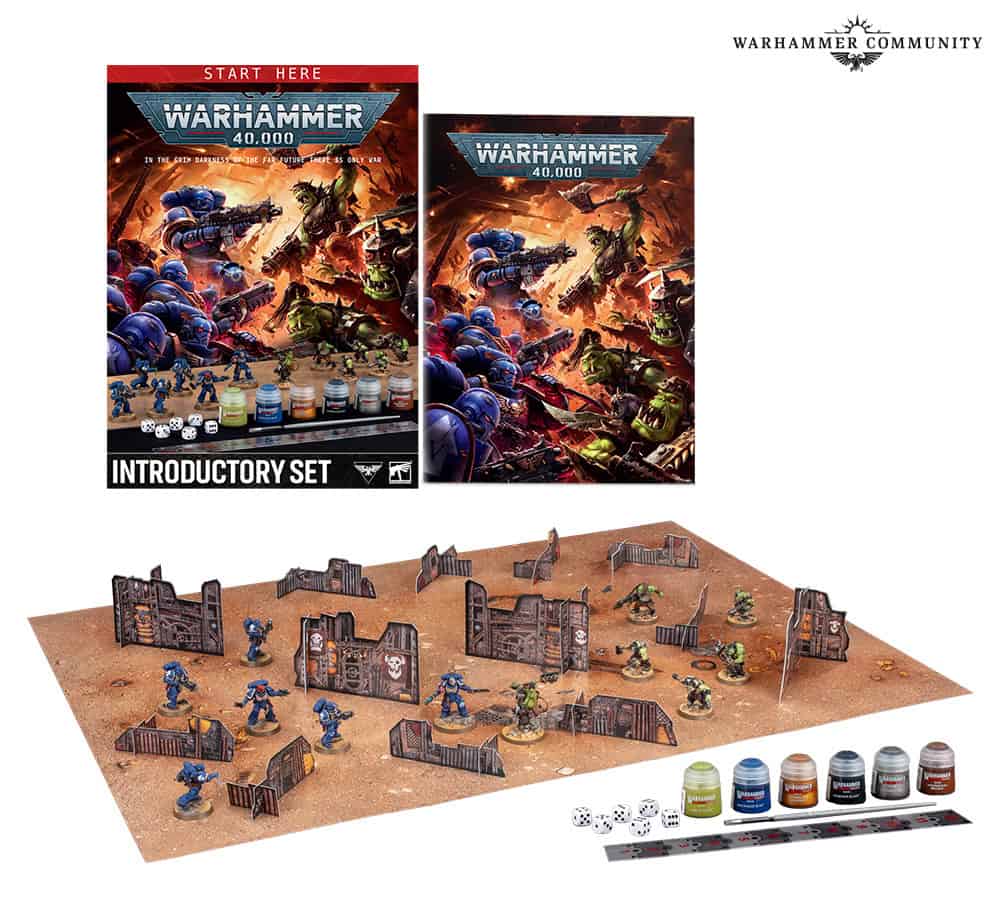
The Introductory Warhammer 40k Starter Set gives you everything you need to try the hobby, from push-fit models to paints, tools, guides, and a full setup for your first few games.
If you want an easy on-ramp into Warhammer 40k or a simple way to bulk up an existing collection, this Warhammer starter set is decent. The real reason it exists, though, is for someone who owns nothing yet.
Buy This If You Own Zero Hobby Supplies
- paints or brushes yet
- Want the cheapest “try everything” entry
- Already have clippers, but not many paints
Now, let’s check out the kind of value this comes with.
- 5x Intercessors $35 ($65 for 10)
- 1x Lieutenant $39
- 5x Ork Boyz $30 ($60 for 10)
- 1x Ork Nob $35
- 5x Citadel paints $39
- Citadel Starter Clippers $35 (not the $53 version on their site)
- Citadel Color Starter Brush $6.50
- Handbook $25
- Double-sided gaming mat, dice, cardboard terrain, and ruler. Added Value
Total Value: $244.50
Total Value Versus $77 MSRP: $167.50
Is the Warhammer 40k Introductory Starter Set Worth It?
Short answer: yes, if you are brand new.
The upside:
You get paints, dice, a brush, a simple mat, cardboard terrain, and enough minis to build, base coat, and get a game going. It is basically a starter hobby kit in a box.
The downside:
The mat is thin, and the model value is low if you’ve been in the hobby for any amount of time. Most of the cost is tied up in the accessories, not the plastic.
Bottom line:
Great for first timers, not great for existing players.
#6 Space Marine 2 Recruit Edition Warhammer Starter Kit ($65): Worth It at Retail Only
Prices checked: September 2026

Released in the Fall of 2024, this is the most recent “starter-style” box from Games Workshop before Armageddon, aimed at anyone who may have played the Space Marine 2 video game and wants the real plastic version of that vibe.
Like Leviathan, it can be rough to find at a reasonable price now. It pops up on the secondary market, but it’s often marked up.
Quick Verdict
Worth it: if you find it at normal retail pricing, because it bundles a hero model with hobby basics.
Skip it: if it’s marked up. At that point, the Introductory Set or the standard Starter Set is a better use of money.
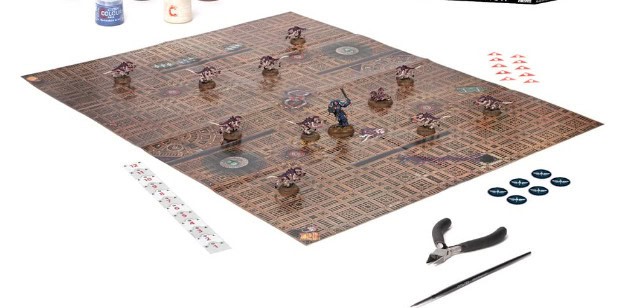
Miniatures:
- 1 Ultramarine Lieutenant Demetrian Titus miniature $45 (based on other named characters)
- 10 Tyranid Termagant miniatures $45
- 1 Ripper Swarm miniature included in the Termagant box
Hobby Tools:
- Clippers for assembling miniatures $50
- Paintbrush for detailing miniatures $11.50
Paints:
- Macragge Blue $7.80
- Wraithbone $7.80
- Naggaroth Night $7.80
- Balthasar Gold $7.80
- One additional unspecified color $7.80
Rulebook and Lore:
- 48-page handbook with game rules and Warhammer 40k lore $25
Total MSRP: $215.50
Total Value Versus $65 MSRP: $150.50
Is the Space Marine 2 Recruit Edition Warhammer 40k Starter Set Worth it?
Short answer: yes, if you want Titus and the hobby gear, and you can find it at a sane price.
The upside:
New players get paints, tools, and a solid hero model all in one box, which makes it a clean build, paint, and play starter.
The downside:
If you already have hobby supplies, it is smarter to hunt down Titus on his own. The value drops fast if you are only after the mini.
Bottom line:
At retail price, this kit is a steal. If it’s marked up, it’s usually better to grab a different set instead.
Honorable Mentions
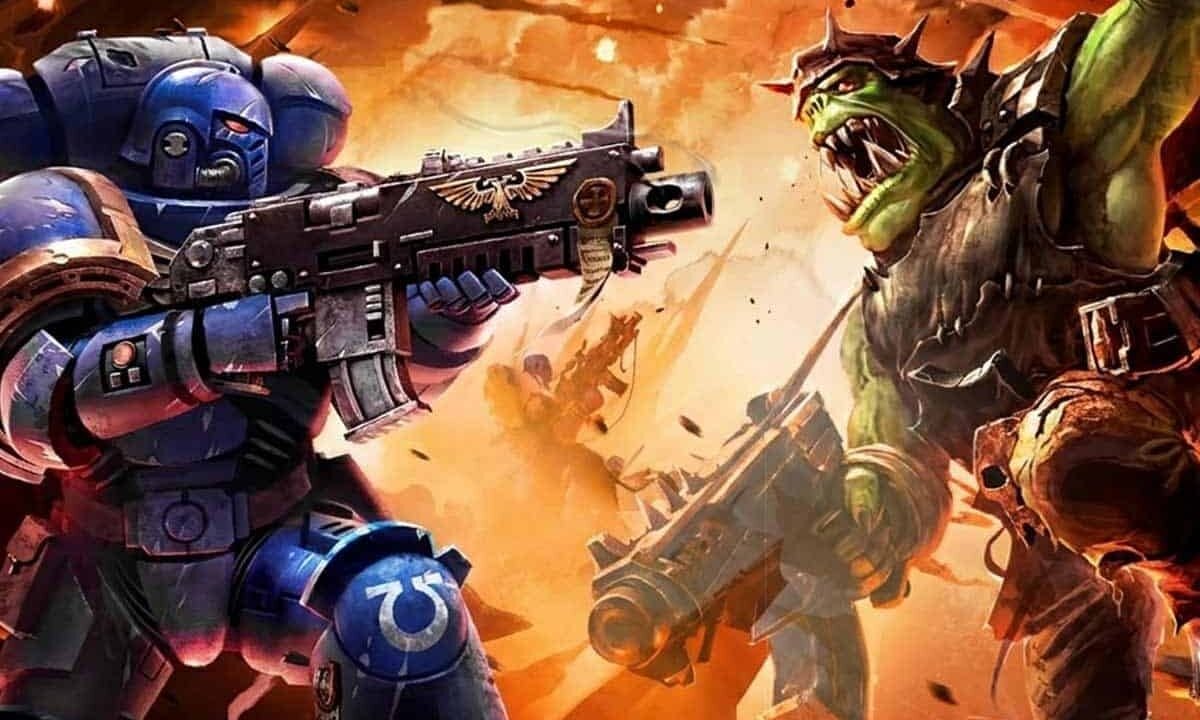
If you know you want to start with just Space Marines or Orks (and not get a bundle box with two armies), but still need paints and accessories, the new Get Started boxes are great starting points. They aren’t exactly starter sets, but they come with everything you need to start a new army and try the hobby side of things at the same time.
Getting Started With Orks: $170
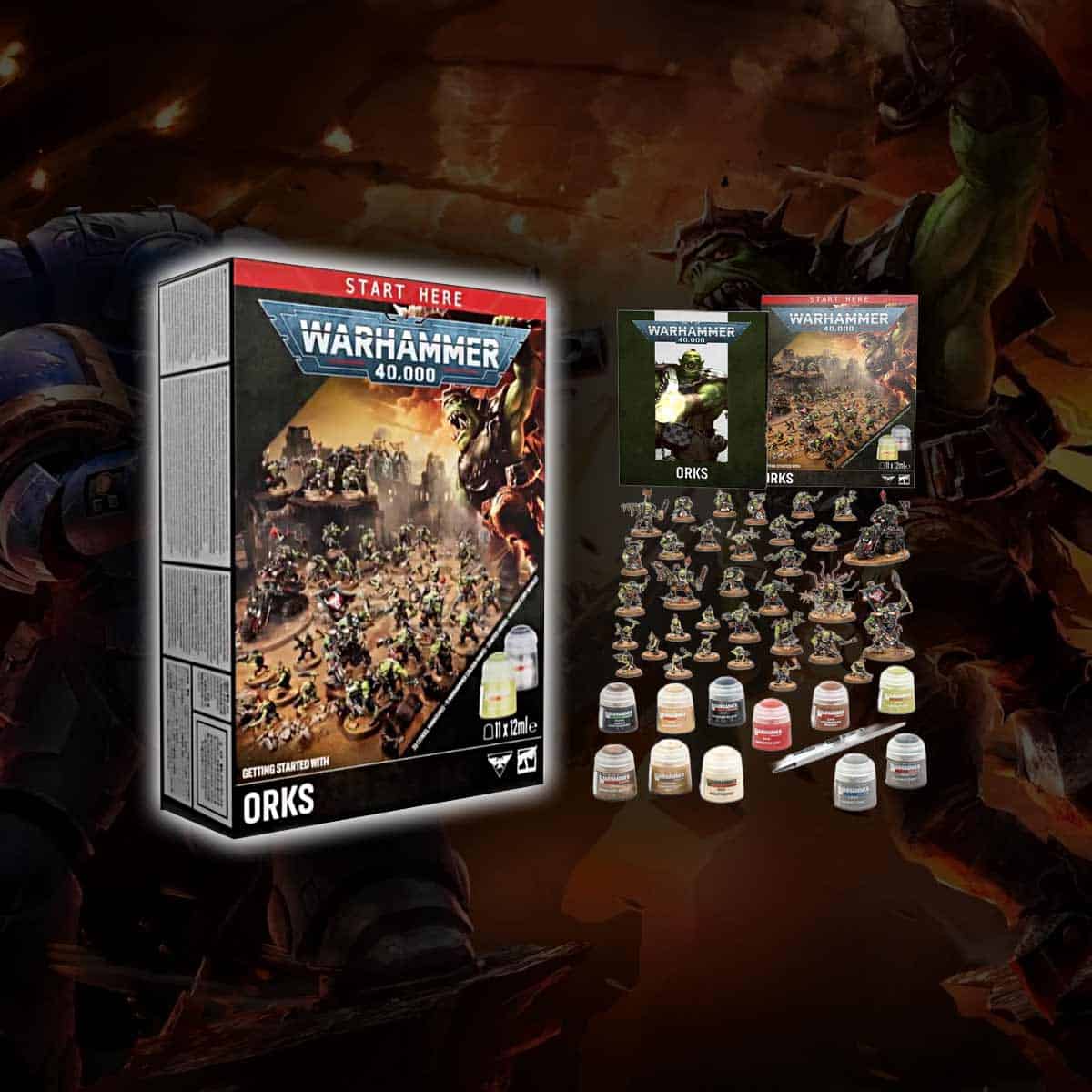
Released alongside the Armageddon starter box products in July of 2026, this box actually has a ton of value when you add in the paints (GW put in faction-specific ones), accessories, and minis together. If you’re starting an Ork army, this box is actually an amazing buy.
Here’s the value breakdown for the box:
- 1x Warboss $43.50
- 1x Weirdboy $43.50
- 20x Boyz $120
- 10x Gretchin $27
- 1x War Trakk $60
- 11x paints $75 ($4.55 -$7.80 each)
- 1x starter paintbrush $7.50
- 1x texture spreader $7.50
- 1x Orks introductory booklet Added value
Total MSRP: $384
Total Value Versus $170 MSRP: $214
Is the Getting Started with Orks Warhammer 40k Box Worth It?
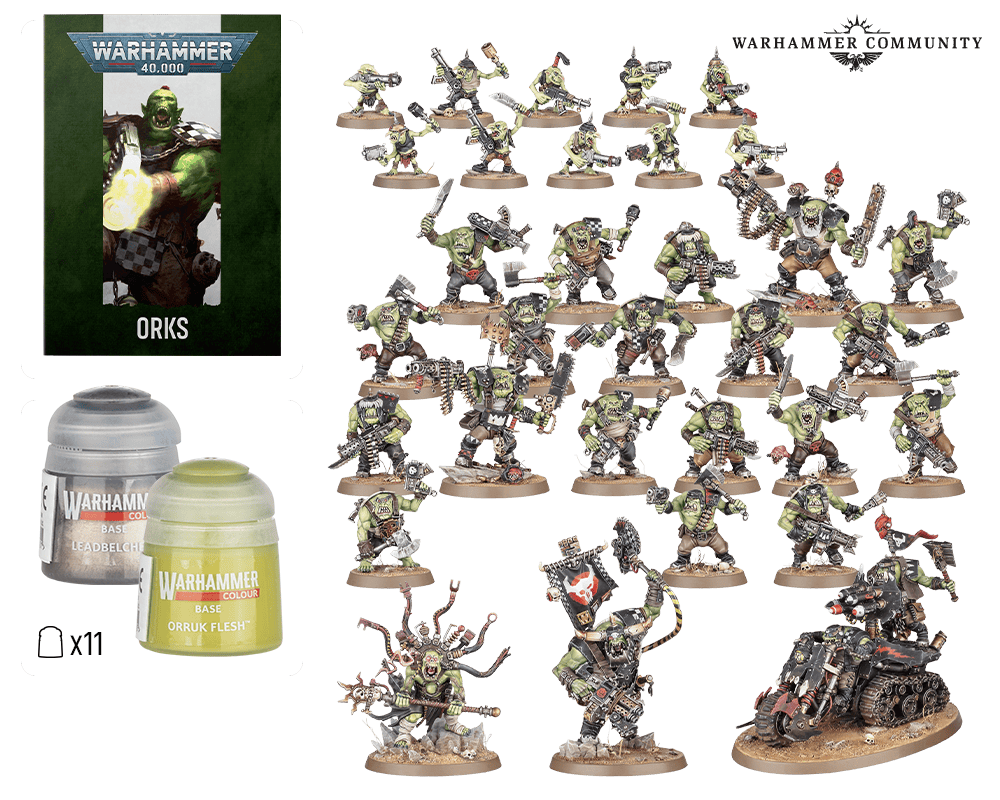
Short answer: yes, especially if you want to start Orks and need the hobby gear too.
The upside:
New players get a full Combat Patrol, paints, a brush, a texture spreader, and an Orks intro booklet all in one box, which makes it a clean build, paint, and play starter.
The downside:
If you already have a pile of Orks or plenty of hobby supplies, the value depends on how badly you want the included units and paints. It’s less exciting if you’re only chasing one or two specific models.
Bottom line:
At $214 in savings on a $170 box, this is the best value we’ve seen at this price point. If you’re starting a Waaagh!, this one is tough to beat.
Getting Started With Space Marines: $170
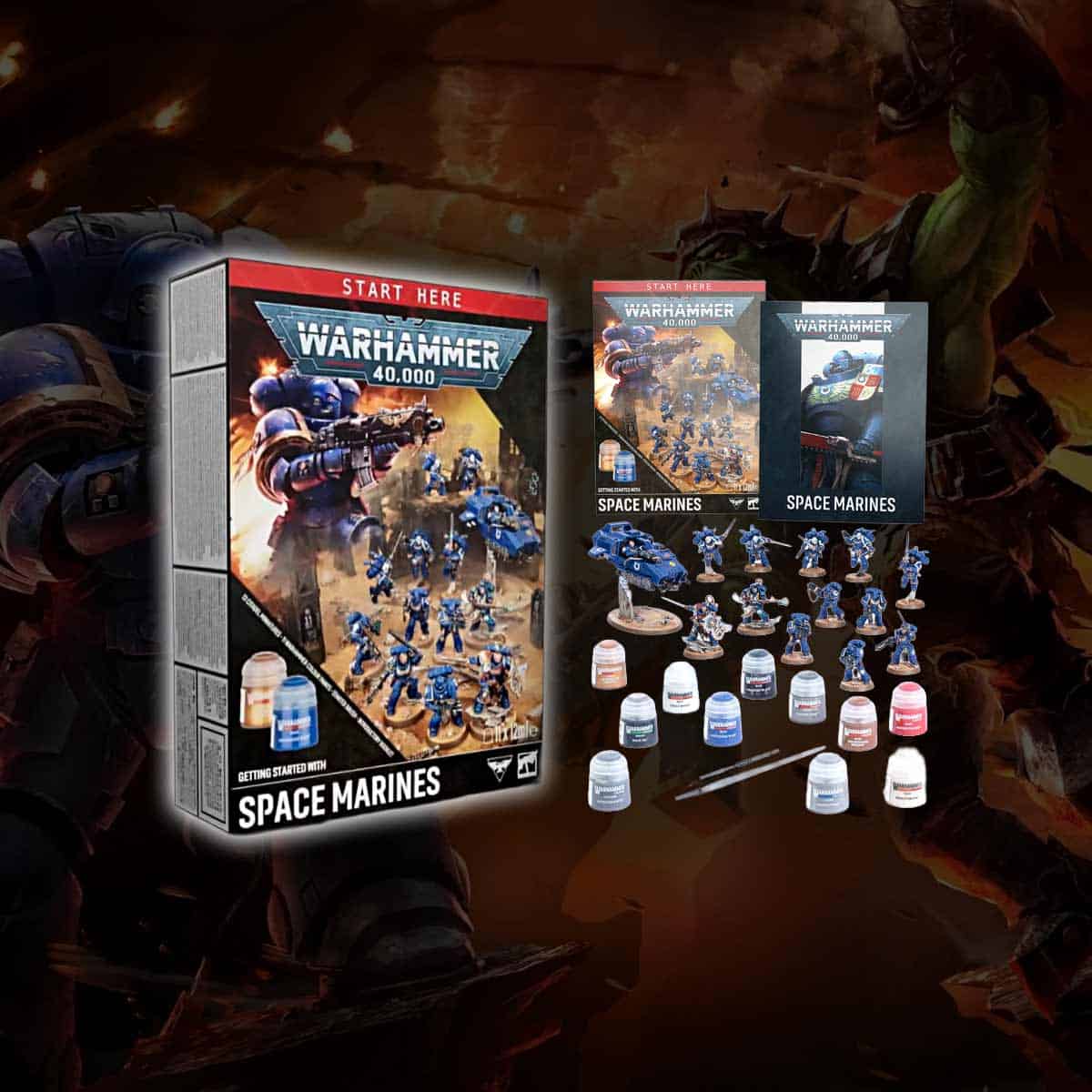
Released alongside the Armageddon starter box products in July of 2026, this box offers a ton of value when you add in the Space Marines-specific paints, accessories, and minis. If you’re starting a Space Marines army, this box is a pretty strong buy.
Here’s the value breakdown for the box:
- 1x Captain with Relic Shield $43.50
- 1x Librarian $43.50
- 5x Intercessor Squad (half box) $35
- 5x Vanguard Veterans $65
- 1x Land Speeder $60
- 11x paints $75 ($4.55 -$7.80 each)
- 1x starter paintbrush $7.50
- 1x texture spreader $7.50
- 1x Space Marines introductory booklet Added value
Total MSRP: $337
Total Value Versus $170 MSRP: $167
Is the Getting Started with Space Marines Warhammer 40k Box Worth It?
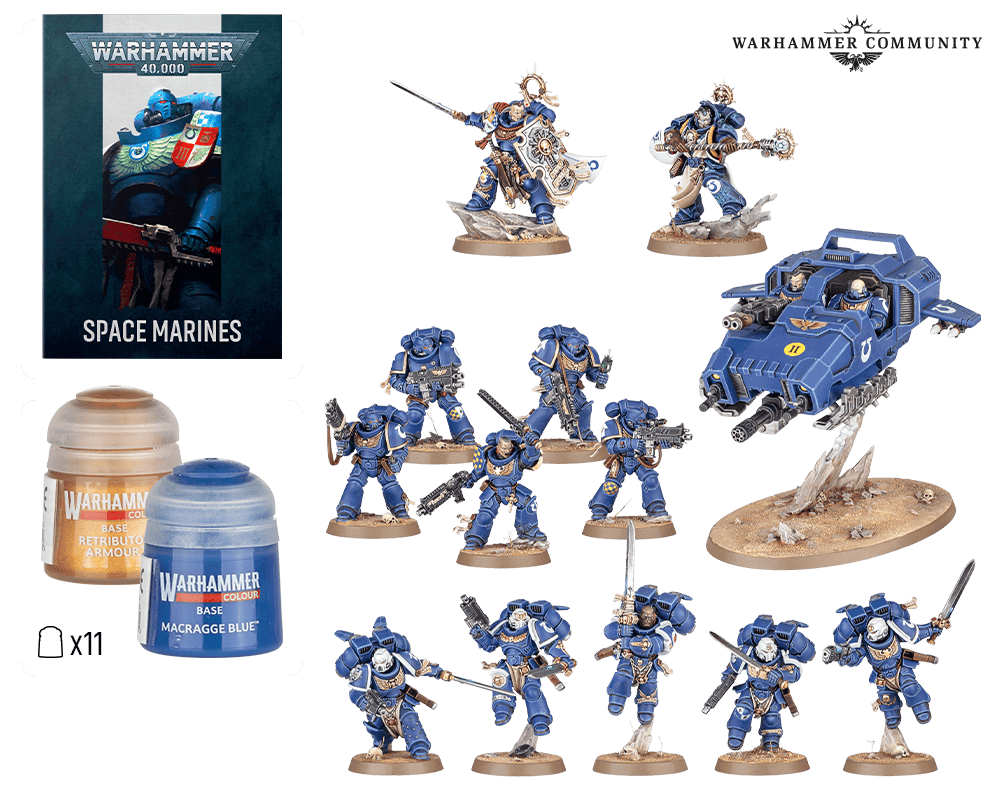
Short answer: yes, especially if you want to start Space Marines and need the hobby gear too.
The upside:
New players get a full Combat Patrol, paints, a brush, a texture spreader, and a Space Marines intro booklet all in one box, which makes it a clean build, paint, and play starter.
The downside:
If you already have a pile of Space Marines or plenty of hobby supplies, the value depends on how badly you want the included units and paints. It’s less exciting if you’re only chasing one or two specific models.
Bottom line:
At $167 in savings on a $170 box, this is also some of the best value we’ve seen at this price point. If you’re starting a Space Marines army, this one is tough to beat.
Warhammer 40k Starter Set FAQ
What is the best Warhammer 40k starter set for new players?
If you want maximum plastic and the brand-new 11th Edition rules, grab the Armageddon Starter Set. If you want the quickest, simplest “play tonight” option without spending $295, the standard Warhammer 40k Starter Set is still the sweet spot, with solid armies, a rules primer, and enough tools to actually play.
Which Warhammer starter kit has the best value in 2026?
Armageddon. The 11th Edition launch box stacks over $1,032.50 in MSRP value into a $295 box. That’s $737.50 in savings, the most ever in a 40k starter. Leviathan is still excellent if you can find it near MSRP, but Armageddon takes the crown for 2026.
Is the Armageddon starter set worth pre-ordering?
Yes, you’re getting 61 brand-new push-fit minis, the 11th Edition Core Rules booklet, the hardback Operation Imperator lore book, two mission decks, datacards, and transfers. Split it with a friend and each player walks with around $461 in models for roughly $150. See our full Armageddon value breakdown for the per-line math.
What’s in the Armageddon 11th Edition launch box?
The Armageddon box comes with 23 Space Marines (Captain, Librarian, Chaplain with Jump Pack, Ancient, 10 Intercessors, 5 Vanguard Veterans, 3 Eradicators with Heavy Bolters, and a Land Speeder), plus 38 Orks (Warboss, Bigboss, Bannernob, Painboy with Grot, Weirdboy, 20 Boyz, 10 Gretchin, Wartrakk, and Big Mek Dakkarig). You also get the 11th Edition Core Rules, the Operation Imperator lore book, datacards, and two mission decks.
Is the Combat Patrol Starter Set (formerly Ultimate Starter Set) worth the higher price?
If you want full Combat Patrol forces for both armies plus terrain and boards, then yes. It costs more than the basic Starter Set, but it feels like a complete “open the box and play” package. If pure value is the goal, Armageddon or Leviathan beats it on a dollar-per-mini basis.
Is the Combat Patrol Starter Set the same as the Ultimate Starter Set?
Yes. Games Workshop renamed the Ultimate Starter Set to the Combat Patrol Starter Set ahead of 11th Edition. Everything inside is identical, including the $210 price. Just a new name on the outside of the box. Some orders may still arrive in the old “Ultimate” packaging while GW burns through warehouse stock.
Why did Games Workshop rename the Ultimate Starter Set?
The most likely reason is to avoid “wrong edition” confusion when 11th Edition drops. Tying the product to the evergreen Combat Patrol game format lets it stay on shelves across rules cycles instead of getting binned with the old edition’s branding. Expect the Combat Patrol Starter Set to be the bridge product that stays in stock alongside any new 11th Edition starters.
What is the cheapest Warhammer starter set right now?
The Space Marine 2 Recruit Edition is the budget pick at retail. If it’s marked up, the Introductory Set is usually the smarter “cheap entry” because you at least get a broader hobby bundle.
Should I split a Warhammer 40k starter set with a friend?
Absolutely. Every set in this lineup splits cleanly into two armies, and the math almost always works out in your favor. The Armageddon split is especially good, around $150 each for about $461 in models per side. Find a buddy, split the plastic, and get games in faster.
Are push-fit models good for beginners?
Yes. They go together fast, the sculpts look great, and you can always glue them later. For starter sets, push fit is basically the hobby cheat code. The Armageddon box uses push-fit for every single model in the box.
Do I need anything else to start playing?
For most boxes, no. Starter sets usually include dice, rulers, missions, and rules (and the core rules are free to download). If you want to paint your minis, you’ll eventually want better brushes and more colors, but you can play right out of the box.
Can I use these starter set models in bigger Warhammer 40k armies?
For sure. Everything here slots into full 40k lists, and most kits form the backbone of larger collections. Starter sets are basically step one of building a real army. The Armageddon minis are designed specifically to anchor new 11th Edition lists.
Can I play Combat Patrol with these starter sets?
The Combat Patrol Starter Set (formerly Ultimate Starter Set) is built to align with Combat Patrol forces, which is why it feels so complete, and why GW renamed it to reinforce that link. The standard Starter Set also comes with two Combat Patrol armies, so you can play right away if that’s your main format.
Armageddon’s two halves are big enough that each side can serve as a Combat Patrol-plus on its own.
What should I buy after my first starter set?
Pick one faction and commit. A Combat Patrol for your chosen army is the best next step, then a codex when your faction gets one, then add units that solve real problems on the table (anti-tank, scoring units, and a durable anchor).
Is Leviathan still worth it if I only want one faction?
It can be, but only if you can sell or trade the half you do not want. If you cannot move the other side, the Armageddon, Starter Set, or Combat Patrol Starter Set (formerly Ultimate) is usually the smarter buy for a single-faction plan.
What is the difference between the Leviathan and Ultimate starter sets in Warhammer 40k?
Leviathan is the 10th Edition launch box: 72 miniatures, Space Marines against Tyranids, $250 MSRP, and long out of print. The Ultimate Starter Set, now renamed the Combat Patrol Starter Set, is the evergreen $210 box with 44 miniatures plus terrain and boards, and it is still on shelves. Leviathan wins on plastic; the Combat Patrol box wins on actually being available.
What is the difference between the Warhammer starter set and the introductory set for beginners?
The Starter Set is $250 and holds 46 push-fit miniatures, terrain, two boards, and the full Core Rules, which makes it a complete game in a box. The Introductory Set is $77 and holds 12 miniatures plus paints, a brush, clippers, card terrain, and a handbook. One teaches you to play; the other teaches you to build and paint first.
When did 40k Leviathan come out?
Leviathan went on sale in June 2023 as the 10th Edition launch box, with 25 Space Marines against 47 Tyranids for 72 miniatures in total. It has been out of print for a while, which is why finding one anywhere near its $250 MSRP is the hard part now. Armageddon replaced it as the current edition-launch box in 2026.
Final Thoughts on the Best Warhammer 40k Starter Sets
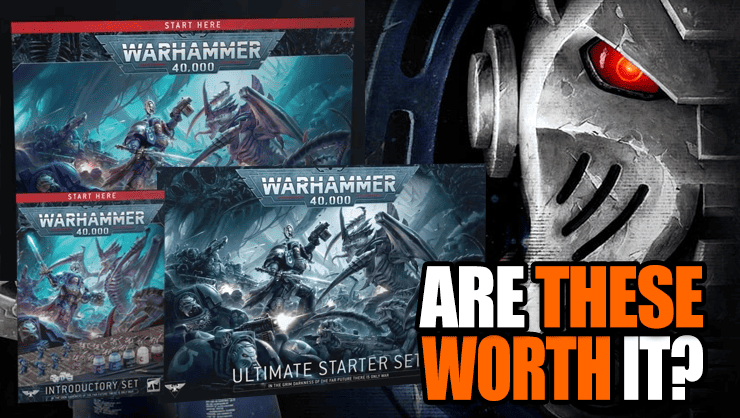
At the end of the day, every Warhammer 40k Starter Set brings something different to the table, so the real win is picking the box that matches your budget and your future army plans.
- Best overall value (new for 2026): Armageddon Starter Set, over $1,000 in value at $295
- Best 10th Edition value hunt: Leviathan (price-dependent)
- Best overall first buy: Starter Set
- Best all-in with terrain: Combat Patrol Starter Set (formerly Ultimate Starter Set)
- Best budget with tools: Introductory Set
If you spot one of the high-value Warhammer starter kits at retail, snag it fast, because in this hobby, hesitation means someone else buys your plastic.
Where to Buy Your Warhammer 40k Starter Set
Before You Buy: 3 Quick Money-Saving Checks
- Check your local game store first, because typical discounts add up fast. Pre-orders on Armageddon will usually net the deepest markdowns.
- If you are hunting Leviathan, set a max price and stick to it. Do not chase scalpers on eBay, etc.
- Split with a friend whenever possible; these boxes are built for it.

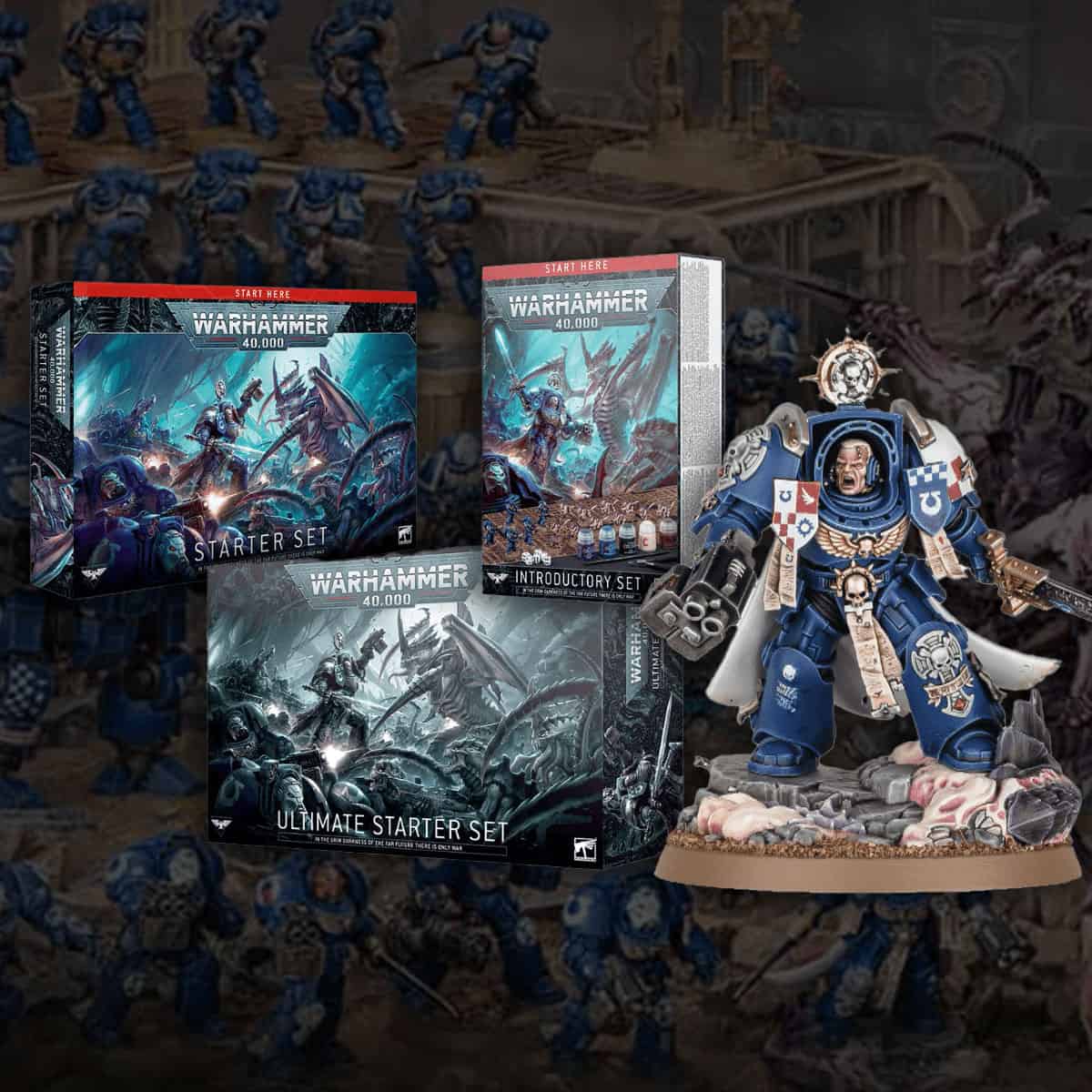
- Take the plunge into the 41st Millennium with the Ultimate Starter Set for Warhammer 40,000.
- This box gives you a complete introductory experience, with loads of incredible models, a battlefield to fight over, helpful guides, and all the dice, tools, and rules you need to play your first games.
- Pick the noble Space Marines or swarming Tyranids, give control of the other army to a friend or family member, and battle it out for hours of entertainment.
- There’s no better way to get into the Warhammer 40,000 hobby – this box is also an excellent way to expand your existing collections.
Last update on 2026-10-19 / Affiliate links / Images from Amazon Product Advertising API
🔗 Related Reads:
- Warhammer 40k Armageddon Box Set: Full Contents & Value
- Warhammer 40k 11th Edition Starter Set: Contents, Price & Review
- Leviathan 10th Edition Starter Box: Value & Reality Check
- Warhammer 40k Combat Patrol Guide: How It Works
- 11th Edition & Games Workshop’s 3-Year Release Roadmap
- Best Places to Buy Warhammer 40k & Save
- Warhammer 40k Faction Guide: Who to Play
What do you think about the new Armageddon Warhammer 40k starter set and the value lineup for 2026? Are you grabbing the 11th Edition launch box?