Get up to speed on 40k Salamanders lore fast: Vulkan, Nocturne, the Fire-Sight gene-seed, the Promethean Cult, and why these Marines go out of their way to protect civilians.
- Primarch: Vulkan
- Homeworld: Nocturne
- Defining traits: fire-based warfare, master-crafted wargear, and civilian protection
- Iconography: dragons and flame motifs
- Signature weapons: flamers, meltas, and anything that turns armor into soup
- Battlefield vibe: mid-range brawlers who grind forward and burn the problem away
Let’s be honest: when folks rattle off the most popular Space Marine Chapters, it’s always the same roll call. Ultramarines get the poster-boy spotlight, Blood Angels show up with the tragic opera energy, and Space Wolves are basically Viking werewolves with chainswords. Fair. But the Salamanders? They keep getting shoved to the side, and that’s a crime against good taste and a good open flame.
These guys are loyal, stubborn as a furnace door, and literally forged in fire. More importantly, they fight like they actually remember what they’re protecting. In a setting where most Space Marines treat civilians like set dressing, Salamanders will step in, pull people out of danger, and then go right back to turning the enemy into ash.
That “protect the innocent” thing is not common in 40k, which is exactly why they stand out.
And then there’s the craftsmanship. Salamanders don’t just carry flamers and meltas because they match the color scheme. They build, tune, and master their wargear like it’s a sacred craft. When they light up the battlefield, it’s not random chaos; it’s controlled, deliberate, and terrifyingly effective.
This guide covers Salamanders lore, culture, and history, plus a beginner-friendly look at what they’re like on the tabletop and where to start collecting. Rules and unit performance vary by edition, so treat anything “meta” as edition-specific.
Key details here are summarized from Black Library stories and reference sources, with links and further reading in the Resources section below.
Meet the Salamanders in 40k: The Fire-Born of Nocturne
Updated February 10th, 2025, by Rob Baer with links and relevant information about the Salamanders.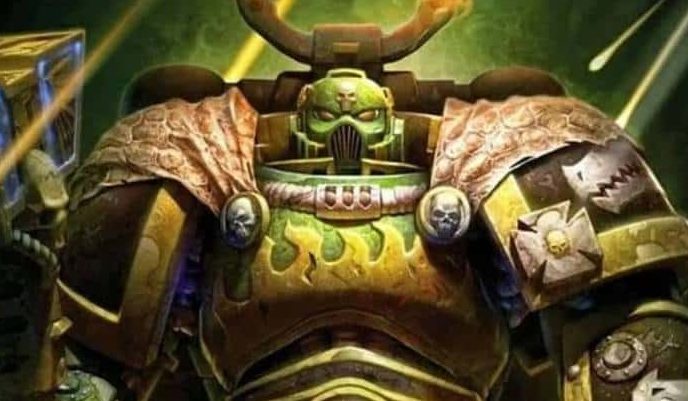
Space Marines have a reputation for being ruthless, efficient, and, yeah, maybe a little too proud of how serious they are. Then the Salamanders show up and ruin that whole “civilians are just scenery” vibe. While a lot of Chapters treat regular humans like collateral damage with legs, Salamanders actually see protecting them as part of the job. In a universe where “acceptable losses” feels like the default setting, that hits different.
They come from Nocturne, a volcanic nightmare of a homeworld that basically trains you to be tough or be ash. That background shapes everything about them: endurance, grit, and a love for heat-based problem-solving. Flamers, meltas, and enough firepower to turn a battlefield into a controlled burn, all backed up by wargear they’ve personally obsessed over until it’s just right.
And it all traces back to Vulkan. His gene-seed and his influence push the Chapter toward a rare combo in 40k: strength with actual honor behind it. If you want Space Marines who can hit like a hammer but still remember why they’re swinging, the Salamanders are that Chapter.
Why the Salamanders Deserve More Recognition in 40k
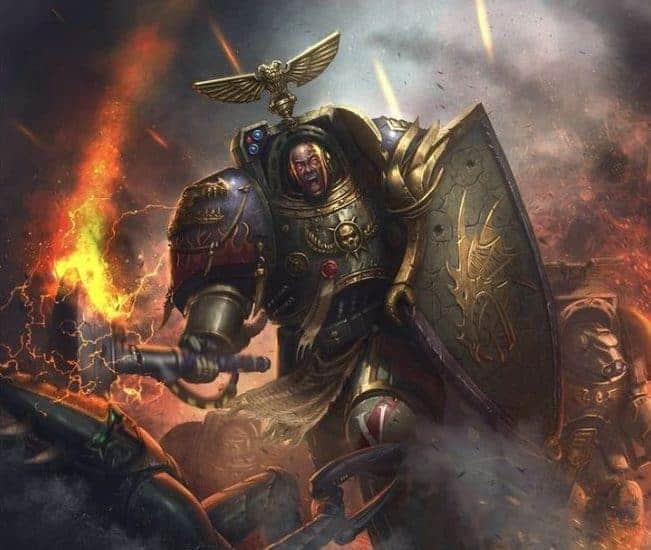
For a Chapter with a backstory this good, the Salamanders still feel weirdly overlooked. They’re not trying to be the edgiest guys in the room, they don’t run on nonstop tragedy like the Blood Angels, and they’re not built for instant meme status like the Space Wolves.
So they end up flying under the radar, which is wild, because their whole identity hits a combo you do not really get anywhere else.
Here’s the factual part that explains why they stand out without leaning on vibes alone: Salamanders are defined by three big canon pillars.
- First, the Fire-Sight gene-seed shows up in their physiology and presentation.
- Second, the Promethean Cult shapes its culture around duty, self-reliance, and protecting humanity instead of treating civilians like collateral.
- Third, their preferred way of war is flamer and melta warfare, meaning they lean into close-range pressure where heat and armor-melting power do the talking.
On the tabletop side, that translates into a Chapter that loves getting into the danger zone and making it everyone else’s problem. If the idea of turning elite infantry into charcoal and vehicles into a puddle sounds like your kind of fun, you’re in the right place.
Salamanders are built around brutal, reliable tools, and they take the “craftsmanship” part seriously. Your army is not just torching the enemy, it’s doing it with master-crafted wargear that looks and feels like it was made by someone who cared.
The Strengths of the Warhammer 40k Salamanders
 The Salamanders have a couple of big strengths that show up in the lore and on the tabletop, but it helps to split them out so you can see what you actually came here for.
Lore strengths
- Nocturne-bred endurance: Growing up on a volcanic death world does not produce delicate people. Salamanders are built to take punishment, keep moving, and keep their heads when everything is on fire because, honestly, that’s just Tuesday for them.
- Craftsmanship as a way of life: They do not treat wargear like disposable kit. Salamanders forge, maintain, and obsess over their weapons and armor, and it shows in the quality of what they carry into battle and in bigger campaigns like the Badab War.
- Civilian protection and real human ties: This is the rare part. Salamanders actively protect civilians and actually interact with regular people instead of acting like everyone without power armor is an inconvenience. In 40k terms, that’s basically a personality trait.
- Durable, grindy playstyle: If you like Marines who can absorb a hit and keep pressuring the board, Salamanders lean that way. They’re happy trading blows and sticking around longer than your opponent wants.
- Mid-to-close range pressure: Their signature tools shine up close. You want to bully the midfield, force awkward decisions, and make anything within range regret existing.
- Flamer and melta synergy: The Chapter’s whole vibe is heat, and that usually translates into strong support for flame and armor-melting weapons, plus the kind of brawling follow-up that finishes what the fire started.
Why More Players Should Consider a Salamander 40k Army
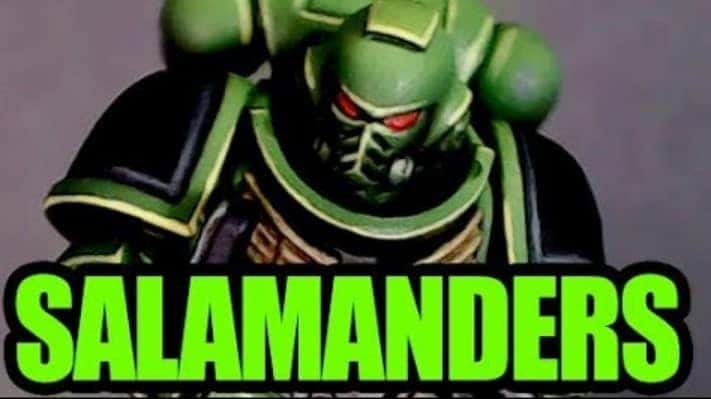
If you’re putting together a Salamander’s army, you’re in for a good time, especially if you like playing in the “get close and make it hurt” range band.
Depending on the current edition and your detachment rules, Salamanders-style play often rewards mid-to-close range pressure, leaning into flamer and melta weapons, and keeping tough units on objectives while the enemy gets cooked off the board.
The exact bonuses and interactions change as editions and balance updates roll through, but the theme stays the same: close-range heat, steady board control, and finishing fights up front.
Visually, they’re also one of the sharpest Chapters in the setting. Green power armor pops on the table, the flame and drake motifs look great on helmets, shoulder pads, and vehicles, and the whole “hand-forged wargear” thing gives you a built-in excuse to go wild with glow effects, scorched barrels, and molten weapon details. If you want an army that looks like it walked out of a forge and straight into a warzone, Salamanders deliver.
Lore-wise, you’ve got plenty to read, too. There are Salamander books that dig into their big battles, their devotion to Vulkan’s ideals, and the constant push-pull of staying human in an Imperium that rewards being a weapon first and a person never. Whether you’re here for the art, the vibe, or the playstyle, Salamanders bring a very specific flavor to 40k, and it’s a lot more interesting than they get credit for.
The Unique Characteristics of Salamanders in 40k
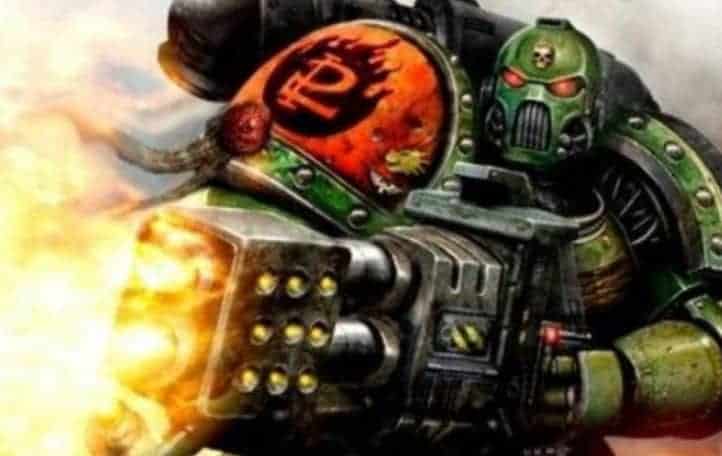
Most Space Marine Chapters have a reputation for being cold, calculating, and sometimes a little too comfortable treating everyone else like expendable scenery. The Salamanders? They’re built different. They’re not just warriors, they’re craftsmen and guardians, and they’re one of the few groups in the Imperium that still seems to remember there are actual people on the other side of all this bolter fire.
A big reason for that comes down to the Promethean Cult, which is the Salamanders’ cultural framework and basically their operating system.
It’s the Chapter’s blend of belief, tradition, and day-to-day mindset: endure hardship, master your craft, prove your worth through deeds, and protect humanity because that’s the whole point. That’s why their “guardian” behavior is not some cute personality quirk. It’s baked into who they are and how they measure honor.
They hail from Nocturne, a volcanic death world where survival is a full-time job, and the planet is actively trying to delete you. Earthquakes, lava flows, and wildlife that treats humans like a menu item all make “tough” the default setting. That kind of environment doesn’t just produce warriors who can take hardship; it produces people who expect it and keep going anyway.
And unlike a lot of Chapters that feel like they’re hovering above humanity, Salamanders keep real ties to their homeworld. They’re connected to the people of Nocturne, living among them rather than acting like distant warlords.
It’s another way the Promethean Cult shows up in practice: the Salamanders fight for humanity, and they actually stay close enough to remember what that means.
Notable Traits of Warhammer 40k Salamanders
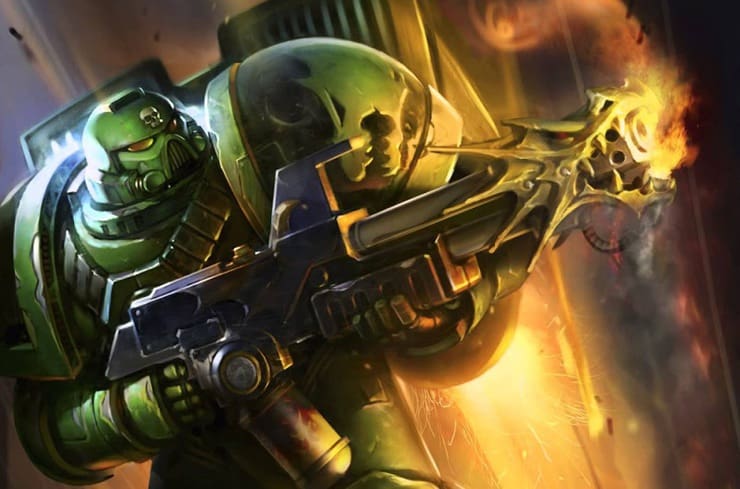
The Salamanders stand out for a bunch of reasons, but the headliner is simple: they’re ridiculously hard to put down. A lot of that comes back to their gene-seed and the way it shapes them, especially when it comes to enduring brutal conditions. Stack that with their Chapter culture, and you get Marines who can take hits, keep moving, and then calmly solve the problem with extreme heat. Add in their obsession with master-crafted wargear and, yeah, their strengths basically write themselves.
Salamander’s strengths (lore and vibe, in plain English)
- Resilience for days: They can soak up punishment that would fold most Astartes.
- Heat and fire endurance: Nocturne plus their physiology means they’re comfortable where other people start screaming.
- Craftsmanship: They do not just carry weapons, they build and refine them like it’s sacred work.
- Firepower identity: Flamers and meltas are not a gimmick here. They’re the point.
- Guardian mindset: They protect civilians like it’s part of the mission, not an optional side quest.
That “moral compass” thing is also real. In a setting where plenty of Chapters treat civilians like inconvenient paperwork, Salamanders will throw themselves into the worst of it to pull people out. It does not make them soft. It makes them one of the most respected flavors of loyalist Marines because they still act as humanity matters.
On the battlefield, their style is exactly what you’d expect. They like getting close, they like burning things that should not be alive, and they’re terrifying when they do it with control instead of blind chaos. If the enemy fears anything more than a power-armored super soldier, it’s one who shows up with a flamer and uses it like a precision tool.
- Smaller numbers: Their recruitment is slower, so they’re not as widespread or numerous as some other Chapters.
- Experience over quantity: You’re often looking at fewer warriors, but the ones you get are typically seasoned and battle-hardened.
- Close-range commitment: Their signature tools reward getting into the danger zone, which can be risky if you misjudge positioning.
The Fire-Sight Gene-Seed
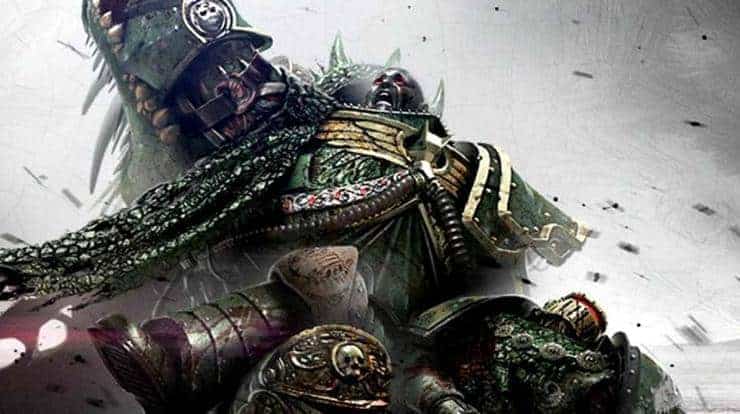
Every Space Marine Chapter has its own genetic quirks, and for the Salamanders, it all starts with Vulkan. Their gene-seed is often summed up under the Fire-Sight label, and it’s basically the reason they’re so comfortable doing war the hot way.
Between Nocturne’s volcanic nightmare of a homeworld and what’s in their blood, Salamanders are built to handle heat and fire like it’s background noise. Where most Astartes are tough, these guys feel purpose-built for fighting in conditions that would turn a normal battlefield into a crematorium.
Fire-Sight also ties into the Salamanders’ most famous look: jet-black skin and glowing red eyes. That isn’t a “paint job” or some spooky Chapter tradition. It’s framed as a physiological adaptation connected to Nocturne’s extremes and the way their gene-seed expresses itself.
Pair that with their love of flame-based warfare, and you get one of the most instantly recognizable silhouettes in 40k, which is why Salamanders art always goes so hard. Green plate, flame motifs, ember eyes, and a battlefield that looks like someone lit the horizon on fire. It’s a whole vibe.
Cultural Attributes of Salamanders in 40k

The Salamanders take their heritage seriously, and not in the “we put it on a banner and never think about it again” way. They stay tightly connected to Nocturne and its people, and that whole “protect civilians” thing is not just battlefield manners. It’s core identity. Salamanders live among the people they come from; they keep one foot in the community, and they see themselves as protectors first, warriors second. In 40k terms, that’s basically a superpower.
A lot of that mindset runs through the Promethean Cult, which is the Chapter’s cultural framework: endure hardship, master your craft, prove your worth through deeds, and protect humanity because that’s the point. It’s why their wargear obsession is not just “cool hobby detail.” It’s tied directly to honor and duty.
Culture and ritual examples
- Living among Nocturne’s people: Salamanders stay connected to their homeworld’s communities instead of ruling from a fortress and pretending they’re above it all.
- Personal responsibility for wargear: Each Salamander is expected to maintain, improve, and take pride in their weapons and armor, treating the work like a reflection of character, not just maintenance.
- Craftsmanship as proof of worth: Their traditions push the idea that what you build and how you care for it matters. Your kit is not just gear, it’s a statement.
That respect for craftsmanship shows up in the visuals, too. Salamander models tend to wear the vibe on the armor: ornate details, flame and drake motifs, and the kind of “this was made by someone who cared” look that stands out next to more plain-jane Marines. If you like painting glow, heat-staining, and scorched-metal effects, Salamanders practically beg for it.
And if you’re starting fresh, the current “starter kit” situation is basically the Combat Patrol route, which is a clean way to get the aesthetic on the table and start playing the close-range, heat-heavy style Salamanders are known for. From there, the books do the rest. Salamander’s lore is packed with resilience, honor, community ties, and yes, a healthy amount of heretics getting turned into smoke.
Strengths of the Salamander Army in 40k

Space Marines have no shortage of elite Chapters, but Salamanders bring a very specific mix that’s hard to copy: durability, short-range firepower, and craftsmanship-as-a-personality-trait. They’re the kind of force that can wade into ugly conditions, keep their footing, and then turn the midfield into a controlled burn. That Vulkan gene-seed vibe is all about staying power, and when you pair it with their love of heat-based weapons, you get an army that punishes anyone who lets you set up shop at close range.
They also stand out on the lore side in a way that actually matters for how they’re written and played. The connection to Nocturne, plus the Promethean Cult’s “protect humanity” mindset, gives them a guardian edge you don’t see everywhere else. They’re not just showing up to win the war, they’re showing up to keep people alive while they do it.
As for strengths, it’s the classic Salamanders package: tough Marines, solid wargear, and brutal short-range trades. They might not have the speed game of White Scars or the psychic toolbox of Grey Knights, but they do not need it. Salamanders win by sticking around, taking the hit, and answering back with some of the nastiest flamer and melta pressure the Imperium can bring to the party.
Tactical Advantages
 A Salamanders force is basically calculated aggression with a flamer fuel budget. They like playing in that mid-to-close range band where the shooting is mean, the trades are brutal, and you can bully the midfield without blinking.
Depending on the current edition, detachment, and points, Salamanders 40k armies tend to reward getting in close with flame and melta weapons, stacking reliable damage, and staying power that lets you keep pushing even when the return fire starts flying.
They also tend to feel resilient on the table, not because they’re magically unkillable, but because their whole game plan is built around walking into the danger zone and still having enough bodies and resources left to keep pressure on objectives. The theme is consistent even when the exact rules text shifts: get close, burn something important, and don’t fold when your opponent tries to punch back.
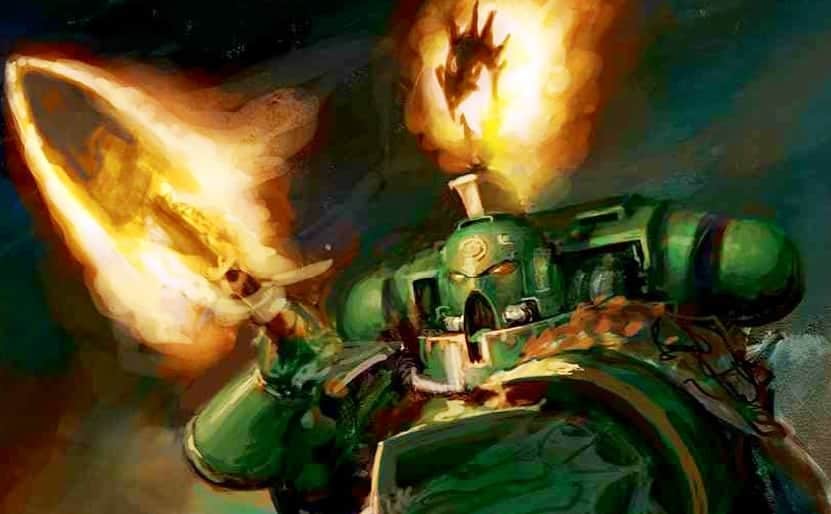
On the character side, Vulkan He’stan is the poster child for that playstyle. He’s the famous Forgefather, he carries the Gauntlet of the Forge and the Spear of Vulkan, and he’s absolutely the kind of model that makes people re-check charge distances.
Rules-wise, his support effects vary by edition, but he’s commonly used as the “make the army’s heat weapons scarier” leader, whether that’s through aura-style buffs, reliability boosts, or other flamer and melta-friendly tricks that fit the Salamanders’ identity.
Notable Units and Strategies
A Salamanders army tends to feel best when your units are happy fighting in that mid-to-close range sweet spot. You want stuff that can move up, survive the clapback, and then delete something important once it’s in the danger zone. That’s why the usual suspects keep showing up in Salamanders lists, even as points and detachments shift around.
- Aggressors: midfield brawlers that walk up and hose targets at close range, great for bullying objectives and clearing infantry
- Eradicators: armor-crackers, point them at a vehicle or elite target and let the melta do the talking
- Terminators: durable anchor unit, ideal for holding ground, screening, and forcing your opponent to overcommit to shift them
- Dreadnoughts (Redemptor): hard-hitting support piece, brings durability plus consistent damage to back up your push
How you actually play it is pretty straightforward. Use cover, stage your threats, and set up turns where you can close the distance without getting peeled off the board on the way in. Once you’re in range, you want high-impact bursts of fire that swing the trade in your favor, then you plant something tough on the objective and dare your opponent to come take it.
Just keep your choices edition-aware: Salamanders armies often tend to like tools that improve reliability and pressure at close range, and they usually feel comfortable playing the “hold the line and punish anything that gets too close” game. The exact morale and modifier interactions depend on the current edition and detachment, but the identity stays the same: walk up, burn the problem away, and make the midfield miserable.
Salamander Warhammer 40k Army Composition
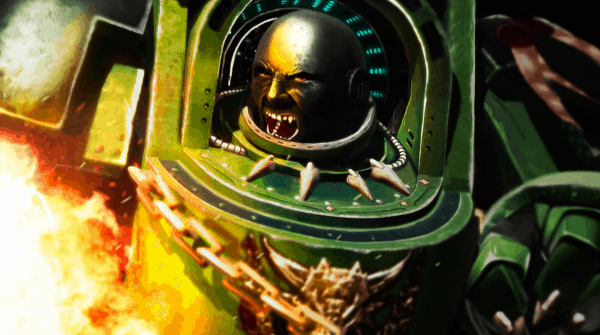 The ideal Salamander army in a 40k build focuses on a mix of heavy infantry, melta-equipped vehicles, and flame-wielding support units. The chapter’s natural toughness makes them an army that can take losses while still dealing massive damage.
A solid core of Intercessors backed by flamers, Eradicators for anti-armor duties, and a mix of Dreadnoughts and Aggressors ensures a flexible but hard-hitting force. Many players opt for Vulkan He’stan as a warlord to get the most out of the army’s unique weaponry.
Key Roles in the Battlefield
In a Salamanders force, every piece should have a job. You’re not just tossing Marines on the table and hoping the green armor does the work for you. The army clicks when your units cover the basics, lock down the midfield, and then use heat and melta to make sure anything that wanders too close gets deleted.
Role-by-unit quick reference
- Battleline / scoring infantry: Intercessors, Heavy Intercessors, Infiltrators
- Flame pressure units: Aggressors (flamestorm), Infernus Squad, Land Raider Redeemer
- Melta hunters: Eradicators, Devastator Squad with multi-meltas, Attack Bikes with multi-meltas
- Dreadnoughts and heavy support: Redemptor Dreadnought, Brutalis Dreadnought, Ballistus Dreadnought
- Terminators and other anvil units: Terminators, Assault Terminators, Bladeguard Veterans
- Support and utility: Apothecary, Captain, Chaplain, Lieutenant
Played well, Salamanders feel rewarding because they control the middle of the table through sheer “nope” energy. You take space, you dare the opponent to contest it, and then you answer with overwhelming short-range firepower. Whether you’re setting hordes ablaze or melting elite units into slag, Salamanders bring a brand of up-close destruction that a lot of other Space Marine Chapters just can’t replicate.
The History of Salamanders 40k
- Great Crusade: Vulkan leads the XVIII Legion with a protect-the-people mindset
- Horus Heresy: Dropsite Massacre at Istvaan V, Vulkan captured by Konrad Curze, Legion nearly shattered.
- Post-Heresy: Rebuilt as a Codex Chapter, stays tightly tied to Nocturne, smaller numbers, but hard-earned experience.
- Current era: Still fighting the long war, the Salamanders way: close-range heat, stubborn durability, and protecting civilians when it matters
Origins and Gene-seed

The Salamanders trace their origins back to Vulkan, one of the Emperor’s rare “good guys” who actually meant it. While some of his brothers leaned into conquest and collateral damage like it was policy, Vulkan believed strength should be used to protect, not just win wars. That mindset runs through the Chapter’s veins, right alongside his gene-seed, which is famous for producing Salamanders who are built like a forge wall: tough, heat-hardy, and naturally wired for craftsmanship.
That genetic legacy is a big part of why Salamanders have the reputation they do. They’re among the most resilient Astartes out there, and they’ve got a look you don’t confuse with anyone else: coal-black skin and glowing red eyes, tied to the brutal conditions and radiation of Nocturne. Intimidating? Sure. But it’s not an “evil Chapter” look. If anything, Salamanders tend to be some of the most honorable Marines in the Imperium, and they take protecting human lives way more seriously than most of their peers. In 40k, that’s basically a personality flaw, in the best way.
And then there’s Nocturne itself, which is less “homeworld” and more “planet-sized endurance test.” Volcanoes, tectonic chaos, monsters, and enough lava to make a Catachan Jungle Fighter raise an eyebrow. Growing up there doesn’t just toughen you up, it rewires your idea of what “hardship” even means. By the time a recruit earns a place in the Salamanders, they’re already seasoned, stubborn, and very familiar with the concept of pushing through misery.
Notable members and Chapter leadership (who’s who)
- Vulkan: Primarch of the Salamanders, the big reason they’re wired for duty and protection
- Vulkan He’stan: Forgefather and the most famous modern Salamanders leader figure
- Tu’Shan: Chapter Master of the Salamanders (modern era)
- Bray’arth Ashmantle: Legendary Dreadnought, basically a walking “don’t stand there” warning sign
- Artellus Numeon: Artellus Numeon is a Salamanders captain and Vulkan’s fiercely loyal bodyguard in the Horus Heresy era.
- Atok Abidemi: is a Salamanders captain and one of the Legion’s steadier, level-headed leaders, the kind of hard-nosed survivor who keeps the XVIII Legion fighting.
The Great Crusade and Horus Heresy
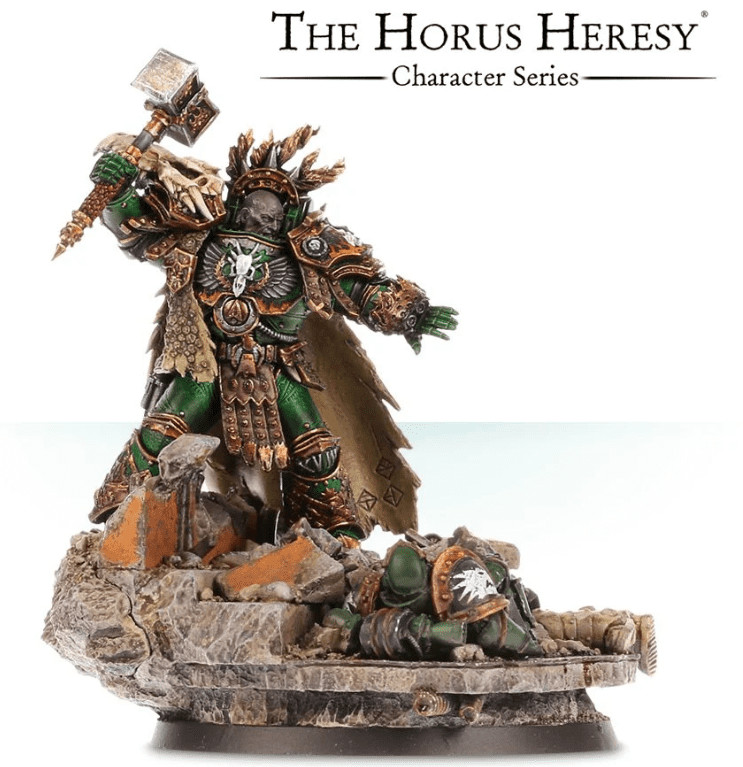 During the Great Crusade, the Warhammer 40k Salamander legion fought alongside the Emperor to reunite humanity. Vulkan, true to his ideals, ensured his warriors acted with honor and protected those in need, even amidst the chaos of war. But when Horus turned against the Imperium, the 40K Salamanders faced one of their darkest moments.
At the Dropsite Massacre on Istvaan V, they, along with the Iron Hands and Raven Guard, were betrayed by the Traitor Legions. Cut down in brutal ambushes, the Salamanders in Warhammer 40k suffered devastating losses. Vulkan himself was captured by the Night Lords’ Primarch, Konrad Curze, and endured unimaginable torture.
Unlike many of his brothers, Vulkan was a perpetual; capable of regenerating from any wound; but that didn’t make Curze’s torment any less painful.
Though shattered by the massacre, the survivors of the Warhammer 40k Salamander legion refused to give up. They spent years rebuilding, guided by Vulkan’s high-level teachings and their commitment to protecting the Imperium.
Post-Heresy Developments
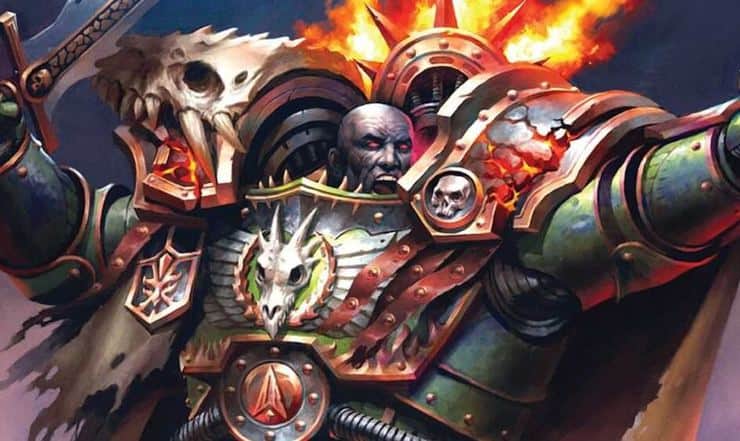
After the Heresy, the Salamanders got reshaped into a Codex-compliant Chapter like everyone else, but they never turned into the kind of distant, fortress-bound warlords you see in a lot of other lineages. They kept their boots on Nocturne, stayed close to the people, and trained the next generation face-to-face instead of acting like the locals are just background NPCs.
That connection isn’t symbolic. It’s the backbone of their culture, and it shows in how they fight and what they value.
They’ve also almost always been smaller in numbers than plenty of other Chapters, and a lot of that comes down to how picky they are. The Salamanders do not churn out battle-brothers at scale. They take recruits who can survive Nocturne, then they take the ones who can survive the training, and then they shape them around Vulkan’s ideals.
So, yeah, they might not have the Ultramarines’ headcount, but the trade-off is quality: Salamanders tend to feel like veterans, not fresh factory output.
Tactically, the theme stays consistent: close-range fighting, heavy heat, and refusing to die on schedule. Flamers and meltas are their signature tools, and in Salamanders hands they’re more than just weapons. They’re part of the Chapter’s whole “purification” mindset, burning away corruption and heresy the same way a forge burns impurities out of metal.
That’s why the models lean so hard into the look, too: flame motifs, drake-scale cloaks, and hand-crafted details that scream “this armor was earned.”
Salamanders 40k Art and Symbolism

Salamanders imagery pretty much sells the Chapter in one glance. Dragon iconography, forge-crafted weapons, drake-skin cloaks, and that “we came straight from the anvil to the battlefield” vibe all reinforce the same story: resilience, honor, and a very practical relationship with fire. Their roaring dragon chapter badge ties it all together, a nod to Nocturne’s legendary beasts and the fact that Salamanders do not show up to fight politely.
Horus Heresy era visuals
This is where the “legion forged in catastrophe” look really lands. Art from the Heresy side leans into ash, heat-haze, and battered plate, with Salamanders framed as survivors pushing through hellish conditions.
Classic 40k era visuals
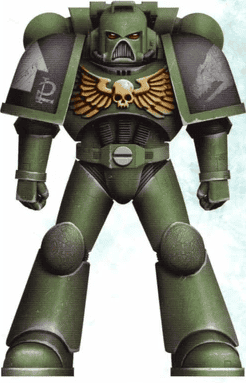
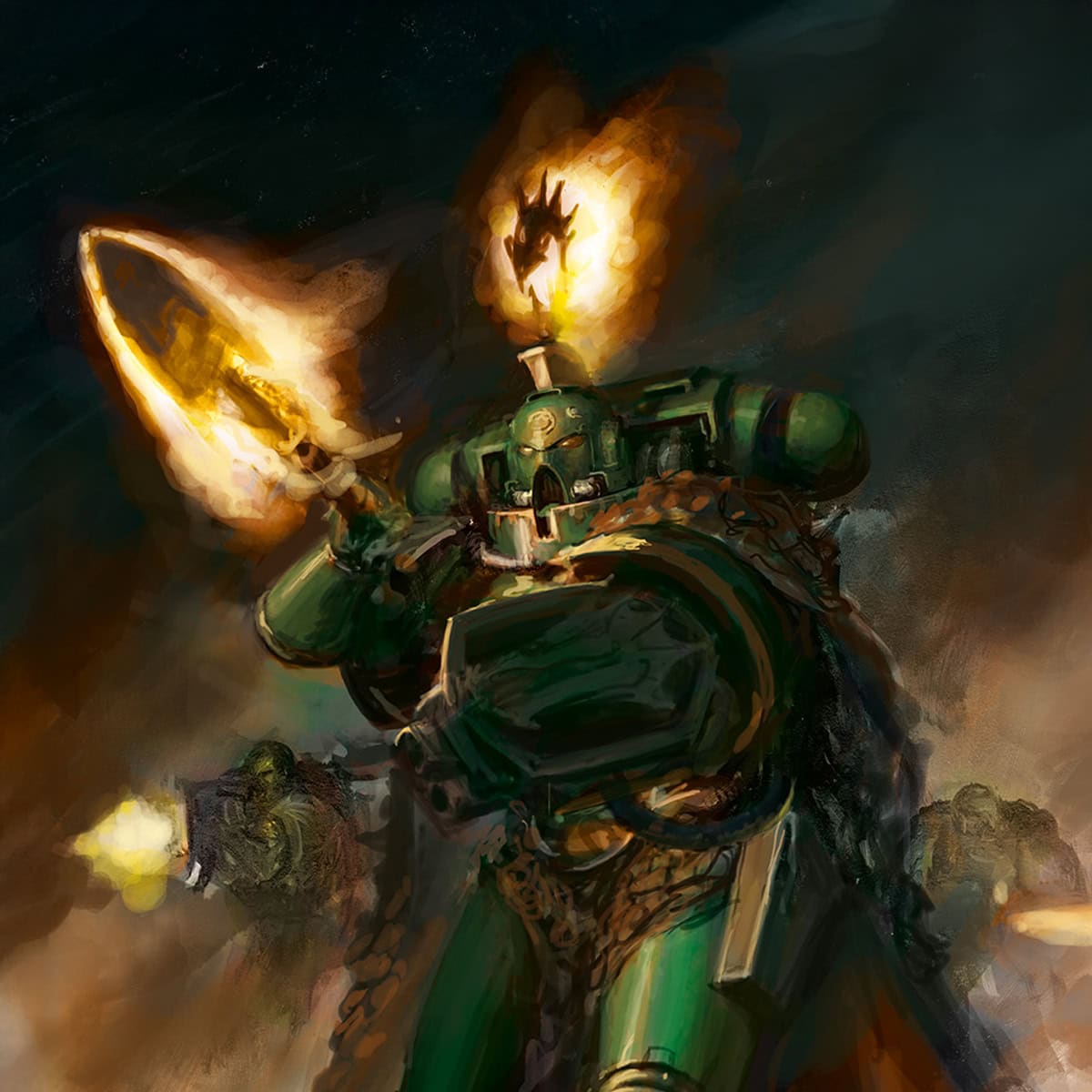
This is the classic Salamanders look most people recognize: bold green armor, fiery weapon glow, and drake-scale cloaks that make them feel more primal than gothic. Where other Chapters go heavy on purity seals and cathedral vibes, Salamanders lean into fire, steel, and craftsmanship. It’s less “holy knight” and more “master smith who also happens to be a super soldier.”
Modern 40k era visuals

Modern-era depictions crank up the forge details. More ornate flame motifs, more “hand-made” personality in the gear, and a stronger contrast between the bright green plate and brutal heat-based weapons. This is the era where Salamanders often look like walking icons of their own culture: protective, unbreakable, and ready to turn a warzone into a kiln.
How the books paint the picture
In Salamanders novels and stories, the visuals hit just as hard even without the art. You get Marines standing in infernos like it’s bad weather, armor reflecting molten glare, and weapons turning the battlefield into a furnace. The best part is the contrast: the books tend to underline their humanity, too.
Salamanders are terrifying in combat, but they’re also written as one of the few Chapters that still feels grounded in protecting people, not just winning wars.
Recommended Resources for Salamanders in 40k
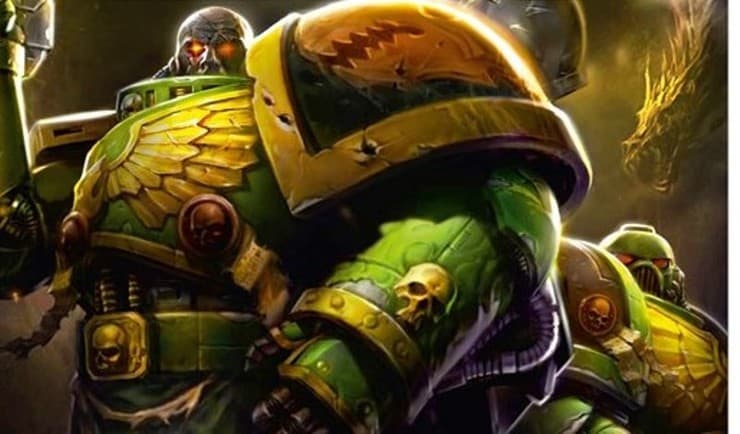
The Salamanders have the full package: killer lore, nasty up-close tactics, and an aesthetic that looks like it crawled out of a forge and chose violence. Between the heat-based war style, the honor-and-humanity angle, and their deep roots on Nocturne, there’s a lot to latch onto, whether you’re here to read, paint, or start putting green power armor on the table.
If you’re looking to go deeper or kickstart a Salamanders army, you’ve got options. Books flesh out the culture, characters, and big moments, while starter boxes like the Combat Patrol route give you a clean on-ramp for the hobby side. However you get there, Salamanders are one of those Chapters that reward the time you put in.
Reference and sources
If you want the citation-heavy, “show me the receipts” version of Salamanders lore, here are solid places to start:
- Lexicanum: deep wiki-style summaries with citations and source lists
- Warhammer 40,000 Wiki (Fandom): broad coverage and easy browsing (useful, but cross-check details as not always perfect)
- Black Library novels and anthologies: primary-source storytelling for Salamanders culture and major characters
- Games Workshop codex entries and supplements: the official backbone for modern-era Chapter framing and tabletop context
Salamanders 40k Books
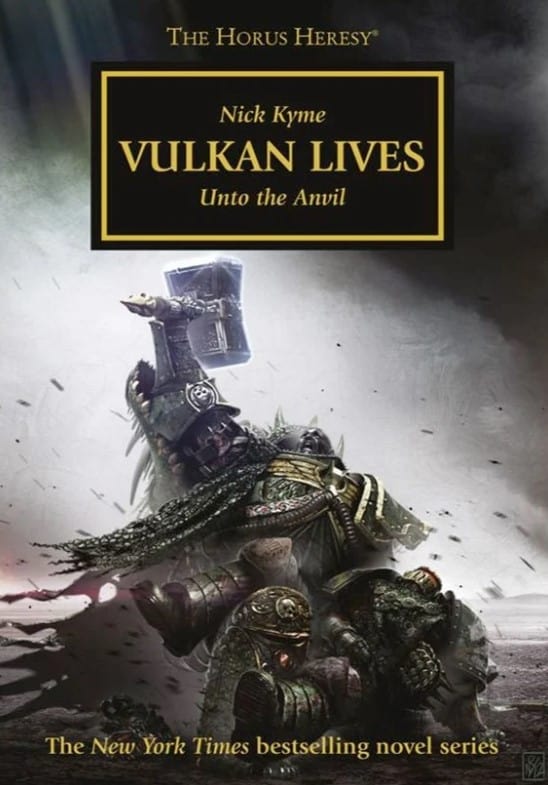
There’s nothing quite like a good Salamanders story when you want that mix of “hold the line against the impossible” action and the quieter stuff that makes the Chapter feel human. The books lean into big stakes, forge-and-fire traditions, and the kind of duty-first mindset that turns Vulkan’s sons into more than just another set of power armor colors.
Snag your new Salamanders goodies and give us a high-five in support! Every qualifying purchase helps Spikey Bits keep the lights on and the fun going.
Start here
- Salamanders (Nick Kyme): A solid entry point that gets you into the Chapter’s day-to-day reality, the brotherhood, and the brutal tests they face. It also puts key names on the board like Da’kir and Vulkan He’stan (often referenced in the Forgefather role).
Expand your reading
- Firedrake (Nick Kyme): Keeps the story rolling with more conflict, more pressure, and more “this is what it costs to be a Salamander.”
- Nocturne (Nick Kyme): Continues the arc while digging further into the Chapter’s connection to Nocturne and the weight of carrying Vulkan’s legacy.
If you want the Primarch side of the story
- Vulkan Lives (The Horus Heresy): One of the key books for understanding Vulkan’s role and the wider Heresy-era context around the Salamanders.
- Deathfire (The Horus Heresy): Follows up with more Vulkan-focused story that fills in the emotional and historical backbone behind the Chapter’s modern identity.
If you’re trying to understand what makes Salamanders tick, this reading path gets you the “who they are,” the “what they’ve survived,” and the “why they still fight the way they do,” without you having to dig through half the library first.
Warhammer 40k Salamanders Starter Kit
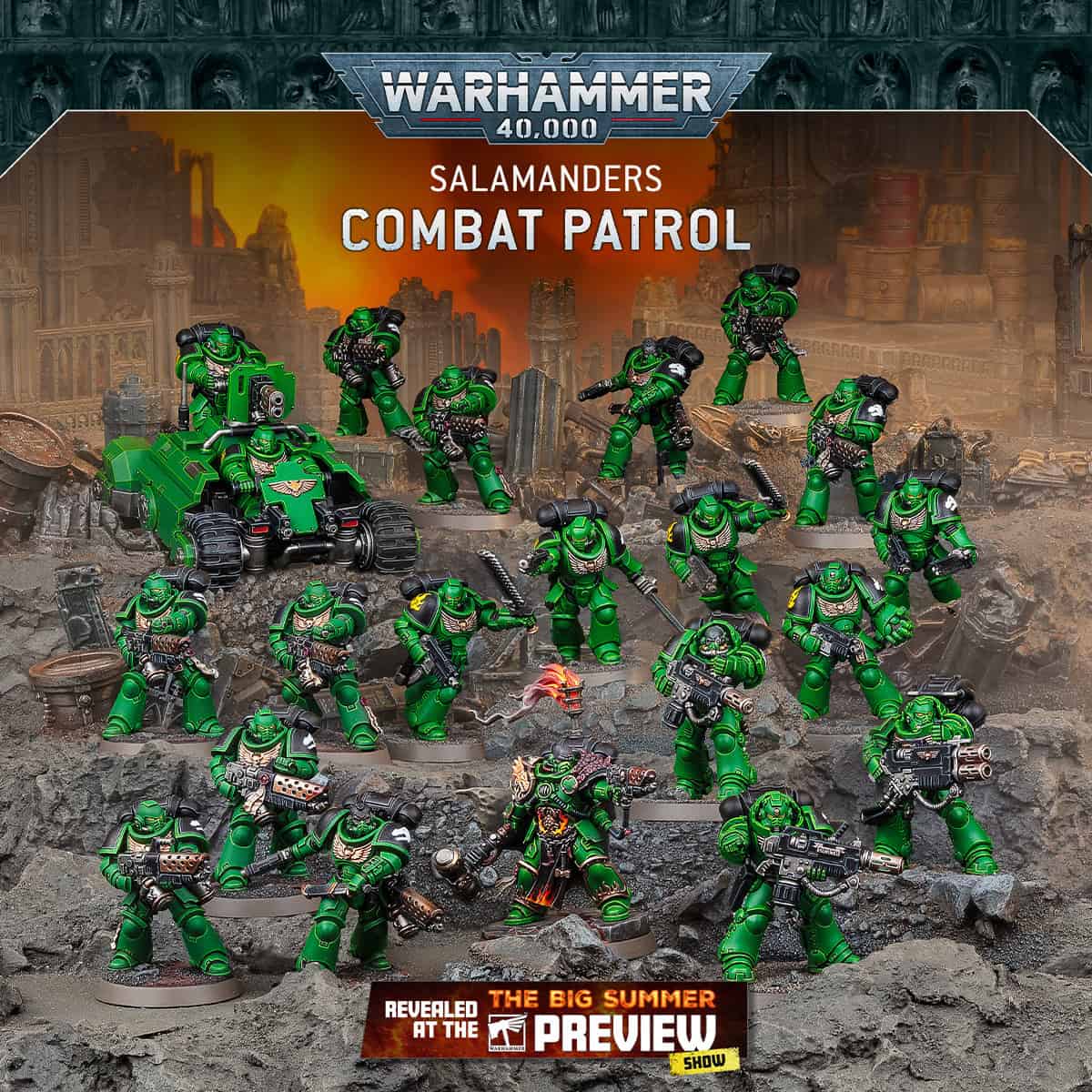
Getting into the Salamander 40k chapter on the tabletop is an exciting prospect. With their devastating close-range firepower and resilience, they make for a force that’s both durable and punishing in combat.
The Warhammer 40k Salamander starter kit (which, unfortunately, is just a combat Patrol right now) is the perfect way to begin building an army that embodies Vulkan’s legacy. Or you can even start with the Space Marines Combat Patrol as well.
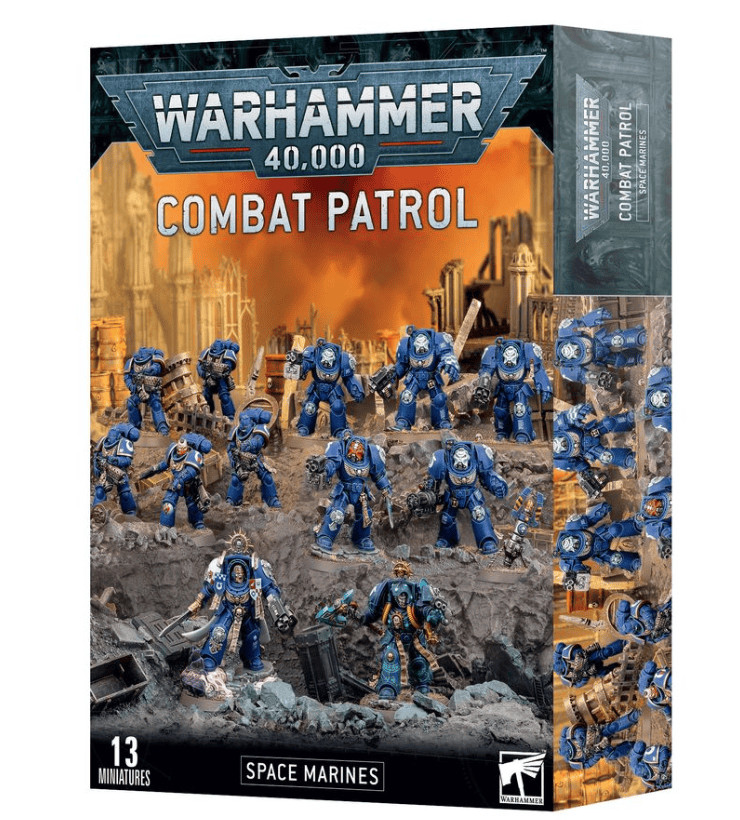
Most starter kits include a solid foundation of Primaris Marines, which fit perfectly with the Salamanders 40k army playstyle. Intercessors provide a reliable core for holding objectives, while Aggressors, armed with flamestorm gauntlets, fit the chapter’s love for fire-based warfare.
For those looking to expand beyond the basics, adding Eradicators and a Redemptor Dreadnought can bring extra firepower. The Salamander 40k models often feature unique details, such as flame motifs and drake-skin cloaks, making them stand out on the battlefield.
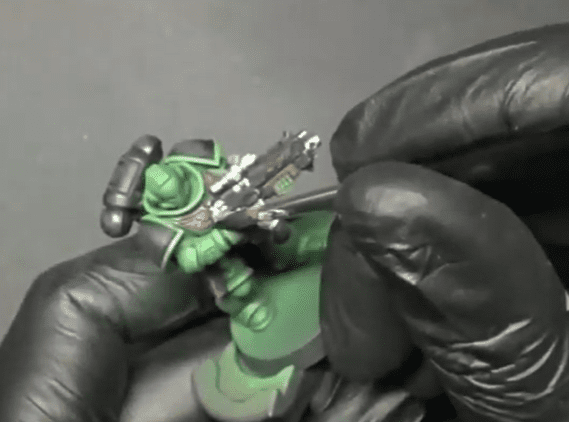
Painting a Salamander army 40k is also a fun challenge. The chapter’s signature green armor, darker skin, combined with fiery weapon effects and lava-themed bases, creates a striking look and some racial diversity among the Space Marines. Many fans take inspiration from 40k Salamander art, incorporating flame patterns and intricate detailing to give their army a unique touch.
GW’s Warhammer 40k Salamanders’ art also offers great inspiration for painting and customizing models. From battle-worn armor to banners covered in ancient Nocturnean symbols, there are countless ways to bring the chapter to life on the tabletop.
For anyone looking to start collecting, playing, or reading more about the wh40k salamanders, these resources offer a solid path forward. Whether through lore, miniatures, or stunning artwork, there’s always more to enjoy about one of Warhammer’s most underrated Space Marine chapters.
Salamanders: What it All Means
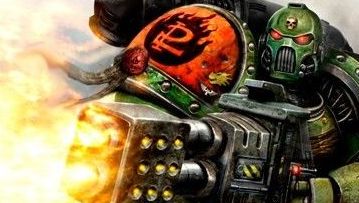
The Salamanders bring a mix you don’t see often in 40k: brutal firepower, stupid-level resilience, and a genuinely rare dose of humanity. While plenty of Chapters are happy to write off civilians as “acceptable losses,” Salamanders take the protect-the-people part seriously.
Nocturne’s volcanic nightmare of a homeworld only sharpens that edge, forging Marines who thrive in extreme conditions and refuse to fold when the fight gets ugly.
They also stand out because everything about them lines up. The flame-and-melta combat style matches the forge culture. The master-crafted wargear matches the Promethean Cult mindset. And the moral code gives them a distinct identity in a setting full of cold, detached killers.
Add in the visuals, green armor, drake motifs, flame details, and Salamanders look as good on the table as they do in the lore. Toss in legendary names like Vulkan He’stan and you’ve got a Chapter that stays memorable for more than just the paint scheme.
Quick recap
- Tough, heat-hardy Marines who love close-range firepower
- Craftsmanship and the Promethean Cult shape their culture and wargear
- One of the few Chapters that treats protecting civilians as a core mission, not a bonus objective
Next steps
- Lore: hit the reading list for Salamanders (Nick Kyme), then branch into Firedrake and Nocturne
- Tabletop: start with mid-to-close range pressure and build around units that like flamers, meltas, and holding the midfield
- Collecting and hobby: Combat Patrol is the clean on-ramp, then lean into flame effects, heat-staining, and drake-scale details to make the army pop
FAQ’s
What makes Salamanders different from other Space Marines?
Most Space Marine Chapters put the war first and everything else somewhere in the “acceptable losses” pile. Salamanders do not. They’re wired to protect people, they stay connected to Nocturne’s communities, and they treat craftsmanship like a core virtue, not a hobby. On the battlefield, they’re also known for leaning into flame and melta weapons, so their “close-range problem solving” tends to look like a controlled inferno.
Who are the successors of the Salamanders?
Compared to Chapters like the Ultramarines, Salamanders have far fewer widely recognized successor Chapters in the lore. Some sources hint at possible successors, but it’s not the big, neatly labeled family tree you get elsewhere.
What is the motto of the Warhammer Salamanders?
Salamanders are more about a guiding philosophy than a clean, stamped slogan. Their whole vibe is Vulkan’s “strength tempered by compassion,” wrapped in duty, honor, and protection. The line you’ll most often see associated with them is: “Into the fires of battle, unto the anvil of war.”
Are Salamanders Space Marines Black?
Salamanders are described with charcoal-black skin and glowing red eyes because of how their gene-seed expresses and the extreme conditions tied to Nocturne. It’s not an ethnicity callout. It’s a physiological change, basically a grimdark adaptation that comes with their lineage and environment, and it’s one of the reasons they’re so visually distinctive in 40k art and fiction.
Final Thoughts From us on 40k Salamanders Space Marines
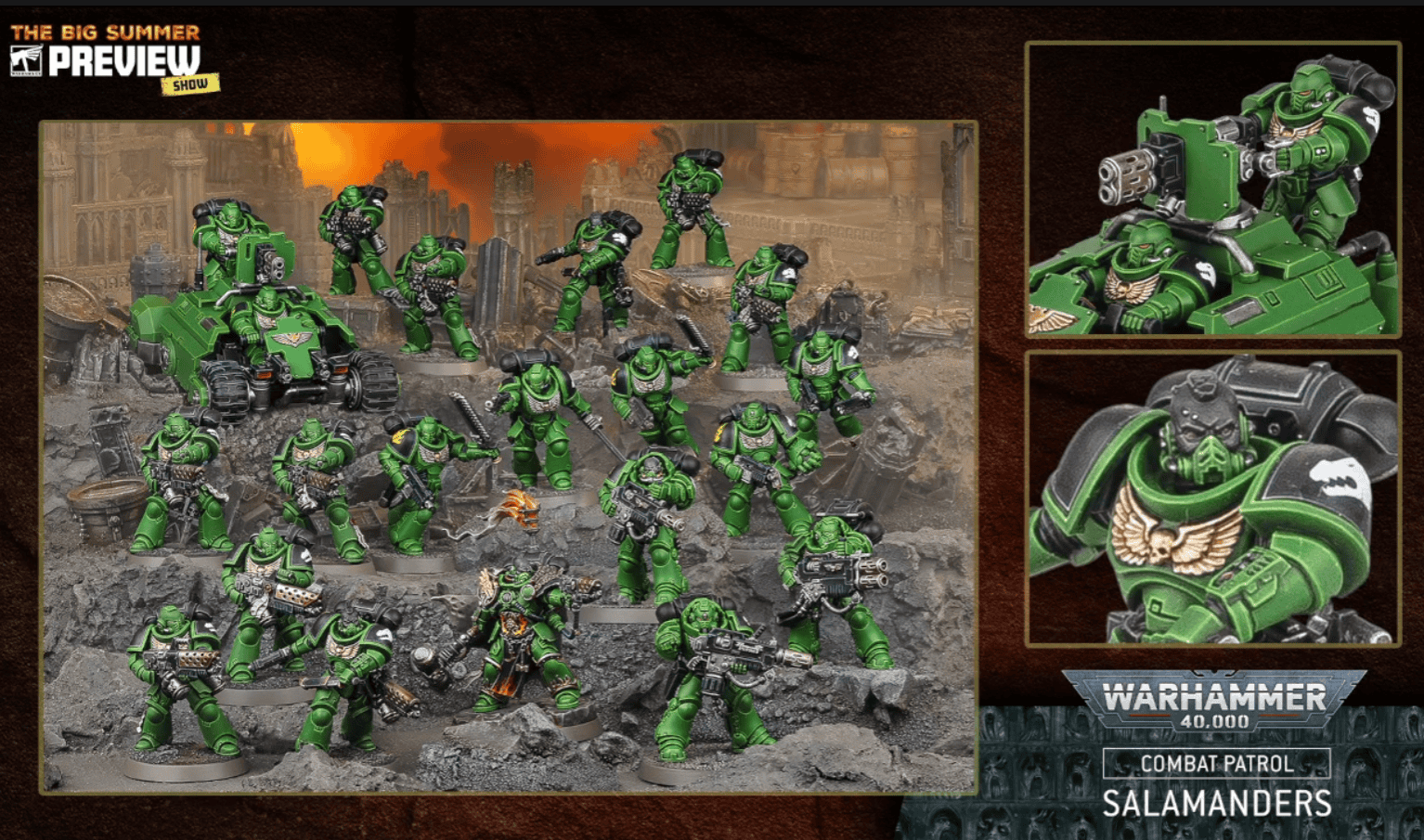
The Salamanders Warhammer 40k chapter may not get as much attention as some of the flashier Space Marine legions, but their rich lore, striking visual design, and brutal combat tactics make them a standout faction.
Whether through Salamanders 40k books, stunning 40k Salamander art, or tabletop armies built with Salamanders 40k models, this chapter continues to capture the imagination of players and readers alike. Their resilience, craftsmanship, and sense of duty set them apart, making them a perfect choice for anyone looking for a Space Marine force that embodies both fire and honor.
Learn to Play Space Marines in 40k Here!
Why do you think the Salamanders get overlooked sometimes in Warhammer 40k? Will you be painting and playing them on the tabletop?