Citadel Contrast paints and their alternatives can make painting your army super fast. Here’s our guide to using them, along with the pros and cons of each brand.
If you’re looking to get better results faster, you can’t go wrong with learning how to use Citadel Contrast paints or seeing which of their best alternatives may work for you. This guide breaks down what these paints actually do, how to apply them without making a mess, and which options are worth a look if you want similar results without burning up your hobby dollars.
But like we also said, we’ll look at some of the best alternatives on the market so you can make a smarter call before starting your next project.
The Ultimate Guide to Citadel Contrast Paints & Their Best Alternatives
Updated on October 2 2026, by Rob Baer with new paints, charts, and product info.
TL;DR:
- Best for: textured areas like fur, cloth, skin, and batch painting whole armies fast
- Hard mode: smooth armor panels, where streaks and pooling show up fast
- Biggest “looks different in person” variable: primer choice, lighting, and varnish
- If you only read one section: jump to Choosing the Right Basecoat and Common Mistakes
This guide covers a lot, including what contrast type paints are, how to apply them, etc, so you can skip straight to the section you need instead of wandering around the page.
Introduction to Citadel Contrast Paints
 Imagine you’re a budding miniature painter standing before a mountain of unpainted plastic. Intimidating, right? Enter Citadel Contrast Paints, your new best friend in the world of miniature painting.
These magical concoctions are designed to make your painting journey smoother and more enjoyable, especially if you are a new painter.
How we’re defining “Contrast” here: We mean Citadel (technically Warhammer color now) Contrast paints first, but also the whole batch of speedpaint-style alternatives built to get color, shading, and quick tabletop results in one pass. Just keep in mind that not every brand behaves the same, as some cover more like a true one-coat paint, while others lean closer to a glaze or tinted ink.
What Are Citadel Contrast Paints?
Okay, so what exactly are these paints, and why is everyone still talking about them?
Contrast paints are a type of acrylic paint with a twist. They’re formulated to create both a base color and shading in one go. They’re translucent, so the primer color and lighting change the final result. Which means you can slap a single coat of paint onto your miniature, and voila.
You’ve got a shaded, highlighted model without the usual pile of layers and cleanup. Think of them as a shortcut tool that still looks great, especially when you use them “as intended.”
The History of Citadel Contrast Paints

The tale of Contrast Paints begins in 2019 when Games Workshop, the masterminds behind Warhammer, decided to make miniature painting less intimidating for new hobbyists and faster for everyone else. And thus, Citadel Contrast Paints were born.
When they hit the market, painters lost their minds for good reason. Getting strong tabletop results with far less effort changed the hobby for a lot of people. Contrast paints lowered the barrier to entry and made it much easier to move an army from grey plastic to something that actually looked finished.

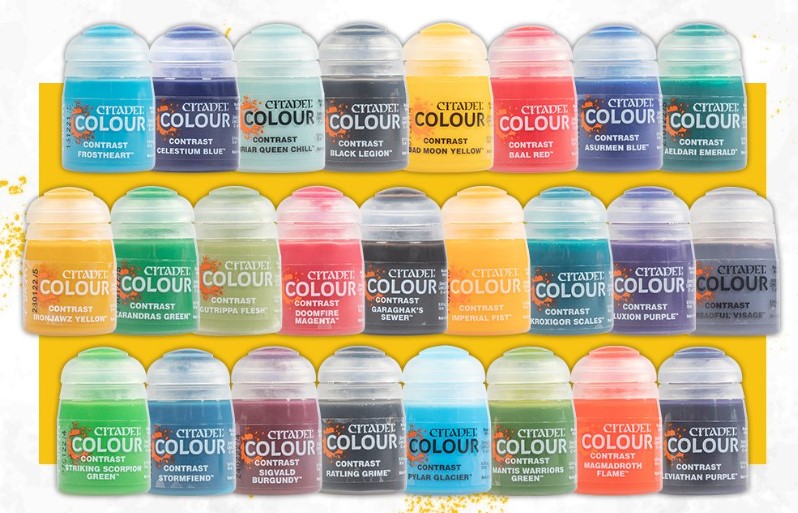
Six of the Contrast colours from Games Workshop were added in 2022, from Frostheart to Luxion Purple.
Why Use Citadel Contrast Paint (and Similar ‘One-Coat’ Paints)?
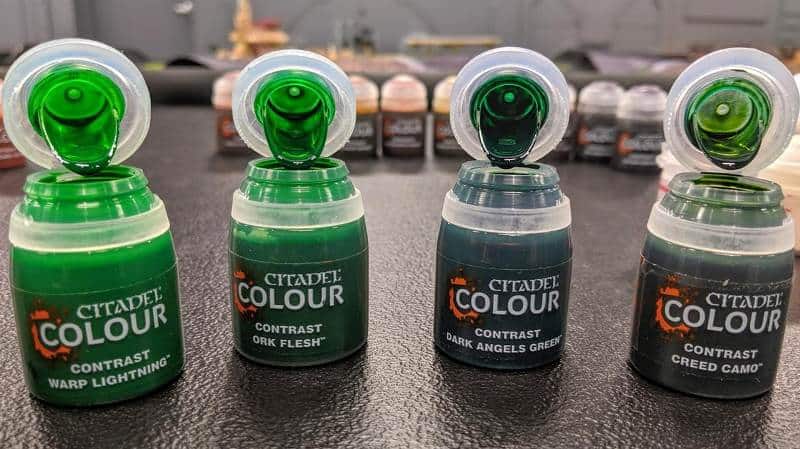
- Speed: you can basecoat and shade at the same time
- Beginner-friendly: they help newer painters get solid results faster
- Excellent on textures: fur, cloth, skin, scales, and muscles all benefit
- Great for armies: batch painting gets much less painful
Traditional painting often means applying a base coat, then a wash, then a highlight, and maybe even more highlighting. Contrast-style paints cut that workflow down hard, which is a huge win if you’re staring at piles of unpainted Warhammer 40k or Age of Sigmar models.
They’re also flexible. They work best on textured surfaces, but with a little control, they can still help on smoother areas too. So, if you want fast progress without your models looking flat, they absolutely earn their spot on the desk.
In short, Citadel Contrast paints are one of the easiest ways to get miniatures looking good quickly, and that’s why people still keep reaching for them.
How to Use Citadel Contrast Paints
How these examples were tested/photographed:
- Primers used: Grey Seer, Wraithbone, and Corax White
- Coverage shown: one coat unless otherwise stated
- Dry time before photos: allow a full dry before comparing results
- Lighting: consistent daylight-style lamp / even bright lighting
- Keep in mind: varnish and warm or cool lighting will shift the final appearance
Citadel Contrast Paint Chart: Grey Seer vs Wraithbone vs Corax White
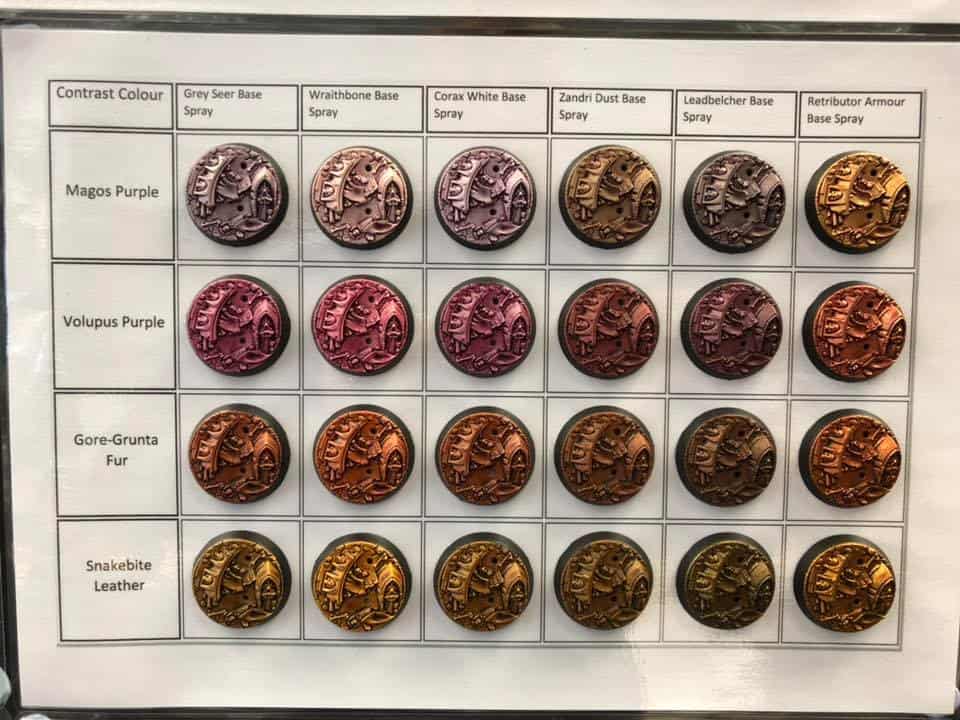
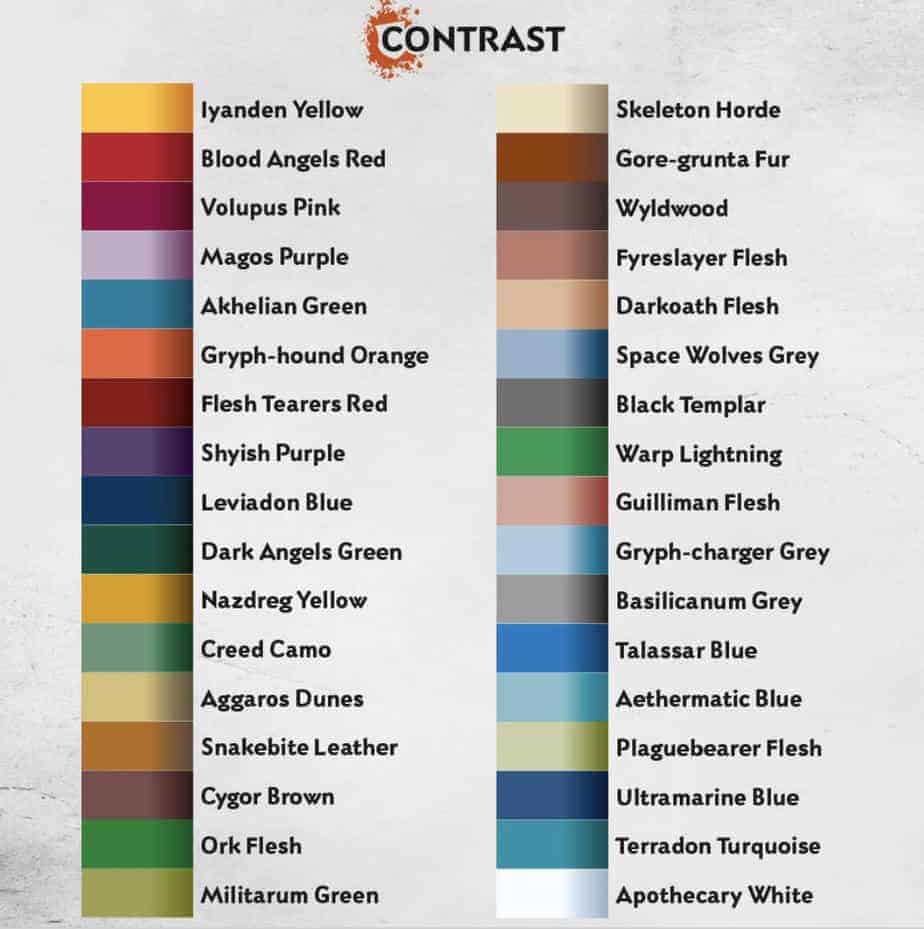
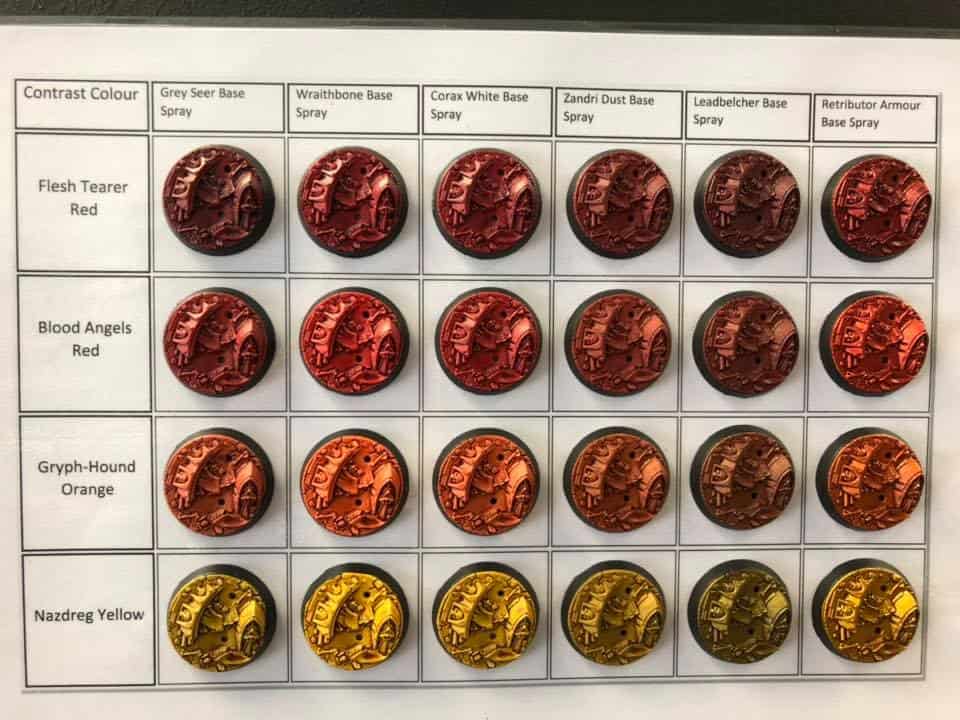 Citadel Contrast paint chart: each Contrast colour over Grey Seer, Wraithbone, Corax White, Zandri Dust, Leadbelcher and Retributor Armour spray.
Obviously, Grey Seer is the more grey primer, Wraithbone is a bright tan, and Corax White is the purest white you’ll find among the paints.
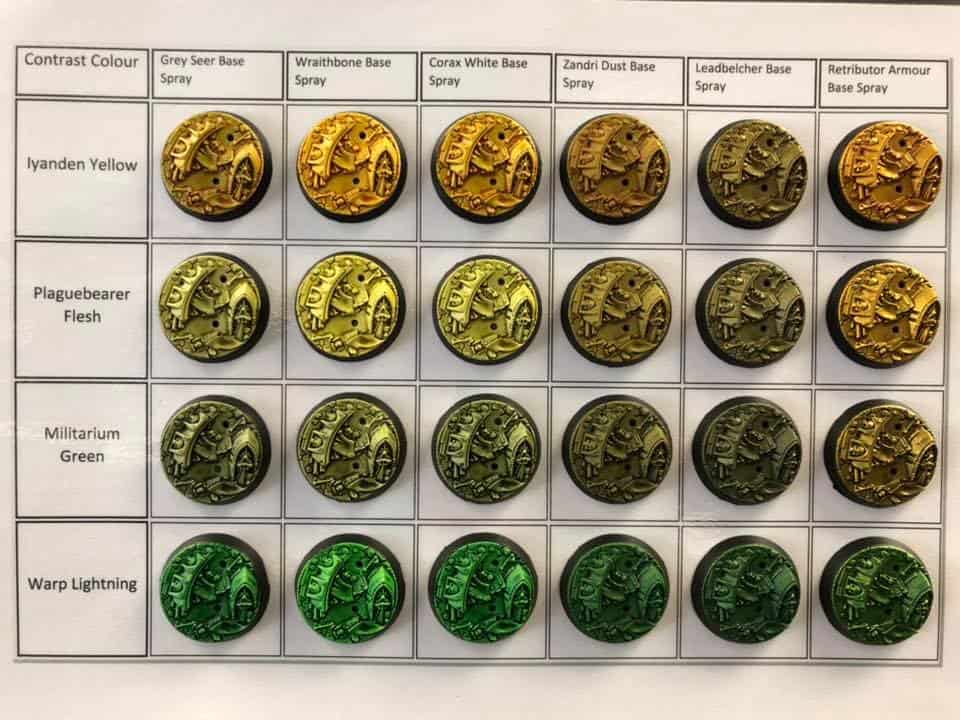
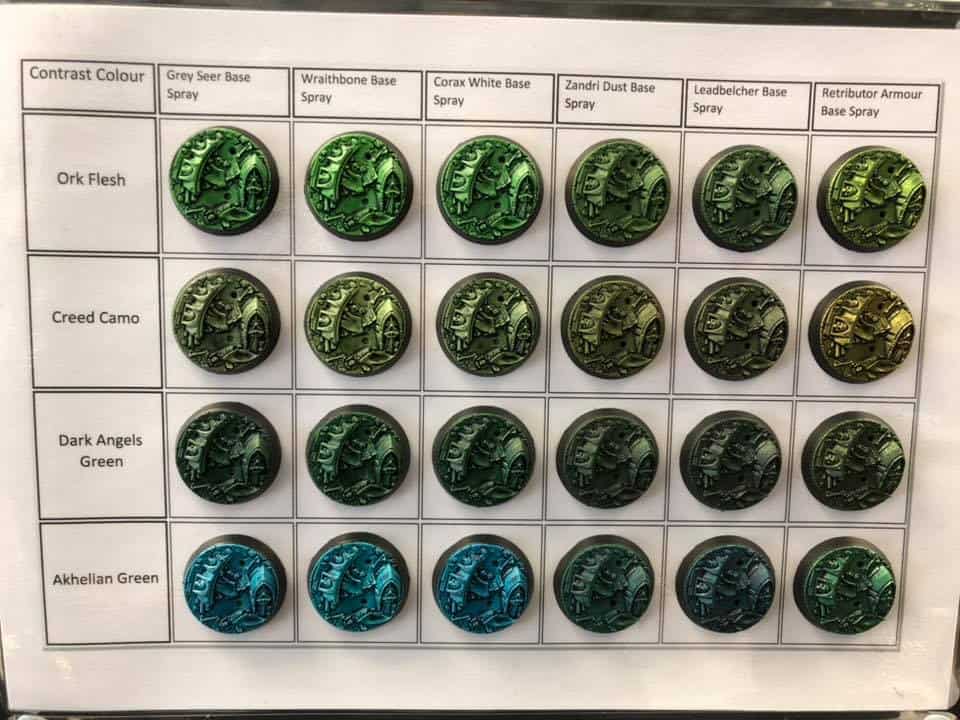
You can see that, generally speaking, the Grey Seer primer produces a darker hue, while Corax White has the most vibrant, bright color. Of course, that leaves Wraithbone in the middle of the road.
| Primer choice | Best result |
| Corax White | Brightest and punchiest finish |
| Wraithbone | Warmer, richer colors |
| Grey Seer | Muted, grimier, darker read |
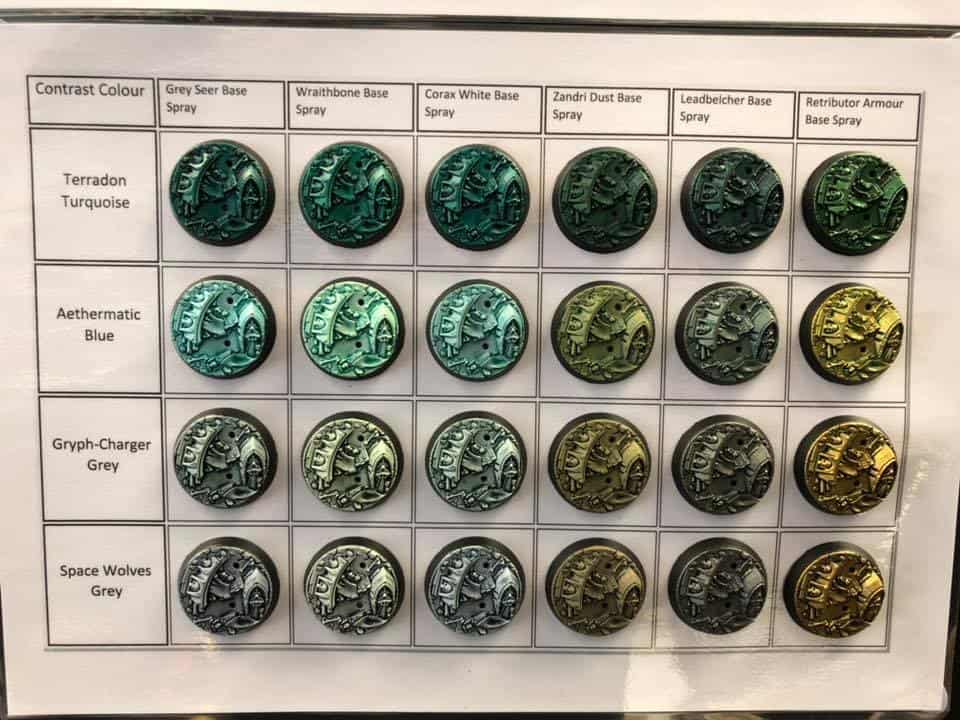
Alright, let’s get into the nitty-gritty of using these magical paints. First things first: the basecoat. Think of the basecoat as the canvas for your masterpiece. For Contrast paints, white or bright basecoats are your best friends.
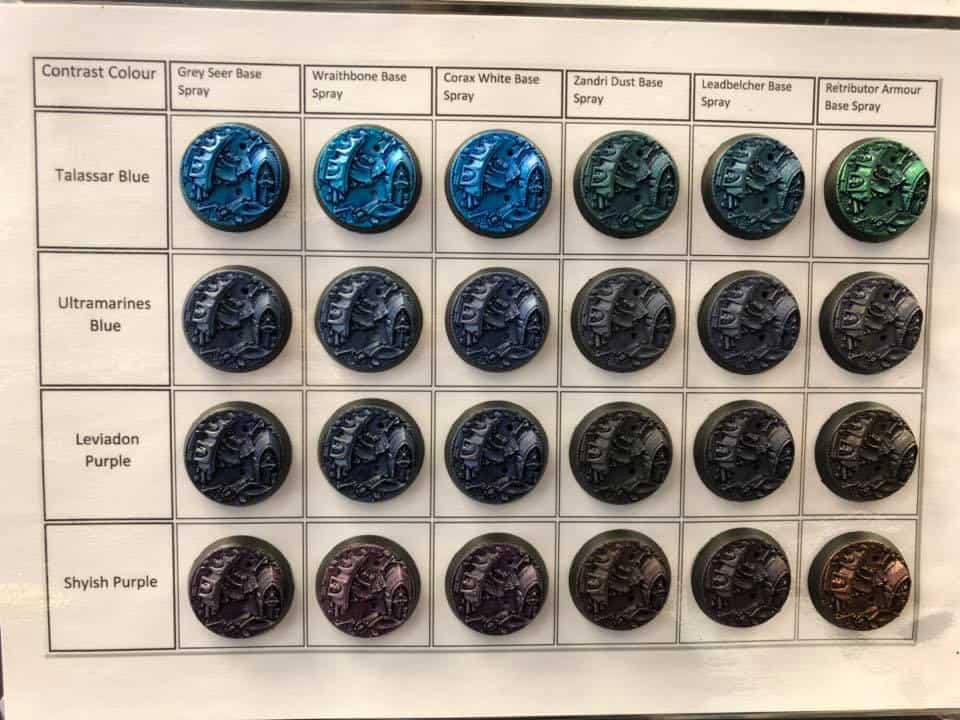
Imagine trying to paint a rainbow on a blackboard. Not the best idea, right? The same thing happens here. Contrast paints work their magic over light colors, giving you those stronger, cleaner hues.
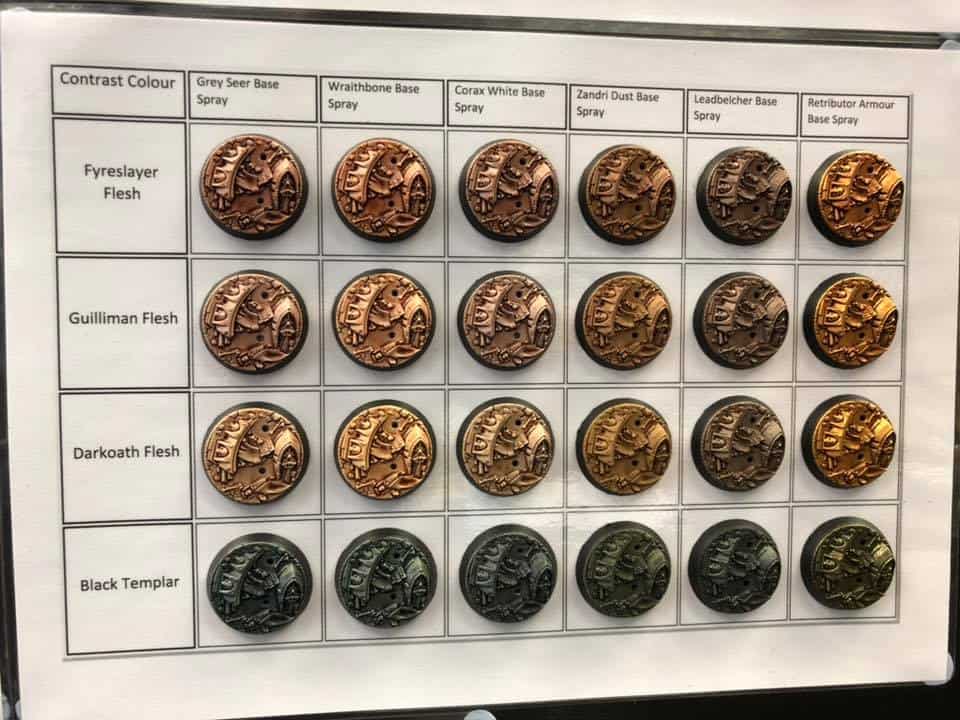
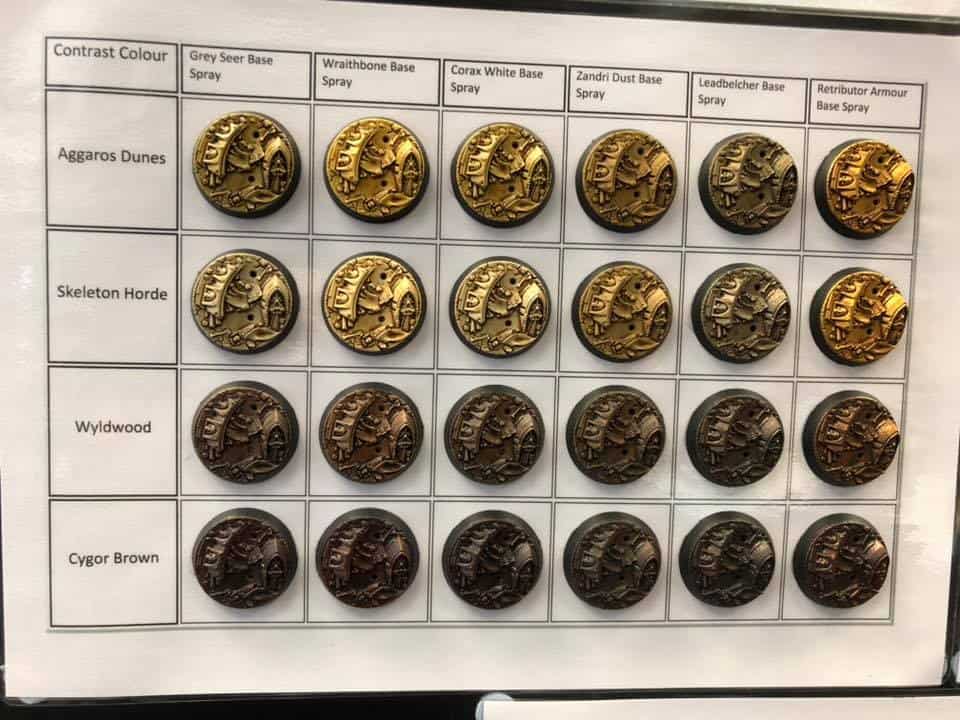
Pro tip: different shades of white and off-white can slightly shift the final color, making the same paint feel warmer, cooler, brighter, or dirtier without changing the bottle.

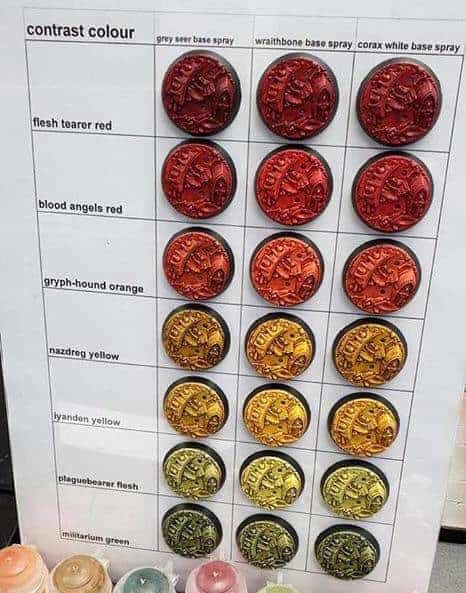 These pictures come from a GW table in store. They show the original Contrast range over Grey Seer, Wraithbone and Corax White base spray. Skeleton Horde, the go-to bone colour, is in the third chart
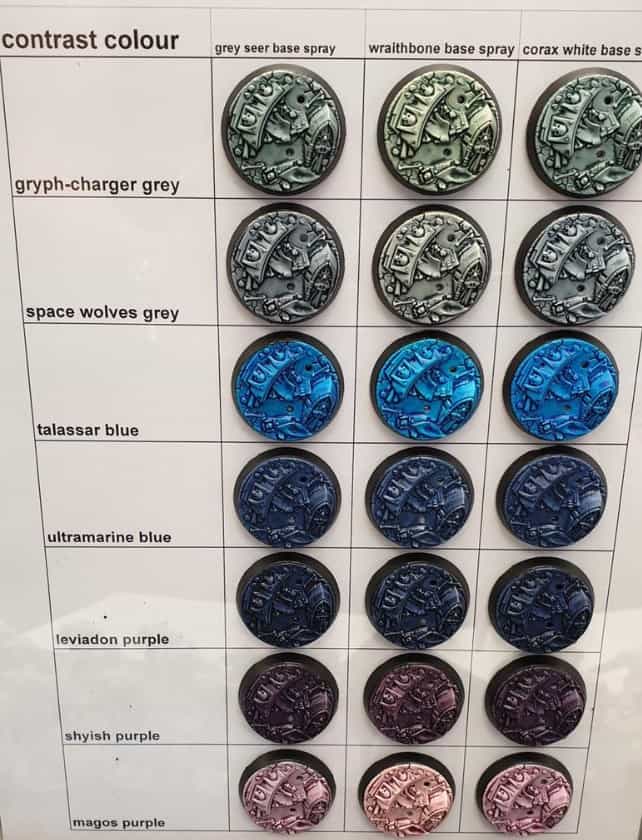
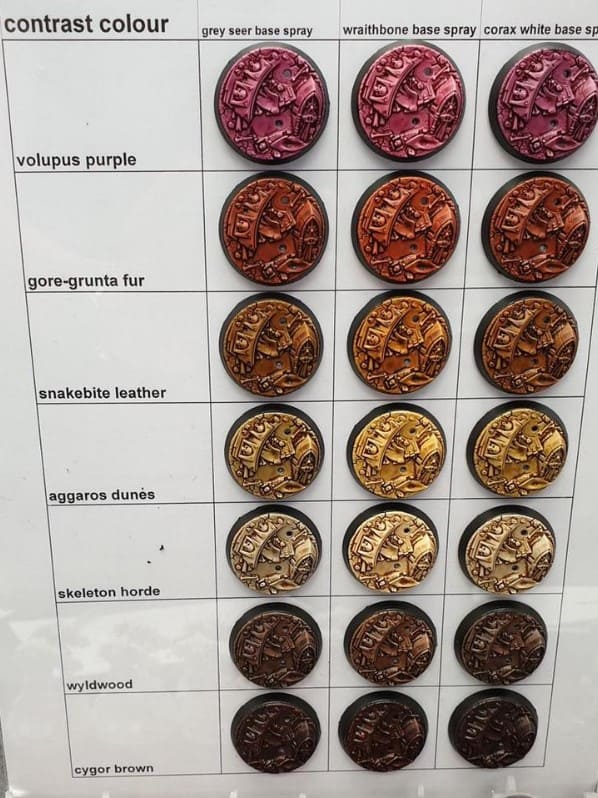
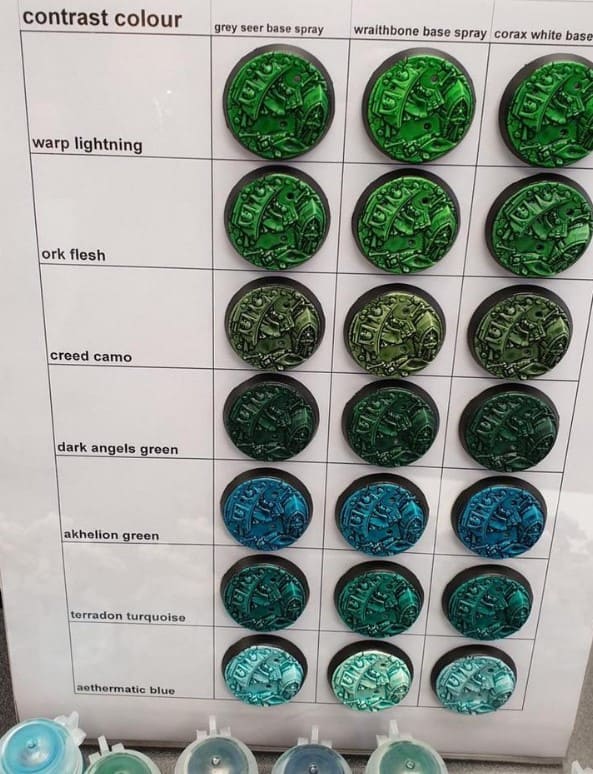
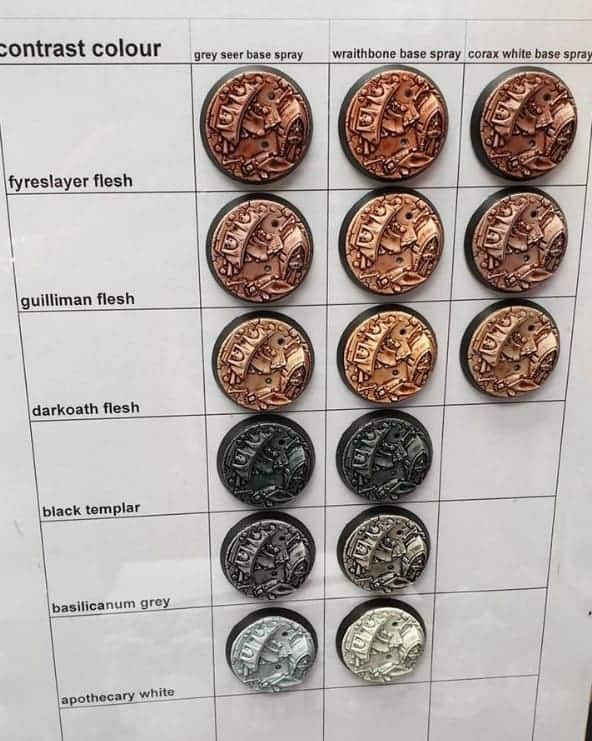
Hopefully, this side-by-side comparison of primers and Citadel Contrast paints helps you decide which primer matches the look you actually want.
Applying Contrast Paints
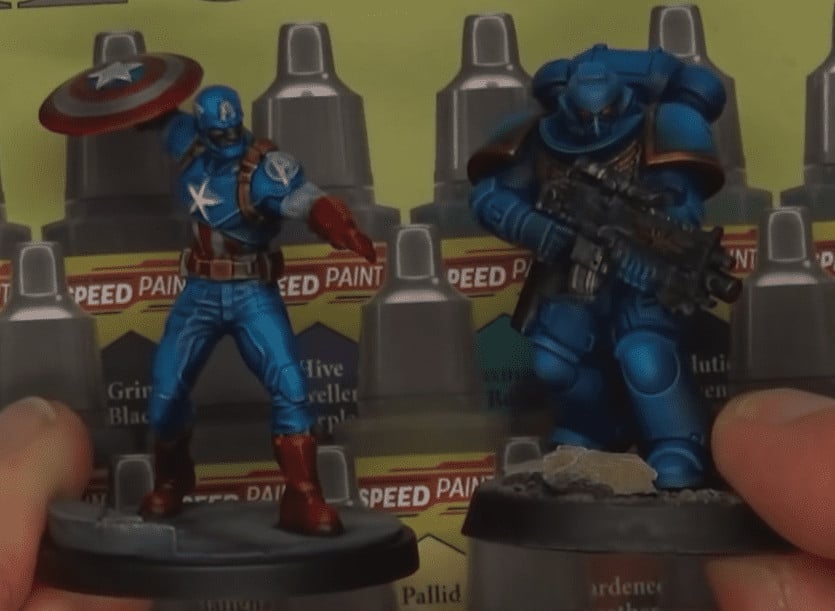
Now that you’ve sorted your basecoat, it’s time for the fun part: applying the Contrast Paints. Grab your favorite brush, a medium-sized one usually works great, and let’s get to it.
The key here is to apply the paint generously but not excessively.
- Load the brush: get enough paint on it so it flows, not so much that it floods
- Lay the paint down: work section by section instead of chasing the whole model at once
- Wick pooling: if paint gathers too hard in one recess, pull it back with a clean brush tip
- Do not overwork it: once it starts settling, leave it alone
- Let it dry fully: do not judge the finish while it is still wet
You want it to flow into the nooks and crannies of your miniature, creating natural shadows and highlights.
Think of it like spreading jam on toast. You want even coverage, but you do not want it dripping off the edges. Start with larger areas and work down into the smaller details.
If you’re painting a model with lots of textures, like fur or scales, you’re in great shape. The paint will do a lot of the work for you, pooling in the recesses and highlighting the raised areas.
Common Mistakes (Pooling, Streaking, and Overworking) + Quick Fixes
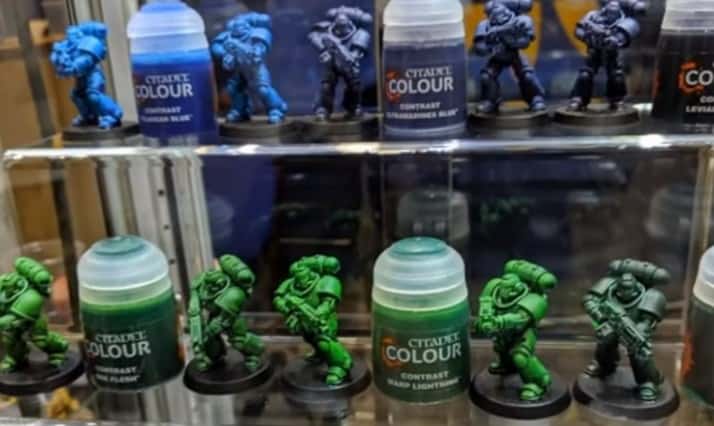
Even with the magic of Contrast paints, it’s easy to hit a few potholes. Here are the big ones and how to clean them up fast.
- Mistake #1: Too Much Paint. It’s tempting to slather on a thick coat, but too much paint can pool excessively in recesses, obscure details, and create a blotchy finish. Quick fix: rinse your brush, dry it off, then touch the tip to the pooling area and wick the excess away.
- Mistake #2: Wrong Basecoat Choice. A darker or duller primer can kill the look before the paint even has a chance. Quick fix: test one color over your chosen primer first, and switch to a brighter base if the result looks muddy.
- Mistake #3: Not Letting Paint Dry. Patience matters here. If you touch or layer too early, you’ll get smudging and torn-up patches. Quick fix: let the first coat fully dry before deciding if it needs another pass.
- Mistake #4: Overworking the Paint. Once you’ve applied it, let it settle. Pushing it around too much causes streaks and uneven coverage. Quick fix: leave it alone, let it dry, then do a second controlled pass only if it actually needs it.
Keep those in mind, and Contrast paints get a lot less scary in a hurry.
Advanced Techniques with Contrast Paints
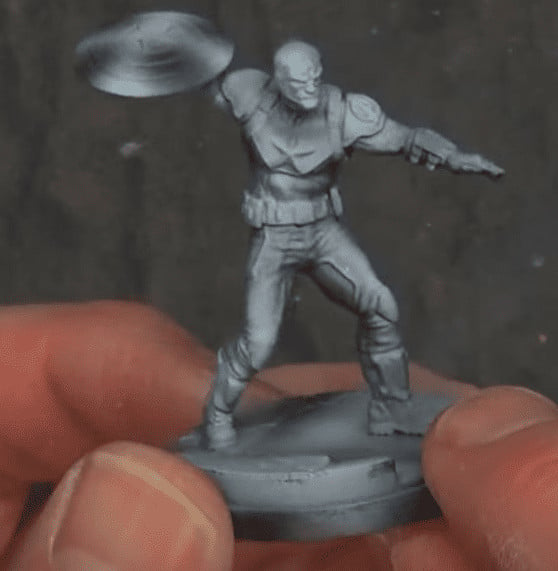
Once you’ve got the basics down, these paints get way more interesting. The easiest way to think about advanced use is as a few simple recipes:
- Recipe 1: zenithal or slapchop for extra depth
- Recipe 2: Contrast over metallics for colored metal effects
- Recipe 3: glazing and layering with medium for smoother transitions
Creating Depth & Highlights (Zenithal / Slapchop Workflow)
Contrast paints already create shadows and highlights, but you can push that effect much harder with zenithal or slapchop prep.
Basically, you spray your model with a black basecoat, then build the light back in from above. Here’s a quick checklist/workflow:
- Black
- Grey drybrush
- White drybrush
- One coat of Contrast
- Let it dry fully
- Optional second pass, where you want a richer color
Once that pre-shading is in place, apply your Contrast paints as usual. The paint flows into the recesses and reacts to the lighter and darker underpainting, giving you stronger depth with almost no extra color work.
The result is a model with dynamic contrast that makes it look like you spent far more time layering than you actually did.
Using Contrast Paints on Different Textures
Miniatures come loaded with different textures, and this is where Contrast paints really earn their keep.
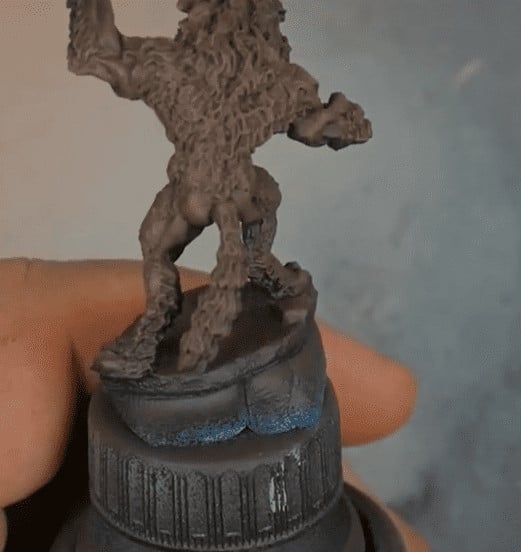
Model Painted by ImpendingDuff
Contrast paints are excellent for textures like fur, cloth, or scales. The paint naturally sinks into recesses to create shadows while pulling off the raised areas to create highlights.
When painting fur, start with a light basecoat, then apply your Contrast paint and let the texture do the heavy lifting. Cloth gets nice folds and creases with almost no effort, and scales can look surprisingly rich right away.
Armor Panels: How to Avoid Tide Marks
Smooth surfaces like armor plates need a little more control. Apply a thin, even layer, work one panel at a time, and let it dry completely before deciding whether it needs another coat. You can also mix in Contrast Medium or come back with traditional acrylic highlights to tighten the finish.
Incorporating Metallics (Colored Metallics / ‘Candy Coat’ Effect)
If you look to the right of the chart, you can see contrast colors used over metallics.
- Gold + red Contrast: great for a deep candy red effect
- Silver + blue or green Contrast: excellent for cool-toned colored metallics
Metallics and Contrast paints can make some very slick effects. Start with a metallic basecoat like silver or gold, then apply your chosen Contrast paint over the top.
For example, if you want to give your Chaos Space Marines a blue-green metallic look, start with a silver base, brighten it with a lighter metallic drybrush, and then glaze over it with a teal Contrast paint like Aethermatic Blue.
For that candy red vehicle look, start with a rich gold basecoat like Retributor Gold, then apply Baal Red over it. Because Contrast paints are translucent, the metallic base still shines through while picking up that tinted color.
That combo is one of the easiest ways to make a model look fancier than it really has any right to.
Now that you’ve seen the techniques, let’s talk alternatives and where each one makes the most sense.
Best Alternatives to Citadel Contrast Paints
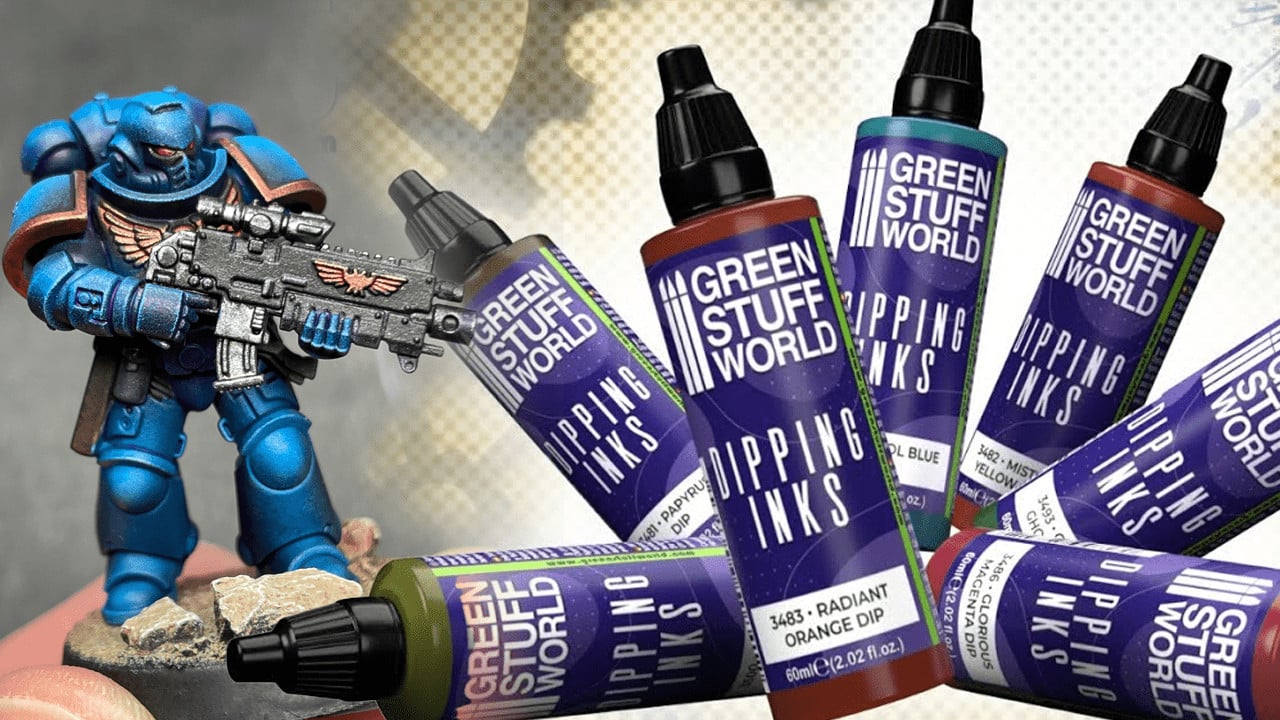
Lots of companies have started producing Citadel Contrast-style paints, and there are some solid options now, depending on whether you want a true one-coat solution, a glaze-style finish, or just better value per bottle.
Ever since Games Workshop introduced a faster painting system, the rest of the market has responded with some pretty cool products. Some are more like true one-coat solutions, such as Speedpaint, while others feel closer to contrast or tinted dipping systems, such as Green Stuff World’s dipping inks.
So, check out all the Citadel Contrast paints and the best alternatives for miniatures so you don’t spend money on something you don’t really want or need.
| Range | Best for | Finish tendency | Handling note | Price per ml (rough) | Best workflow |
| Citadel Contrast | Rich color range, easy pickup, textured surfaces | Saturated translucent finish | Pot format, benefits from careful pooling control | ~$0.43/ml | Classic Contrast workflow, metallic tinting |
| Monument Hobbies 1-Step | Fast army painting & matching Pro Acryl colors | Built for solid single-coat coverage | The Secret Sauce can turn any Pro Acryl paint into a contrast paint | ~$0.27/ml | Zenithal, slapchop, quick army painting |
| Army Painter Speedpaint 2.0 | Army batch painting | Strong one-coat look | Dropper bottles are easy to control | ~$0.28/ml | Slapchop, zenithal, speed army work |
| Cephalopod Studios Cuttlefish Colors | Sketch and glaze style painting | Very matte | More technique-driven than pure slap-it-on paint | ~$0.21/ml | Glazing, controlled layering |
| Green Stuff World Dipping Inks | Big bottle value | Tinted ink-style finish | Test one bottle first if you’re unsure | ~$0.09/ml | Over bright basecoats, quick shading |
| Scale 75 Instant Colors | More muted one-coat looks | Controlled, softer finish | Worth testing by set if you want a certain palette | ~$0.21/ml | Zenithal, muted fantasy palettes |
| Vallejo Xpress Color | Strong value and easy dropper use | Clean translucent coverage | Availability can vary by region | ~$0.29/ml | Slapchop, zenithal, controlled layering |
- Army Painter Speedpaint
- Monument Hobbies 1-Step
- Cephalopod Studios Cuttlefish Colors
- Green Stuff World Dipping Ink
- Scale 75 Instant Colors
- Vallejo Xpress Paint
Just one last thing to note. We’ll show some of the product lines here, but for most brands, this is only a slice of what they offer.
Speedpaint 2.0
These paints are designed to be a single-coat solution. You can wait just a little and add more coats, but you usually do not need to. It’s meant to get your minis on the table fast and looking solid.
Best if: you want lots of colors in dropper bottles for army batch painting.
They released version 2.0, which addressed the biggest complaints from the first release. Be sure to check out the video above for application tips and how they work in practice.
SPEEDPAINT STARTER SET 2.0+: $39.99
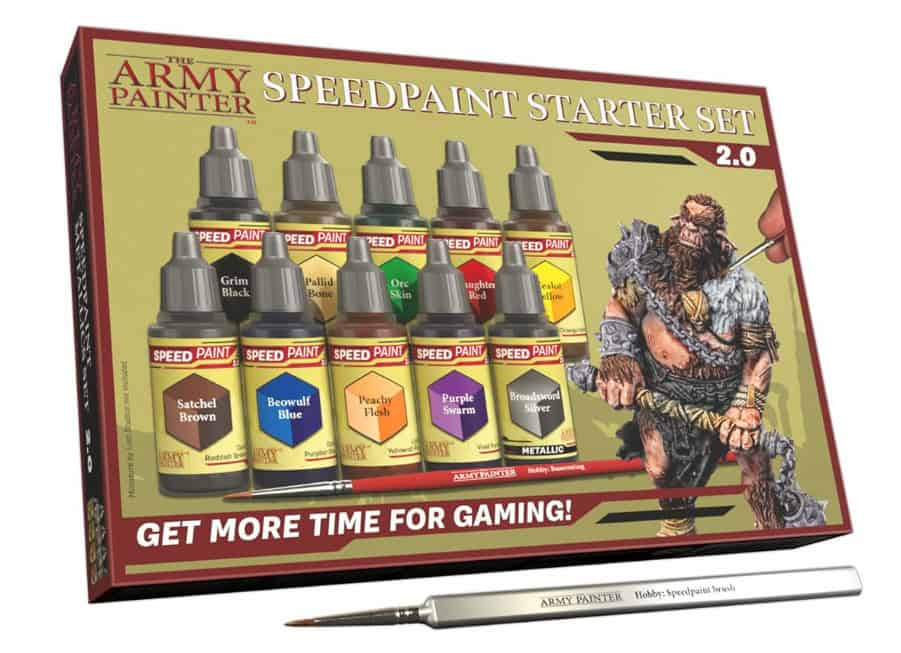
The starter comes with enough to get rolling and more than enough to cover a good chunk of an army.
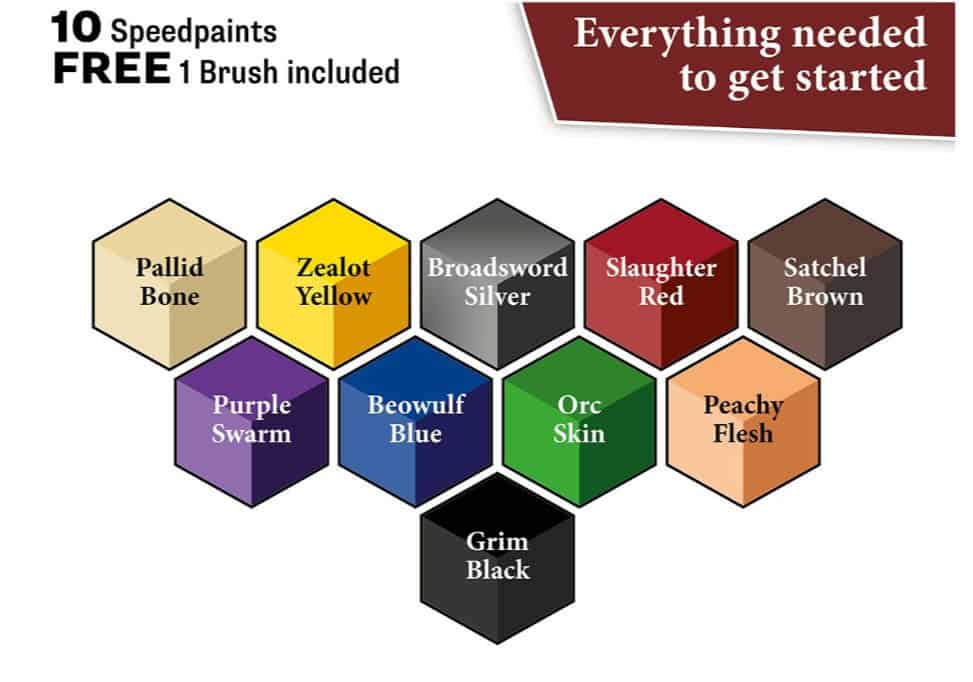 Contents:
- 5 new colors
- 1 Speedpaint Metallic
Army Painter Speedpaint Mega Set 2.0: $199
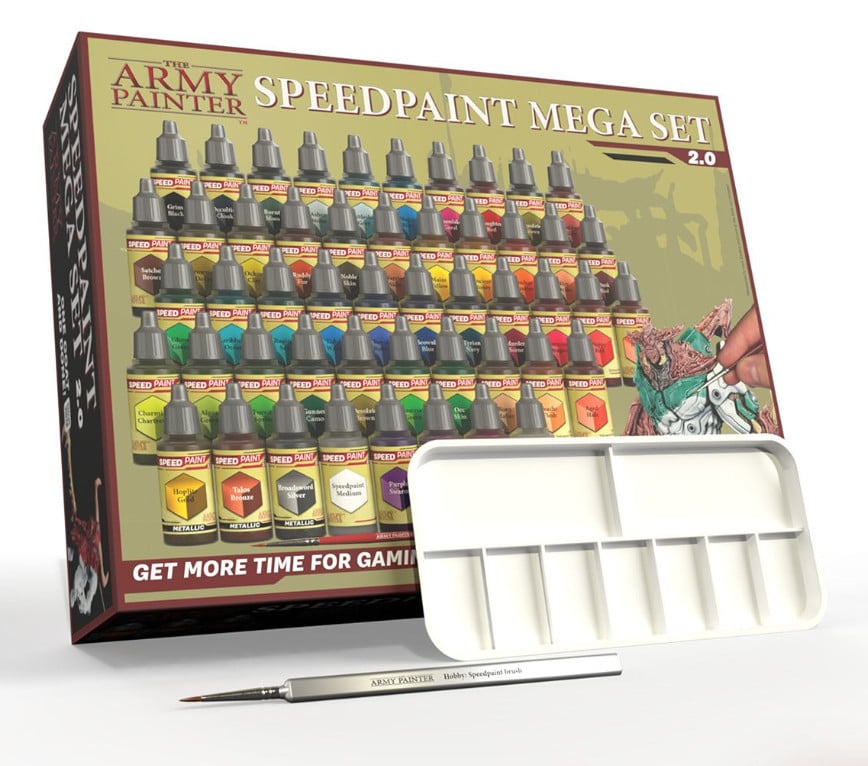
Getting more paint is always nice, and grabbing them all at once is never the worst idea. At this price, they break down to about $4 each, which is a pretty solid deal for that many paints.
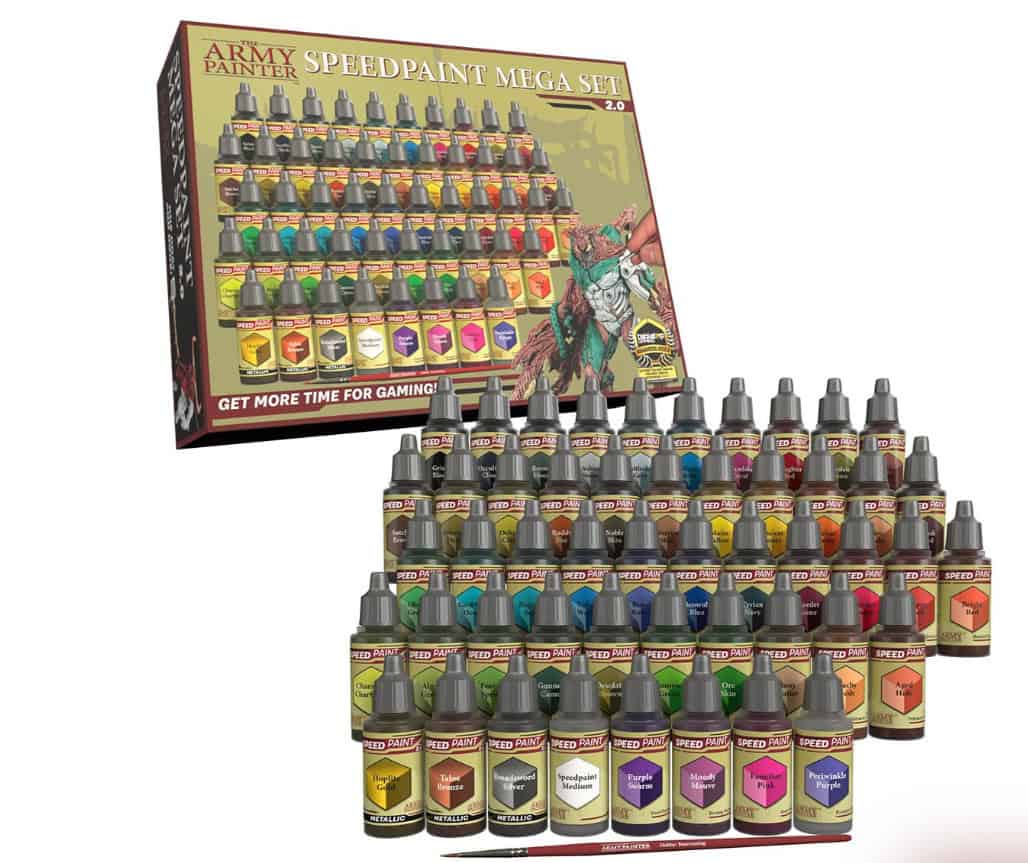
- 50x 18ml Speedpaints
- 45 new colors, including 3 first-ever Speedpaint Metallics
- 1 Speedpaint Medium
- 4 Speedpaint colors from the original range for free
- 1x Basecoat Brush
- Pre-order Bonus: Speedpaint Brush & Hard Plastic Palette
Pro Acryl 1-Step From Monument Hobbies
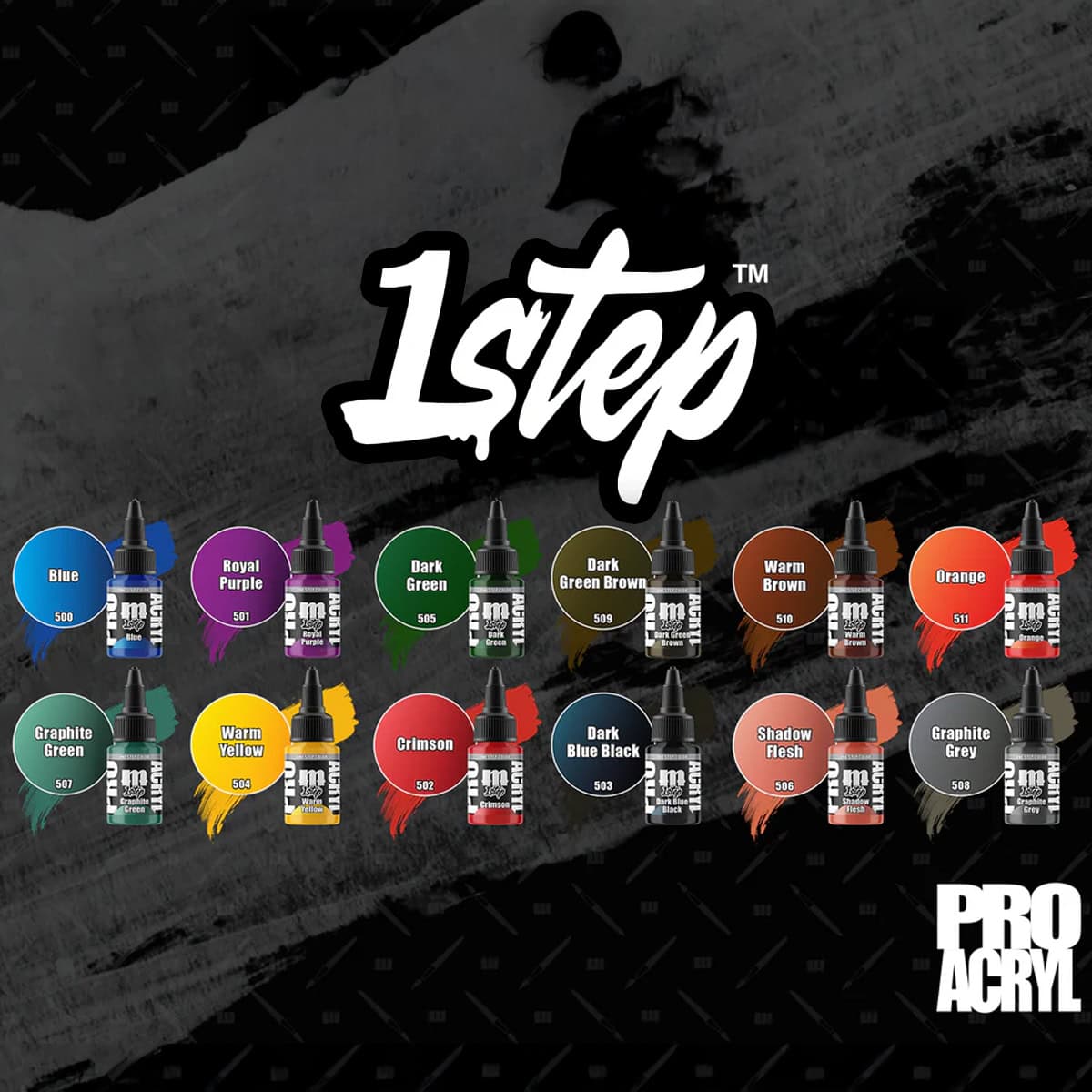 These paints are designed to be a single-coat solution, giving you vibrant color with darker recesses and brighter raised areas over a bright primer. You can thin them with water or the 1-Step Special Sauce for glazes, filters, or softer effects, but the whole point is getting solid-looking minis done fast.
Best if: you want quick tabletop results, easy depth, and a speed paint that plays nicely with the rest of your Pro Acryl collection.
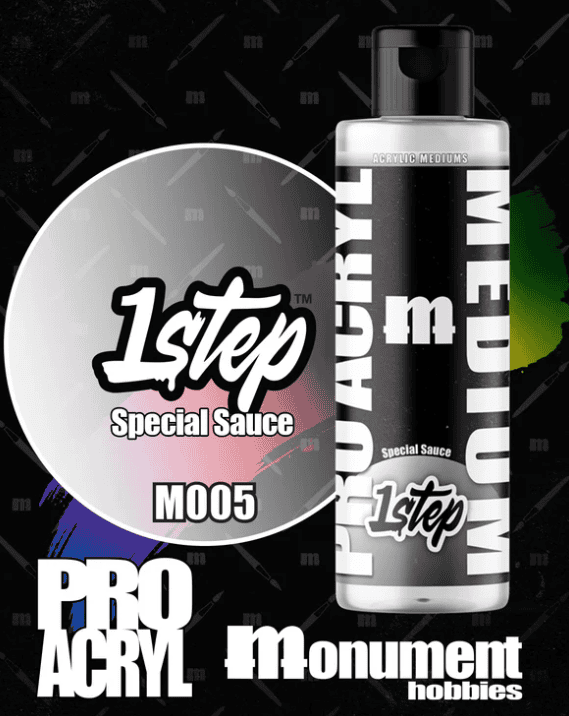 Then, Monument added the real hook with 1-Step Special Sauce, which helps thin the paints and can even turn regular Pro Acryl colors into one-step paints with a rough two-to-one mix. Be sure to check out the video above for tips on how they work in practice.
Cephalopod Studios Cuttlefish Colors
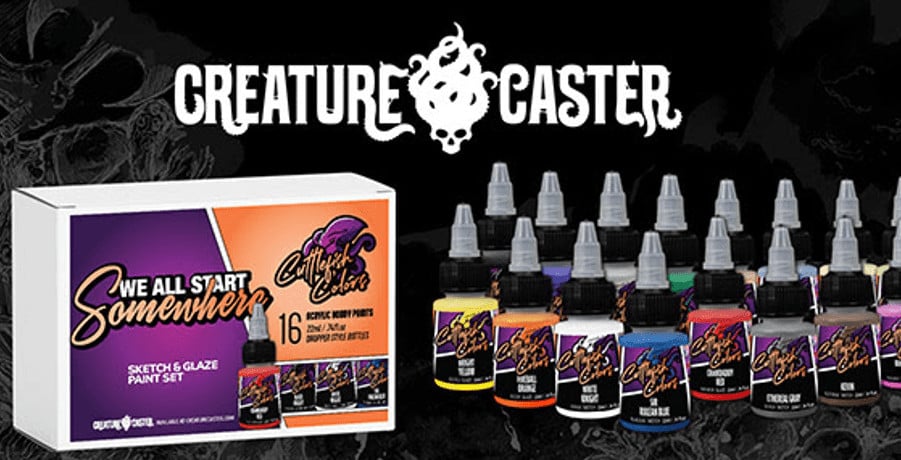
This paint line offers 112 rich, dead-matte colors that look great on minis and hold up once they hit the table. Built by Cephalopod Studios and curated by Creature Caster, these paints lean into the old sketch-and-glaze approach.
They give newer hobbyists a solid path to better results while helping veteran painters move faster without reaching for extra media at every step.
We All Start Somewhere Set of 16 Paints (Cuttlefish Colors Set)

Contents:
- Black Knight
- Poor Boy Denim
- Sir Rulean Blue
- Kevin
- Peachy-keen
- Up Chuck Green
- Lush Valley
- Ghoul Flesh
- Ethereal Gray
- Fireball Orange
- Bubblegum Pink
- Chromamancer Purple
- Crawdaddy Red
- White Knight
- Tainted Snow
- Bright Yellow
Contrast Alternatives: Dipping Inks From Green Stuff World
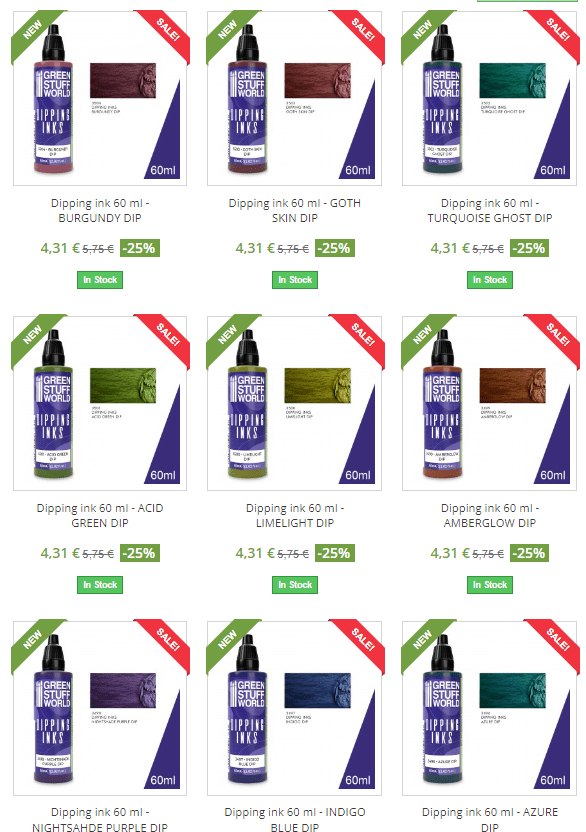
If you don’t feel like paying the prices for contrast paints, the Green Stuff World offering might be right up your alley. They have 24 different colors, and each comes in a 60ml dropper bottle, so it’s pretty hard to ignore on value alone.
While we haven’t used these ourselves yet, the results shown are hard to argue with.
If you’re trying dipping inks for the first time:
- Test on one spare primed model first
- Use one coat and let it fully dry before judging it
- Varnish a test area so you can see how the final finish changes
This is only a small part of what they offer, but it gives you a feel for the range.
GOTH SKIN DIP: $5.11
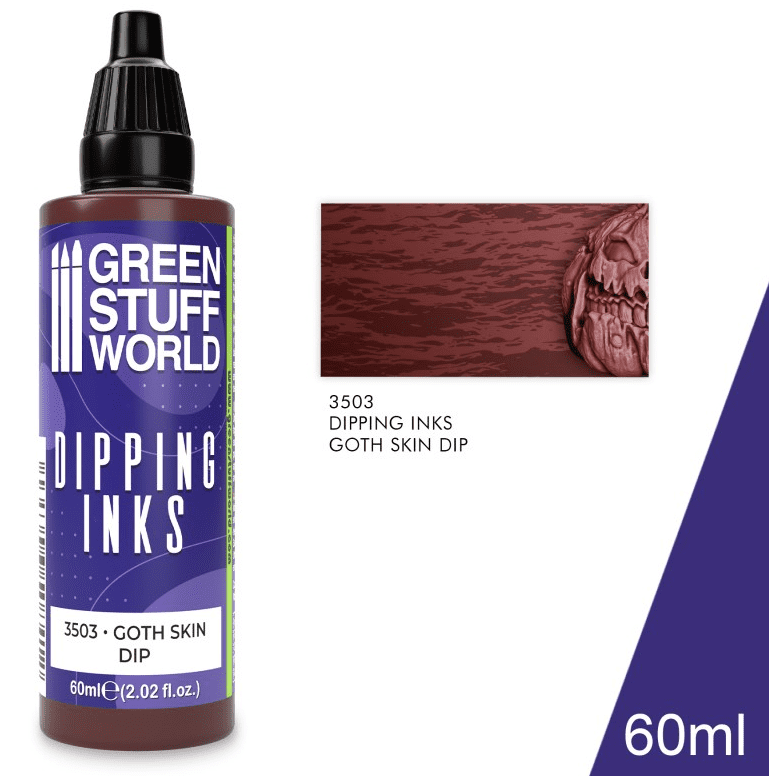
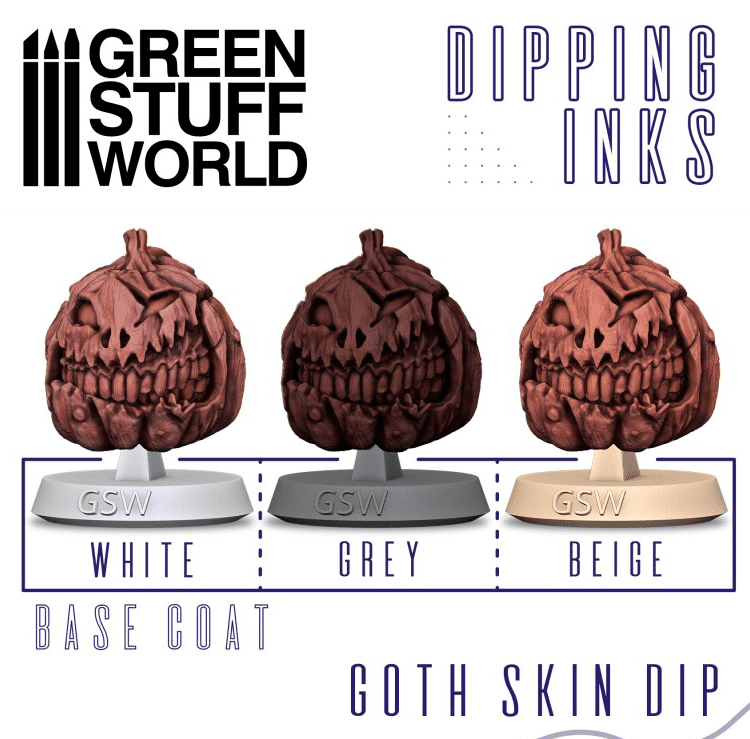
As you can see, the price for the volume you get is pretty nice.
Scale 75 Instant Colors
The video does a great job of showing how the paint looks on different primers and gives you a better feel for the range.
Best if you want a more muted or controlled one-coat behavior.
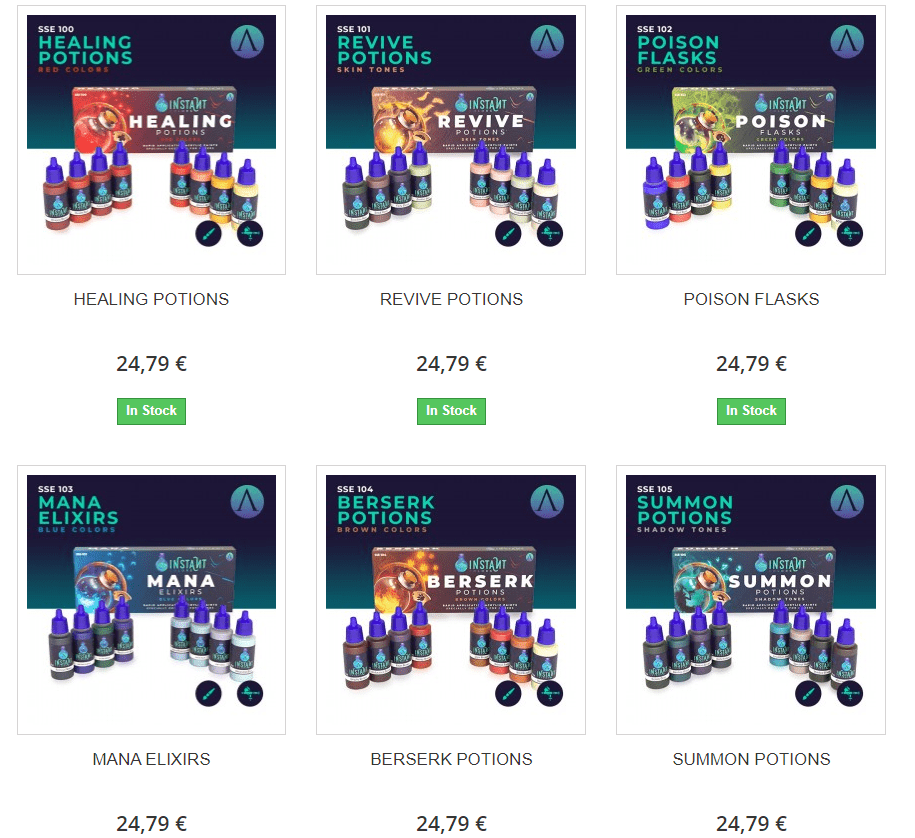
We haven’t personally tested these out yet, but we’ve heard good things. Their packs look well put together, and if you want a specific set, the price really isn’t that bad. Plus, it’s always nice to have more options. You can get yours by clicking here.
Vallejo Xpress Color Paints
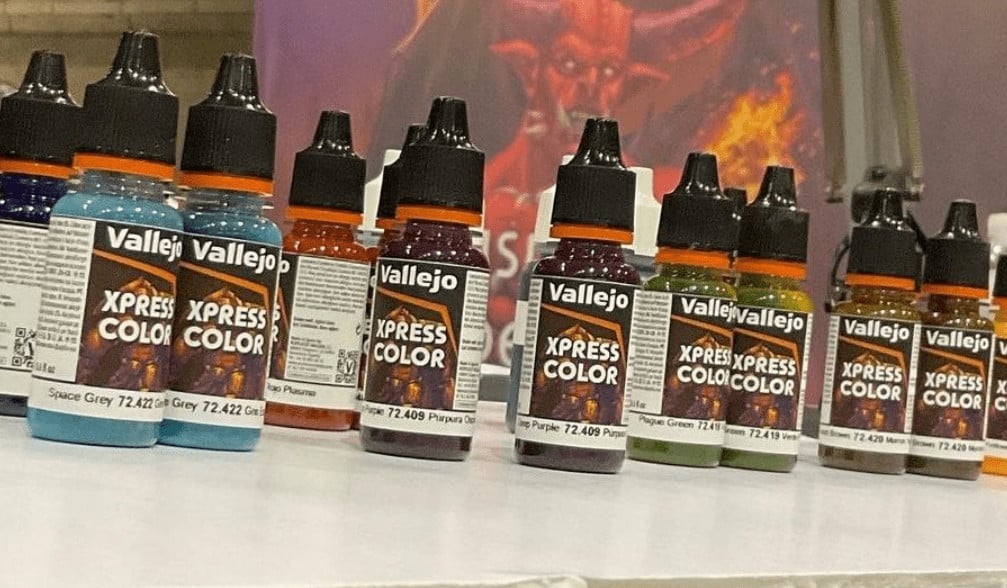
As we can see, this stuff looks pretty decent, with Angel using it quickly and even on a small miniature, too.
Great over slapchop or zenithal prep if you want strong results with dropper-bottle convenience.
Remember that getting Vallejo paints in the States was always a little harder, even before COVID, so local availability may still vary.
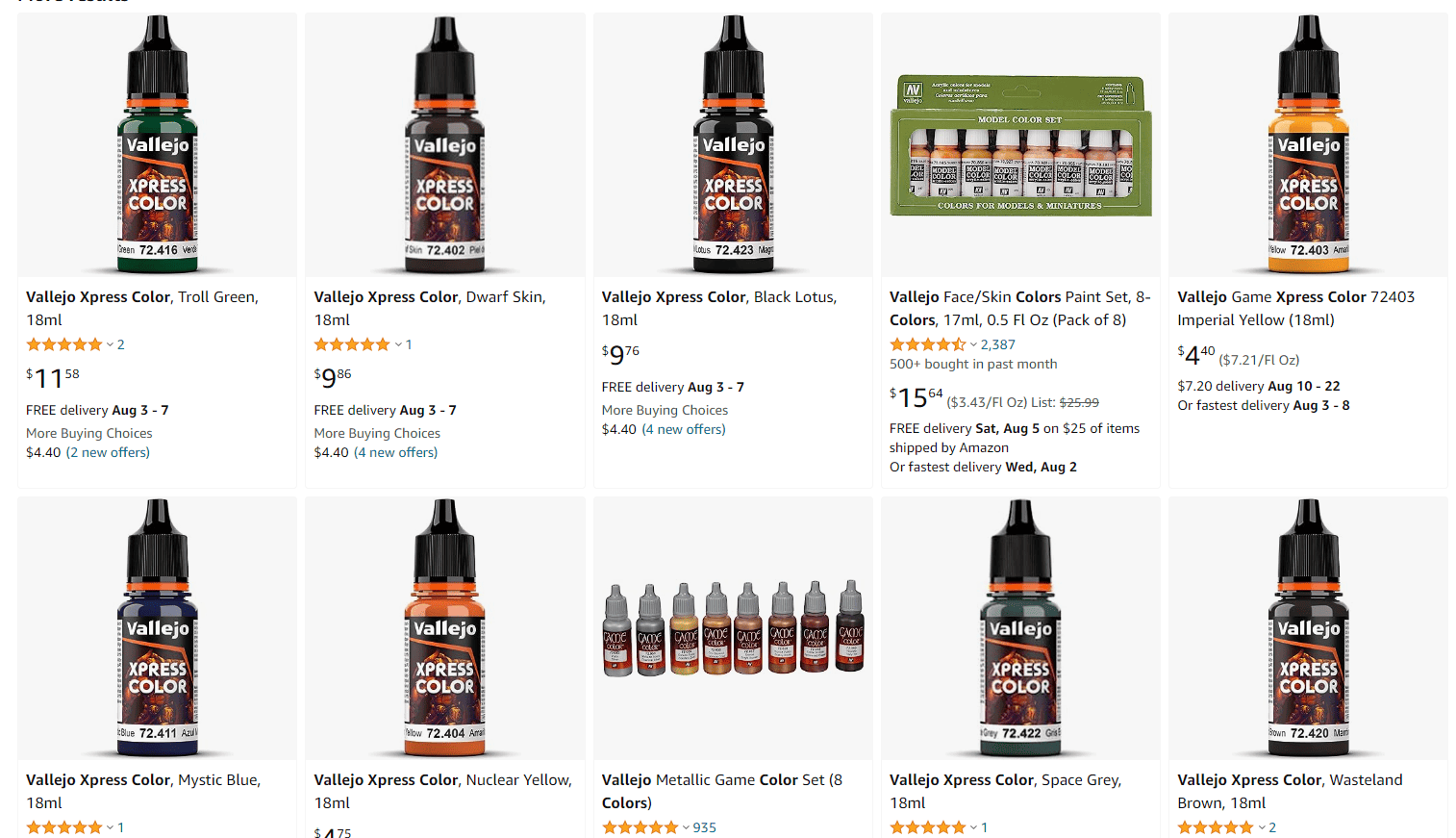
However, you can find them on Amazon, but the prices vary, and we mostly found singles. Still, if you like the look, they’re out there.
Games Workshop Citadel Contrast Paints
There are definitely some great uses for Contrast paints. Especially if new hobbyists are scared of picking up a brush and wrecking a model.
They are best if you want rich pigmentation, a big color selection, and the most recognizable one-coat paint line, even if it costs more.
Contrast is a great way to test the waters of painting for beginners. For anything with a bunch of curves and recesses, Contrast will really shine. There is still a technique for applying Contrast paints, though, as the paint doesn’t eliminate the need for control.
Contrast paints were red hot when they first came out. Now that other companies have tweaked and improved their own formulas, there’s more competition. With the price increases, many painters have started looking more closely at alternatives. Still, Citadel Contrast remains a favorite for plenty of hobbyists.
You can get yours by clicking here.
How Much Does Contrast Paint Cost Compared to Alternatives
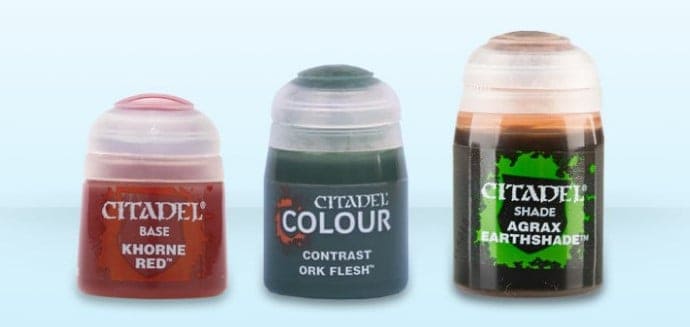
Contrast paints retail for $7.80 per 18 ml pot, and because they sit somewhere between a layer and a wash in consistency, they can go faster than you might expect if you’re banging through a whole army.
However, let’s look at the alternative prices as well. Price per ml is where things get interesting, and bottle style matters too. Dropper bottles are usually easier to measure and waste less paint, while pots are quicker to open but easier to overdo at the desk.
- Citadel Contrast Paint: 18ml pot for $7.80 (about $0.43/ml)
- Vallejo Paint: 17ml dropper bottle for $4.99 for Xpress Paint (about $0.29/ml)
- Monument Hobbies 1-Step 22ml dropper bottle for about $5.75 (about $0.27/ml)
- Cuttlefish Colors: 22ml dropper bottle for about $4.65 (about $0.21/ml)
- Army Painter Paint: 18ml dropper bottle for $4.99 (about $0.28/ml)
- Scale 75 Paint: 17ml dropper bottle for about $3.50 (about $0.21/ml)
Next, let’s see how these paints perform in action with practical examples.
Contrast Paints in Action
Start here:
- If you’re painting armies, go to Speed Painting Armies
- If you’re painting characters, go to Detailing Individual Miniatures
- If you want maximum depth, go to Underpainting Techniques
Speed Painting Armies
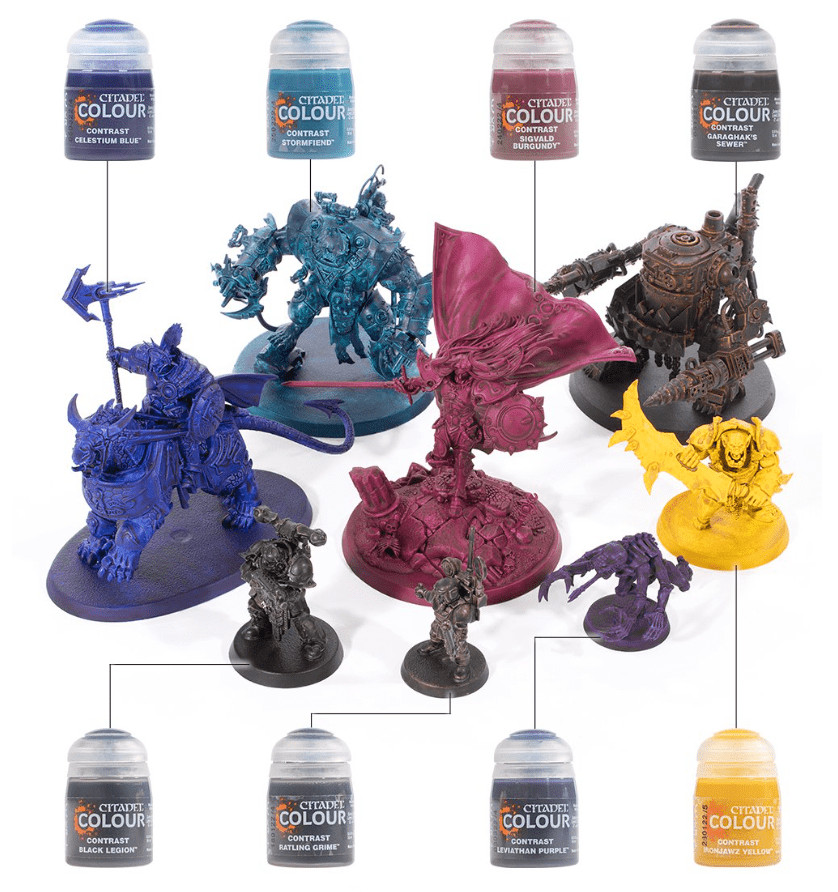
Alright, so you’ve got your Contrast paints, or their alternatives, ready to go. Now let’s put them to work on something real: speed painting armies.
We’ve all been there, staring down a horde of unpainted miniatures and feeling that familiar sense of doom. This is where Contrast paints are genuinely useful.
Contrast paints are a godsend for speed painting. Their formulation lets you paint large batches quickly without totally tanking the quality. Start with a white or light grey basecoat, then apply your color in controlled sections.
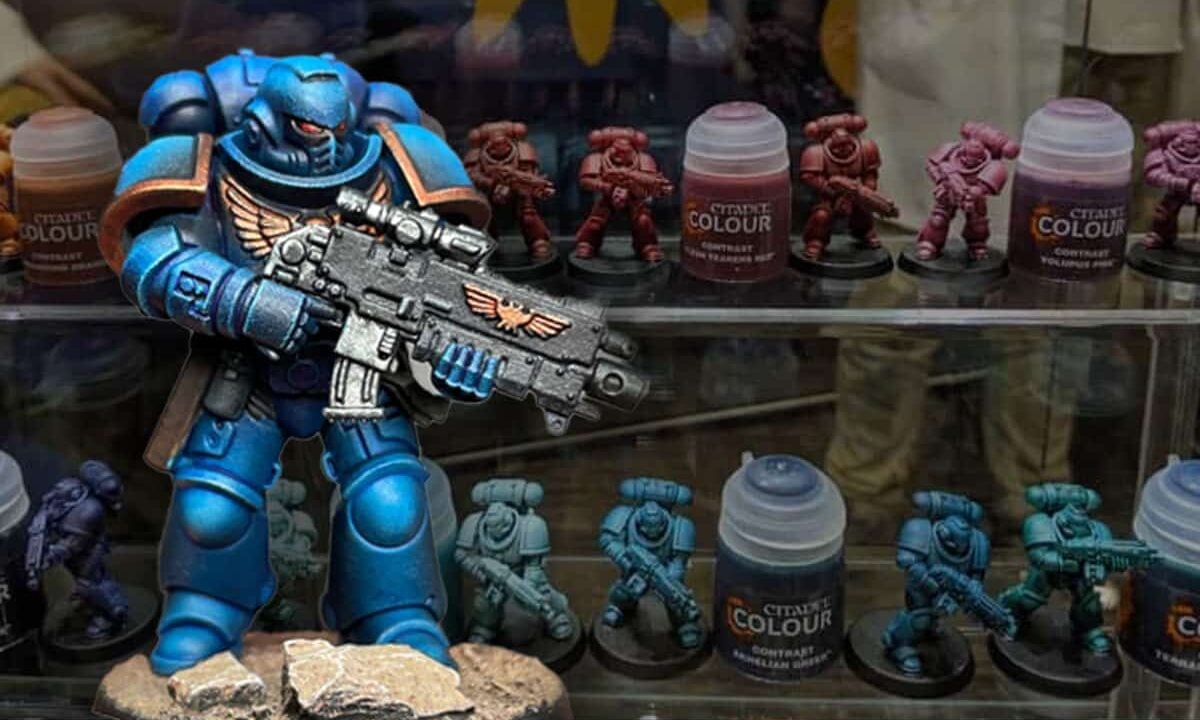
The paint flows into the recesses, creates natural shadows, and leaves the raised areas lighter. It’s basically painting in fast forward. For example, if you’re painting an army of Space Marines, you can get an entire squad knocked out quickly. Basecoat them with a light primer, then apply a blue Contrast paint such as Ultramarine Blue.
The paint does much of the work for you, creating depth and definition with minimal effort. Add a few details with traditional paints, and you’re off to the races.
Detailing Individual Miniatures
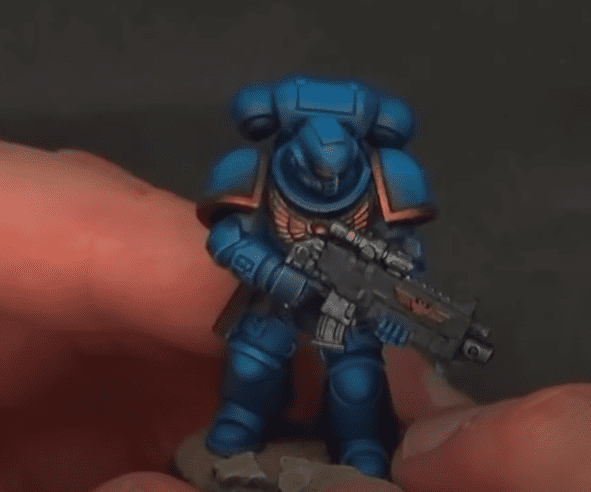
Contrast paints are not only for rank-and-file troops. They can also do a lot for character models and centerpiece pieces if you use them with a little more control.
Take a Goliath ganger from Necromunda, for example.
Start with a white base coat, then apply a flesh-toned Contrast paint such as Guilliman Flesh. The paint settles into the recesses, helping define muscles and natural shadows. For clothing, use a darker color like Snakebite Leather. It creates folds and creases with almost no effort.
One of the best things about Contrast paints is how easily they help bring out sculpted detail. You can also combine them with traditional acrylics to add more precision.
For example, metallic paint on weapons and armor can be followed by a thin glaze of Contrast paint for added tint and depth. That combo works especially well when you want the model to pop without repainting half the thing by hand.
Underpainting Techniques
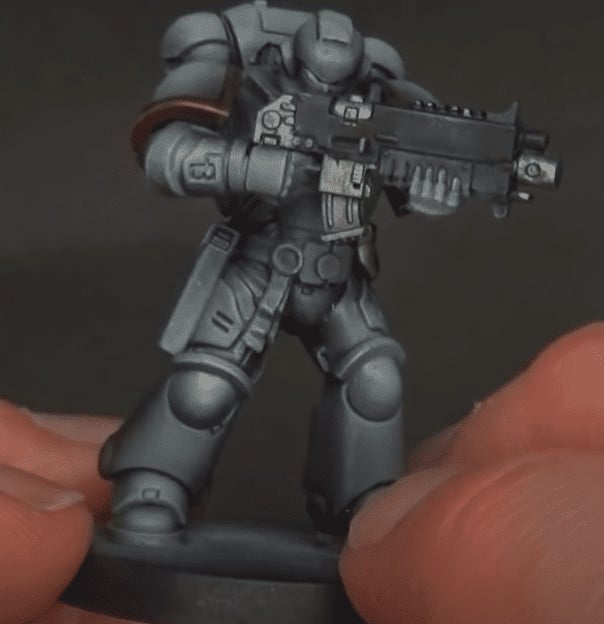
Now let’s get a little fancier with underpainting techniques. Underpainting, also called slapchop or sketch-and-glaze, means building your highlight and shadow map before the color goes on.
Start by priming your model black. Then use a white spray, a heavy drybrush, or both to pick out the areas that would naturally catch the light.
This is your underpainting. It sets up the contrast before the Contrast paint ever hits the model. Once your prep is done, apply your Contrast paint over the top.
The result is a model with richer highlights, deeper shadows, and much better definition. This works especially well for skin, fabric, fur, and anything organic.
For example, if you’re painting a barbarian with exposed skin and fur, underpainting gives you a much stronger finish. Start black, build the highlights with white, then apply a flesh tone for the skin and a brown for the fur. You’ll get a more natural, realistic look with very little extra effort.
Pros and Cons of Contrast Paints
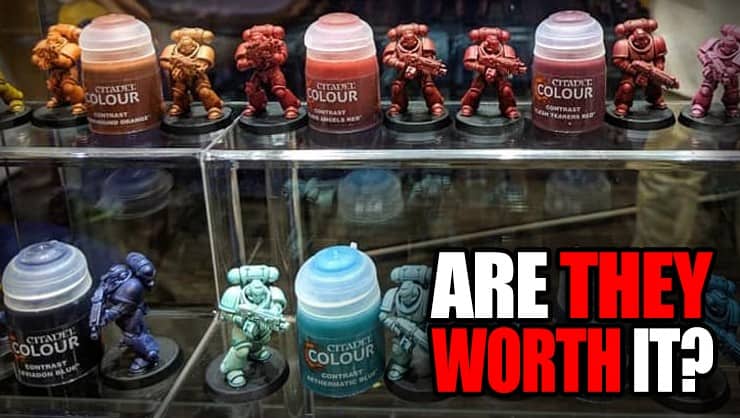 Are Citadel Contrast paints worth it? Here’s where they shine and where they struggle.
Benefits of Using Contrast Paints
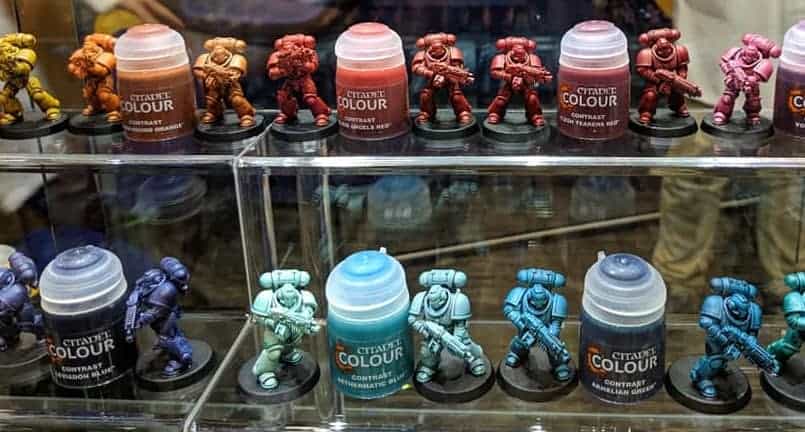
Let’s break it down. What makes Contrast paints so popular in the first place?
- They save time. By combining base color and shading in one step, they speed up painting in a big way, especially for army projects.
- They’re beginner-friendly. If you’re new, they make it easier to get tabletop-ready results without needing a full stack of advanced techniques.
- They create lively color fast. Their translucent nature helps details show through instead of burying everything under thick paint.
Drawbacks to Consider
But, like any superhero, Contrast paints have a few weak spots. Most issues are solved by primer choice, wicking pooling, not overworking the paint, and sealing with varnish. Check the Mistakes and Tips sections if one of these problems hits your project.
- Translucency can be unforgiving. Because the paint is see-through, the primer matters a lot. If you make a mistake, you usually need to reapply the basecoat before fixing that area.
- Smooth surfaces can be tricky. Large flat armor panels and broad plates can streak or show tide marks if you are not careful.
- They can be a little delicate. Contrast paints do not always cure as hard as some other acrylic layers, so a matte varnish is a smart move, especially for gaming pieces that get handled a lot.
Tips for Getting the Best Results
Preparing Your Miniatures
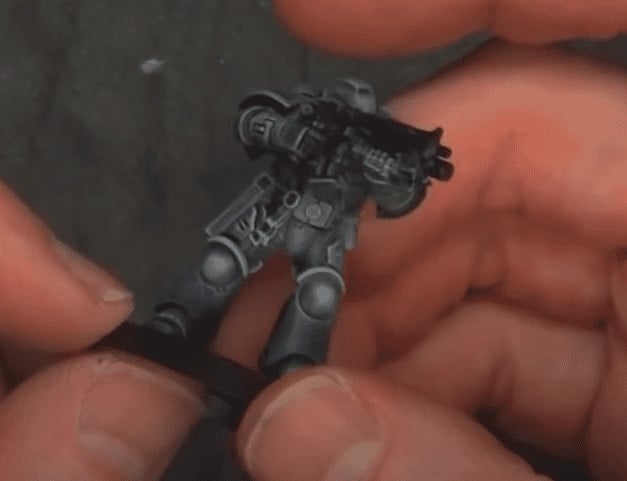
Preparation is still the part people want to skip, but it matters. Clean your miniatures to remove mold-release residue, scrape off mold lines, and make sure the model is ready before paint ever touches it.
Use a bright primer (see Basecoat section above) to control how Contrast reads.
Get the Supplies to Transfer Your Contrast Paints to Dropper Bottles:
- 15ml Dropper Bottles
- 30ml Dropper Bottles (for Contrast and 18ml large pots)
- Vallejo Flow Improver
- The Army Painter Mixing Balls
If you’re a dropper-bottle person, moving Contrast out of pots can make measuring, mixing, and controlling paint a lot easier.
Post-Painting Care
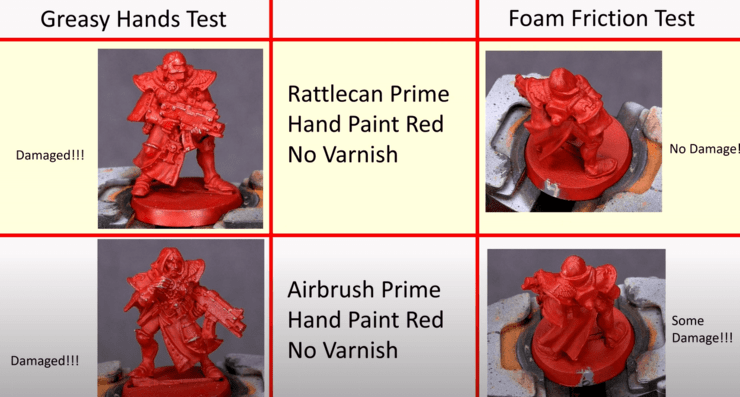
Goobertown Hobbies tested all kinds of varnishes on miniatures
Once your paint job is done, protect it. Contrast paints can be a little delicate, so a matte varnish is a smart final step. It protects the finish and helps everything look more even across the model.
Think of it as the last layer that keeps your hard work from getting rubbed away by actual tabletop use.
Experimenting with Different Techniques
Do not be afraid to experiment. Contrast paints are versatile, and once you understand how they behave, you can use them for glazing, underpainting, metallic tints, and mixed workflows with regular acrylics.
That’s where a lot of the real fun starts.
Real-World Examples & Tutorials
Step-by-Step Painting Guides

Luckily, we have dozens, if not hundreds, of tutorials on Contrast and other one-coat paint workflows. If you need inspiration, tips, or techniques, check out all of our contrast tutorials here!
Community Creations and Inspiration: The miniature painting community is full of talented hobbyists sharing their work online. Instagram, Reddit, and hobby forums are great places to steal a little inspiration, pick up tricks, and see how other painters are using Contrast paints in the wild.
Frequently Asked Questions About Contrast Paints
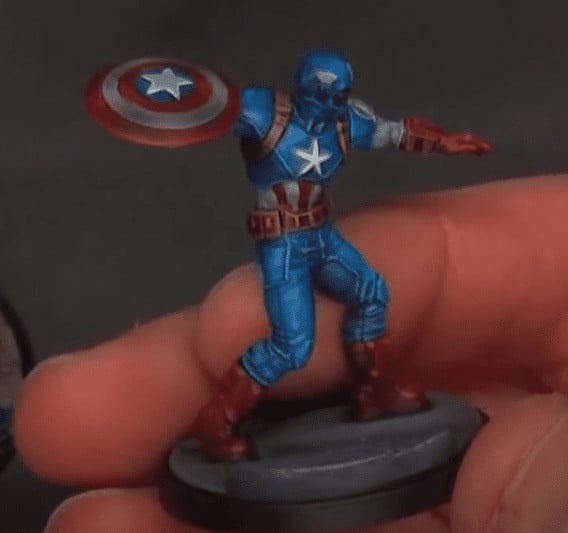
Can You Airbrush Citadel Contrast Paint?
Absolutely. Using Contrast paints through an airbrush reduces some of the natural recess shading effect, but it works well for smooth translucent layers, colored metallics, and shading larger surfaces.
How Do You Fix Mistakes With Citadel Contrast Paint?
If you make a mistake, do not panic. Reapply your basecoat to the affected area, let it dry fully, and then repaint that section with your Contrast color. For tiny corrections, regular acrylics are usually easier.
Do You Need Special Brushes for Citadel Contrast Paint?
No special brushes are required, but a good brush with a decent point helps a lot, especially when you need to control pooling around details and panel lines.
Do Contrast Paints Work Over Black Primer?
Usually not the way most people want. Because Contrast paints are translucent, black primer kills most of the vibrancy. If you want to use black, it works much better as part of a slapchop or zenithal workflow where you drybrush lighter tones back over the top first.
Are Contrast Paints Good for Space Marine Armor Panels?
They can work, but armor panels are one of the trickier uses. Smooth flat surfaces tend to show tide marks and streaking more than textured areas. If you want to use them there, work one panel at a time, control pooling carefully, and consider using them more as a tint over underpainting or metallics.
Do Citadel contrast paints need to be thinned?
No. Warhammer Community describes Contrast paints being used straight from the pot over a light basecoat, and that’s how they’re made to go on. If you want a softer glaze or a lighter tint, thin them with Contrast Medium, which Warhammer Community says keeps that intense colour and the smooth flow.
Are contrast paints just washes?
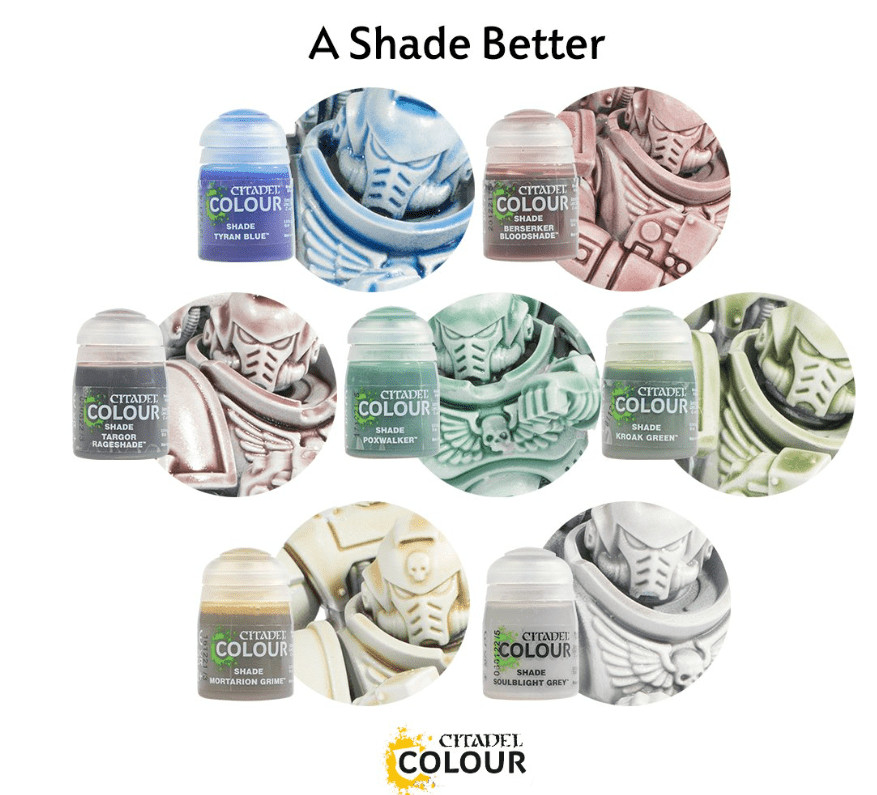
Not quite. A wash, like a Citadel Shade, is a thin tint you brush over a colour you have already painted to darken the recesses. Games Workshop sells Contrast to base, shade and highlight in one coat, so it does the colour and the shading together, and it sits somewhere between a layer and a wash in thickness.
Is there a Citadel contrast paint set?
Yes. Games Workshop released a nine-pot Contrast Paint Set in April 2023 with Black Legion, Apothecary White, Guilliman Flesh, Snakebite Leather, Skeleton Horde, Gutrippa Flesh, Asurmen Blue, Blood Angels Red and Imperial Fist. Sets come and go, so check the Warhammer webstore for what is in stock now.
What are the best Citadel contrast paints?
Our picks are Skeleton Horde for bone, Snakebite Leather for leather and Apothecary White for white armour and cloth, and all three were in Games Workshop’s own nine-pot Contrast Paint Set. Black Templar is a strong shortcut for black too, because it shows you exactly where your highlights need to go.
Final Thoughts on Contrast Paints & Their Alternatives
Citadel Contrast paints and their alternatives offer a genuinely different way to approach miniature painting. They make the hobby more approachable for beginners, faster for veterans, and a whole lot easier for anyone staring at a backlog that is starting to look personal.
Honestly, whether you’re just starting out or you’ve been painting for years, Contrast paints are worth trying. Mess around with different primers, test a few brands, and find the workflow that actually feels good on the desk. The hobby is supposed to be fun, and these paints can help you spend less time wrestling with basics and more time getting cool models on the table.
If you remember one thing, be sure to remember this: use the right bright primer, do not overwork the paint, and save Contrast for the areas where it shines most.
Click Here to Get Your Games Workshop Citadel Contrast Paints
What’s your favorite style of contrast paint?