 Explore the ultimate guide to Imperial Knights playstyles in Warhammer 40k, and discover key strategies, army composition, and customization tips!
Updated December 16th, 2024, by Rob Baer with new information and links to relevant content.
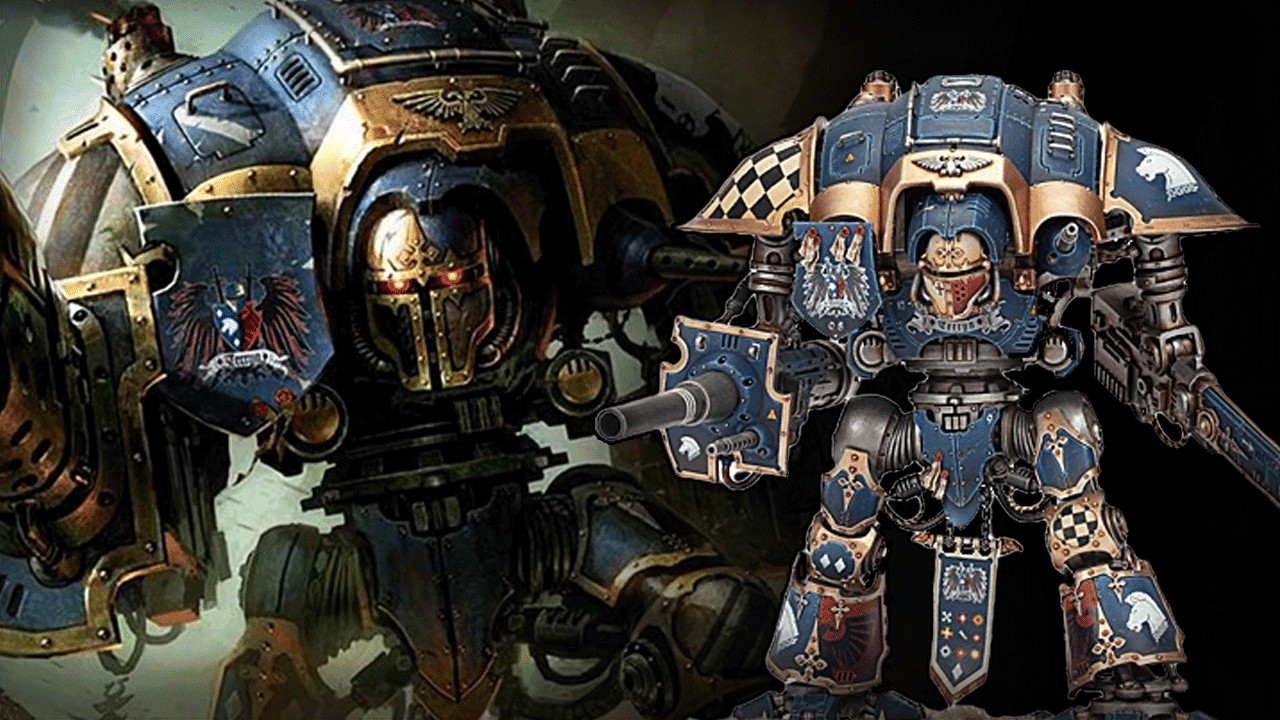
Imperial Knights in Warhammer 40k are more than just big stompy robots—they’re a fusion of noble legacy and battlefield supremacy. These colossal war machines carry the weight of entire houses, both figuratively and literally, as they stride into battle to tip the scales in dramatic fashion, and can be quickly started with a Battleforce!
Whether you’re commanding a single Knight as a centerpiece or an entire household of mechanized royalty, this faction delivers both firepower and flair. From towering Dominus-class fortresses to the smallest Armiger units darting around the field, Imperial Knights excel at being the center of attention—and destruction (and just maybe we get to see them on the big screen). Let’s unravel what makes them a powerhouse on the tabletop, from playstyles to strategic finesse.
Intro to Imperial Knights
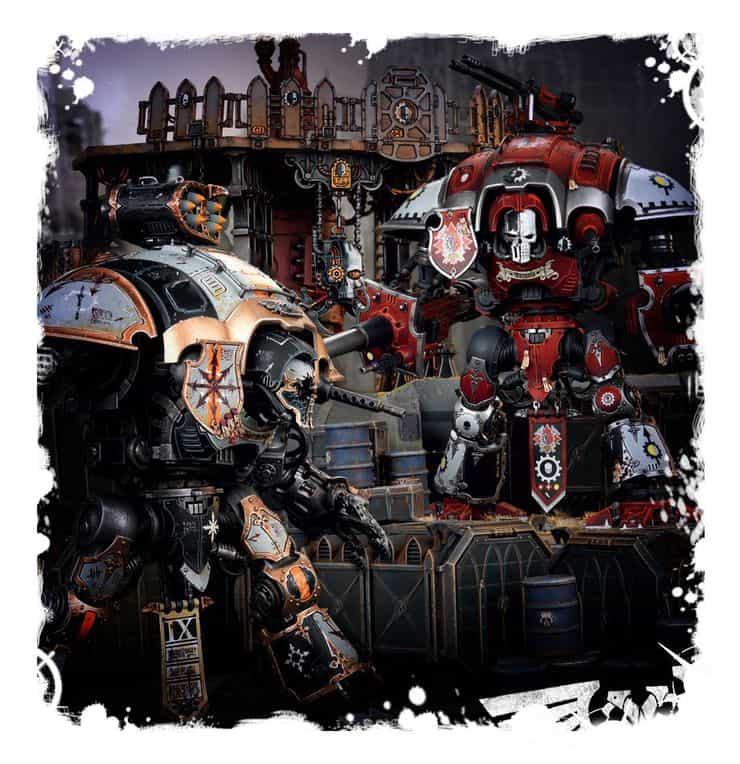 In the grim darkness of the 41st millennium, where war consumes entire star systems, few things command as much awe as an Imperial Knight. These towering war machines aren’t just tools of destruction—they’re walking relics of honor, steeped in millennia of tradition. Imagine ancient noble houses, their legacies bound to these hulking titans, each Knight a physical embodiment of duty, pride, and raw firepower. Whether you’re new to Warhammer 40k or a long-time fan who knows the difference between a Questoris and a Cerastus at a glance, Imperial Knights offer a unique blend of lore, strategy, and sheer spectacle.
From the smallest units, like the agile Armigers, to the towering Dominus-class juggernauts bristling with weapons, there’s a Knight for every battlefield role—and every player’s playstyle. They stride into battle as unstoppable forces, carrying banners of ancient heraldry and enough firepower to rewrite the enemy’s game plan entirely. For newcomers, they’re an entry point into a universe of mechanized nobility. For long-time players, they’re a chance to command the kings and queens of the battlefield. Let’s crack open the armor plating and get to the heart of what makes Imperial Knights one of 40k’s most iconic factions.
Playstyles & Tactics
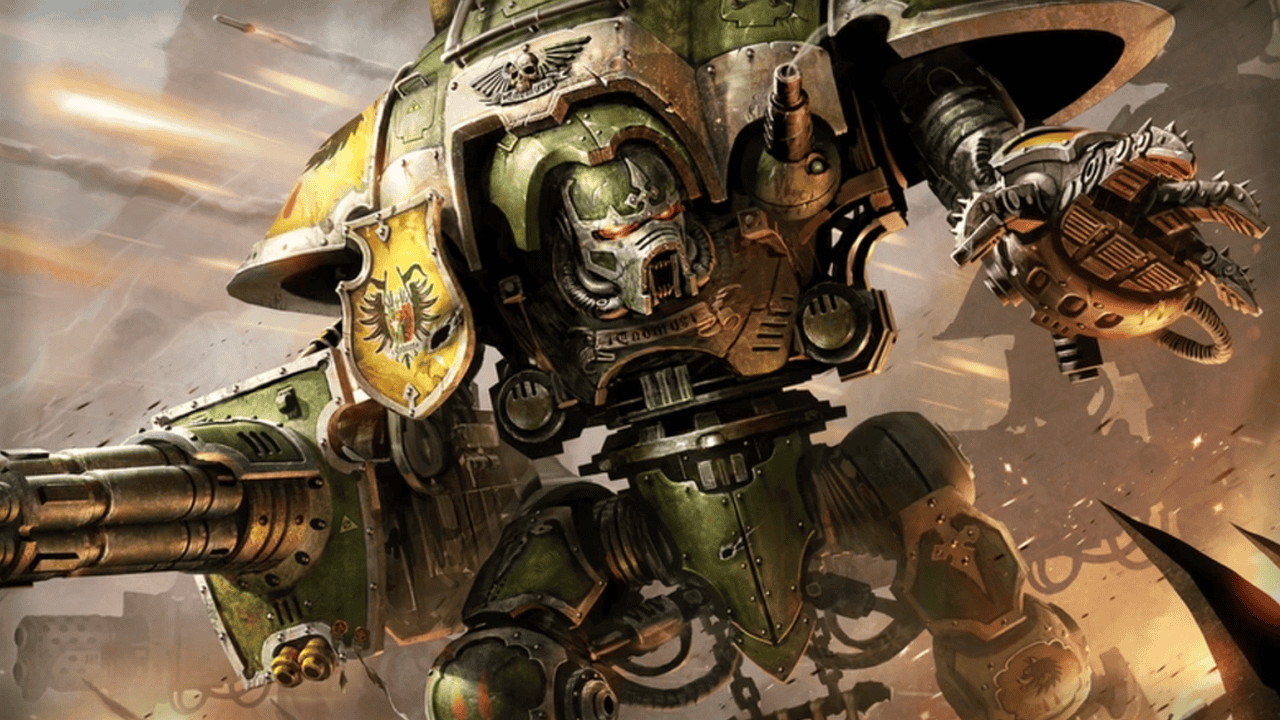 Imperial Knights are a jack-of-all-trades faction, offering versatility in how you approach a game. Whether you want to dominate the board with brute force, play the objective game with precision, or control the battlefield through strategic positioning, they can do it all. Their strength lies in their adaptability: a single Knight can act as a wrecking ball, while a diverse force can cover multiple roles. Key tactics include leveraging their incredible durability and devastating firepower to control the pace of the game. Understanding when to hold back and when to push forward with your titanic machines is the secret to leaving your opponent scrambling.
Offensive Strategies
When it comes to sheer destruction, Imperial Knights stand second to none. Their arsenal includes everything from Thermal Cannons that melt tanks like butter to Avenger Gatling Cannons that chew through infantry lines. Target priority is your best friend—focus on high-value threats early to cripple your opponent’s strategy.
Questoris-class Knights offer a flexible blend of melee and ranged options, while Dominus-class Knights like the Castellan excel at obliterating enemies from across the table. Close combat weapons like the Reaper Chainsword or Thunderstrike Gauntlet ensure that no unit, no matter how tough, is safe from these titanic warriors.
Defensive Strategies
Durability is one of the defining traits of Imperial Knights, but that doesn’t mean they’re invincible. Ion Shields provide a vital invulnerable save, but strategic placement and terrain use are just as critical to keeping them in the fight. Smaller Armiger units can screen larger Knights, absorbing firepower or tying up enemy units. Don’t forget repair abilities or stratagems that boost survivability—small investments that can make a big difference in a game. Remember: a Knight that survives an extra turn can do monumental damage.
Mobility and Support Roles
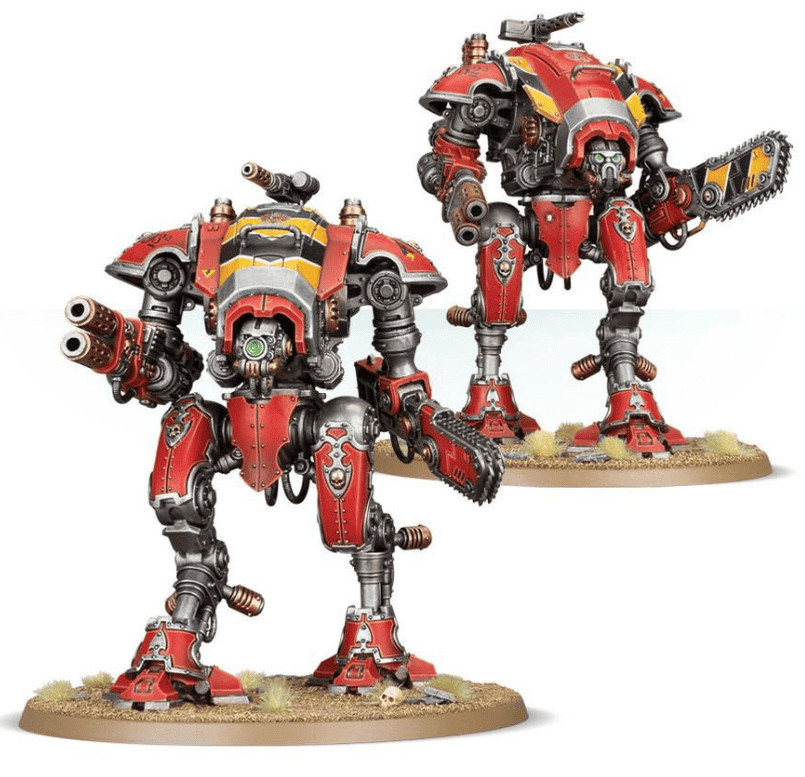 Despite their size, Knights aren’t slow. Armigers, the smallest units, are surprisingly agile, making them excellent for capturing objectives or flanking enemy forces. Cerastus Knights bring speed and elegance, while the larger Questoris and Dominus classes can still reposition effectively if planned carefully. Support roles often involve these smaller units creating opportunities for their larger counterparts to dominate. Use Armigers as bait, flankers, or objective-grabbers while your big guns smash the core of your opponent’s army. Proper positioning and coordination turn your household into an unstoppable force.
Army Composition
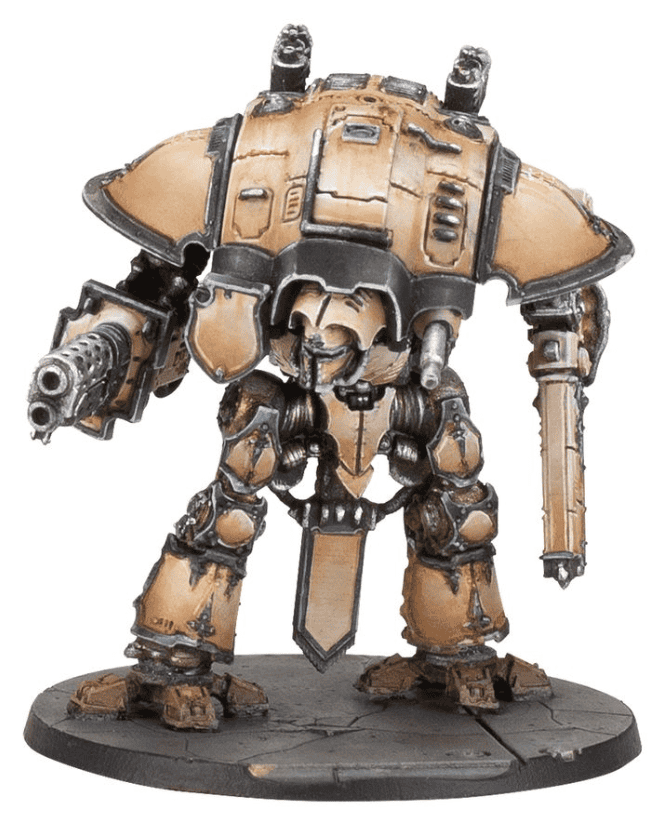 Building an Imperial Knights army in Warhammer 40k is like crafting a masterpiece—every piece matters, and every choice carries weight. The balance between titanic powerhouses and nimble support units defines your success on the battlefield. Are you a fan of overwhelming firepower? Lean into Dominus-class Knights, the walking fortresses that obliterate everything in sight. Prefer a mix of versatility and durability? Questoris Knights are your bread and butter. And don’t overlook the smallest units, the Armigers—they’re the unsung heroes of objective play and flanking maneuvers.
An effective Imperial Knights list thrives on synergy. Each model complements the others, creating a household that operates like a well-oiled war machine. Whether you’re running a single Knight as an allied detachment or fielding a full knightly house, focus on balance: a mix of long-range firepower, melee threats, and mobile support ensures you’re ready for anything the battlefield throws your way.
Types of Knights
Imperial Knights come in a variety of flavors, each with its own strengths. Questoris-class Knights like the Paladin and Errant are your classic all-rounders—tough, flexible, and deadly in both ranged and melee combat. Cerastus Knights, known for their sleek design and agility, are specialists that excel at exploiting weak points in enemy lines. Then there’s the Dominus-class Knights, towering engines of destruction bristling with guns capable of leveling entire armies.
Each type offers unique tactical options. Mixing classes in your army can create a versatile force that keeps your opponent guessing. Need speed? Cerastus fits the bill. Want to hold the line? Dominus-class Knights anchor your defense. Questoris Knights are the ultimate multitaskers, seamlessly blending into any strategy.
Questoris, Cerastus, and Dominus Patterns
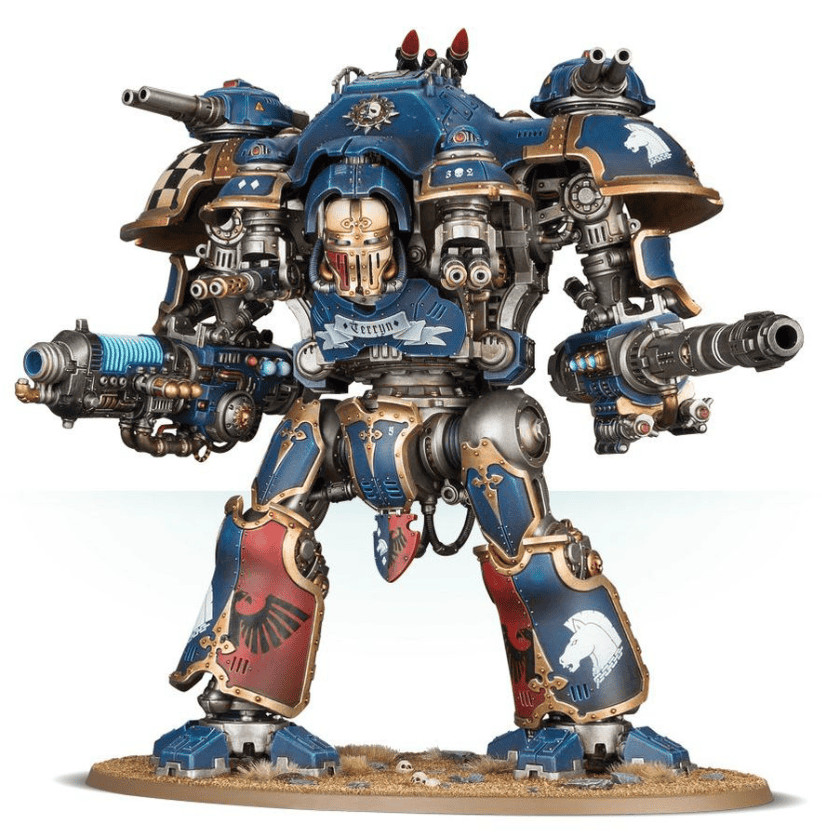 Within each class, patterns add even more variety. Questoris-class Knights like the Crusader prioritize ranged devastation, while the Gallant charges into melee with devastating results. Cerastus Knights such as the Lancer are perfect for precision strikes, and Dominus-class Knights like the Castellan turn long-range firepower into an art form.
Choosing the right pattern is as much about personality as it is strategy. Find the ones that fit your playstyle and battlefield needs, then customize them to amplify their strengths.
Smallest Unit Considerations
The Armiger-class Knights may be the smallest units in the Imperial Knights roster, but they punch far above their weight. Helverins bring long-range support with their Autocannons, while Warglaives are melee-focused, using their Thermal Spears and Chainswords to carve through lighter units.
Armigers are indispensable for grabbing objectives, harassing enemy flanks, and protecting larger Knights from threats. Their speed and low cost make them a flexible tool in any army, proving that even the smallest Knight can shape the outcome of a battle.
Building Your Army
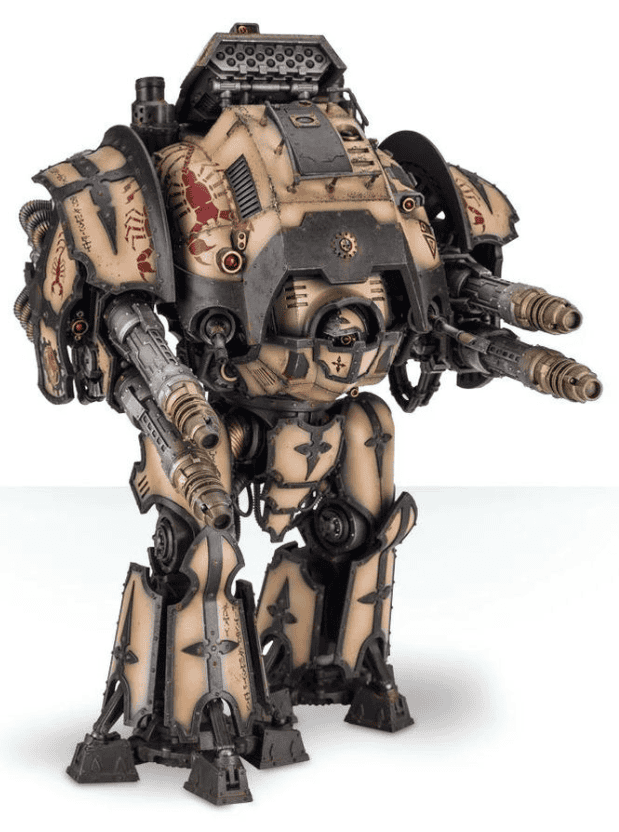 Creating an Imperial Knights army for Warhammer 40k is a bit like assembling an orchestra—each Knight has its own role, and together they create a symphony of destruction. The big question is: what kind of music are you trying to play? Whether you want to overwhelm the table with a wall of towering titans or support your favorite faction with a single powerhouse, there’s an approach for every general.
Start by deciding your focus. Do you want heavy-hitting ranged dominance? Include Dominus-class Knights like the Castellan for long-range devastation. Need a balanced force? The Questoris-class offers versatility, blending ranged weapons with devastating melee options. And let’s not overlook the smallest units, the Armigers—they’re your quick-response team, perfect for capturing objectives and harassing enemy flanks.
The key to success is synergy. Build an army where each Knight supports the others. A mix of ranged firepower, melee threats, and mobile units will keep your opponents guessing—and struggling to respond. To start playing them, you will need a Codex book (or the index) or access to a reference site like Wahapedia, or the official Warhammer 40k army builder app (subscription required for most up-to-date rules.)
Customizing Knights
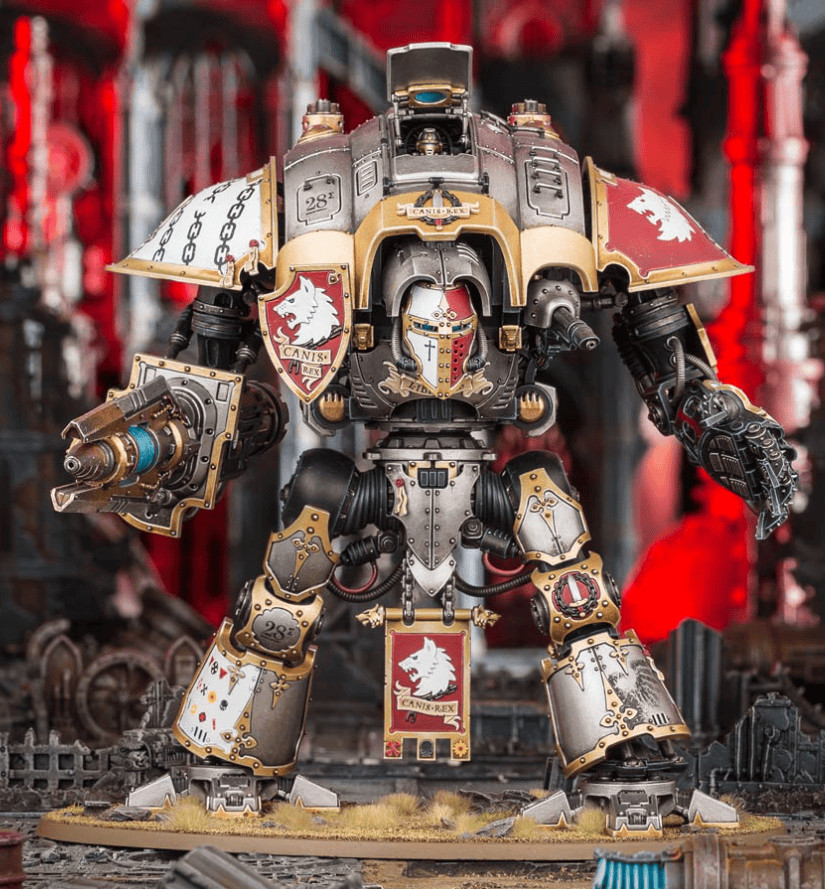 One of the joys of Imperial Knights is the ability to personalize them, both in aesthetics and loadouts. Think of it like tailoring a suit for war—a Knight should fit your strategy perfectly.
When it comes to weapons, you’re spoiled for choice. Thermal Cannons and Rapid-fire Battle Cannons provide ranged options, while melee weapons like the Thunderstrike Gauntlet bring crushing power up close. Customizing isn’t just about weapons, though; consider relics and stratagems that amplify your Knight’s abilities. For example, Ion Shields can protect against heavy firepower, while House-specific traits offer unique perks that enhance your playstyle.
Don’t forget the visual flair. Custom paint jobs and heraldry make each Knight uniquely yours. Add decals, battle damage, or freehand designs to give your army a sense of personal pride and narrative depth.
Selecting the Right Knights for Your Strategy
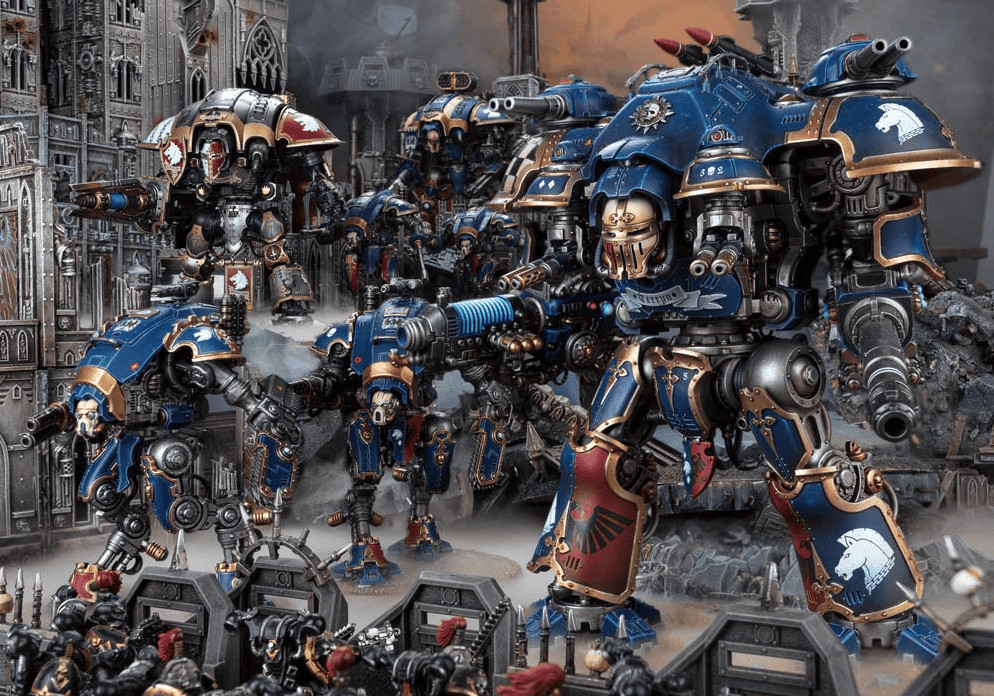 Choosing the right mix of Knights depends on your goals. If you’re aiming to dominate objectives, Armigers like the Helverin or Warglaive provide speed and adaptability. For mid-field control, Questoris Knights like the Paladin or Crusader bring reliable firepower. Need to hold the backline while raining destruction? Dominus-class Knights, especially the Castellan, excel at area denial.
Match your Knights to your game plan. Are you playing aggressively? Build around melee-focused Gallants and Warglaives. Prefer a more defensive approach? Prioritize long-range weaponry and durable units. With careful planning, you’ll have an army that not only looks stunning but crushes all opposition with mechanical precision
Conclusion
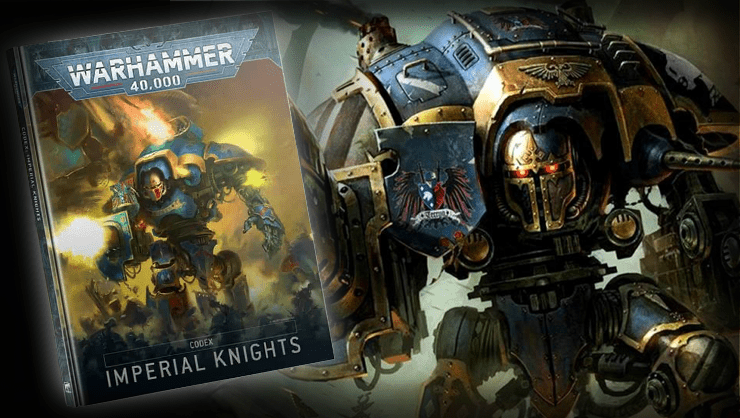 Imperial Knights in Warhammer 40k are more than just battlefield giants; they’re the embodiment of epic storytelling, tactical brilliance, and sheer intimidation. Whether you’re fielding a lone Knight as a heroic centerpiece or commanding a full house of towering machines, they offer something for everyone. With their mix of overwhelming firepower, durable frames, and customizable options, Imperial Knights dominate not only the battlefield but also the hobby table. Let’s recap what makes these noble war machines so appealing and take a peek at what the future holds.
Summary of Key Points
- Army Composition: Success lies in balance. Combining titanic Dominus-class units, versatile Questoris Knights, and the smallest units like Armigers creates a flexible, powerful force.
- Customizing Knights: Tailor each Knight to your strategy. From weapons to heraldry, every choice adds layers of personal style and tactical precision.
- Strategic Playstyles: Knights excel in both offense and defense. Proper positioning, target priority, and role assignment ensure they shine in any game.
- Smallest Units Matter: Don’t underestimate Armigers! These compact units bring mobility and utility, making them essential for objective play and support roles.
Imperial Knights are more than just units—they’re a narrative centerpiece.
FAQs and Future of Imperial Knights in Warhammer 40k
Q: Are Imperial Knights beginner-friendly?
Absolutely. While they require strategic planning due to their point cost, their simplicity in movement and combat makes them a solid choice for new players.
Q: Are Armigers worth the investment?
Yes! They’re the smallest units in the lineup, but they’re indispensable for their speed, flexibility, and ability to capture objectives while supporting larger Knights.
Q: What’s next for Imperial Knights in Warhammer 40k?
The faction remains a fan favorite, so expect continued support in future updates. Rules tweaks, new stratagems, and potential model releases could expand their role even further, ensuring they remain a competitive and exciting choice.
Final Thoughts
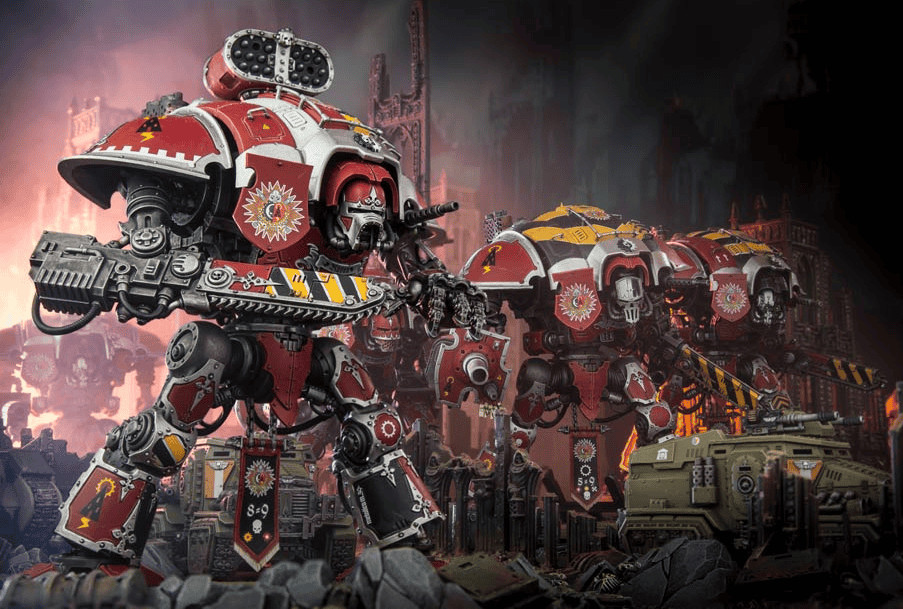 In a galaxy where war never ceases, Imperial Knights stand as both relics of an age-old nobility and engines of unmatched destruction. They’re more than just battlefield titans—they’re symbols of humanity’s enduring spirit, fighting for honor and survival amidst the chaos. For newcomers, Knights are a gateway into the grandeur of Warhammer 40k, a faction that’s as visually stunning as it is tactically satisfying. For long-time fans, they’re a testament to how far the lore and game have evolved, offering both nostalgia and fresh challenges.
Whether you’re commanding a towering Castellan that rains death across the battlefield or sending nimble Armigers to outflank the enemy, each Knight brings its own story to the table. They’re not just units—they’re characters, each one carrying the weight of its house, its pilot’s will, and the dreams of a crumbling Imperium.
So, whether you’re drawn by the lore, the spectacle, or the sheer power of these magnificent machines, Imperial Knights offer something unforgettable. Field them with pride, paint them with passion, and let their thunderous steps remind the galaxy that humanity still has a few tricks left. In the end, there’s nothing quite like the majesty of a Knight striding into battle.
Warhammer 40k Factions Explained: A Complete Guide to Every Army
What do you think about the Imperial Knights in Warhammer 40k? Do you like the Imperial Knight’s playstyle and units in 40k?