Games Workshop made a critical mistake when they teased the release of Darkwater, which could affect every game store and Warhammer hobbyist in the world.
Warhammer Quest: Darkwater is rolling in like a storm, but shockingly, GW mentioned it is a “normal range item”, not a limited stock item like everything else they have released as of late.
Which means if it sells out, they can just… print more. As they indicate in their own article, even.
What a shocking concept: printing more to meet demand… Seems like everyone would love that instead of playing the Warhammer Hunger Games Lottery each week.
So if this is the case for this ONE PRODUCT, why the constant song-and-dance from GW about limited runs and scarcity for every other hot product?
The “Trust Me” Moment That Went Sideways
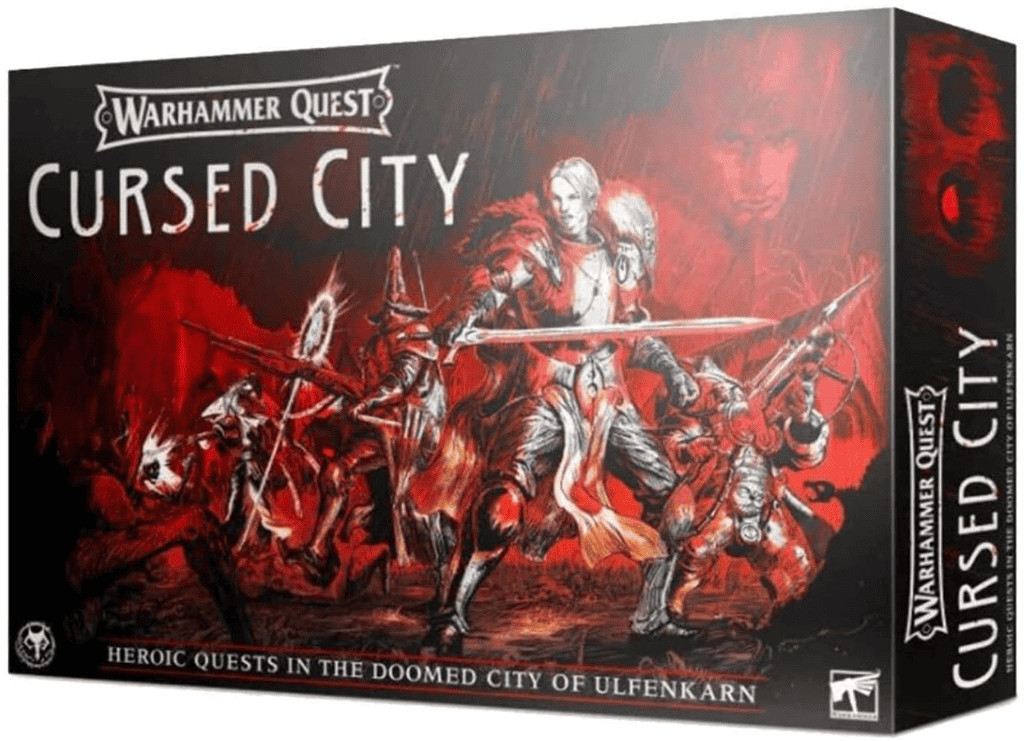
It seems like with Darkwater, Games Workshop is asking the community to trust them after Cursed City’s spectacular burnout.
If you don’t remember the debacle, they marketed this box for months and months and then slashed allocations to stores and sold out on their own webstore in seconds. They didnt even make a fraction of the demand it seemed like.
While they later offered an MTO for it, which was nice, it still felt awful for hobbyists waiting and then missing out or paying wild prices on the secondary market.
 Now, Darkwater just proved something crucial to pretty much everyone. We think it proves GW can reprint products at any time, yet they push fake sellouts to boost demand.
If a product moves enough units (or as many as GW wanted), it can continue to be reprinted to meet demand.
Games Workshop simply chooses not to, which creates the illusion that every release is rare. That illusion drives hype, consumer panic, and the sense that their games must be so popular that everything sells out in minutes.
Spoiler: it does not always sell out in minutes. Or hours. Or days. But GW likes everyone to think the product does.
Artificial Scarcity, GW’s Favorite Party Trick
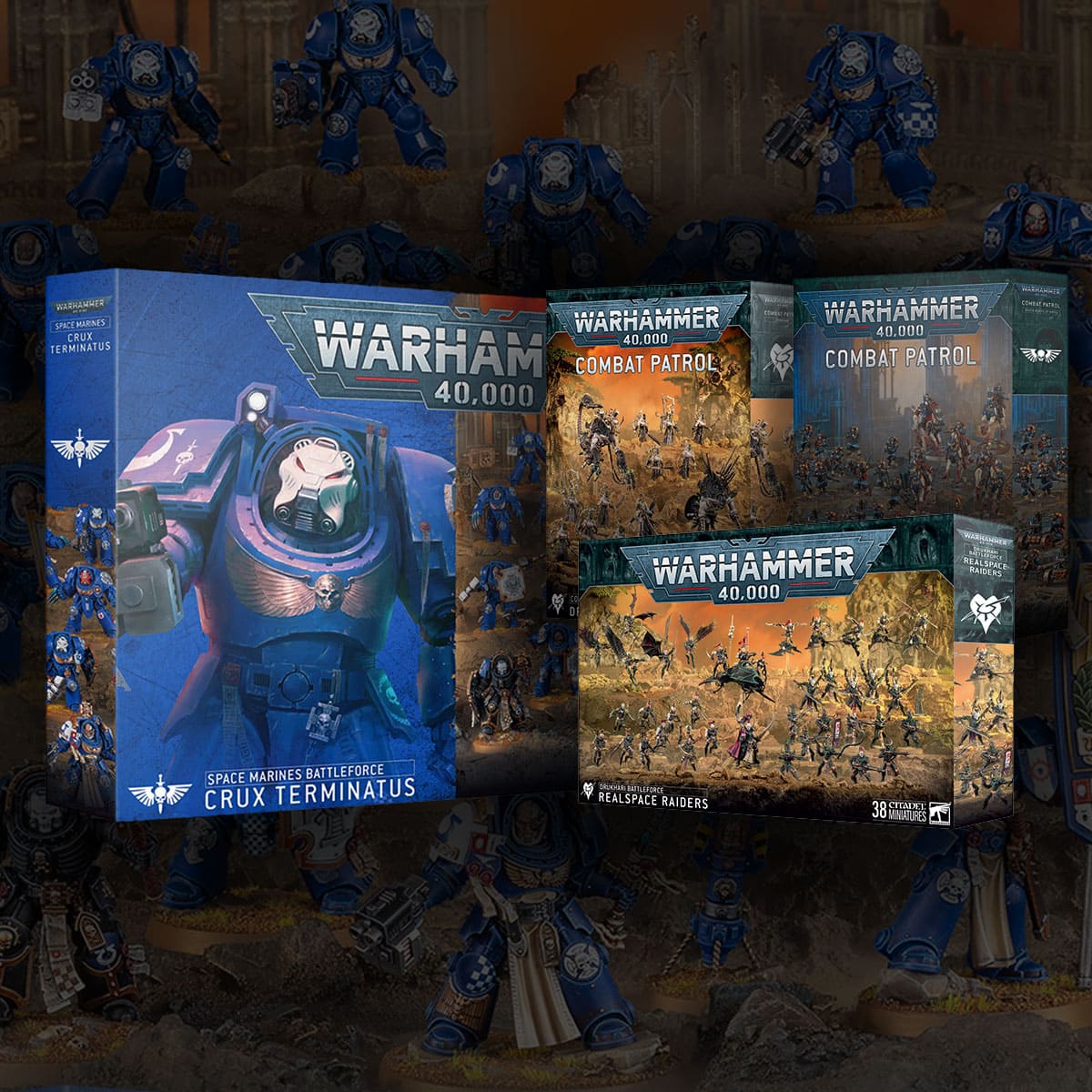 Scarcity makes a product look sought after. When an item vanishes from shelves instantly, retailers think they need to order more next time. It is the same trick that Magic: The Gathering and Pokémon have used for years. GW is also very good at it.
When something fails to sell through, the shell game begins. The leftovers get shuffled into high-volume trade accounts. Suddenly, stores get emails and calls offering “limited-time” deals on products that did not sell over the weekend.
The reality: the product did not perform, and now it needs a new home that does not expose the miss, and GW has plenty of stock rotting cause they were off in their forecasting.
Their Darkwater statement just exposed the trick. If they can keep producing it when they feel like it, then the FOMO marketing around other releases is exactly that, marketing.
The Wild World of Arcades and… Hyundai Dealerships
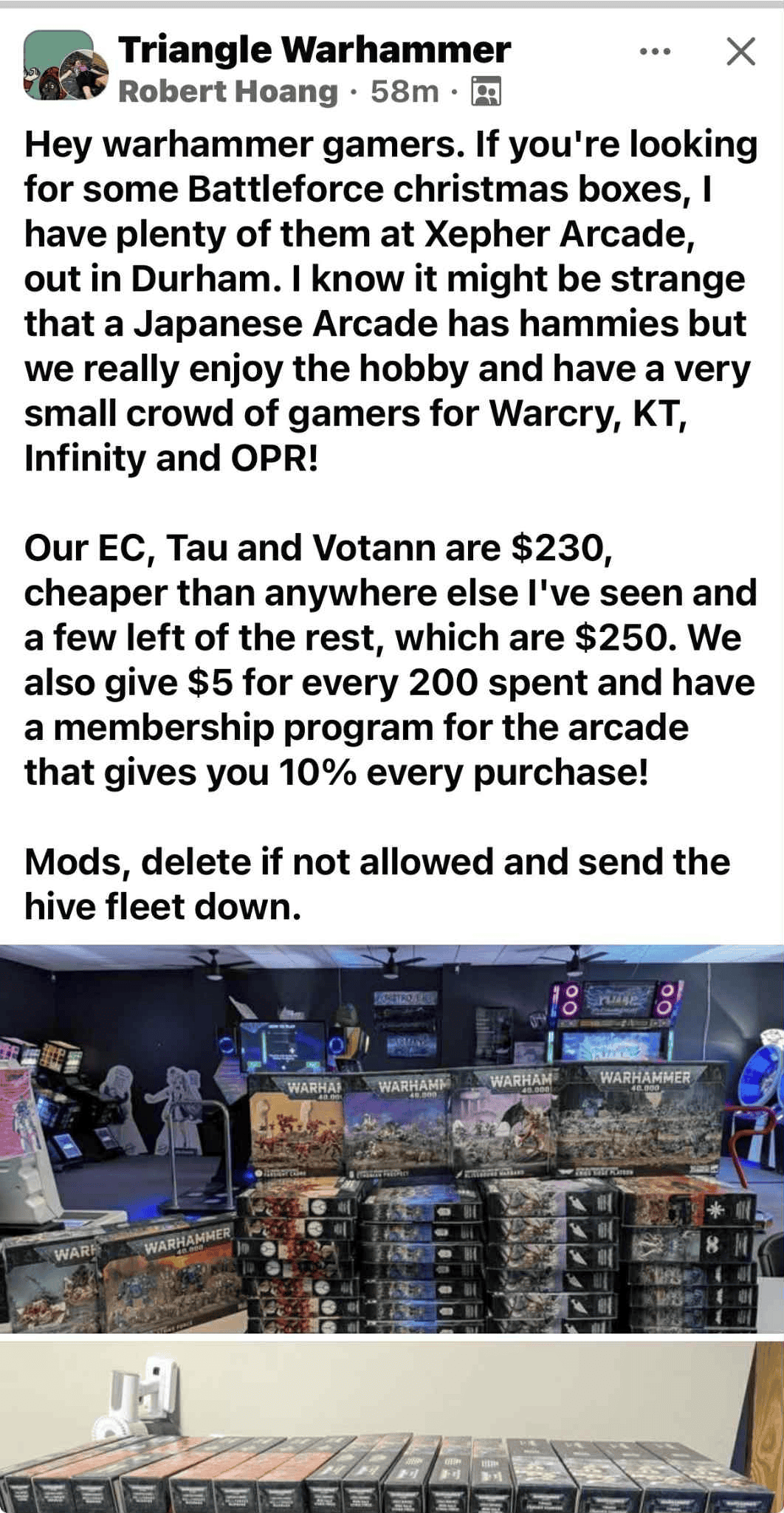
Let’s talk about one of the strangest parts of this story. An arcade that mostly runs arcade machines suddenly has full allocations of Christmas Battleforces and limited edition items usually found at real game stores.
Meanwhile, actual LGS owners are staring at empty order sheets.
Then there is our favorite entry in the “what are we even doing here” file: Warhammer at a Hyundai dealership. Yes, that happened. We covered it, and while the store seems to have decent reviews, it’s just strange.
So who is getting the product? Arcades, car dealerships, and maybe soon, big box stores like Game Stops? If so, that means every copy diverted to a non-gaming retailer is one less landing at the store that built the community (and customer base) your games rely on.
GW wants the prestige of a broad retail presence and Wall Street sparkle. The sad reality is that the casualty in all this is the hobby store that kept the lights on for decades.
The House of Cards Strategy
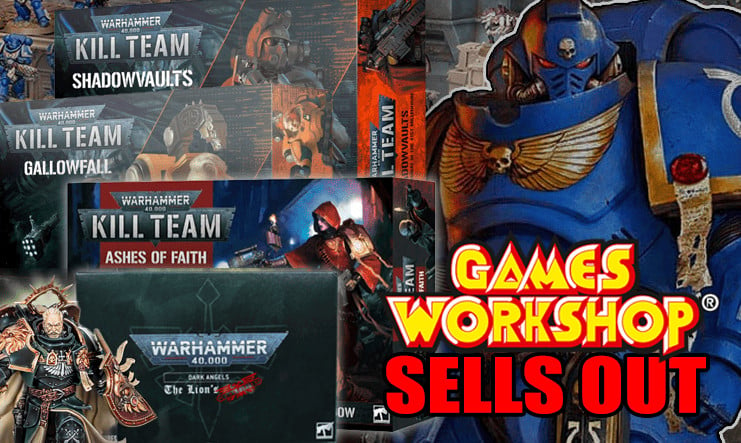
Here is the pattern:
- Slow previews that line up perfectly with quarterly reports
- Hype cycles are built around scarcity
- Controlled allocations to give the illusion of widespread demand
- Wide distribution to non-hobby outlets
- Quiet shifting of unsold stock to back-end channels
This is how you create the appearance of luxury demand without actually having it. When you can turn production on and off at will, “limited” begins to lose meaning. Darkwater inadvertently put this strategy under a bright spotlight. GW essentially admitted, with their own messaging, that they can bring back whatever they want.
They simply choose not to unless it helps the brand narrative.
What This Means for Game Stores Now
Local Game Stores used to be (and still are) the backbone of Warhammer. They hosted leagues, tournaments, painting nights, and they handled the heavy lifting of teaching new players.
Now they are competing with arcades, car dealerships, and ridiculous allocations. Those locations may not run events or host communities. More often than not, when the sales well dries up for a “Warhammer-as-a-second-hustle” retailer, they just stop carrying the product and dump their inventory into the liquidation pipeline.
Our Local Game Stores cannot survive in the same model. They need consistent stock and consistent customers. Artificial scarcity and inconsistent allocations only make the situation worse.
Darkwater Revealed More Than GW Intended

Darkwater was not just another product launch. It was a peek behind the curtain. GW wanted to calm nerves about Cursed City repeating by showing that a “limited run” product can be brought back. They ended up revealing that scarcity is a choice.
Press the button, and more Darkwater appears. Press a different button, and the product “sells out forever.” This strategy may look good on quarterly sales report slides. It does not look good at the ground level for stores or players.
See the Latest GW Allocations Here